Voices of Buhoma — Community Perspectives
In August 2018, Ebola broke out in the North Kivu province of the Democratic Republic of Congo — roughly 50 kilometres from the western boundary of Bwindi Impenetrable National Park. Over the following eighteen months, it became the second-largest Ebola outbreak in history. For the lodges, guides, and community businesses in Buhoma, the consequence was immediate and severe: international bookings collapsed, and one of the most remote tourism economies in East Africa came almost to a standstill.
The Outbreak That Reached the Border
The 2018–2020 DRC Ebola outbreak began in North Kivu and later spread to Ituri province. By the time it was declared over on 25 June 2020, it had resulted in 3,470 confirmed cases and 2,287 deaths — making it the deadliest Ebola outbreak ever recorded outside of the 2014–2016 West Africa epidemic (WHO, 2020).
The geography was what made Bwindi particularly exposed in the eyes of the international media. North Kivu borders south-western Uganda — the same corner of the country where Bwindi sits, where the Buhoma sector gate opens onto the main gorilla trekking trails, and where a small but functioning tourism economy had taken nearly three decades to build.
In June 2019, the proximity became concrete: Uganda confirmed its first Ebola-positive case — a Congolese pastor who had crossed the border at Kasese in western Uganda. The World Health Organisation declared the outbreak a Public Health Emergency of International Concern in July 2019. That designation triggered a wave of travel advisories that made no distinction between Kampala and Buhoma.
UWA's Response: Screening, Not Closure
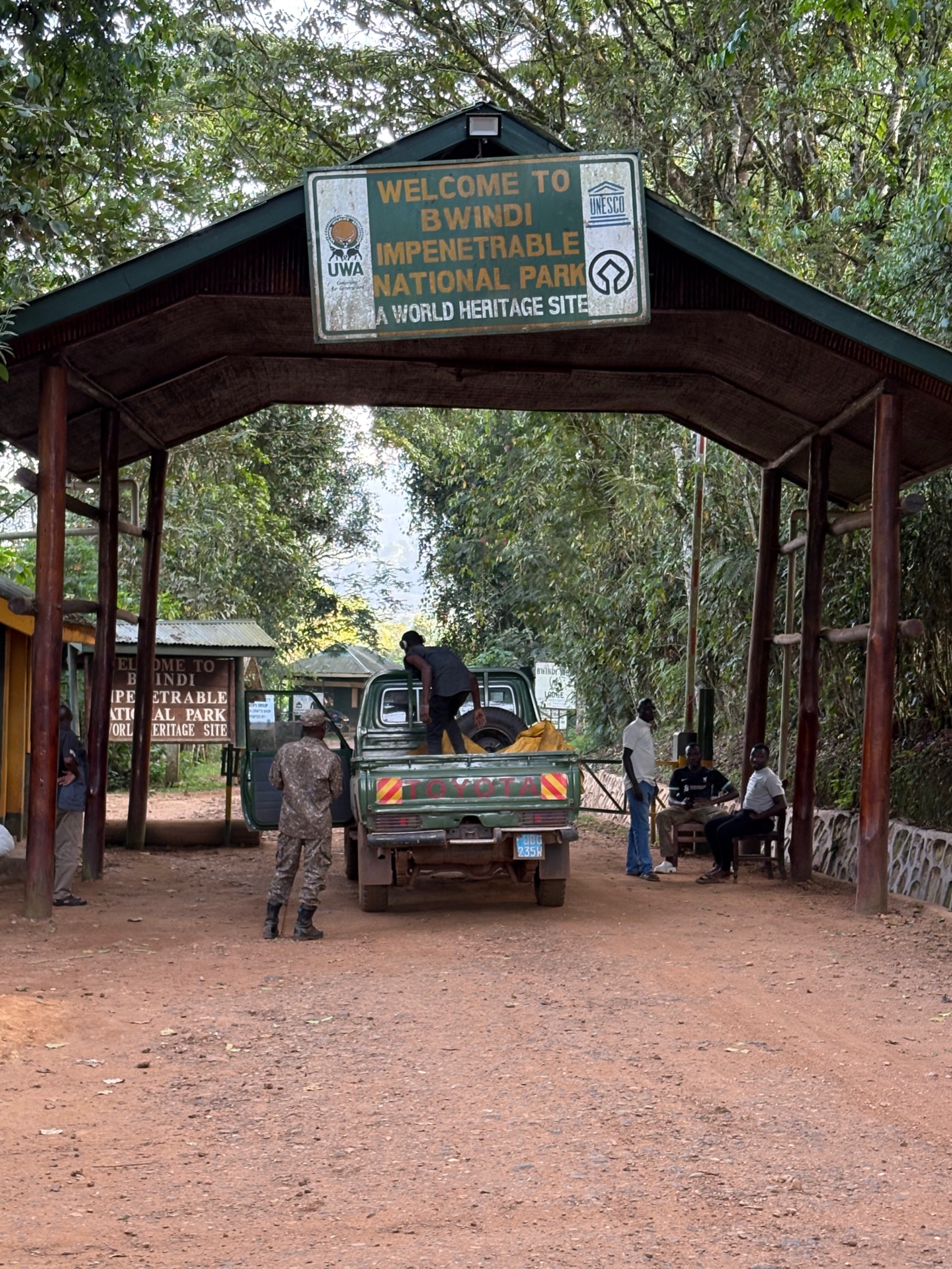
Uganda Wildlife Authority (UWA) did not close Bwindi Impenetrable National Park during the outbreak. The decision was deliberate: a formal closure would have confirmed the worst fears of potential visitors while doing nothing to address the actual risk, which remained on the Congolese side of the border.
Instead, UWA implemented health protocols at all four sector entry points — Buhoma, Ruhija, Rushaga, and Nkuringo. Visitor temperature checks became standard before every trek. Anyone presenting with fever or Ebola-compatible symptoms was denied access and referred to health authorities. Gorilla trekking rangers received additional briefings on infection prevention. The protocols introduced during the Ebola period — temperature screening, symptom questioning at the gate — were refined further during the COVID-19 period and remain in place in modified form today.
The precautions were sound. But they did not address the core problem: international travellers were not refusing to trek because they feared infection inside the park. They were cancelling because they were afraid to fly to Uganda at all.
What It Looked Like on the Ground in Buhoma
In Buhoma, where virtually every economic activity — lodge employment, craft markets, boda-boda transport, guiding — is directly or indirectly tied to gorilla trekking tourism, the collapse in bookings was felt immediately. Lodges that had operated at reasonable occupancy rates began running close to empty for months at a time. Guides had no groups to lead. Craft market sellers had no customers. The economic structure of the village, built almost entirely on international tourism, had no buffer against a sustained collapse in arrivals.
The community around Bwindi had already lived through earlier moments of disruption. There had been periods of instability along the DRC border in the 1990s and early 2000s. The Ebola outbreak of 2018 was different in one important respect: this time, the mechanism of damage was not physical insecurity but information — specifically, how the outbreak was covered in international media, and how that coverage collapsed tourism demand without any actual transmission occurring in Uganda.
“When Ebola was there, we have got a problem. Tourists are not coming. We are just sitting here, waiting. There is nothing to do.”
— Norman, Buhoma resident, June 2026
Norman, a resident of Buhoma who witnessed the period directly, provided a first-hand account of how the tourism collapse affected daily life in the village. His recollection forms part of the oral record of what this period meant for the community — one that statistics alone cannot capture.
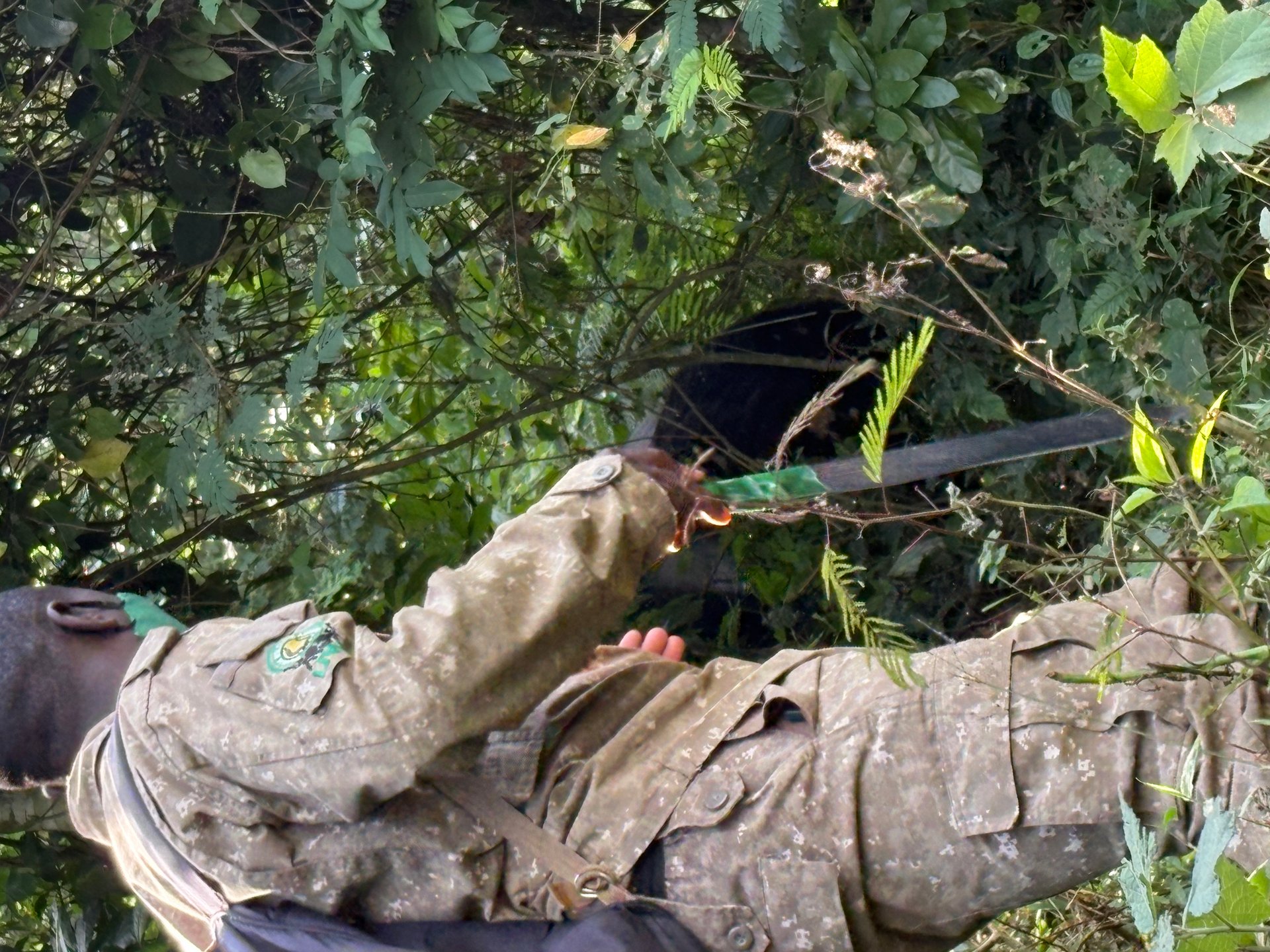
During our gorilla trekking in January 2026, we were accompanied by a guide and two armed rangers. The rangers' role goes well beyond security — they are experienced forest navigators, and on the steep and slippery ascent through the dense vegetation, their assistance was practical and genuinely valuable. What we observed only later, in conversation, was that these same rangers had continued this work through the Ebola years — leading far emptier treks, with far less income flowing into the community around them.
The armed presence on gorilla treks has always prompted questions from first-time visitors. The weapons are standard protocol. What they represent, in practice, is continuity — a permanent staff committed to the forest regardless of how many tourists are walking behind them.
The Recovery That Never Quite Arrived
The DRC Ebola outbreak was declared over on 25 June 2020. The announcement came with some relief in Buhoma — and almost no practical benefit. Within a month, Uganda closed its borders in response to the COVID-19 pandemic, and international tourism ceased entirely. For the lodges and guides who had survived nearly two years of Ebola-related booking cancellations, the COVID closure meant another year and a half of near-zero revenue.
Gorilla trekking at Bwindi resumed fully in 2021. By 2022 and into 2023, bookings began to recover. But the compounded effect of the Ebola period followed by COVID meant that the tourism economy in Buhoma effectively lost close to three years of income — a period that reshaped the finances of individual families, local businesses, and community organisations in ways that were still visible during our eleven-day stay in January 2026.
What This History Means for Today's Visitors
There is no active Ebola outbreak affecting Uganda or the DRC border region as of 2026. Gorilla trekking at Bwindi Impenetrable National Park operates normally under UWA management. The health screening protocols introduced during 2018–2020 remain in place as standard procedure — a temperature check before the trek begins is now a routine part of the morning briefing at the Buhoma gate.
What the Ebola period demonstrated, however, is how structurally fragile a single-product tourism economy can be. Buhoma has gorilla trekking. When that stops, the economic life of the community contracts in ways that are visible and lasting. The community-managed craft market, the boda-boda drivers, the guesthouses, the school — all are downstream of the single revenue stream that flows from the park gate.
For visitors, this context matters. A gorilla trekking permit at Bwindi costs USD 700 per person (2026 rate, issued by UWA). Ten USD from every permit goes directly into the surrounding communities through the revenue-sharing programme. That programme exists precisely because the communities living alongside the park need an economic stake in conservation — one that does not disappear entirely the next time an outbreak on the other side of a border generates a travel advisory.
Frequently Asked Questions
Did Ebola close Bwindi Impenetrable National Park?
Bwindi was not formally closed during the 2018–2020 DRC Ebola outbreak, but the Uganda Wildlife Authority (UWA) implemented strict health screening at all park entry points. Visitors with fever or symptoms were denied access. The practical effect was a dramatic collapse in bookings as international travellers avoided the region.
Was Ebola ever confirmed in Uganda near Bwindi?
Yes. In June 2019, Uganda confirmed its first Ebola-positive patient during the 2018 outbreak — a Congolese pastor who had crossed the border at Kasese in western Uganda. He was treated and died. Several contacts were traced and monitored. No sustained community transmission occurred in Uganda, but the confirmed case deepened the travel advisory affecting the entire western region, including Bwindi.
How close is Bwindi to the DRC Ebola outbreak zone?
Bwindi Impenetrable National Park sits approximately 40–50 km from the Ugandan border with the Democratic Republic of Congo. The 2018 outbreak was centred in North Kivu and Ituri provinces — the provinces directly across the border. The geographic proximity was the primary reason international media and travel advisories associated Bwindi with the outbreak, even as the park remained operational.
How long did the tourism downturn last?
The 2018–2020 DRC Ebola outbreak was declared over in June 2020 — and within weeks, the COVID-19 pandemic imposed a further closure. For Bwindi, the effective period of severely reduced tourism stretched from late 2018 through at least mid-2021. For local communities in Buhoma, it represented nearly three years of economic disruption. Tourism at Bwindi began recovering meaningfully in 2022, with international visitor numbers rebuilding as travel advisories were lifted and the post-COVID appetite for wildlife tourism recovered.
Is it safe to visit Bwindi today?
Yes. The 2018–2020 DRC Ebola outbreak was declared over on 25 June 2020. There is no active Ebola outbreak affecting Uganda as of 2026. Gorilla trekking at Bwindi Impenetrable National Park operates normally under Uganda Wildlife Authority (UWA) management. Standard pre-trek health checks continue as a permanent precautionary measure.