An Ancient Refuge
Bwindi Impenetrable Forest is one of the few African rainforests that survived the last Ice Age. While most tropical forests on the continent retreated during the prolonged dry and cold periods of the Pleistocene, Bwindi persisted as a refugium — a sanctuary where species could endure and, eventually, recolonize the surrounding landscape as conditions improved. This unbroken continuity over more than 25,000 years has given the forest extraordinary biological richness.
Today, the forest covers approximately 321 square kilometres of southwestern Uganda, hugging the eastern edge of the Albertine Rift. Its terrain is defined by steep ridges that rise to 2,607 metres at the summit of Rwamunyonyi Hill and plunge into deep, mist-filled valleys. This dramatic topography, combined with persistent cloud cover and high rainfall, creates a landscape that is both beautiful and genuinely difficult to traverse — earning it the name “Impenetrable.”
Altitude and Diversity
The forest spans an altitudinal gradient of nearly 1,500 metres, from the warmer lowland zones at around 1,160 metres to the cool, misty highlands above 2,400 metres. This vertical range compresses multiple ecological zones into a relatively compact area. Lowland tropical forest gives way to mid-altitude transitional forest, which in turn transitions to montane forest characterised by mosses, lichens, and bamboo.
Each elevation band supports different assemblages of plants and animals. Many species are restricted to narrow altitudinal ranges, and some are found nowhere else on Earth. This gradient is a major reason why Bwindi harbours over 400 plant species, more than 120 mammal species, over 350 bird species, and at least 200 butterfly species within its borders.
Mist, Rain, and Microclimate
Bwindi receives between 1,400 and 1,900 millimetres of rainfall annually, distributed across two wet seasons (March to May and September to November) with no truly dry months. The forest is frequently shrouded in mist, particularly at higher elevations, where cloud interception adds significant moisture beyond what falls as rain. These conditions maintain the high humidity that sustains the forest’s epiphytes, mosses, and the dense understorey vegetation that makes Bwindi so impenetrable.
A Living Watershed
Five major rivers originate within the forest, flowing westward through steep valleys to eventually reach Lake Edward. These waterways are vital not only for the forest ecosystem but for the hundreds of thousands of people living in the surrounding communities who depend on them for drinking water, agriculture, and daily life. Protecting the forest means protecting these water sources.
Explore the Forest
Rainforest Ecology
The ecological systems that sustain one of Africa's most biodiverse forests, from nutrient cycling to microclimate regulation.
Plant Species
Over 400 plant species including ferns, orchids, and endemic flowering plants adapted to Bwindi's altitude gradient.
Tree Species
The towering trees that form the backbone of the Impenetrable Forest, from lowland giants to high-altitude specialists.
Medicinal Plants
Traditional knowledge and scientific study of the forest's healing plants, used by local communities for generations.
Forest Layers
From the emergent canopy to the forest floor, each vertical zone hosts distinct communities of plants and animals.
Rivers & Water Systems
Five major rivers originate in Bwindi, flowing westward through deep valleys to feed Lake Edward and sustain surrounding communities.
Forest Restoration
Ongoing efforts to restore degraded areas and reconnect forest fragments, ensuring Bwindi's ecological integrity for future generations.
Bwindi in Images
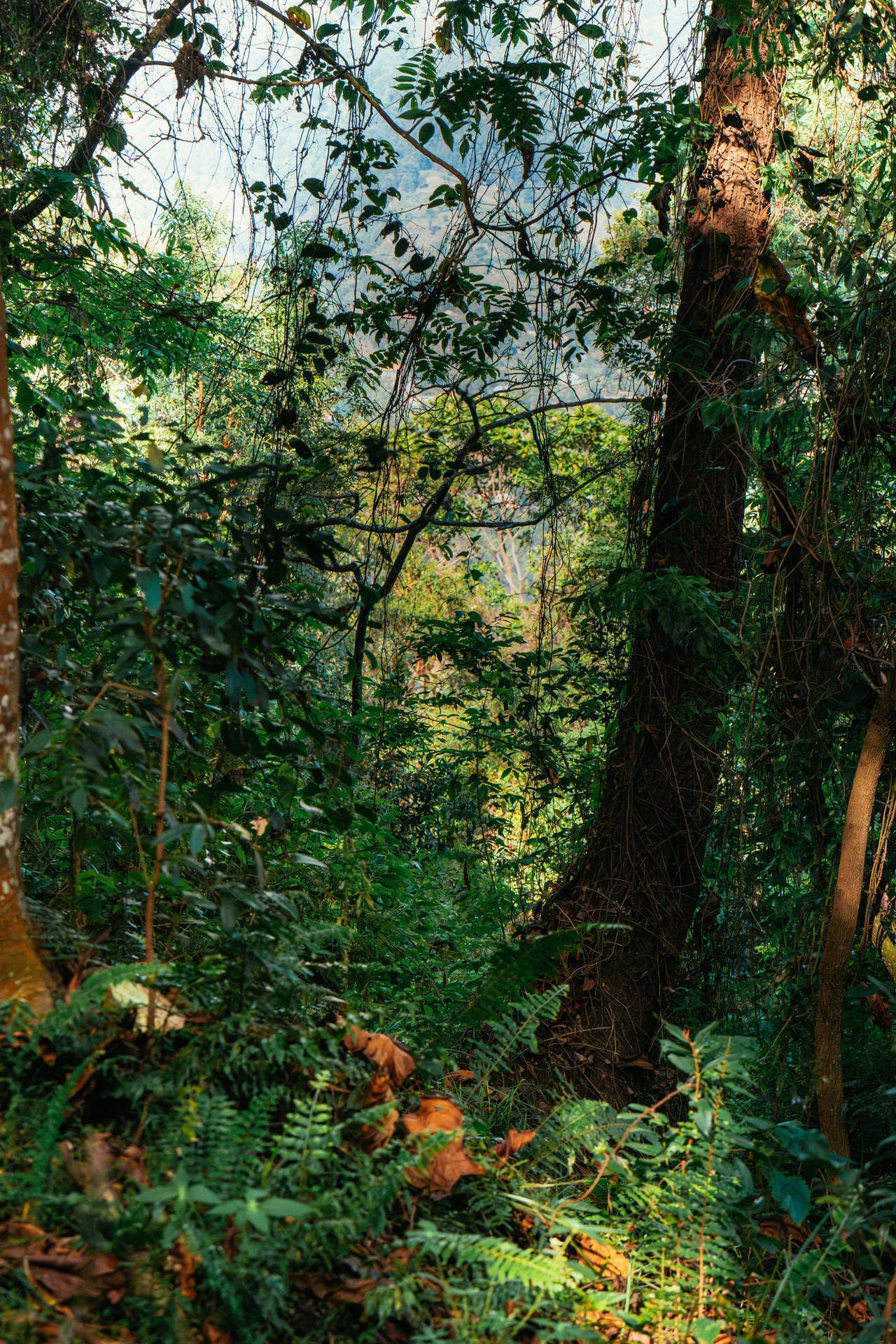
Dense jungle at the start of the gorilla trekking trail

Gorilla trekking in Bwindi: the path through the rainforest
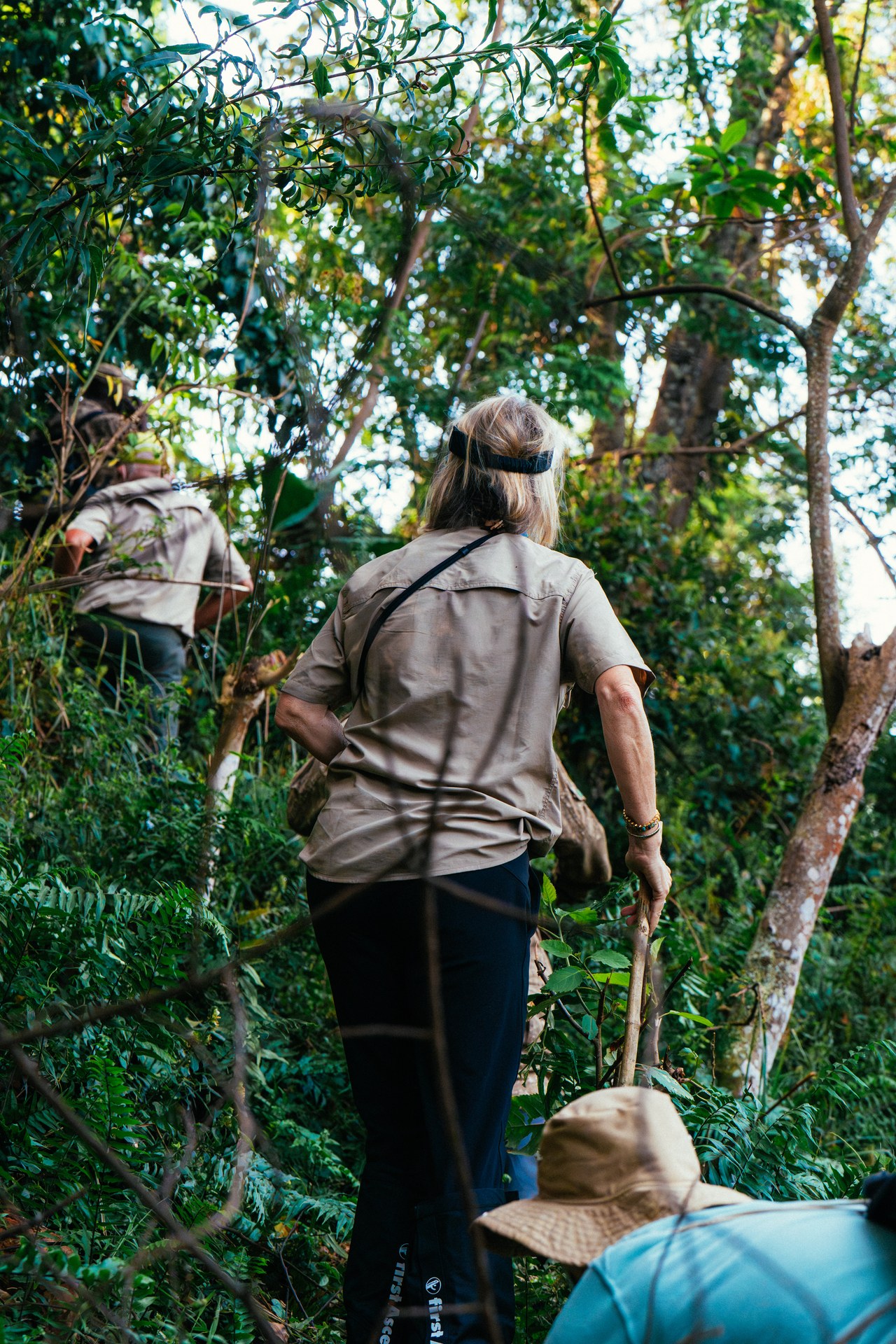
Through Bwindi forest on the trail of gorillas
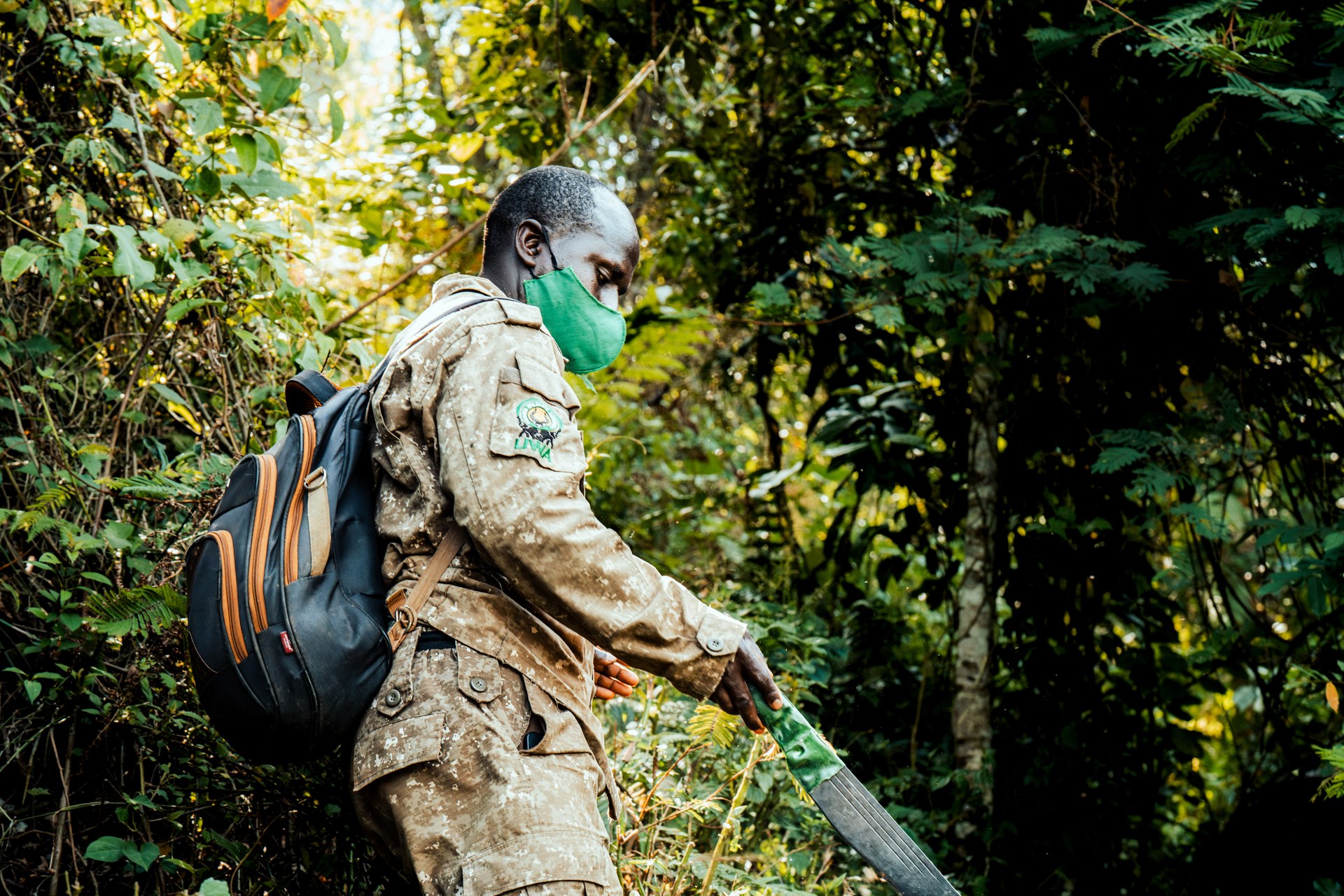
Ranger in Bwindi forest on the way to the gorillas

Preparing for the adventure: gorilla trekking in Bwindi
Mountain Gorilla Peering Through Dense Forest Foliage
Frequently Asked Questions
Related Articles
Mountain Gorillas of Bwindi
Conservation Programs
Bwindi Bird Species
Local Communities
Park Sectors Overview
Research in Bwindi
Bwindi's Rivers and the Lake Edward Watershed
Forest Connectivity: Bwindi's Two-Block Structure
The Resource Use Program
National Forestry Policy Uganda
Central Forest Reserves in Uganda
Wetlands Conservation Uganda
Tree Diversity in Bwindi
Biodiversity Research in Bwindi
Hydropower & Off-Grid Energy at Bwindi
Deforestation & Erosion at Bwindi
Climate Threats to Bwindi's Rainforest
Water Security & Climate Change