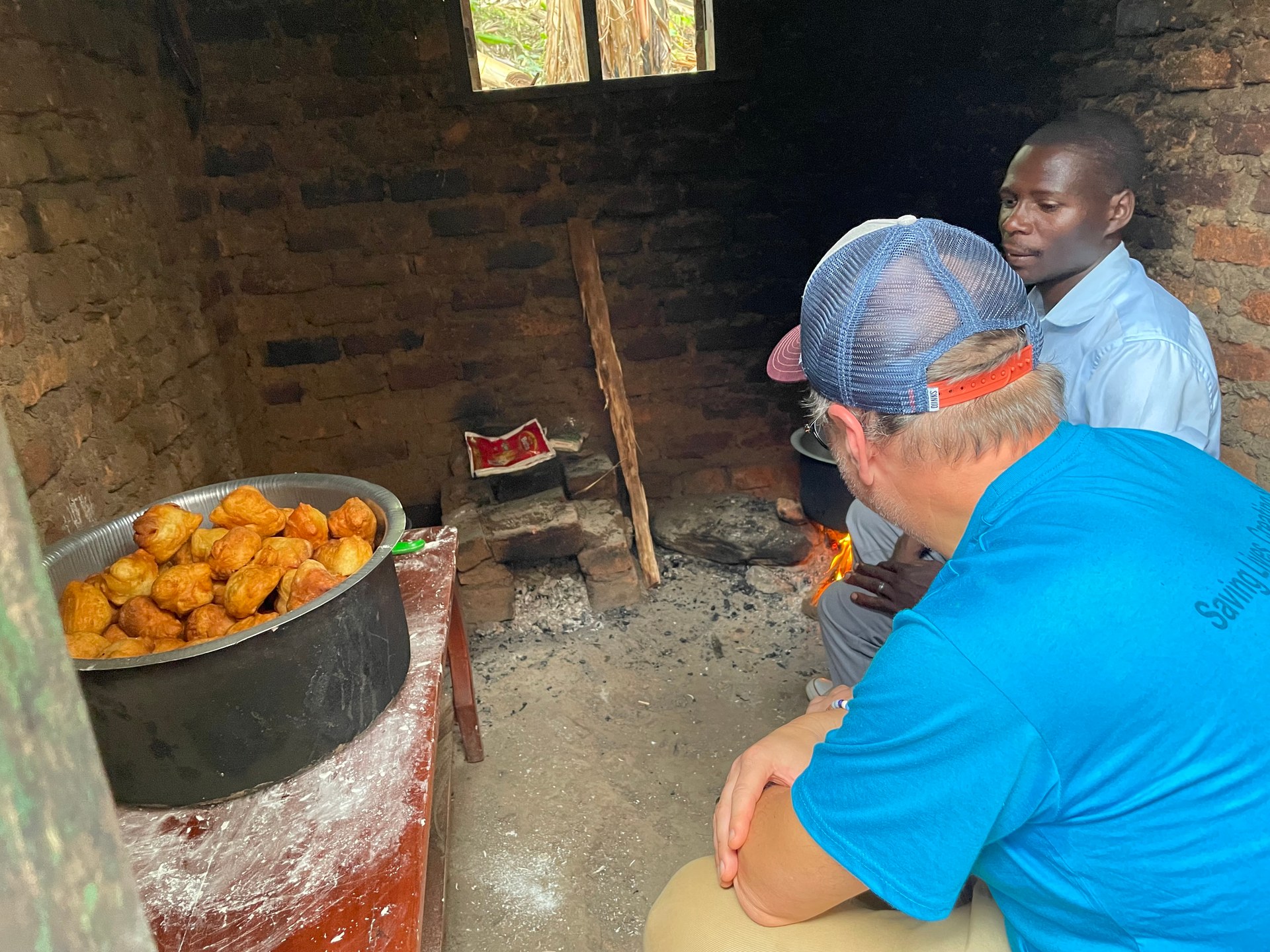
The food at lodges around Bwindi Impenetrable National Park is consistently better than first-time visitors expect. Most lodges serve a combination of Ugandan staples — chapati, matoke, beans, avocado, fresh tropical fruit — alongside international dishes. Vegetarian options are widely available, portions are generous, and breakfasts in particular are a quiet highlight of most Bwindi stays.
What Does Breakfast Look Like at a Bwindi Lodge?
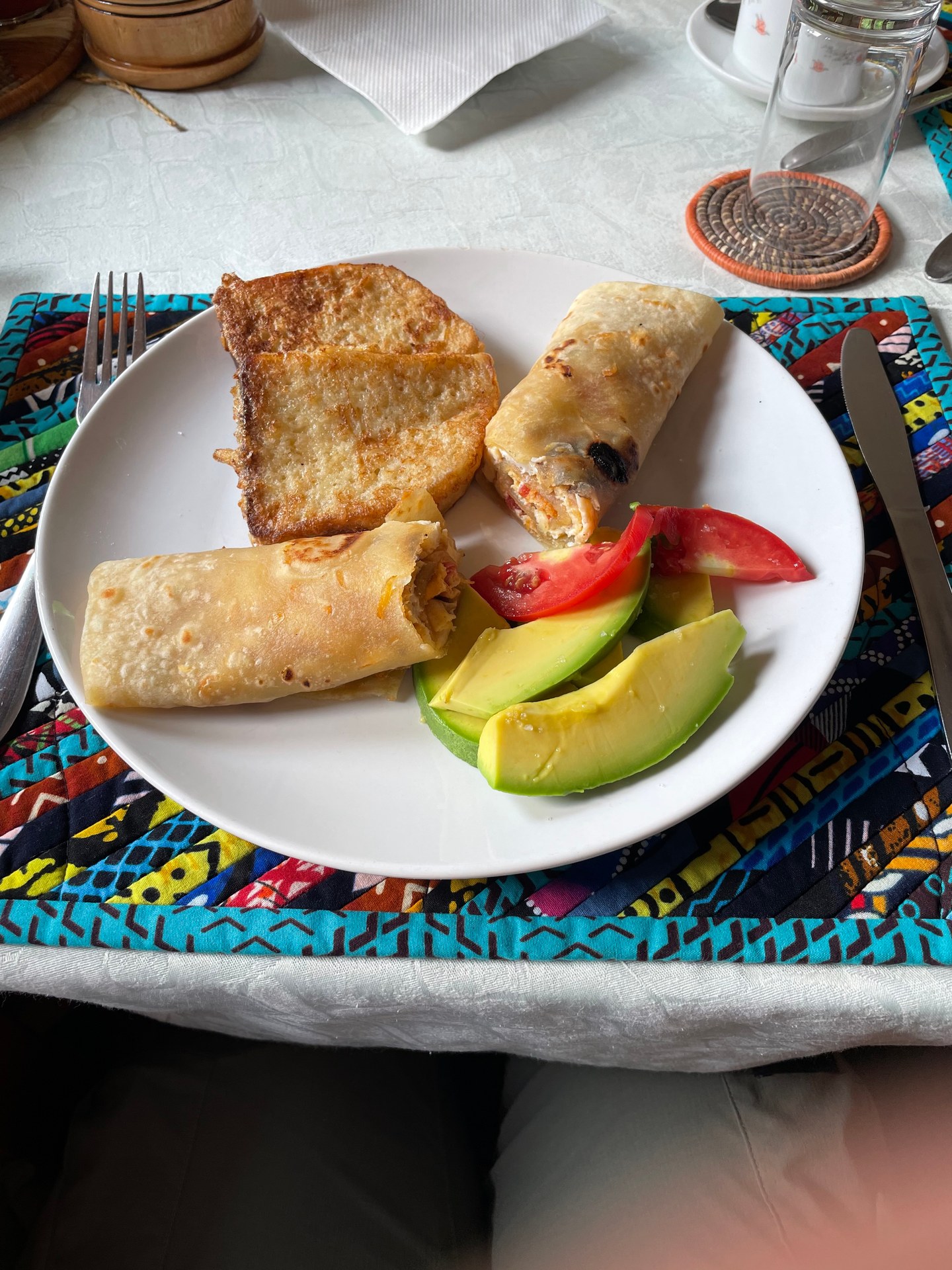
During our January 2026 stay in the Buhoma sector — eleven days in total, with several mornings at the Gorilla Bluff Lodge — breakfast became a ritual that set the tone for every day in the forest. On the table: sliced avocado, a Rolex (Uganda's iconic rolled egg chapati), and French toast. A thermos of strong tea. Freshly cut pineapple, sometimes papaya. Nothing elaborate, but everything right.
Breakfasts at Bwindi lodges are designed to fuel you before a trek — and after several hours on steep forest trails, you will remember that avocado gratefully.
What Is a Rolex — and Why Does It Appear at Every Breakfast?
The Rolex is Uganda's most beloved street food and a staple on lodge breakfast menus across the country. The name is a contraction of “rolled eggs”: a chapati flatbread is spread with a fried egg, onions, tomatoes and sometimes cabbage, then rolled into a wrap. It is filling, flavourful, and made with ingredients grown nearby. You will find it at roadside stalls in Kampala and on the breakfast tables of lodges in Buhoma.
If you leave Uganda without having tried a proper Rolex, you have missed something essential.
Ugandan Dishes Worth Knowing Before You Arrive
Lodge menus vary by price tier, but certain dishes appear consistently across all of them — rooted in the everyday cooking of the Bakiga farming communities surrounding the park, where stews are slow-cooked and portions reflect the physical demands of rural life.
- Matoke: Steamed green bananas — the national staple of Uganda. Served as a dense, starchy side dish alongside groundnut stew or beans. The taste is mild and savoury, nothing like ripe banana.
- Groundnut stew: A rich peanut-based sauce, slow-cooked with onion, tomato and often vegetables or chicken. One of the most satisfying dishes in the Ugandan kitchen.
- Posho: A firm maize flour porridge — similar to ugali in Kenya or nshima in Zambia. Eaten with stew. A staple at community guesthouses and budget lodges.
- Chapati: A soft, flaky flatbread introduced via Indian traders, now entirely Ugandan. Served at breakfast, lunch and dinner — and used as the wrapper for a Rolex.
- Avocado: Grown on the hillsides across south-western Uganda. Creamy, ripe, and served at almost every meal. One of the genuinely great things about eating here.
- Fresh tropical fruit: Pineapple, passion fruit, mango, papaya — served at breakfast and as a light dessert. Local and seasonal. Far better than anything that travelled to reach you.
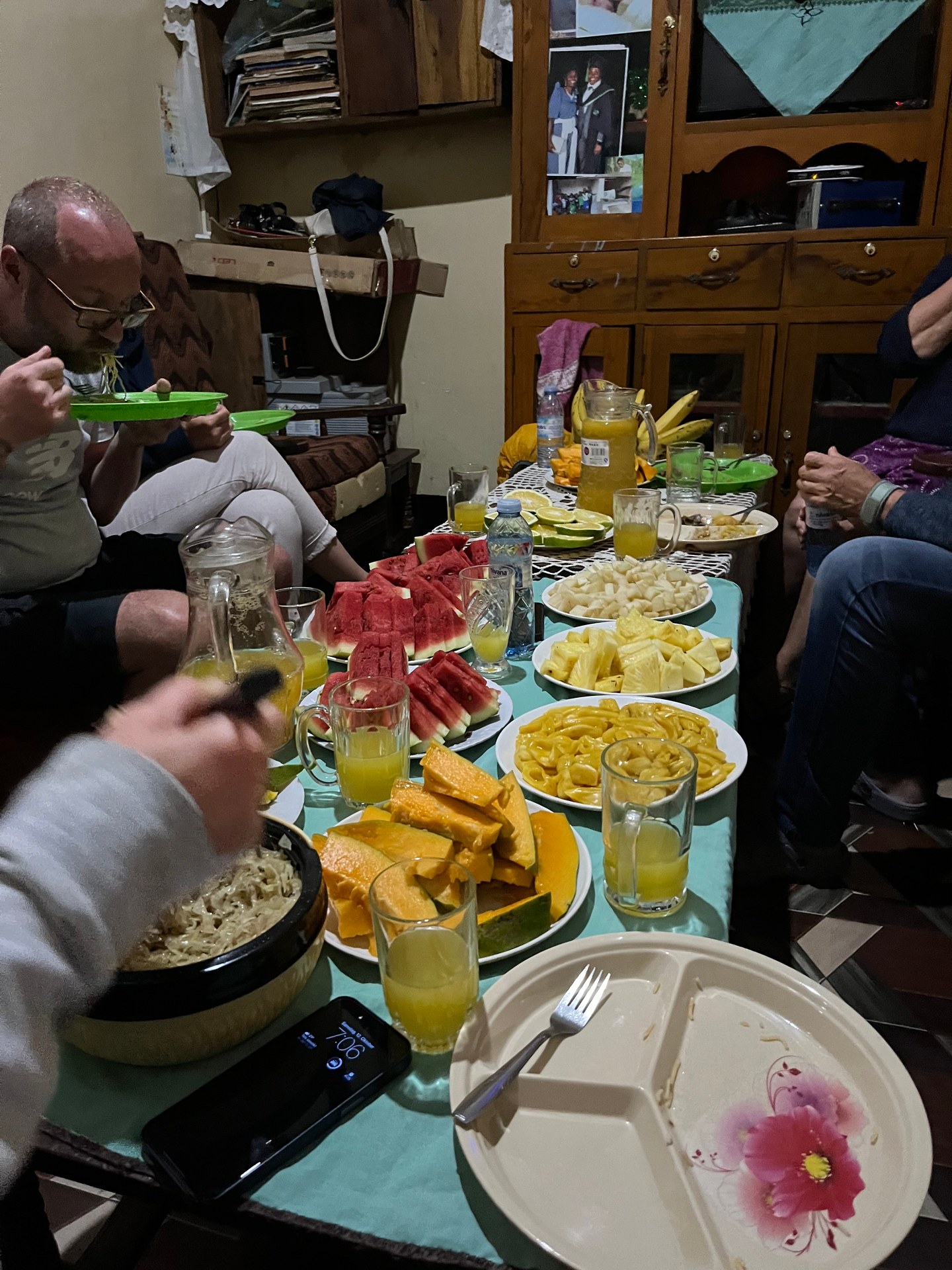
During a visit to the Butiru school in October 2024 — while accompanying the NGO Butiru Freundeskreis — lunch was exactly this kind of food at its best: fresh pineapple, ripe avocado, chapati and beans. Simple, nourishing, made with care. It is the same food that appears on lodge tables a few hundred kilometres south-west in Buhoma, just in a different setting.
Vegetarian and Special Dietary Requirements
Ugandan home cooking is, at its core, largely plant-based. Matoke, beans, posho, chapati, avocado, groundnut stew — the backbone of the local diet requires no meat. Most lodges around Bwindi accommodate vegetarian guests without difficulty, particularly if you mention your requirements at the time of booking.
Vegan travellers should note that eggs and dairy appear in some sauces and baked items even at lodges with vegetarian menus — ask specifically. Gluten-free guests will find the staple carbohydrates (chapati, posho) challenging at smaller guesthouses; communicate clearly before you arrive rather than on the day.
What to Expect at Different Lodge Tiers
Food quality correlates broadly with lodge category — though community-run guesthouses in Buhoma often serve food that rivals more expensive establishments in freshness and flavour. The best meal you eat in the area may well cost almost nothing.
Budget lodges and community guesthouses
Matoke, beans, posho, chapati, eggs. Local and straightforward. Meals are either included in the room rate or priced separately at very low cost. Freshness is generally excellent — ingredients come from nearby farms.
Mid-range lodges (e.g. Gorilla Bluff Lodge, Buhoma Community Rest Camp)
A blend of Ugandan staples and international dishes — pasta, grilled chicken, vegetable stews. Full cooked breakfasts with avocado, eggs and fresh fruit. Usually half-board or full-board.
High-end and luxury lodges
Restaurant-quality menus combining local ingredients with international techniques. Typically fully inclusive of meals and drinks. Polished and reliable — though rarely more memorable than a simple avocado at a community guesthouse.
Where the Food Comes From
Much of what appears on lodge tables in Buhoma travels only a short distance. The avocados come from smallholder farms on the hillsides above the park. Beans and maize are grown in the valleys. Local traders and store owners in the Buhoma trading centre — among them Emily Assimwe, who has run a shop in Buhoma for years — supply smaller lodges and guesthouses with fresh produce, cooking oil and dry goods.
Prosper, a trekking guide based in Buhoma, often walks first-time visitors through the village after a gorilla trek and points them toward local food options. For many travellers, that informal stop — a Rolex from a roadside stall, eaten standing up, still in trekking boots — turns out to be the meal they remember longest.
Eating at local spots in Buhoma village rather than staying within the lodge perimeter is a simple way to put money directly into the hands of the community living alongside the park. The food is just as good. Usually better.
Practical Tips
- 1.Inform your lodge of any dietary requirements at the time of booking — not on arrival.
- 2.Most lodges operate on half-board (breakfast and dinner included). Lunch is usually a packed meal on trekking days.
- 3.Drink only bottled or lodge-filtered water. Ice at most lodges is safe — ask if you are unsure.
- 4.Try the Rolex for breakfast. You will order it again.
- 5.Fresh avocado is available almost year-round in south-western Uganda — it is one of the best things about eating here.
- 6.Walk into Buhoma trading centre for lunch. The food is excellent, the prices are low, and the money stays in the community.
Frequently Asked Questions
Are meals included in the price at Bwindi lodges?
Most mid-range and high-end lodges operate on a half-board (breakfast and dinner) or full-board basis. Budget guesthouses often charge for meals separately. Confirm the arrangement when booking.
Is vegetarian food available at lodges near Bwindi?
Yes. Ugandan cooking is largely plant-based — matoke, beans, avocado, posho and chapati are all vegetarian staples. Tell your lodge when you book to ensure meat-free options throughout your stay.
What is a Rolex in Uganda?
A Rolex is Uganda's most iconic street food: a chapati flatbread filled with fried egg, onion and tomatoes, then rolled into a wrap. The name comes from 'rolled eggs'. It is available at most lodges and at roadside stalls throughout the country.
Is tap water safe to drink at Bwindi lodges?
No. Drink only bottled water or water filtered or boiled by your lodge. Most lodges provide safe drinking water in rooms and at meals. Ask specifically about water used for cooking and washing salad vegetables.
What is matoke?
Matoke is steamed or boiled green bananas — the national staple food of Uganda. It is served as a dense, savoury side dish, usually alongside groundnut stew or beans. The taste is mild and starchy, nothing like ripe banana.