Uganda is a compact country — roughly the size of Great Britain — but its tourism regions are dramatically different from one another. Western Uganda (where Bwindi sits) is mountain forest and highland savanna. Northern Uganda is flat open plains cut by the Nile. Eastern Uganda is highlands and waterfalls. Central Uganda is the transit hub, the city, and the lake shore. For a visitor building a two-week itinerary, the choice of which regions to combine defines the experience entirely.
Western Uganda generates the largest share of national park visitor revenue, driven by gorilla trekking permit income. Growing visitor numbers across all regions reflect sustained investment — northern Uganda in particular has seen significant infrastructure development in the years since the end of the LRA conflict.
Western Uganda
Uganda's wildlife heartland
Parks & Attractions
- Bwindi Impenetrable National Park — 321 km², mountain gorillas, 4 sectors
- Queen Elizabeth National Park — tree-climbing lions, boat safari on Kazinga Channel
- Kibale Forest National Park — founded 1993, chimpanzee tracking near Fort Portal
- Rwenzori Mountains National Park — ~1,000 km², Africa's third-highest massif
- Semliki National Park — 220 km², lowland forest, Sempaya hot springs
Hub: Fort Portal and Buhoma (Kanungu District)
Transport: Uganda Post Bus: Kampala–Fort Portal, 5 hours, 30,000 UGX (2020 rate)
Southwestern Uganda
Kisoro, Mgahinga, Lake Bunyonyi
Parks & Attractions
- Mgahinga Gorilla National Park — 30 km², Nyakagezi gorilla family, golden monkeys, Virunga volcanoes
- Lake Bunyonyi — Uganda's deepest lake, 29 islands, canoe trips, birding
Hub: Kisoro (approx. 18,000 inhabitants — Uganda travel guide, 2020 edition; 75 km west of Kabale)
Transport: Kisoro to Kampala: bus via Kabale, 8–9 hours, 45,000 UGX (2020 rate)
Central Uganda
Kampala, Entebbe, and the transit corridor
Parks & Attractions
- Ziwa Rhino Sanctuary — only location in Uganda with wild rhinos, walking safari
- Lake Victoria islands — Ssese Islands, ferry from Entebbe
Hub: Entebbe International Airport, Kampala
Transport: Most international flights arrive at Entebbe — 40 km from Kampala city centre
Northern Uganda
Murchison Falls and the Nile
Parks & Attractions
- Murchison Falls National Park — most powerful waterfall on the Nile, boat safari, game drive, Rothschild's giraffe
Hub: Masindi (220 km from Kampala by asphalt road — Uganda travel guide, 2020 edition)
Transport: Masindi is the standard gateway town for Murchison Falls
Eastern Uganda
Jinja, Sipi Falls, Mount Elgon
Parks & Attractions
- Mount Elgon National Park — cross-border volcano, cave exploration, waterfall hikes
- Sipi Falls — three-tiered waterfall on the Mount Elgon escarpment, coffee tours
- Jinja — Source of the Nile — white-water rafting, kayaking, bungee jumping
Hub: Jinja (2 hours east of Kampala by road)
Transport: Easily combined with Kampala as a short detour; independent buses run frequently
Western Uganda in Depth: What Bwindi's Region Looks Like on the Ground
During eleven days in the Buhoma area of Kanungu District in January 2026, the texture of south-western Uganda became very clear. Bwindi is surrounded by a landscape of steep green hills, small farms, red laterite roads, and a dense network of villages. The gorilla trekking economy is deeply embedded in the local community — porters, guides, lodge staff, craft sellers, and transport providers all depend on it directly or indirectly.
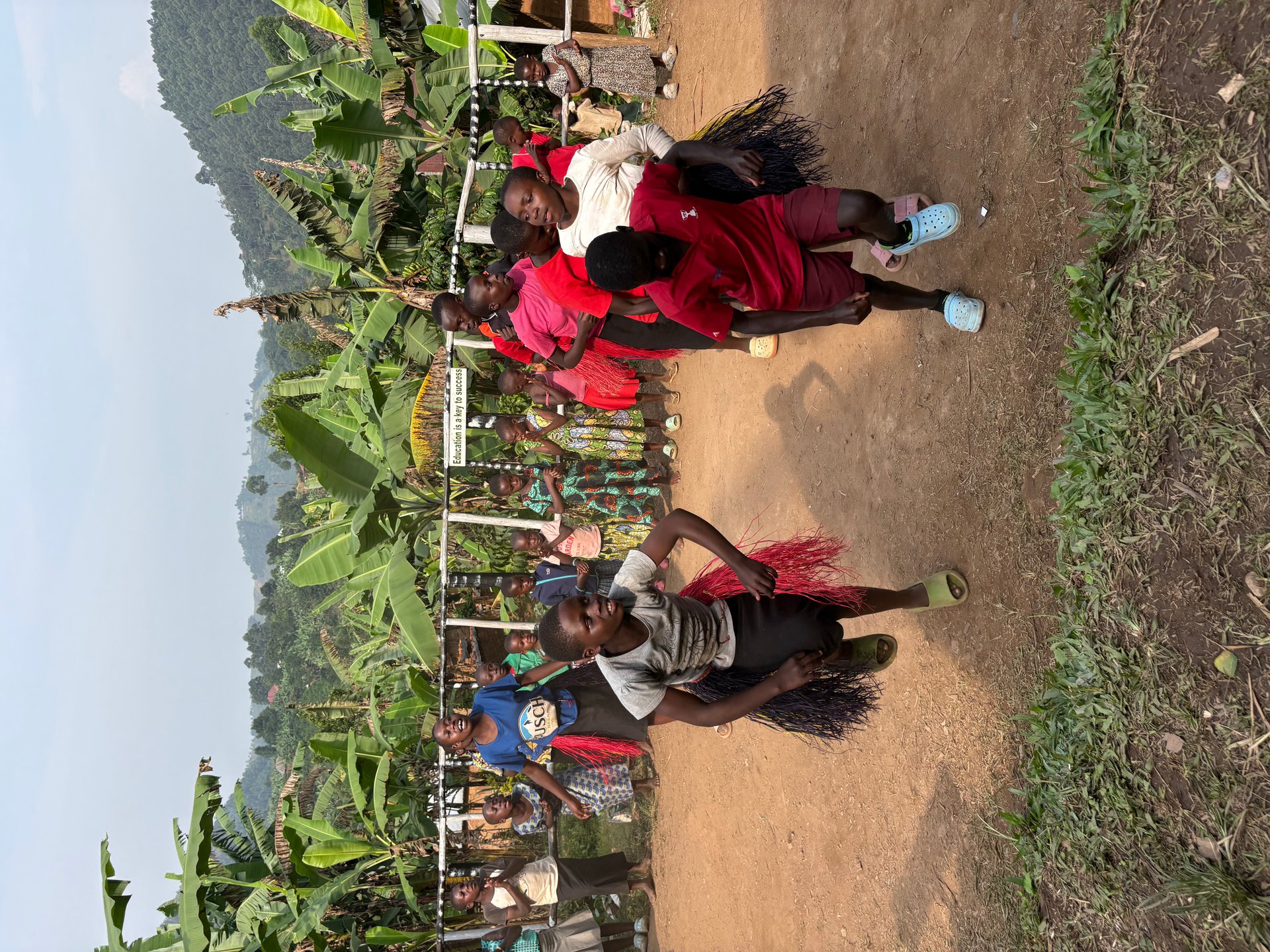
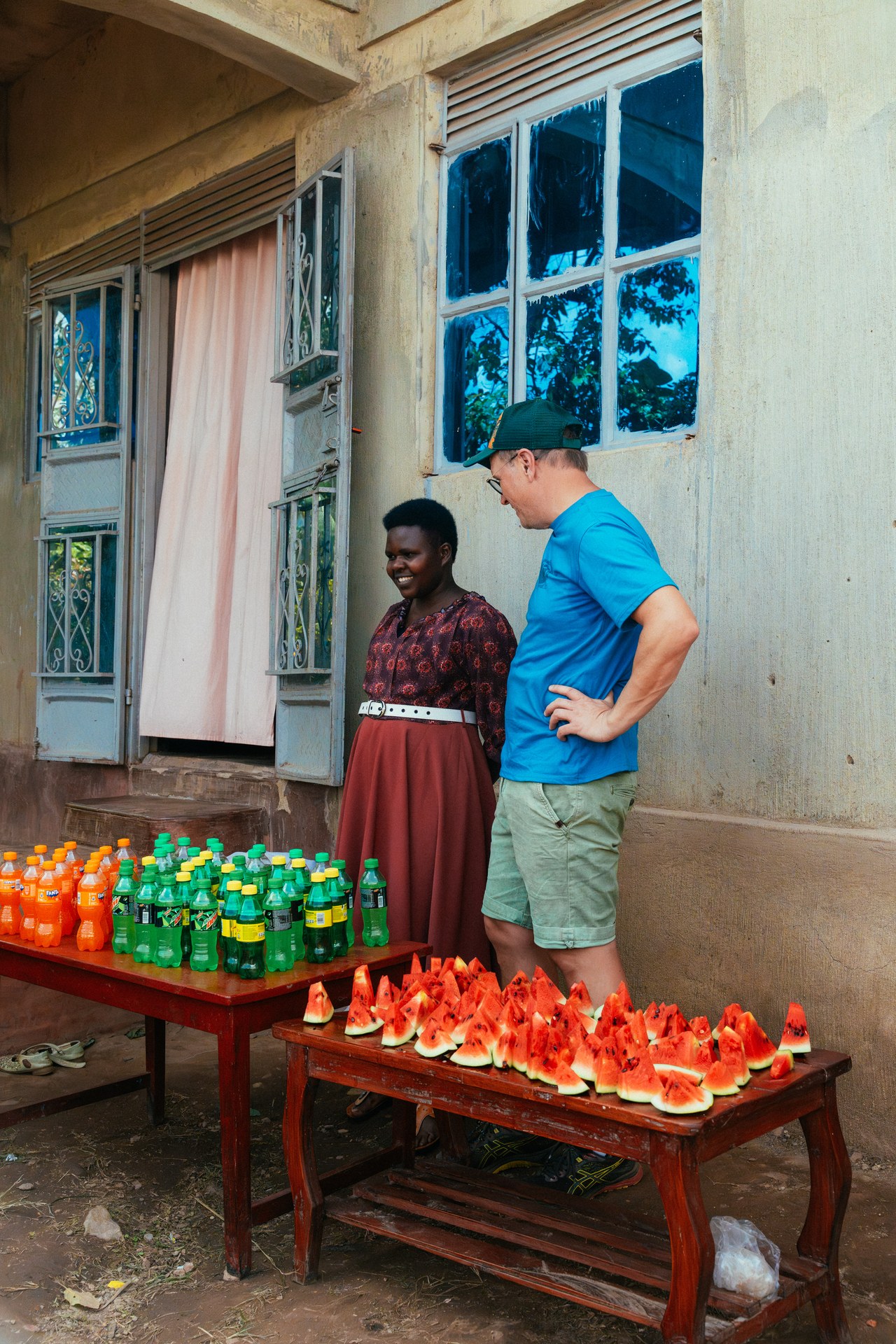
Community tourism in western Uganda extends well beyond the national park gates. The Buhoma area hosts a working orphanage run by Nicholas Muhumuza and his wife Media — a genuine community institution rather than a tourist attraction, where visitors sometimes bring practical support. On our last day in Buhoma, we bought soda and watermelon for a small farewell gathering at the orphanage. It was not a scheduled activity but an organic part of spending time in a place rather than just passing through it.
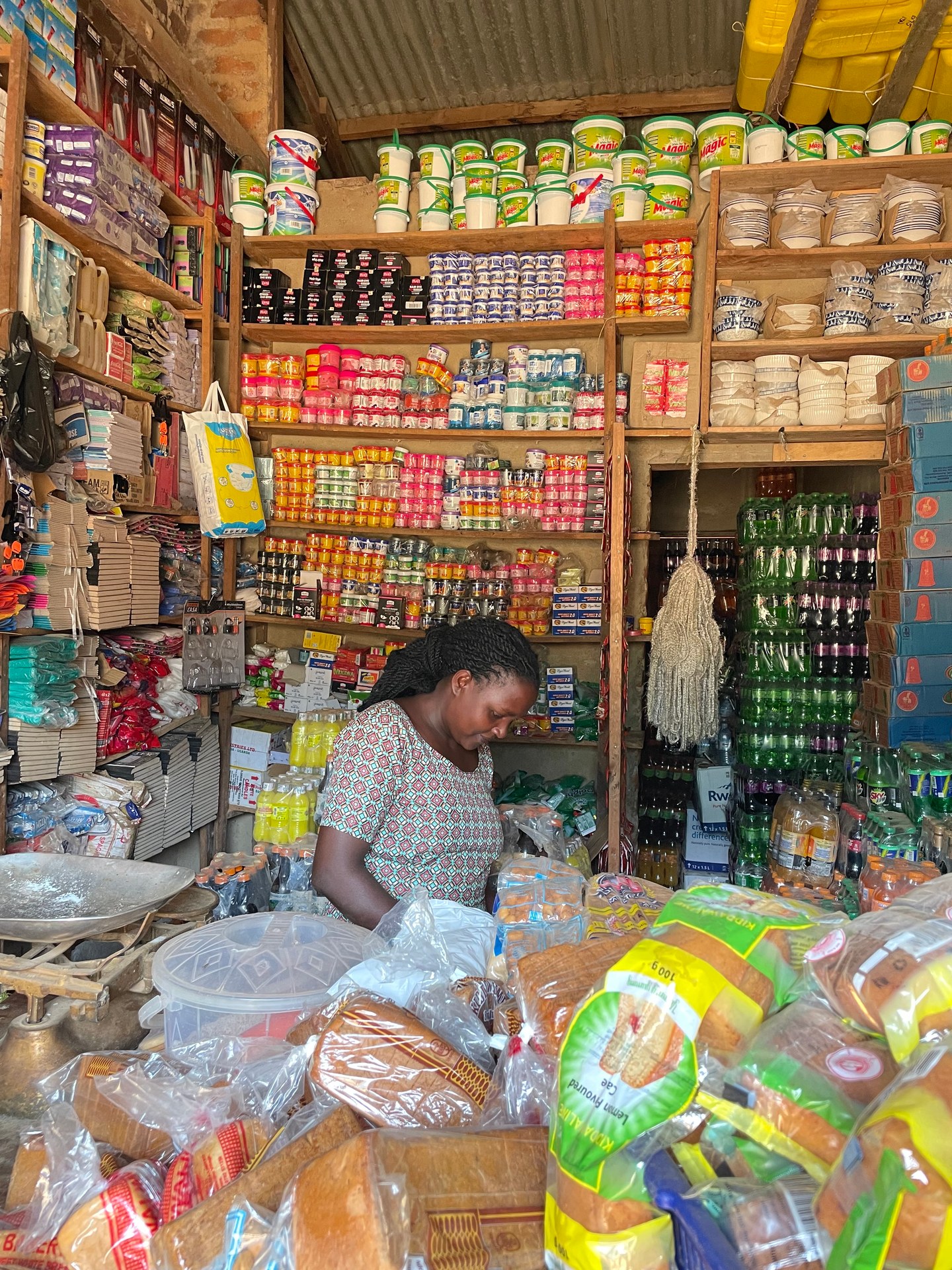
The local economy visible in Buhoma's small shops and markets is directly connected to the park. When we bought groceries for local families from a small Buhoma duka — the kind of windowless single-room shop stocked floor-to-ceiling with beans, soap, bread, and bottled water — it was clear how tight the margins are and how much the gorilla tourism season matters to every business in the area.
The Central Uganda Corridor: Ziwa and the Road South
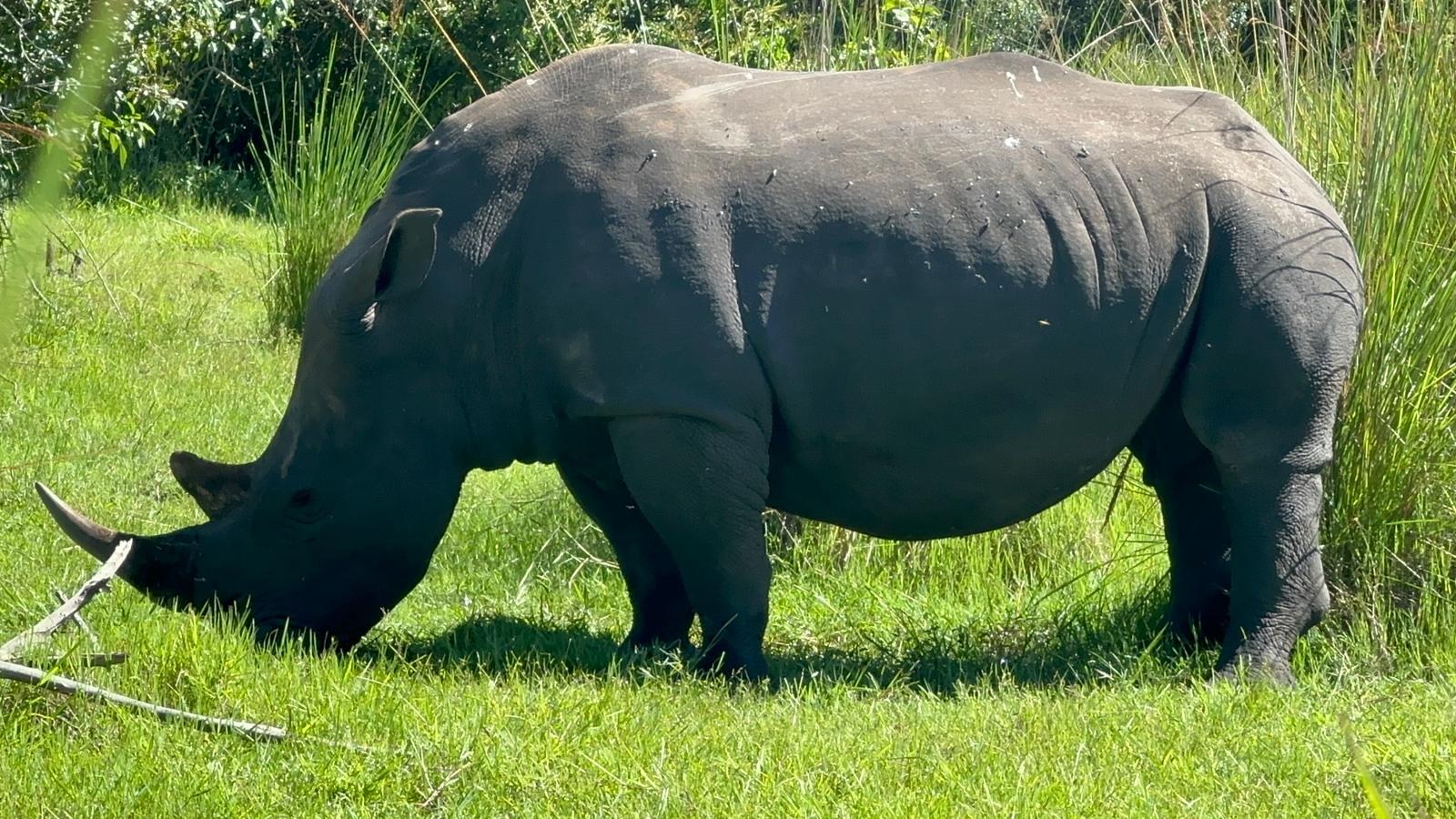
Most overland routes between Entebbe and western Uganda pass through central Uganda, making the Ziwa Rhino Sanctuary — in Nakasongola District, roughly four hours from Kampala — a natural stopping point on a multi-day drive. The sanctuary is not a national park but a private conservation ranch operating under a UWA agreement. Southern white rhinos were reintroduced to Uganda starting in 2005; Ziwa is currently the only place in Uganda where they can be seen in a semi-wild setting.
Walking into the sanctuary on foot with a ranger escort is entirely different from a national park game drive. The rhino we encountered in January 2026 was grazing alone, completely absorbed. It was enormous — the scale of a large animal in an open field, without a vehicle between you and it, lands differently than it does through a safari window.
Northern Uganda: Murchison Falls and a Region Rebuilding
Northern Uganda carries the weight of recent history. During the LRA (Lord's Resistance Army) conflict, which peaked in the late 1990s and early 2000s, the displacement of the northern population was catastrophic — a Uganda travel guide (2020 edition) noted that 90 percent of the population in some northern districts had been driven from their villages into displacement camps. By end-2017, UNHCR recorded over one million South Sudanese refugees in camps in the north — a separate but related humanitarian dimension that continues to shape the region.
For travellers, the relevant reality in 2026 is different: Murchison Falls National Park, in the north-west, is one of Uganda's premier wildlife destinations and infrastructure around it is modern and functional. Masindi — the gateway town, 220 km from Kampala on a paved road (Uganda travel guide, 2020 edition) — is a straightforward overnight stop. The new entrance gate to the park, passed in October 2024, reflected exactly the kind of investment that sustained park revenue enables: freshly paved approach roads, clear signage, a professional visitor centre.
Suggested Itinerary Structures
7 days
Entebbe → Ziwa Rhino → Bwindi (3 nights) → Queen Elizabeth NP → Kampala
The classic western circuit. Covers gorilla trekking and at least one savanna ecosystem.
10–12 days
Entebbe → Ziwa → Murchison Falls (2 nights) → Fort Portal → Kibale Forest → Bwindi (3 nights) → Kampala
Adds northern Uganda. Murchison boat safari is one of the best wildlife experiences in Africa.
14+ days
Full circuit: Jinja → Sipi Falls → Murchison Falls → Fort Portal → Kibale → Queen Elizabeth → Bwindi → Kisoro → Lake Bunyonyi → Kampala
Covers all five regions. Requires a private vehicle and guide for logistics.
All itineraries above assume a gorilla trekking permit is booked well in advance — ideally three to six months ahead. The permit ($800 USD per person, 2026 rate) is issued by Uganda Wildlife Authority (UWA) and must be secured before finalising any itinerary that includes Bwindi.