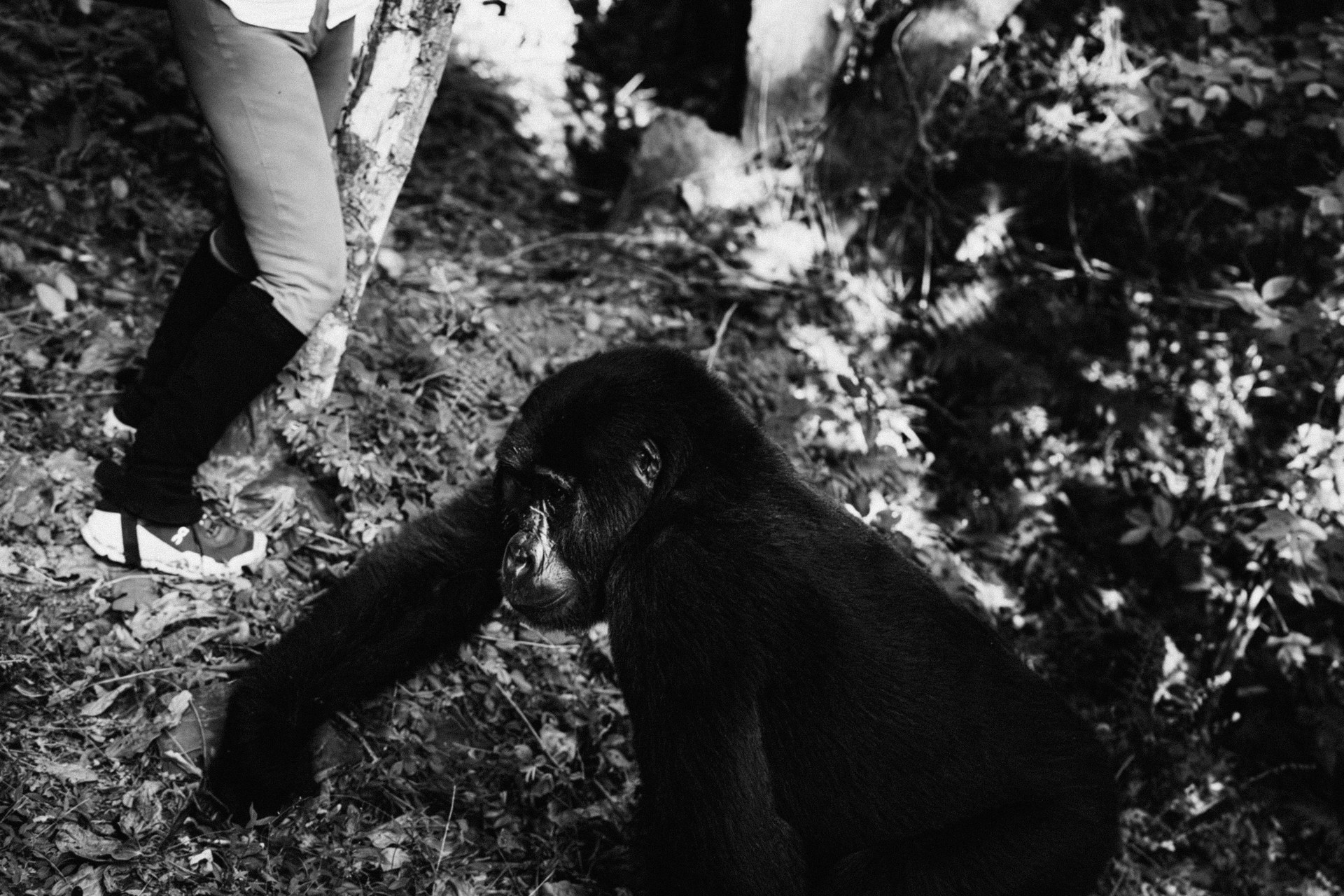
The Problem with One Activity
Uganda Wildlife Authority's General Management Plan 2014–2023 lists 25 management challenges facing Bwindi. Number 22 is over-reliance on gorilla tourism. The concern is not with gorilla trekking itself — which remains one of the most remarkable wildlife experiences in the world — but with the structural fragility of a park whose revenue, conservation funding, and international reputation depend almost entirely on a single activity tied to a single species.
When gorilla groups become ill and trekking is suspended, the park loses revenue. When permit prices rise too steeply, visitor numbers decline. When a pandemic or political event closes borders, everything stops. And when virtually all tourism infrastructure, staff time, and visitor attention concentrates around gorilla groups in the Tourism Zone, the rest of the park — its extraordinary birding, its Batwa heritage, its community landscapes, its forest walks — receives almost no development investment and very few visitors.
The solution is already present in Bwindi, waiting to be better known.
Birding: A World-Class Experience That Sells Itself
Bwindi is one of the premier birding destinations in Africa — not just East Africa, but the continent. The park sits within the Albertine Rift, the region with the highest concentration of endemic vertebrate species in Africa, and its altitudinal range supports an exceptionally diverse bird community. Over 350 species have been recorded, of which 23 are Albertine Rift endemics found in no other region on Earth.
Ruhija sector, in the eastern part of Bwindi's northern block at around 2,350 metres elevation, is the most productive area for montane specialists. Key target species include the African green broadbill, Grauer's swamp warbler, Shelley's crimsonwing, the handsome francolin, bar-tailed trogon, white-tailed blue monarch, and Chapin's flycatcher. Serious birders routinely spend 2–3 days in Ruhija dedicated to birding alone, treating the gorilla trek as a bonus rather than the primary reason to be there.
For non-specialist visitors, even a morning nature walk with an attentive ranger-guide produces memorable bird encounters — colourful sunbirds feeding on flowers at eye level, hornbills flying across valley gaps, and the extraordinary acoustic experience of an Afromontane forest dawn chorus. Birding requires no permit beyond the park entry fee, can be done on any day, and is available at all four sectors.
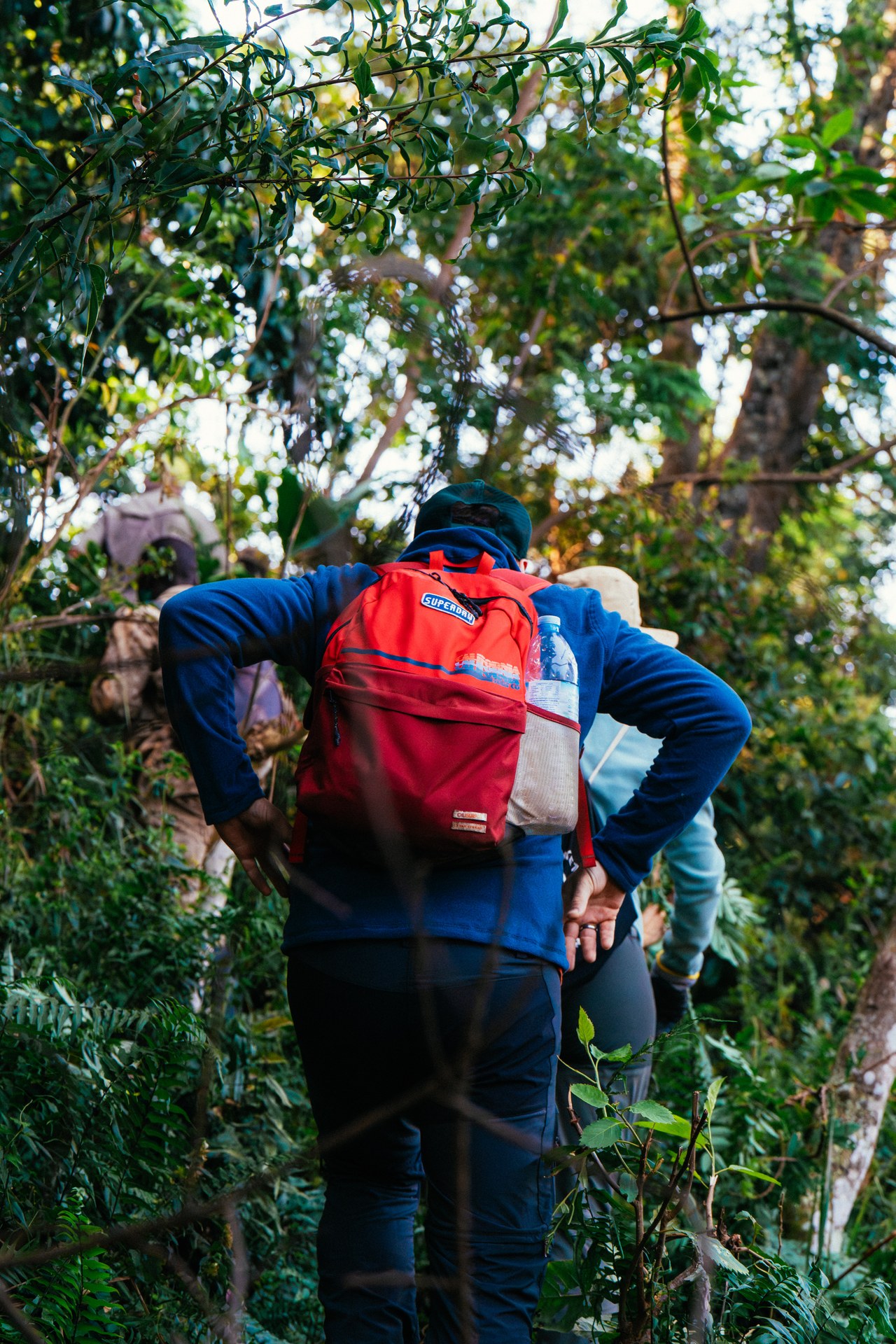
Gorilla trekking in Bwindi: the path through the rainforest
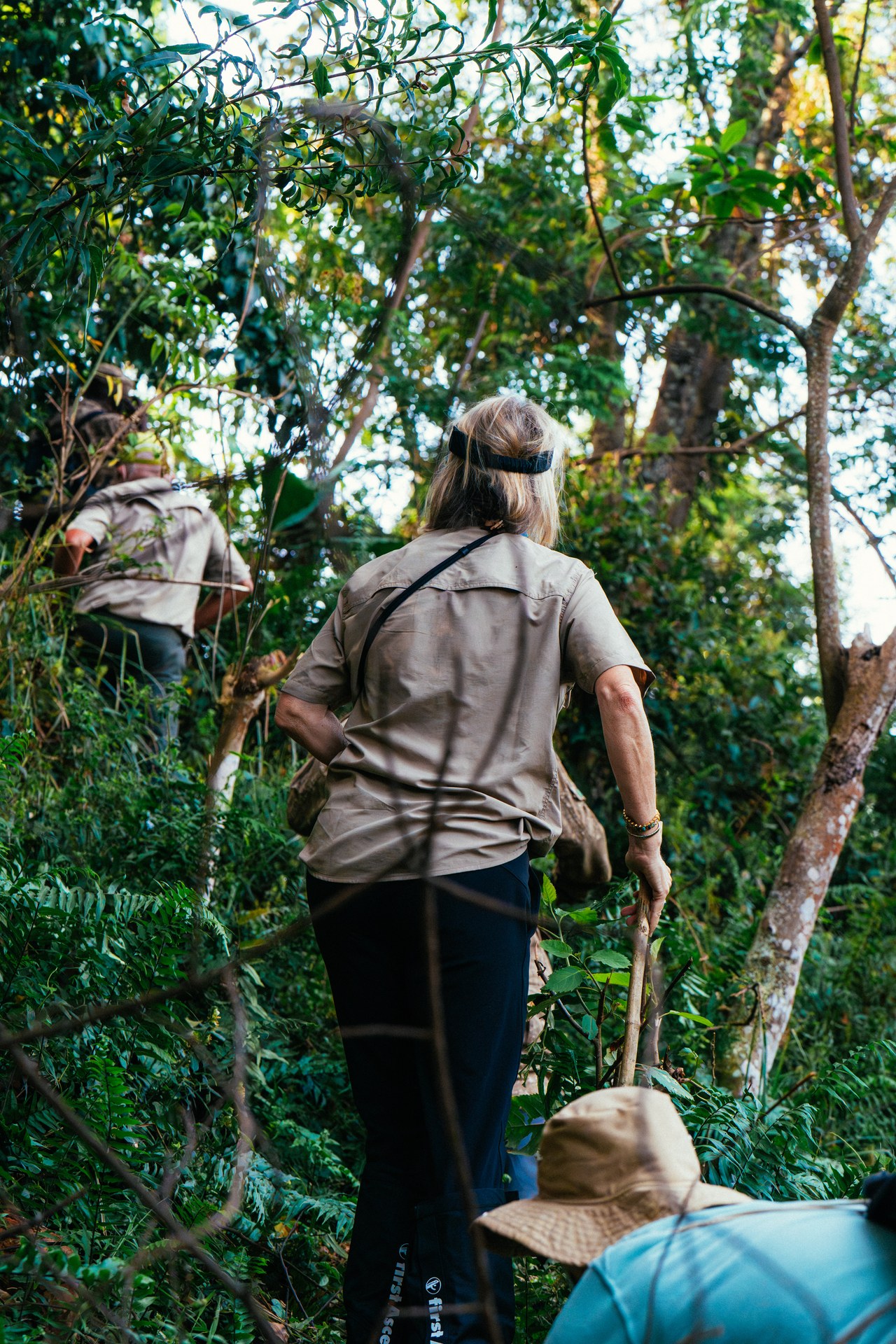
Through Bwindi forest on the trail of gorillas
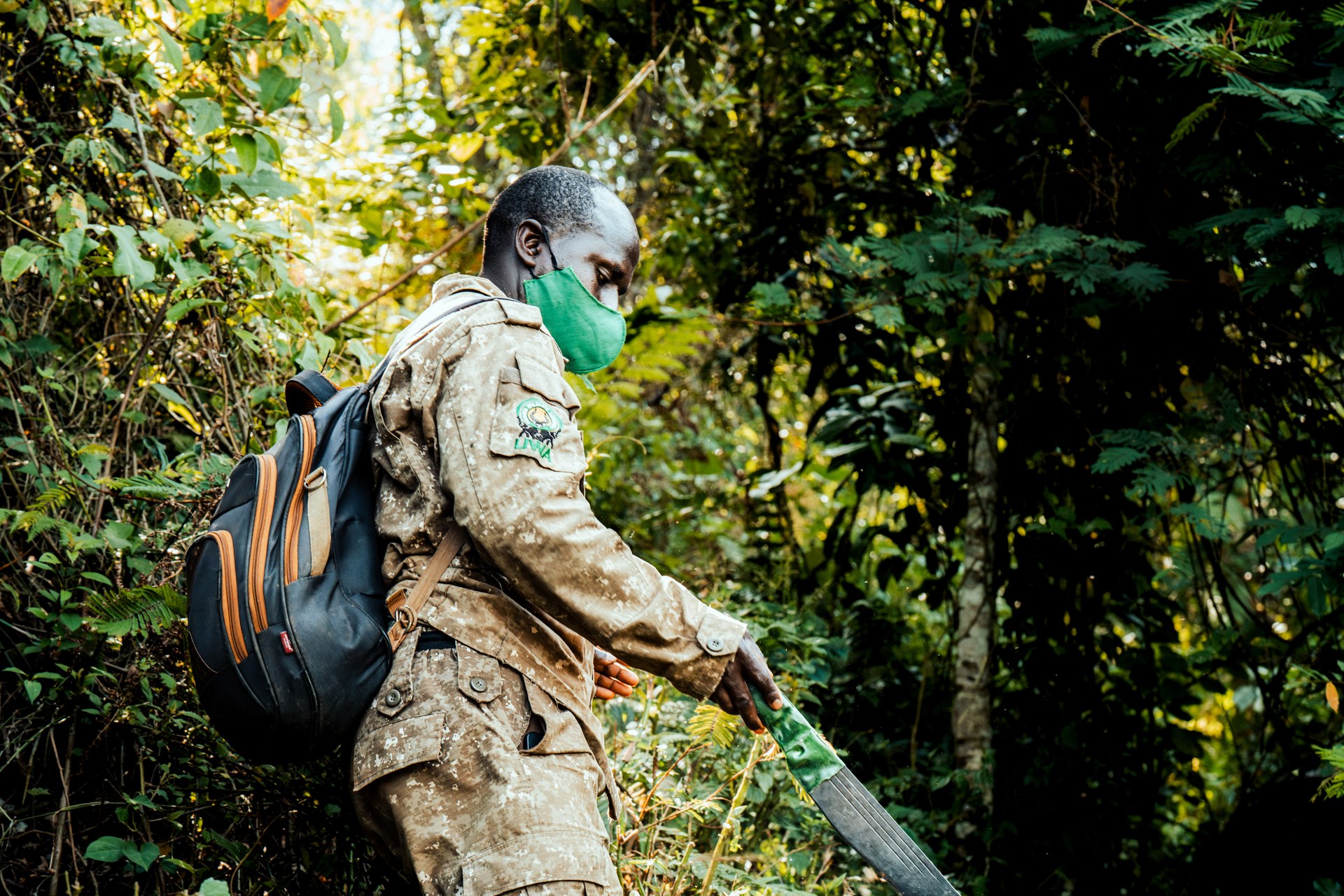
Ranger in Bwindi forest on the way to the gorillas
The Batwa Cultural Experience
The Batwa people lived inside Bwindi forest for thousands of years before the park was gazetted in 1991. Their eviction was one of conservation's difficult chapters. The Batwa Cultural Experience is both a tourism product and a partial restoration: it gives Batwa community members an economic stake in the park, a formal role as knowledge-keepers and guides, and a mechanism for transmitting forest knowledge to younger generations.
The experience takes visitors on a guided forest walk with Batwa guides who demonstrate skills their community used to survive inside the forest: fire-making using friction, identification and use of medicinal plants, location of honey trees, traditional hunting techniques, forest navigation. The walk ends with dance and song. These are not reconstructed performances — the elders who lead the walks grew up inside the forest and are teaching genuine knowledge.
Uganda Wildlife Authority's General Management Plan formally commits to expanding this programme: establishing a Batwa Forest Experience Demonstration Centre as an official tourism product, licensing Batwa forest guides, and supporting Batwa cultural tourism development across all sectors. The Batwa experience is currently the most culturally distinctive activity available at Bwindi and is consistently cited by visitors who have done both as among the most memorable parts of their trip.
Forest Walks and Nature Trails
Every sector of Bwindi offers guided forest walks along designated nature trails. These walks, lasting from two hours to a full day, take visitors through the park's forest with a ranger-guide who interprets the ecology: canopy structure, tree species, medicinal plants, primate signs, and the forest floor community of insects, fungi, and ferns. In contrast to gorilla trekking, which involves following a specific group's movement, forest walks follow set trails and allow a different, slower appreciation of Bwindi's complexity.
The Waterfall Trail at Buhoma is the most visited of these routes, leading to a forest waterfall through secondary and primary forest. The Muzabajiro Loop at Ruhija is a longer trail through high-altitude Afromontane forest. Rushaga and Nkuringo offer less-trodden options. Forest walks cost significantly less than gorilla permits and can be booked with shorter notice.
Community and Village Visits
The human landscape surrounding Bwindi is extraordinary in its own right. More than 500,000 people live in the parishes adjacent to the park — a dense agricultural society of terrace farmers, cattle herders, craft workers, and market traders who have developed a way of life in intimate proximity to one of the world's most significant national parks.
The Buhoma Community Walk is the most developed community tourism experience near the park, taking visitors through village homesteads, community gardens, the local school, and craft-working demonstrations with direct income to household hosts. Near other sectors, village walks, school visits, and cooperative visits are available through lodges and community tourism groups.
Community visits provide income that reaches individual households rather than flowing through large operators, and they give visitors a context for understanding the human dimensions of conservation at Bwindi — the crop-raiding elephants, the revenue-sharing schools, the Batwa families living on the park edge — that is entirely absent from the gorilla trekking experience alone.
Low Season: The Underrated Window
Bwindi's low tourism season — the rainy months of March–May and October–November — is identified in the UWA General Management Plan as a conservation challenge because reduced visitor numbers mean reduced revenue. But for the visitor who can tolerate mud and afternoon rain showers, low season offers significant advantages: gorilla permits available with shorter booking windows, lower lodge prices (sometimes 30–40% below peak rates), substantially fewer visitors on trails, a lush and intensely green forest, and birdlife at its most active. For birding in particular, the rainy season is often the optimal time, with forest species actively foraging and calling at all hours. The afternoon rain showers that characterise Bwindi's wet seasons tend to be concentrated and heavy rather than all-day, leaving mornings reliably clear for forest activities.