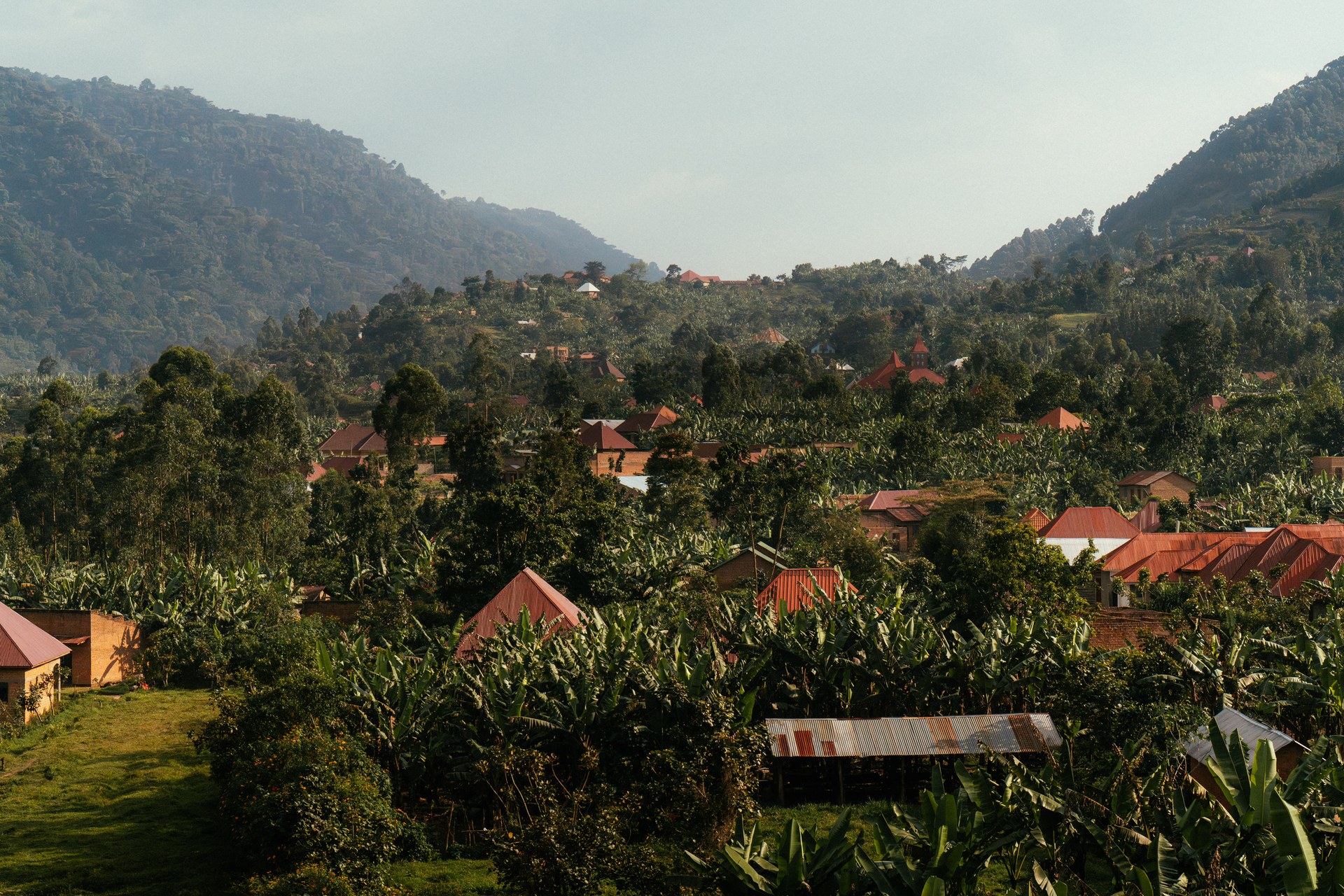
The Forest as Home
Long before Bwindi was a national park — long before it was documented by scientists or listed by UNESCO — the Batwa lived inside the forest. As hunter-gatherers, they moved through the impenetrable undergrowth tracking game, collecting wild honey, gathering plants, and building temporary camps. Their knowledge of the forest was encyclopaedic: which plants healed which ailments, which trees harboured bee colonies, where elephants moved in the dry season, what the behaviour of birds indicated about the forest's state.
This was not incidental knowledge. It was the accumulated wisdom of hundreds of generations, passed from elders to children through practice and oral tradition. It made the Batwa not merely inhabitants of the forest but its most sophisticated interpreters.
1991: Displacement Without Consent
When Uganda gazetted Bwindi Impenetrable Forest as a national park in 1991, the Batwa were evicted. There was no resettlement plan, no compensation for lost land or livelihoods, and no formal consultation. The government and conservation organisations focused on protecting mountain gorillas and biodiversity against encroachment from farming communities and loggers. In the calculus of conservation priorities, the rights of the Batwa — who numbered only a few thousand and had no political representation — were not weighed.
The Batwa emerged from the forest into a world for which they were entirely unprepared. They had no land, no cash crops, no cattle, and no experience of the agricultural economy that surrounded them. Most settled on the edges of Bantu farmland, working as labourers in exchange for food and shelter. Today, the majority of Batwa in southwest Uganda still have no land title and remain among the most economically marginalised people in the country.
The Batwa and Medicinal Plants
One of the most urgent conservation and cultural priorities at Bwindi is the documentation of Batwa medicinal plant knowledge. Over thousands of years, the Batwa identified plants within the forest for treating fever, respiratory illness, wounds, snakebite, infections, and many other conditions. This ethnobotanical knowledge represents a unique intersection of human health and forest biodiversity — plants whose medicinal value has never been formally studied by scientists.
Uganda Wildlife Authority's General Management Plan 2014–2023 specifically commits to partnering with Batwa elders to inventory all medicinal plants in the forest, conducting research and mapping of their uses, and establishing herbal demonstration sites outside the park where this knowledge can be preserved and transmitted. Researchers at ITFC (the Institute of Tropical Forest Conservation) have begun collaboration with Batwa elders on this documentation work.
The urgency is real: the generation of Batwa who grew up inside the forest is ageing, and much of this knowledge has not been passed on to younger Batwa who grew up outside. Every year without systematic documentation represents irreversible cultural and scientific loss.
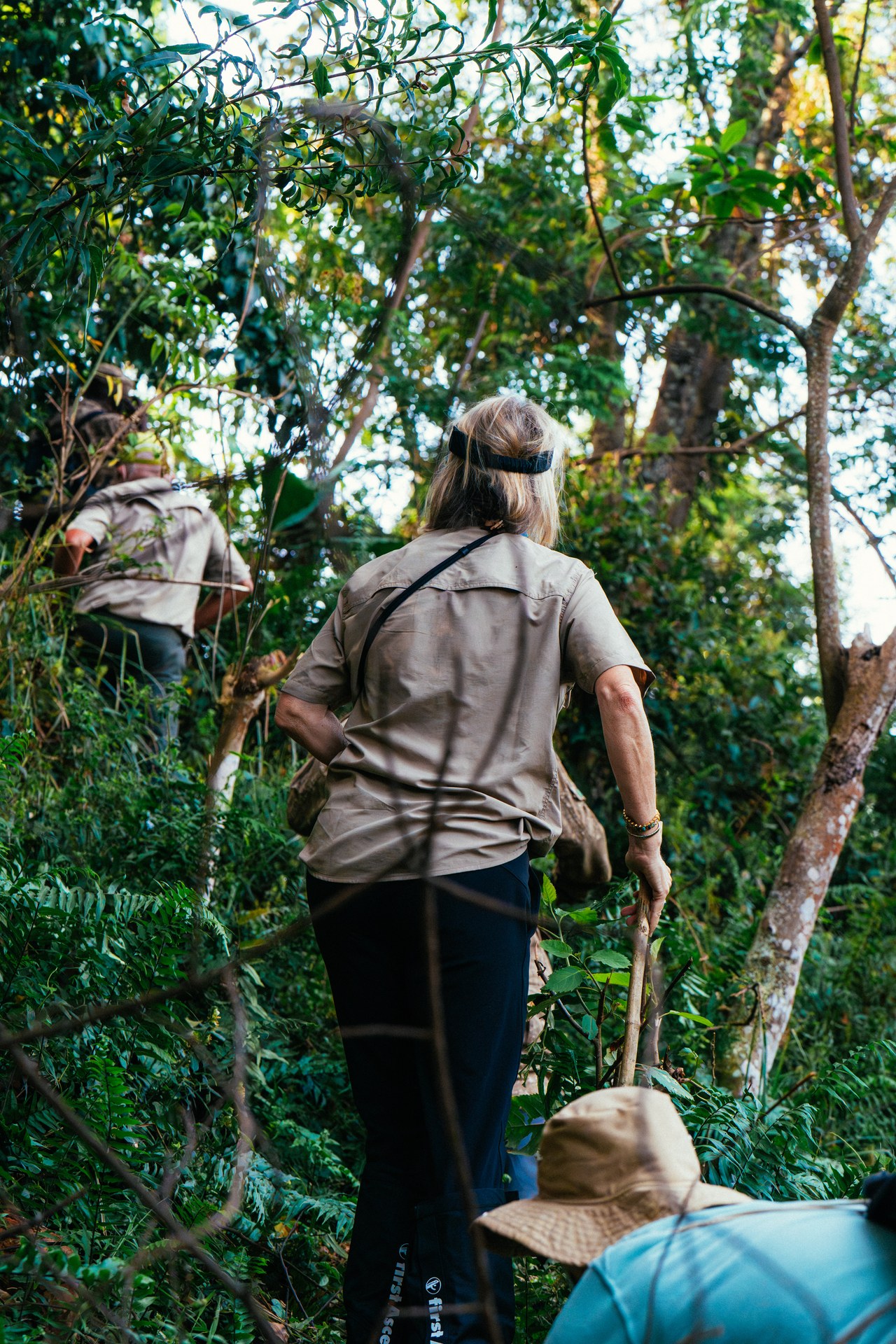
Through Bwindi forest on the trail of gorillas
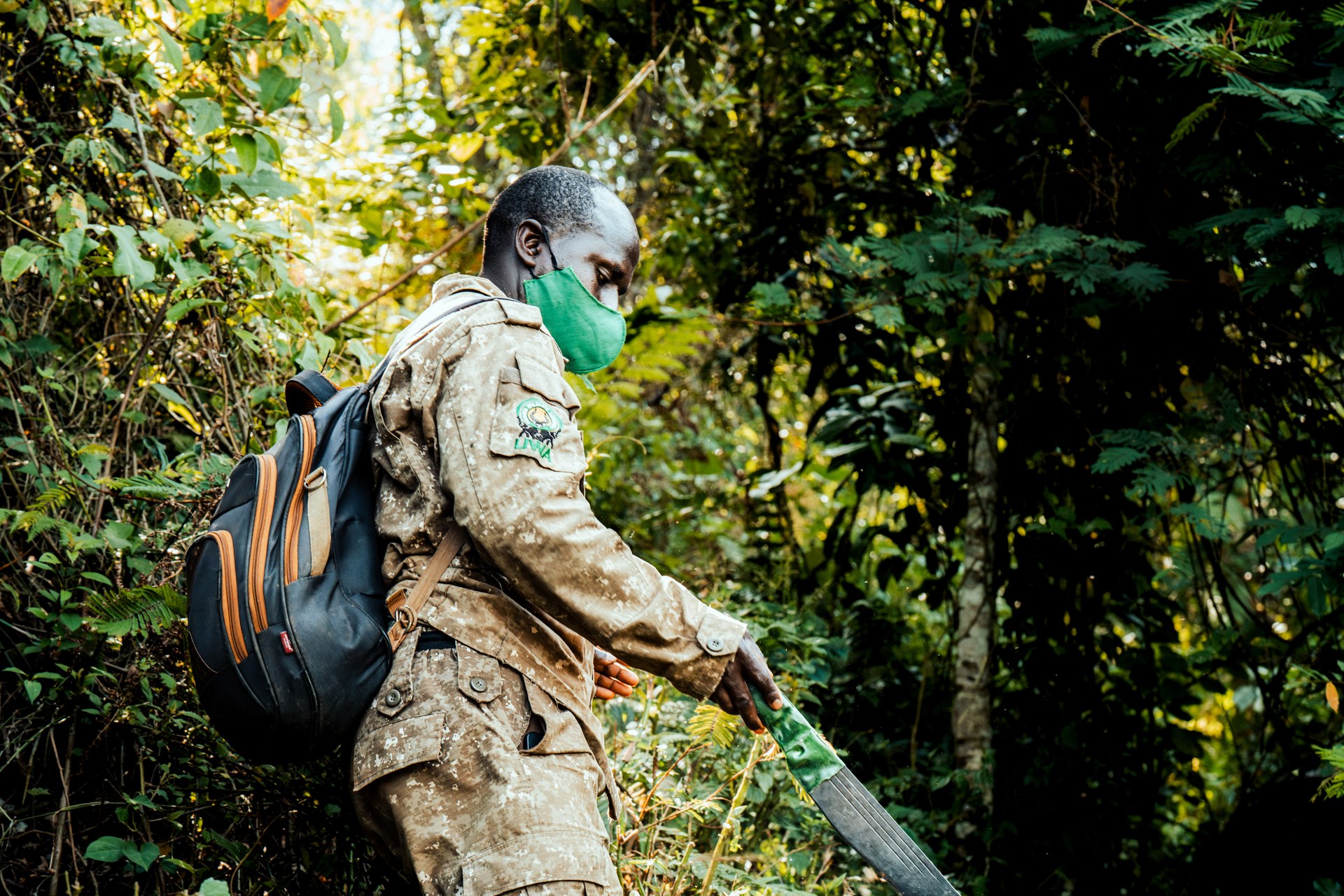
Ranger in Bwindi forest on the way to the gorillas
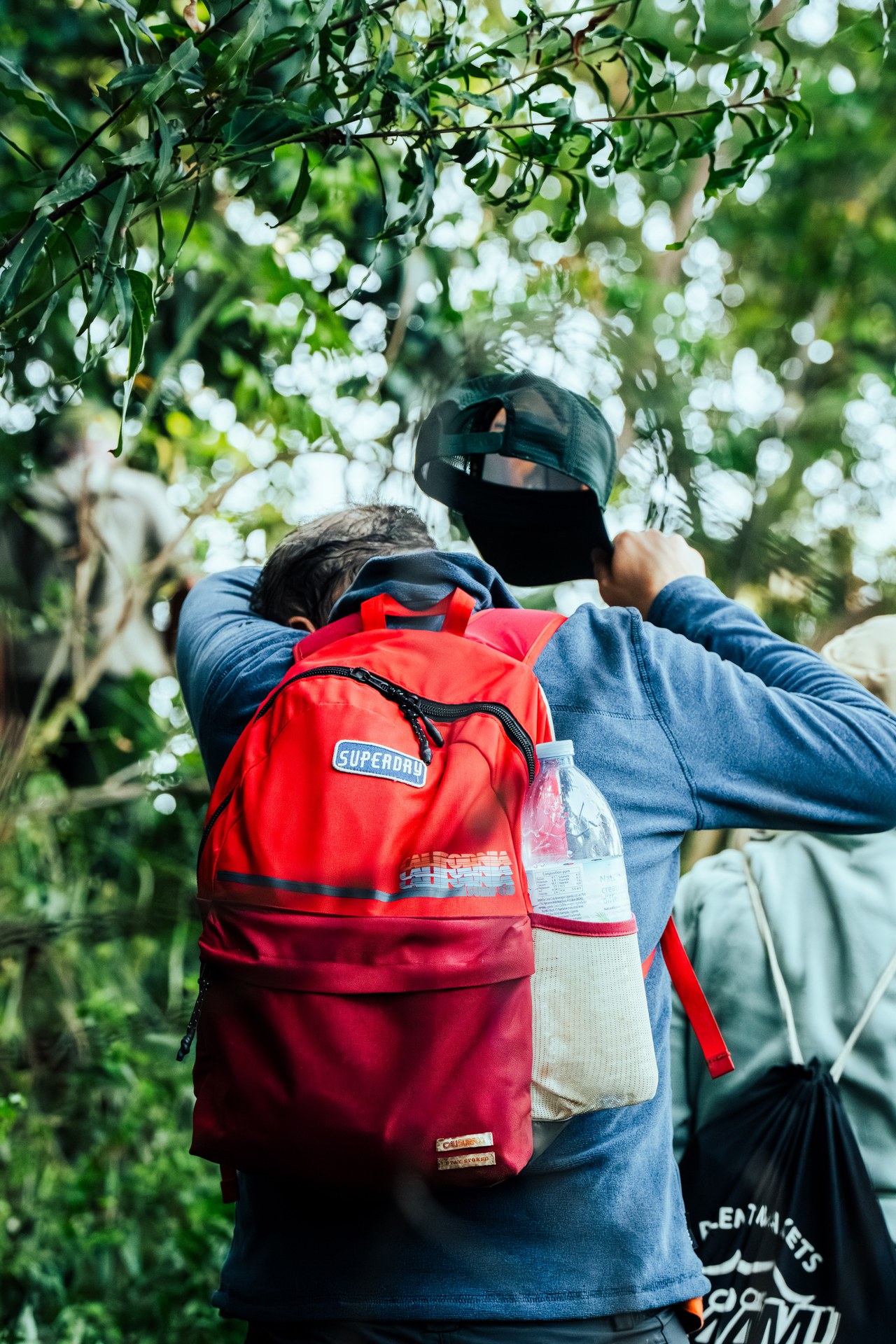
Preparing for the adventure: gorilla trekking in Bwindi
Spiritual Sites and the Sacred Forest
For the Batwa, Bwindi was not simply a place to hunt and gather. Specific locations within the forest held deep spiritual significance — ancestral burial grounds, sites where rituals were performed, trees and clearings tied to the community's relationship with the spirit world. These sacred geographies were embedded in the forest itself, inseparable from its physical landscape.
The 1991 eviction severed the Batwa's connection to these sites. Since then, Batwa community members have had no formal right to enter the park to visit ancestral burial grounds or perform spiritual observances. UWA's General Management Plan commits to identifying and mapping Batwa cultural priority sites inside the park and to negotiating access arrangements that allow the community to maintain their spiritual relationship with the forest. This commitment has not yet been fully realised in practice.
Batwa as Forest Guides and Cultural Tourism
One of the most meaningful economic and cultural developments for the Batwa has been their role as forest guides in cultural tourism programmes. The Batwa Cultural Experience, operating near Buhoma and other sectors, takes visitors on forest walks where Batwa guides demonstrate traditional skills: fire-making using friction, honey tree identification, medicinal plant recognition, hunting techniques, and traditional dance and song. These are not staged performances — they represent genuine skills that the guides' parents and grandparents used to survive inside the forest.
UWA's management plan formalises this approach with planned actions to establish a Batwa Forest Experience Demonstration Centre as an official tourism product, license forest-experienced Batwa as certified guides, support Batwa elders in training younger generations, develop Batwa conservation education drama programmes, and support the improvement of Batwa cultural dance performances for tourism audiences.
Cultural tourism provides income that partially offsets the economic losses from displacement. More importantly, it creates a formal role for Batwa knowledge within the conservation ecosystem — recognising that their forest expertise is not merely a historical curiosity but a living asset with real value for understanding and managing Bwindi.
Looking Forward
The situation of the Batwa around Bwindi is gradually improving, though the structural issues — landlessness, poverty, marginalisation — remain severe. NGO partners including the Kellermann Foundation and UOBDU (United Organisation for Batwa Development in Uganda) have worked to secure land for Batwa communities, provide school fees, and support housing construction. Some Batwa have obtained formal employment with UWA as cultural guides or community rangers.
The deeper question — whether conservation that dispossesses indigenous people can be called ethical, and what genuine reparation looks like — remains open. Bwindi is not unique in this regard; protected areas across Africa have excluded indigenous communities in the name of conservation. What distinguishes Bwindi is that the conversation about restitution is now explicitly part of the park's official management framework. The Batwa Integration Programme represents an institutional acknowledgement that the 1991 displacement created an obligation that has not been fully discharged.