Uganda protects its forests and wildlife through a layered system of national parks, Central Forest Reserves, and private sanctuaries. Each category has its own legal framework, management authority, and mechanism for converting tourism revenue into conservation spending. Understanding how the system works reveals why the $800 you spend on a gorilla trekking permit does more ecological work than almost any comparable conservation contribution.
Uganda's Two Main Protected Area Authorities
Uganda's protected forests are managed by two separate statutory bodies with distinct mandates, governed by different legislation.
Uganda Wildlife Authority (UWA)
Established under the Uganda Wildlife Act, UWA manages the country's 10 national parks and several wildlife reserves. National parks — including Bwindi, Murchison Falls, and Queen Elizabeth — are the most strictly protected category. No extractive activity, agriculture, or settlement is permitted within their boundaries. Tourism is managed through UWA-issued permits, with revenues returning to the national park management budget and a mandated share redistributed to bordering communities.
Governs: Bwindi, Murchison Falls, Queen Elizabeth, and 7 other national parks
National Forestry Authority (NFA)
Established under the National Forestry and Tree Planting Act 2003, the NFA manages approximately 506,000 hectares of Central Forest Reserves (CFRs). Unlike national parks, CFRs allow limited sustainable use, including licenced logging, community harvesting, and eco-tourism. Part 3 of the Forestry Act governs how tourism activities may be permitted within reserves — requiring NFA licensing, environmental review, and community benefit provisions.
Governs: Central Forest Reserves, including buffer zones and community forests
National Parks: How Bwindi's Funding Model Works
Bwindi Impenetrable National Park operates under UWA's national park framework. When a visitor purchases a gorilla trekking permit ($800 per person in 2026), that revenue enters UWA's operational budget. A portion funds:
- Ranger salaries and anti-poaching patrol operations
- Wildlife monitoring and gorilla census work
- Veterinary care for habituated gorilla families
- Infrastructure maintenance: trails, patrol posts, visitor facilities
- Research partnerships and data collection
- Community revenue sharing — 20% of park entry revenues distributed to communities within the park boundary zone
The revenue-sharing mechanism is not a concession — it is a legal obligation built into the national park management framework. It exists because conservation in a densely populated country like Uganda cannot be maintained by exclusion alone. Communities bordering Bwindi must have a direct financial reason to tolerate the park's existence, to report poaching activity, and to avoid encroachment. Revenue sharing creates that incentive.
Additional visitor activities at Bwindi also feed into this system. Nature walks cost $30 USD per person (per Uganda travel guide, 2020 edition). Hiring a porter for the gorilla trek — recommended and typically around $20 USD (2020 source) — provides employment for young men from surrounding villages who might otherwise rely on subsistence farming that encroaches on forest margins.
Forest Reserves: A Different Model
Central Forest Reserves, governed by the NFA, take a different approach. Rather than complete protection, they allow multiple land uses — including eco-tourism — provided these are licenced and managed sustainably. Part 3 of the National Forestry and Tree Planting Act 2003 establishes the framework for tourism activities within reserves: operators must obtain an NFA tourism licence, demonstrate that the activity is compatible with sustainable forest management, conduct an environmental impact assessment for any permanent infrastructure, and include provisions for community benefit.
This creates a more complex but potentially more flexible system for communities living around forest reserves. Whereas national park revenue sharing is formulaic (a fixed percentage of entry fees), NFA forest reserve tourism agreements can be negotiated to reflect local conditions, including community-owned tourism enterprises operating within the reserve with NFA oversight.
In practice, Uganda's most economically significant protected area tourism — gorilla trekking, chimpanzee tracking, savanna game drives — takes place in national parks under UWA. Forest reserves offer quieter, less-developed experiences: birding, butterfly walks, canopy hikes. But their legal framework for tourism development is increasingly important as demand grows and visitor numbers at national parks reach capacity thresholds.
Murchison Falls: The Same System, Different Landscape
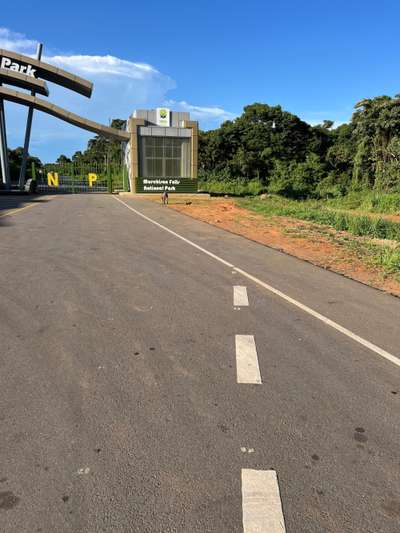
In October 2024, driving into Murchison Falls National Park from the Paraa side, the infrastructure improvement was immediately visible. The entrance gate had been recently rebuilt — clean concrete, proper signage, a paved approach road that ran smooth for several kilometres inside the park. The contrast with the sand-and- dust sections of the Masaka Highway we had driven days earlier was stark. This is what sustained tourism revenue builds: functional visitor infrastructure that enables more visitors, which generates more revenue, which funds more conservation.
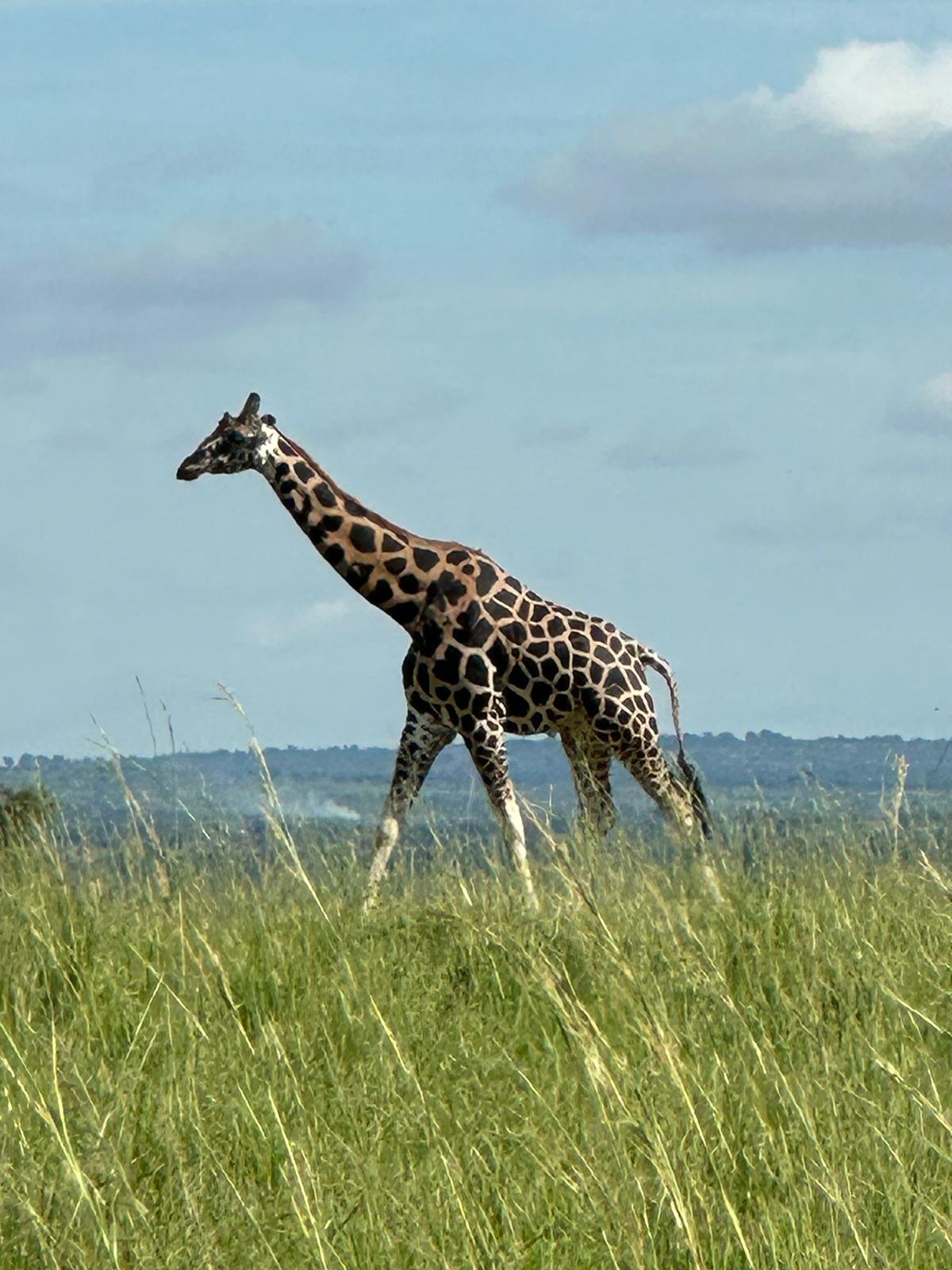
Murchison Falls operates under the same UWA framework as Bwindi but protects a completely different ecosystem: north-western savanna, the Nile, and the most powerful waterfall on the river's length. The park's game drives, boat safaris on the Nile to the base of the falls, and opportunities to see Nile crocodiles, hippos, elephants, and Rothschild's giraffes draw visitors for entirely different reasons than Bwindi. Yet the revenue mechanism is identical: entry fees and activity permits flow to UWA, which maintains the park and shares revenues with bordering communities.
On a morning game drive in Murchison, leaving the lodge at first light to catch the sunrise over the savanna, we encountered a small group of Rothschild's giraffes moving through the golden grass. Later, during a boat safari on the Nile, two large Nile crocodiles rested on a sandbank — several metres long and entirely unbothered by our presence. These animals exist because the park exists, and the park exists because visitors pay to experience them.
Private Sanctuaries: A Third Model
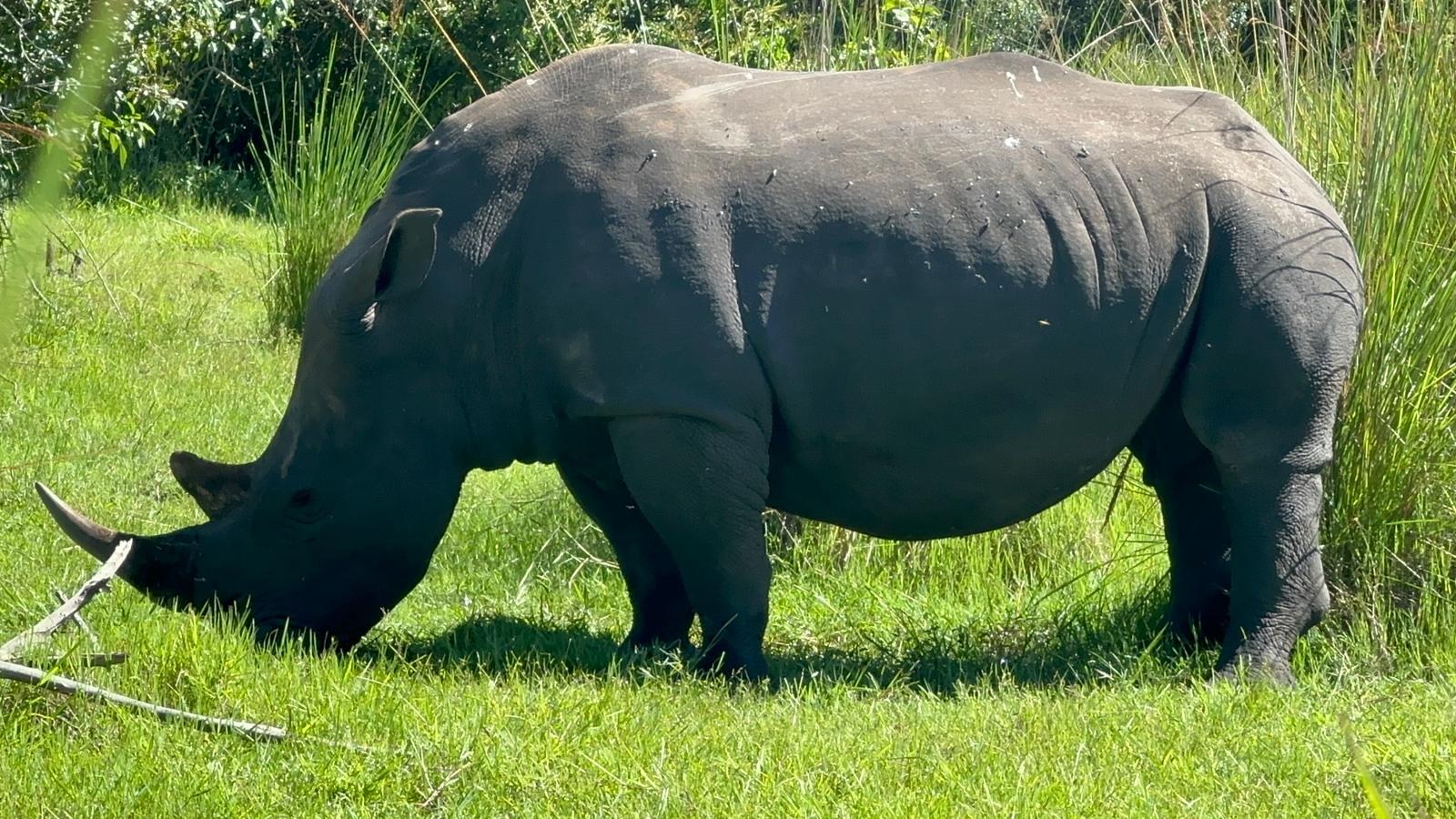
Uganda's Ziwa Rhino Sanctuary, visited in January 2026, demonstrates a third protected area model: a private conservation facility operating under a cooperation agreement with UWA. Southern white rhinos were entirely absent from Uganda until 2005, when a reintroduction programme at Ziwa began. The sanctuary is not a national park but a private ranch that has fenced and managed a wildlife area for conservation breeding.
Walking — not driving — into the sanctuary with a ranger escort and encountering a white rhino grazing alone at perhaps thirty metres is an experience of different character from a game drive. The animal was enormous: heavily built, alone, entirely absorbed in feeding. The ranger explained its daily range, its integration into the breeding programme, its relationship to other individuals in the sanctuary. The revenue from that visit funds the ranger's salary, the sanctuary's anti-poaching patrols, and the continued expansion of Uganda's rhino population.
Private sanctuaries like Ziwa operate outside the NFA and UWA frameworks but are not unregulated — they require wildlife permits and operate under agreements with UWA. They demonstrate that tourism-funded conservation can work at multiple scales and under multiple ownership models, not only through the state-run park system.
What This Means for Visitors
For a traveller planning a Uganda trip, the conservation funding framework has practical implications:
Book permits through official channels
UWA permit revenue funds the conservation system. Using unofficial brokers or third-party resellers does not reduce what conservation receives — permit prices are fixed — but it does reduce transparency in the system. Book directly through UWA or a registered tour operator.
Hire a porter
Porter fees of approximately $20 USD (2020 source — verify current rate at time of visit) go directly to local young men from villages surrounding the park. This is not a tip or an optional extra — it is a direct community conservation payment.
Visit multiple protected area types
Spending time in both national parks (Bwindi, Murchison Falls) and private sanctuaries (Ziwa) diversifies conservation revenue across the system. A multi-park itinerary distributes visitor impact and supports a wider range of protected habitats.
Use local accommodation and guides
Lodges and community-owned guesthouses operating within or adjacent to national parks are typically part of the tourism concession system. Their fees and community relationships are part of the conservation funding chain.
Uganda's conservation model is not dependent on aid or charitable transfers — it runs on tourism revenue. The arrival at Entebbe by safari jeep, the paved road into Murchison Falls, the armed ranger at Bwindi, the rhino at Ziwa: these are all parts of the same system. The system works when visitors show up and pay the stated fees.