The Trekking Experience
Gorilla trekking in Bwindi Impenetrable National Parkis widely regarded as one of the most profound wildlife experiences available anywhere on Earth. For one hour, a small group of visitors sits in the presence of a mountain gorilla family going about its daily life: feeding, grooming, playing, resting. The encounter takes place on the gorillas' terms, in their home, in a forest that has existed for more than 25,000 years.
The experience begins well before the gorillas are found. The trek through Bwindi's ancient rainforest is itself extraordinary. The canopy closes overhead, light filters through in green shafts, and the sounds of civilization fade entirely. The forest is dense, humid, and alive with birdsong, insect noise, and the occasional crash of a branch. It is a landscape that demands attention and rewards it.
Permits and Costs
A gorilla trekking permit costs $800 per person and is mandatory for anyone wishing to visit a habituated gorilla group. The permit is issued by Uganda Wildlife Authority and must be booked in advance, as daily numbers are strictly limited to protect the gorillas from excessive human contact. Each tourism group receives a maximum of eight visitors per day.
In addition to the gorilla permit, visitors pay a park entry fee: $40 for foreign non-residents, $30 for foreign residents, and UGX 20,000 for East African citizens. These fees contribute directly to park management, anti-poaching operations, and community development programmes. Combined, the permit and entry fee represent a substantial investment, but one that funds the conservation infrastructure on which the gorillas' survival depends.
The Four Sectors
Bwindi is divided into four trekking sectors, each with its own set of habituated gorilla families, terrain characteristics, and access points.
Buhoma, in the northwest, is the original and most established sector. It has the best-developed community infrastructure and relatively accessible trails, though the forest here is as dense and steep as anywhere in the park. Buhoma is home to the historic Mubare group.
Ruhija, in the east, sits at the park's highest elevation, around 2,300 metres. Treks here can be particularly demanding due to the altitude and terrain, but the misty, moss-draped forest is hauntingly beautiful. Ruhija is also the premier birding sector in Bwindi.
Rushaga, in the south, has the most gorilla families and is the base for the gorilla habituation experience. The terrain is varied, with steep ridges and deep valleys, and the density of gorilla groups means treks can sometimes be relatively short.
Nkuringo, on the western edge, is known for its dramatic hillside setting and panoramic views of the Albertine Rift. Treks here often involve a significant descent and ascent, making it one of the more physically challenging sectors but also one of the most scenic.
A Typical Trek Day
The day begins with a briefing at the sector headquarters, typically at 8:00 AM. Rangers outline the rules, introduce the gorilla family you will visit, and assess visitor fitness to ensure appropriate group assignment. Trackers who left at dawn to locate the gorillas report their position by radio, and the trek begins.
The walk to the gorillas may take anywhere from thirty minutes to four or more hours. Pace is measured, with regular rest stops. The lead ranger reads the forest as you go, pointing out tracks, nesting sites, and signs of recent gorilla activity. As you draw closer, the mood shifts: voices drop, movements become deliberate, and anticipation builds.
The moment of first contact is unforgettable. You may hear them before you see them — a low rumble of belch vocalizations, the crack of a branch, the rustling of undergrowth. Then a dark form materialises through the green. For the next hour, you sit or crouch at a distance of seven metres or more, watching as the family feeds, plays, and rests. The silverback may glance at you with calm disinterest. An infant may tumble past. The experience is quiet, intense, and deeply moving.
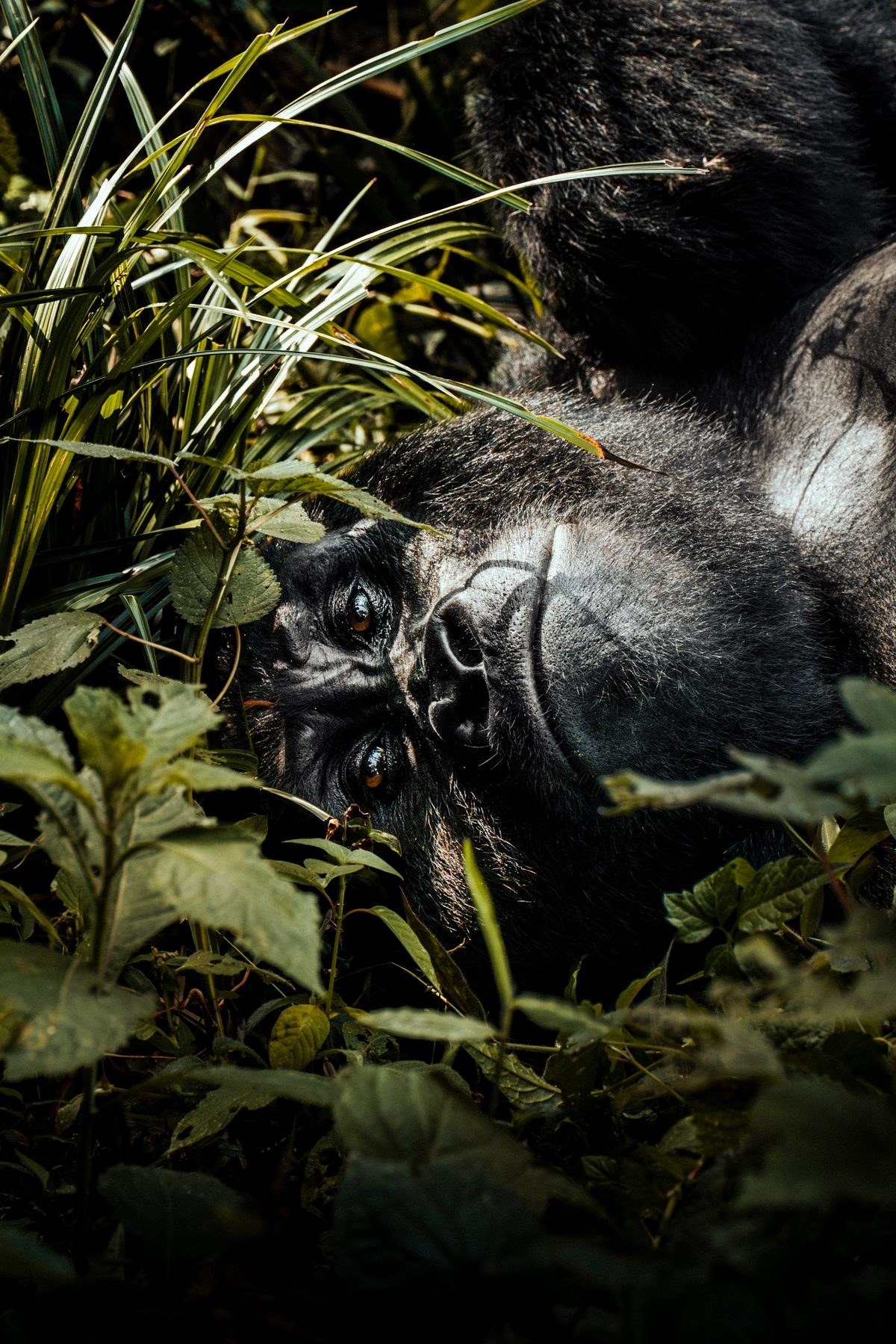
Silverback in the thicket, gazing into ancient eyes
Gorillas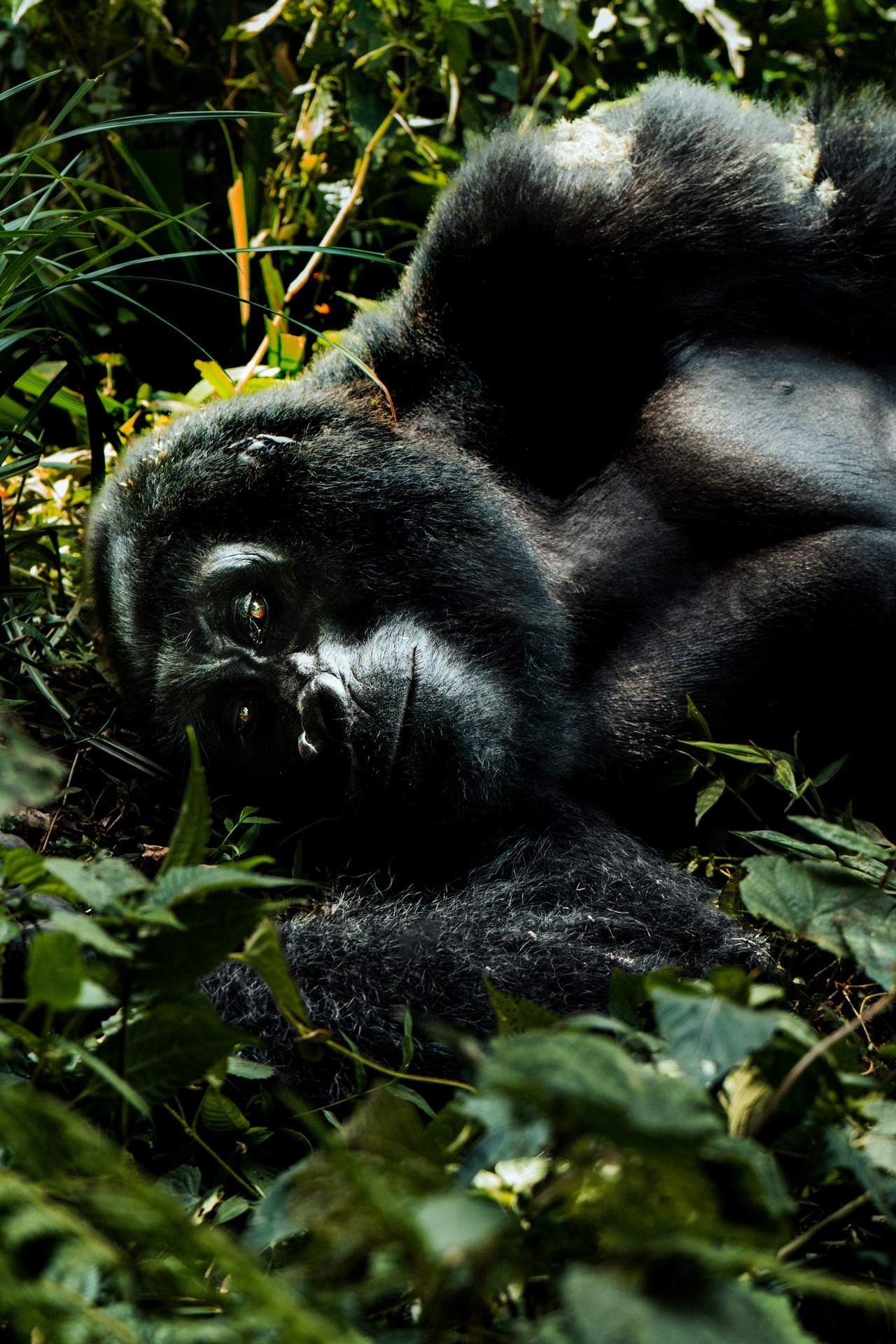
Silverback resting in Bwindi rainforest
Mountain Gorilla (Silverback)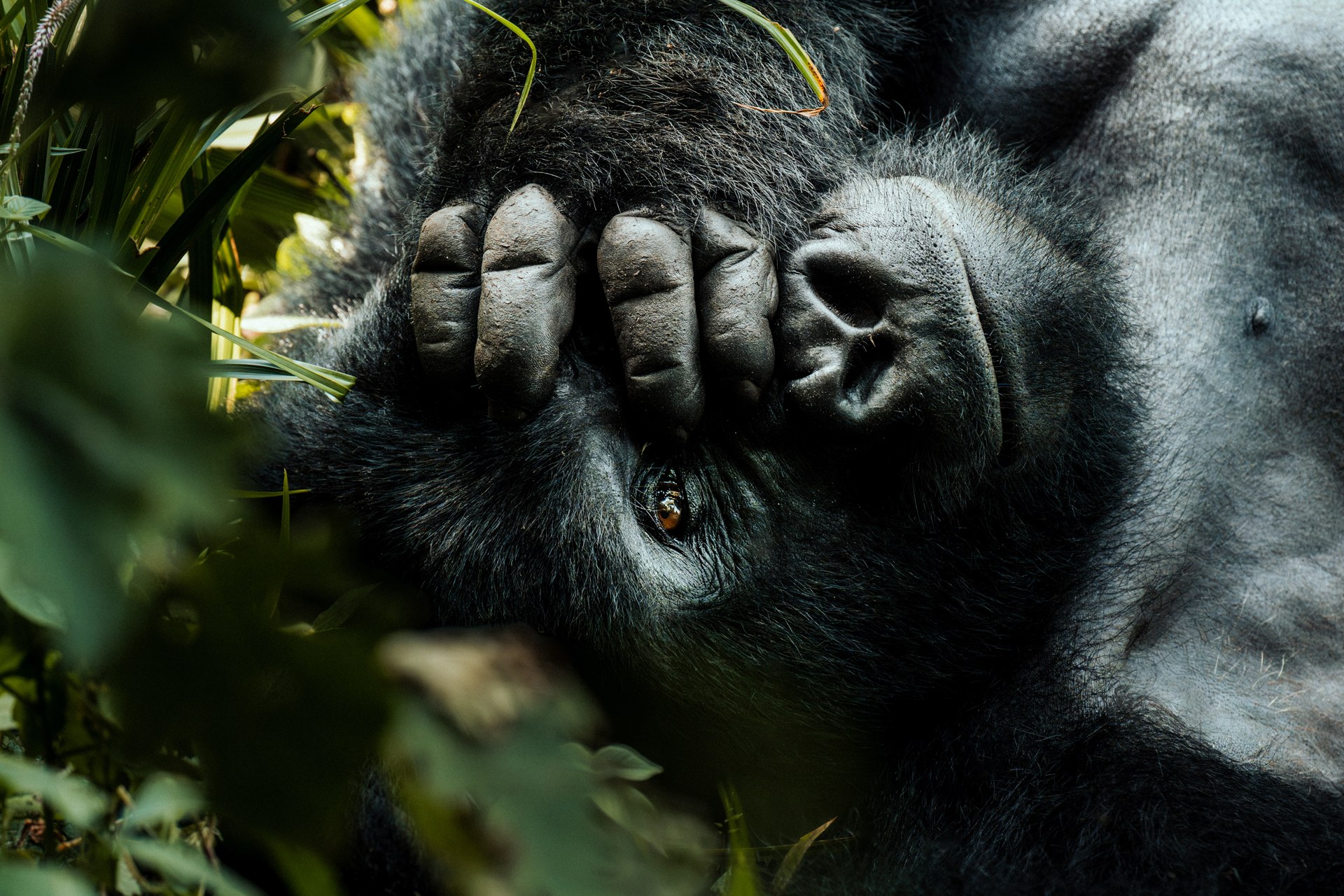
Gorilla covering its face with its hand
Mountain Gorilla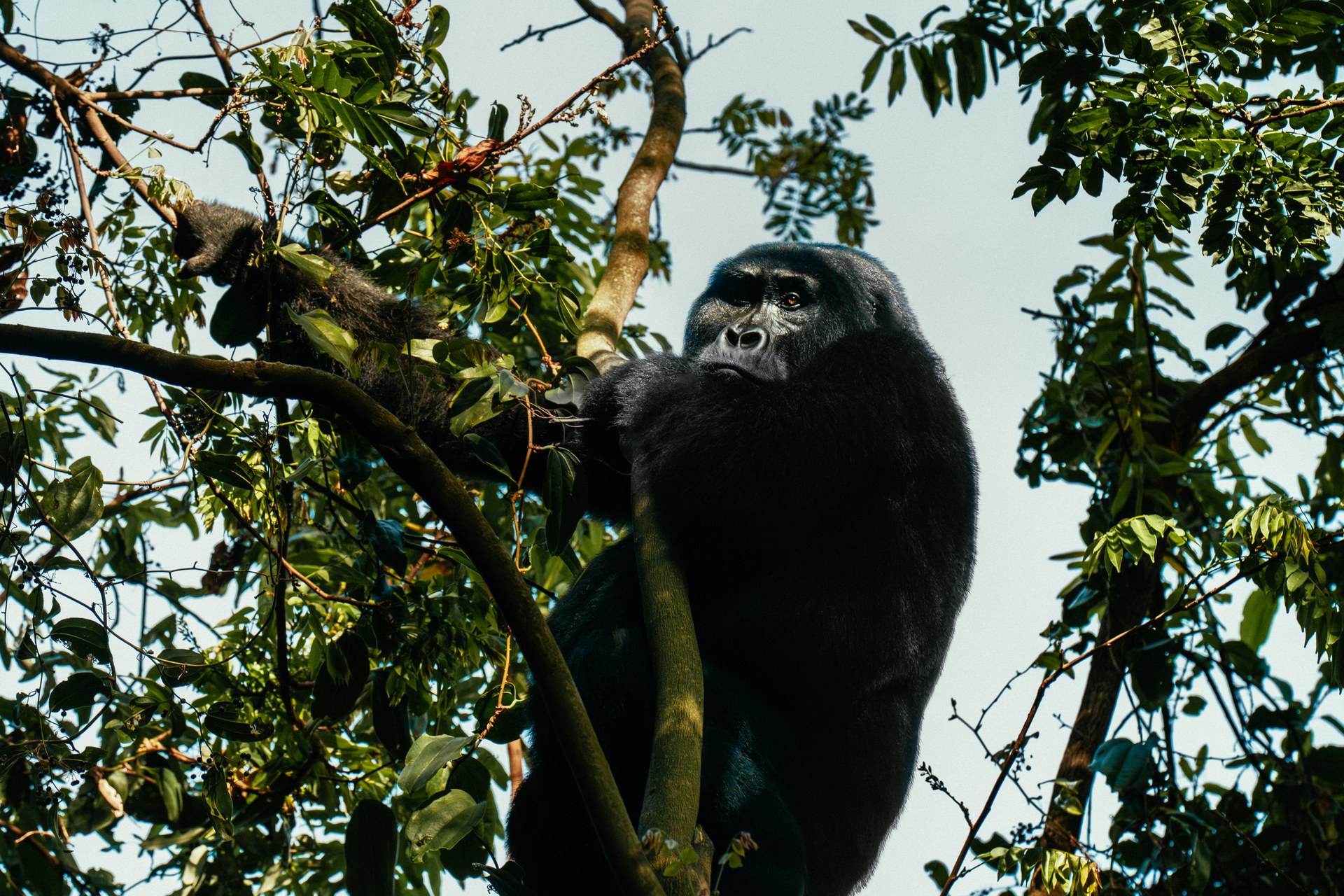
Silverback sitting majestically in Bwindi rainforest
Mountain Gorilla (Silverback)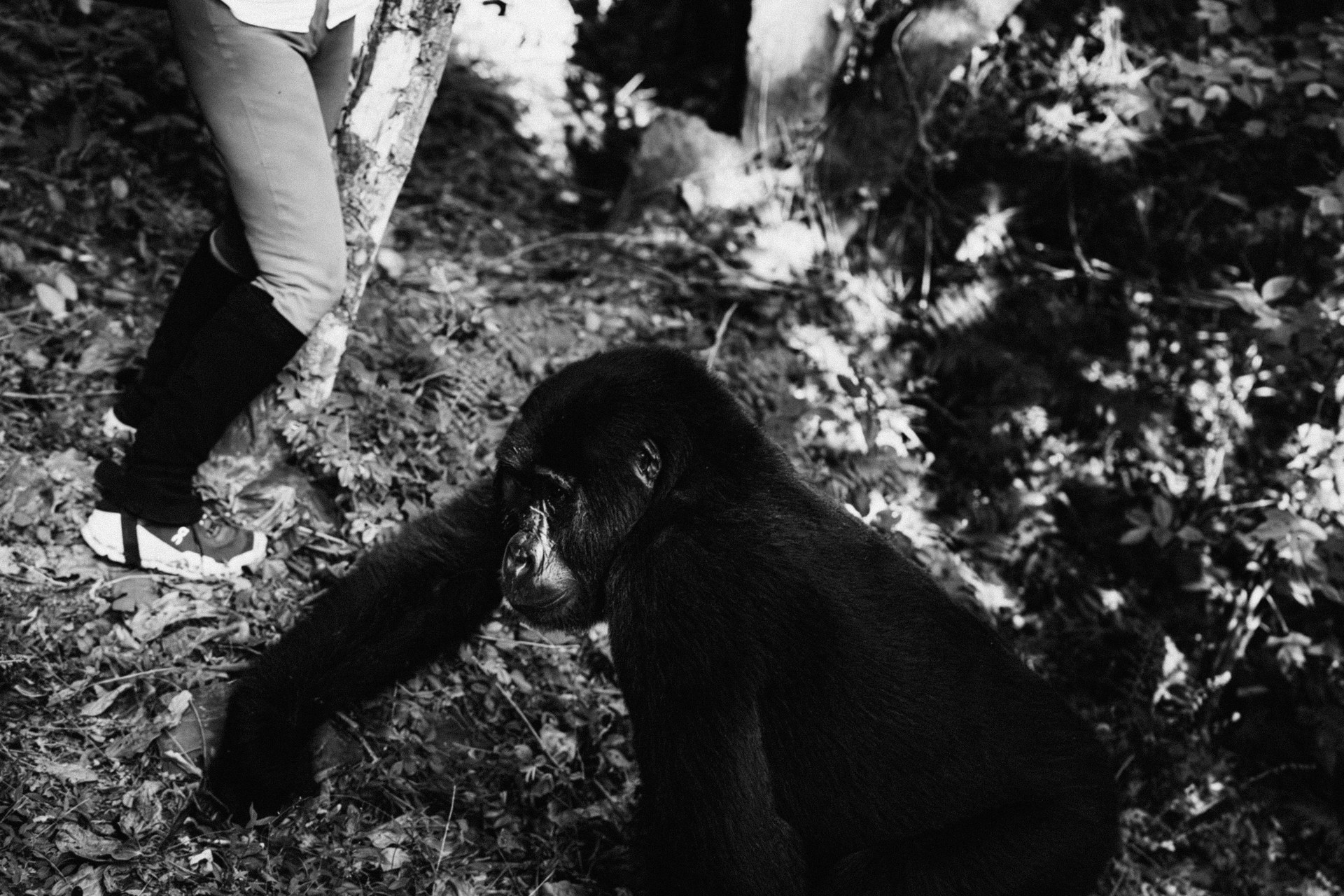
Young mountain gorilla on the forest floor in Bwindi
Mountain Gorilla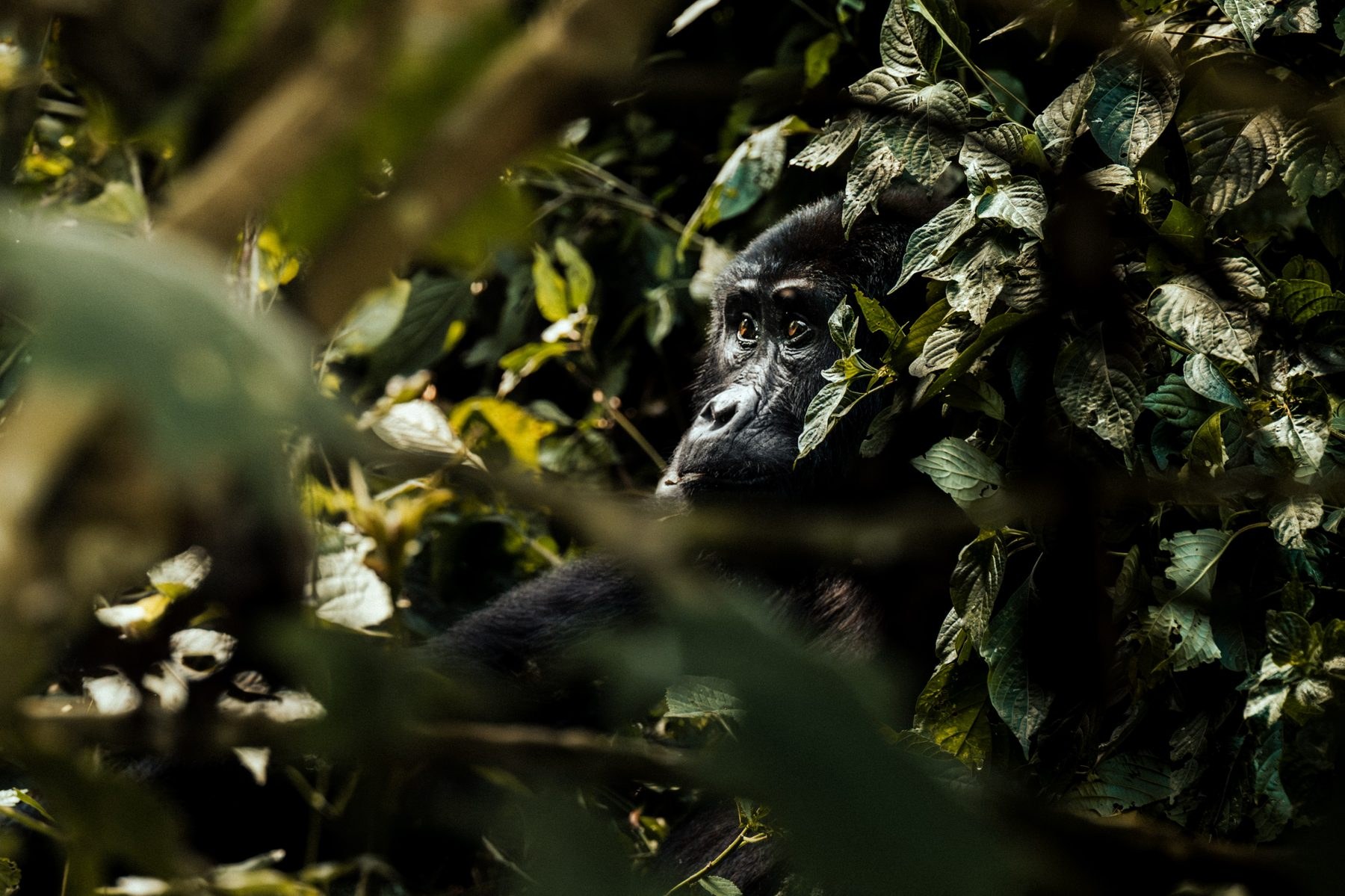
Gorilla in the thickets of Bwindi Impenetrable Forest
Mountain Gorilla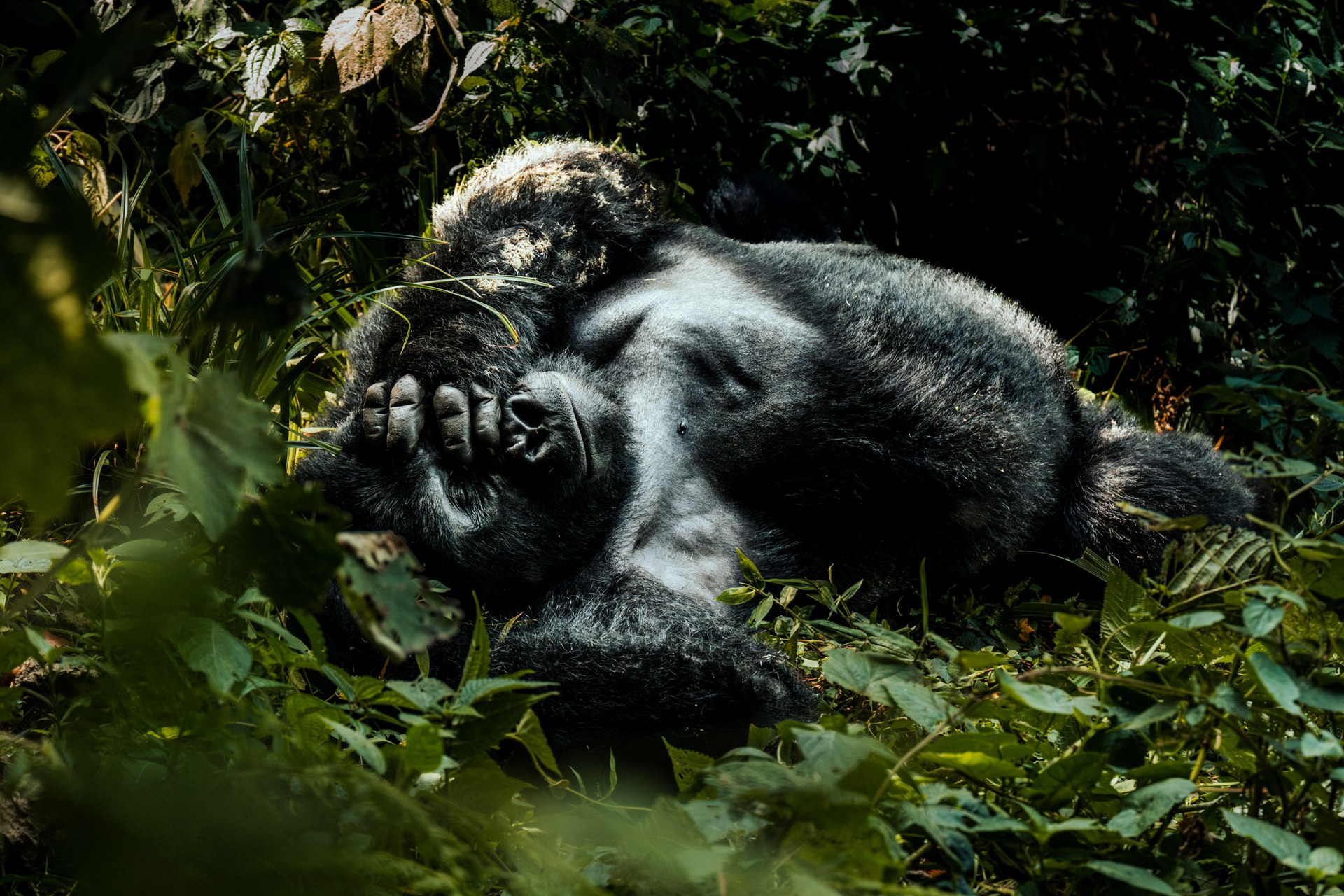
Silverback resting in the dense greenery of Bwindi
Mountain Gorilla (Silverback)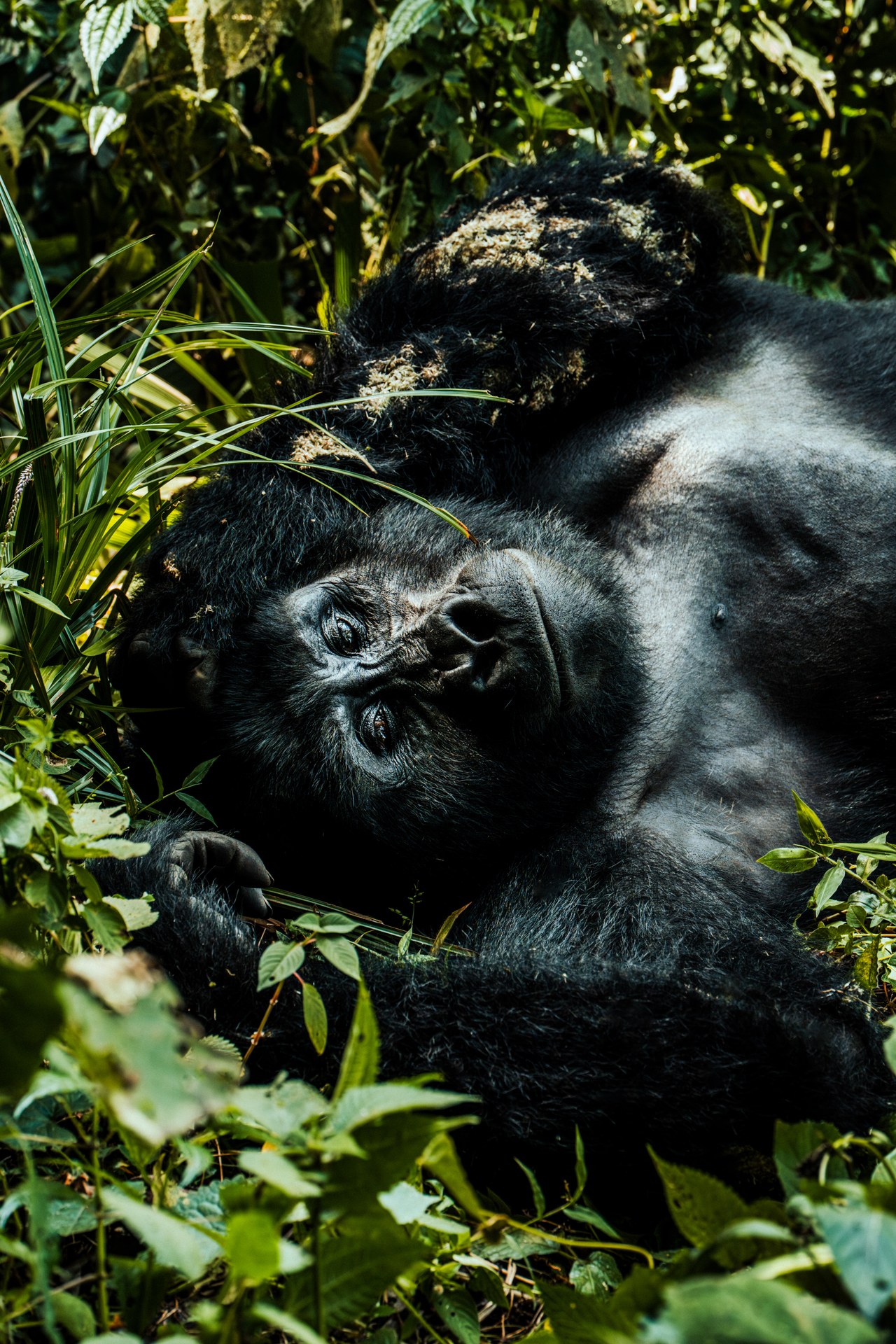
Silverback resting in the thickets of Bwindi forest
Mountain Gorilla (Silverback)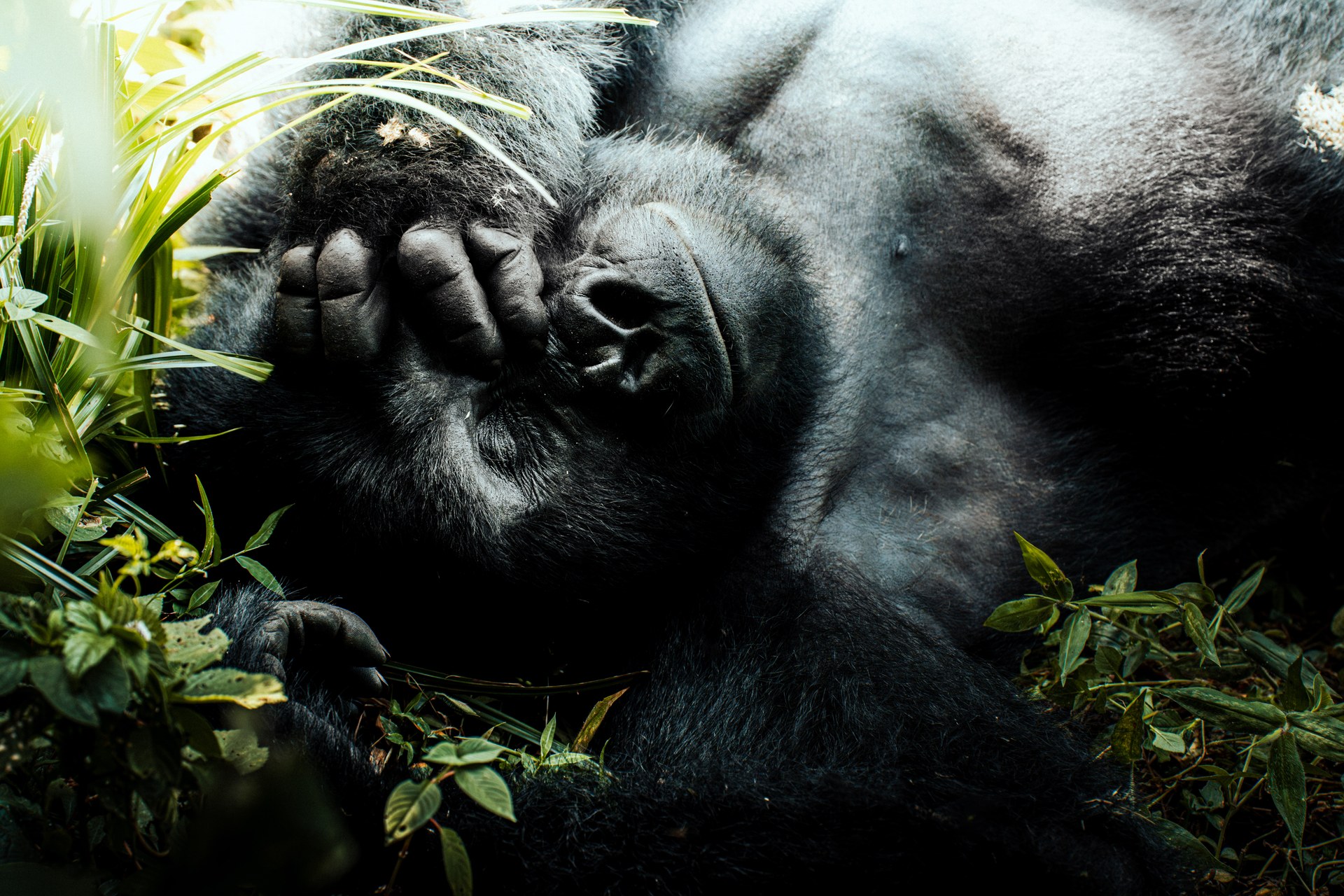
Silverback resting in Bwindi Impenetrable Forest
Mountain GorillaRules and Etiquette
The rules governing gorilla encounters exist to protect both the animals and the visitors. The seven-metre minimum distance reduces the risk of disease transmission, a serious concern given the gorillas' susceptibility to human respiratory pathogens. The one-hour time limit prevents habituation from becoming over-familiarization. The prohibition on flash photography avoids startling the gorillas. And the group size limit of eight ensures that encounters remain intimate and manageable.
Visitors who are visibly unwell, particularly with coughs, colds, or other respiratory symptoms, will not be permitted to trek. This rule is enforced strictly and without exception. If you fall ill on the day of your trek, inform the rangers immediately. In most cases, permits can be rescheduled.
Preparation and Fitness
The physical demands of gorilla trekking vary enormously depending on where the gorillas are on any given day. Some treks last ninety minutes in total. Others involve six or more hours of walking through steep, muddy, densely vegetated terrain. Rangers assign groups based on visitor fitness, but everyone should be prepared for a moderately challenging day.
In the weeks before your trek, regular cardiovascular exercise and hill walking will improve your endurance and enjoyment. On the day, wear layers that can be adjusted as you warm up and cool down, and bring rain gear regardless of the forecast. Bwindi is a rainforest, and precipitation is always possible. Hiring a porter at the trailhead is strongly recommended: they carry your pack, assist on difficult sections, and their fee directly supports the local community.