The Last Mountain Gorillas
The mountain gorilla was once considered doomed to extinction. In the 1980s, fewer than 250 individuals were thought to remain, scattered across the volcanoes of central Africa and the impenetrable forests of southwestern Uganda. Poaching, habitat loss, civil conflict, and disease had pushed the subspecies to the edge. That the population has since nearly quadrupled is one of the most remarkable conservation achievements of the modern era.
Bwindi Impenetrable National Park, a 321-square-kilometre block of ancient montane rainforest in southwestern Uganda, shelters approximately 459 mountain gorillas. This represents nearly half the entire world population of the subspecies Gorilla beringei beringei. The park's extraordinary density of gorillas is a testament to the quality of the habitat and the effectiveness of decades of protection.
Biology and Physiology
Mountain gorillas are the largest living primates. Adult males, known as silverbacks for the saddle of grey hair that develops across their backs after age twelve, can weigh up to 200 kilograms and stand 1.7 metres tall when upright. Females are considerably smaller, weighing around 100 kilograms. Despite their imposing size, gorillas are predominantly gentle herbivores, spending much of their day foraging on the lush vegetation that carpets the forest floor.
Their thick, dark fur is an adaptation to the cool, often damp conditions of montane forest. At elevations between 1,400 and 2,600 metres, nighttime temperatures can drop to near freezing, and the gorillas' dense coats provide essential insulation. They share 98.3 percent of their DNA with humans, and close observation reveals strikingly familiar behaviours: laughter during play, grief at loss, and complex social negotiation within family groups.
Social Structure
Mountain gorillas live in stable family groups typically numbering between 5 and 30 individuals, led by a dominant silverback. The silverback is the centre of the group's social life: he mediates conflicts, determines the daily travel route, chooses nesting sites, and defends the family against threats. Some groups contain multiple silverbacks, often father-son pairs or brothers, though one individual always holds dominant status.
Females may transfer between groups several times during their lives, usually when they reach maturity or after the death of a dominant silverback. Males who fail to attract females may live as solitary individuals for years before either forming their own group or joining another. The dynamics of group formation and dissolution are a central focus of ongoing research in Bwindi.
Bwindi's Unique Population
The gorillas of Bwindi differ from their relatives in the Virunga volcanoes in several important ways. They live at lower elevations, have access to a greater diversity of food plants, and consume substantially more fruit. Their habitat is denser and more complex, with a canopy structure that makes them more difficult to locate and follow. Genetic studies have confirmed that the Bwindi population has been isolated from the Virunga gorillas for thousands of years, raising questions about whether they may represent a distinct evolutionary lineage.
The first gorilla group in Bwindi was habituated for tourism in April 1993 at Buhoma. The Mubare group, named after the hill where they were found, opened a new chapter in Uganda's conservation history. Today, 25 groups have been habituated across the park's four sectors: Buhoma, Ruhija, Rushaga, and Nkuringo. Of these, 9 are available for tourist visits and 1 is dedicated to long-term research.
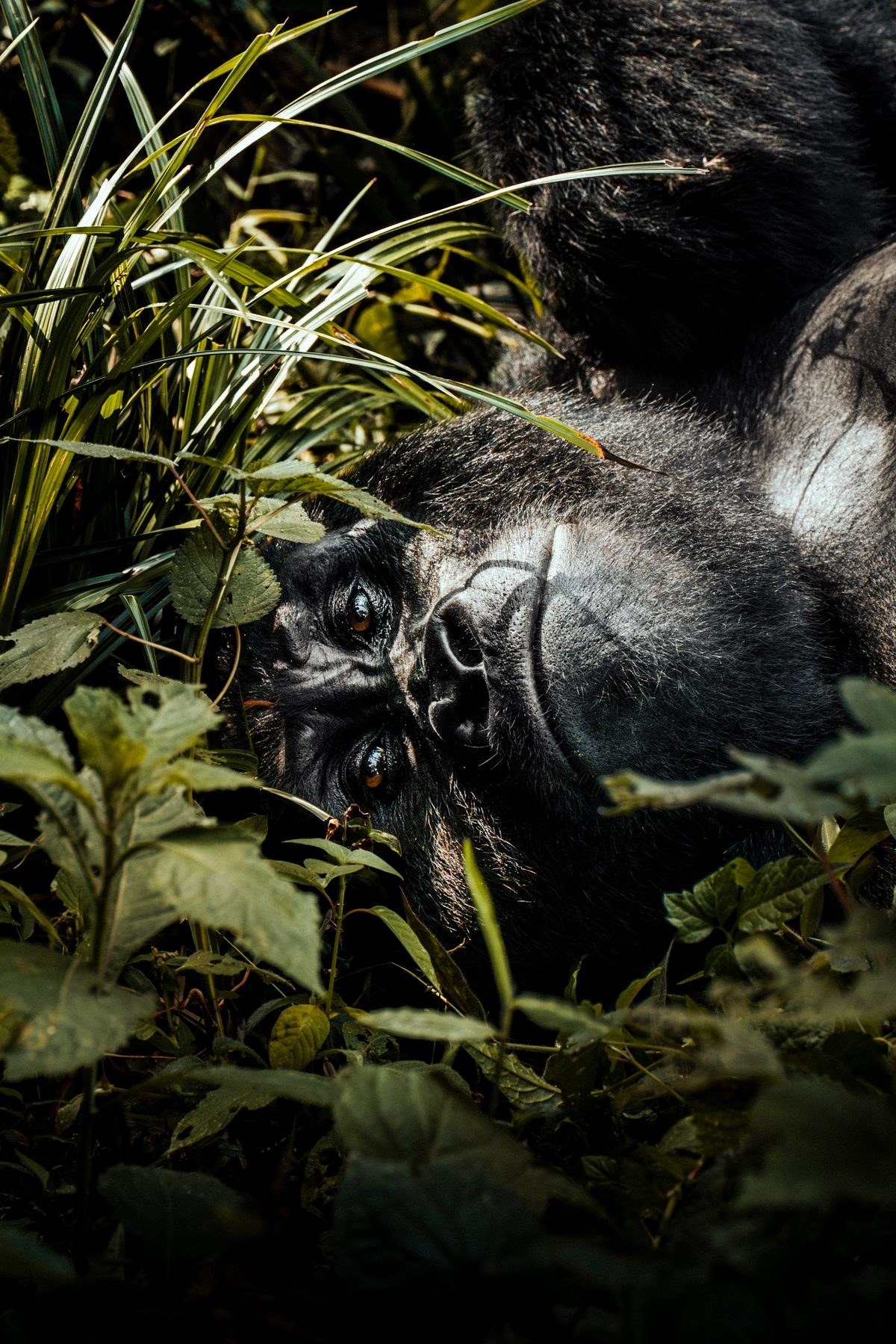
Silverback in the thicket, gazing into ancient eyes
Gorillas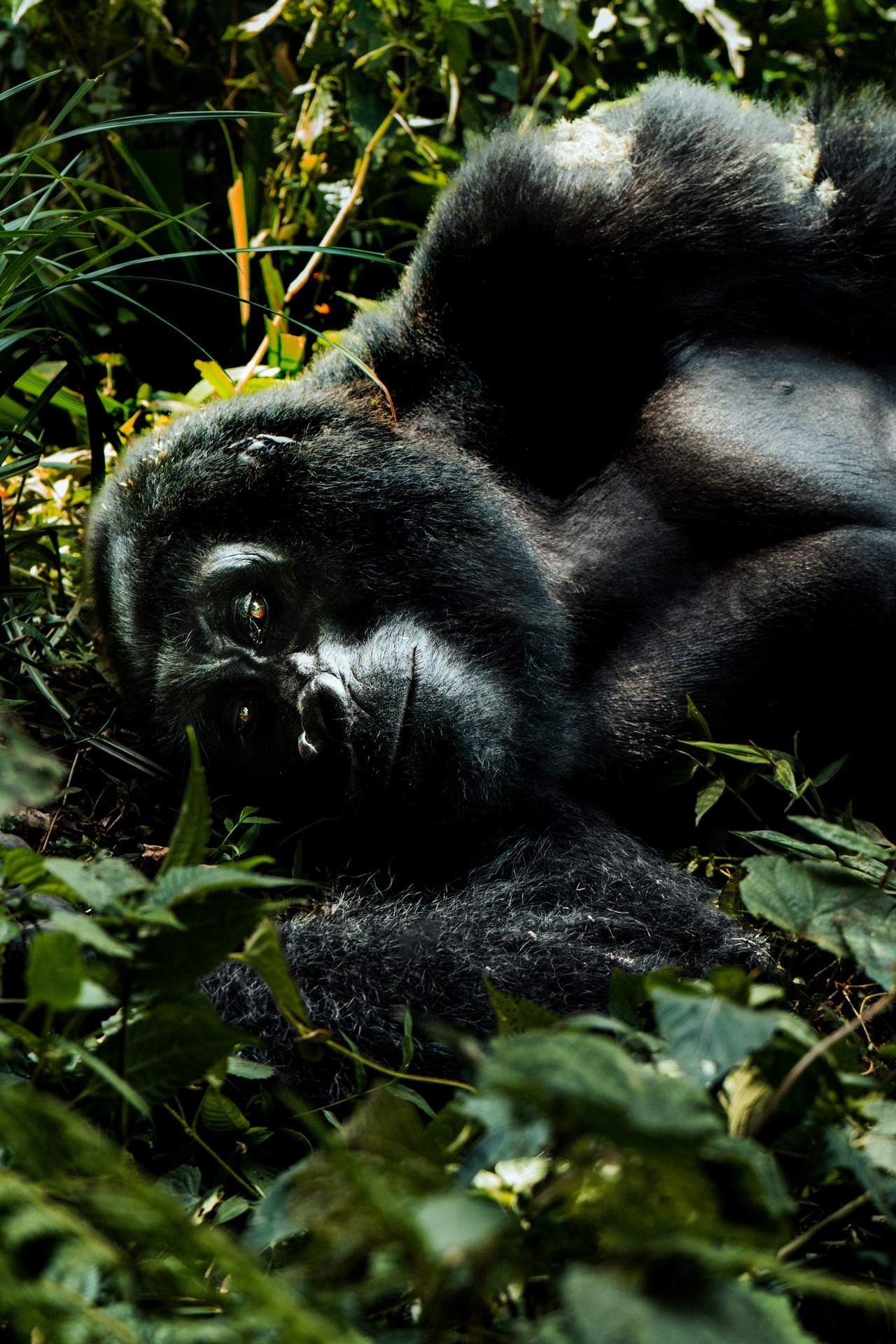
Silverback resting in Bwindi rainforest
Mountain Gorilla (Silverback)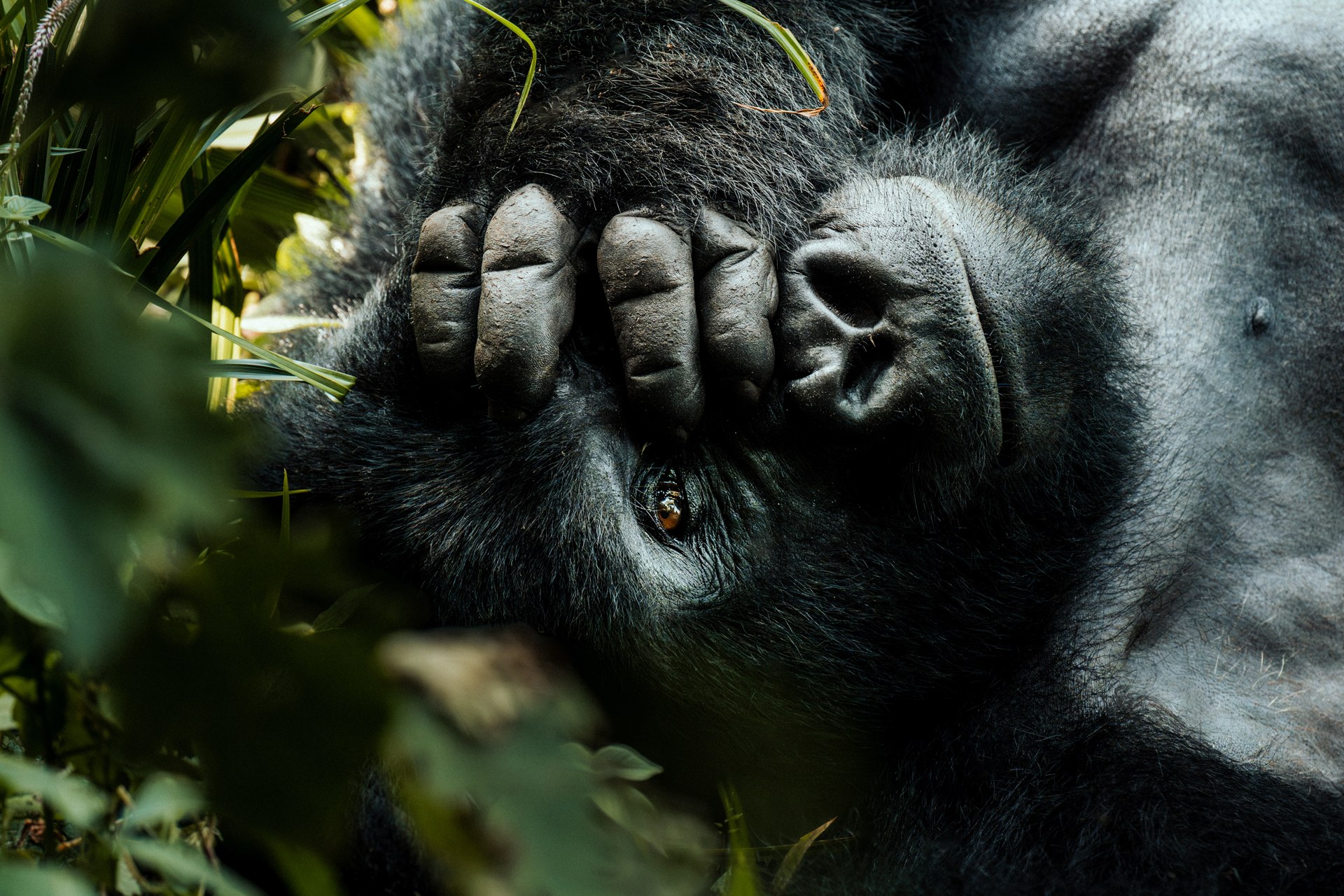
Gorilla covering its face with its hand
Mountain Gorilla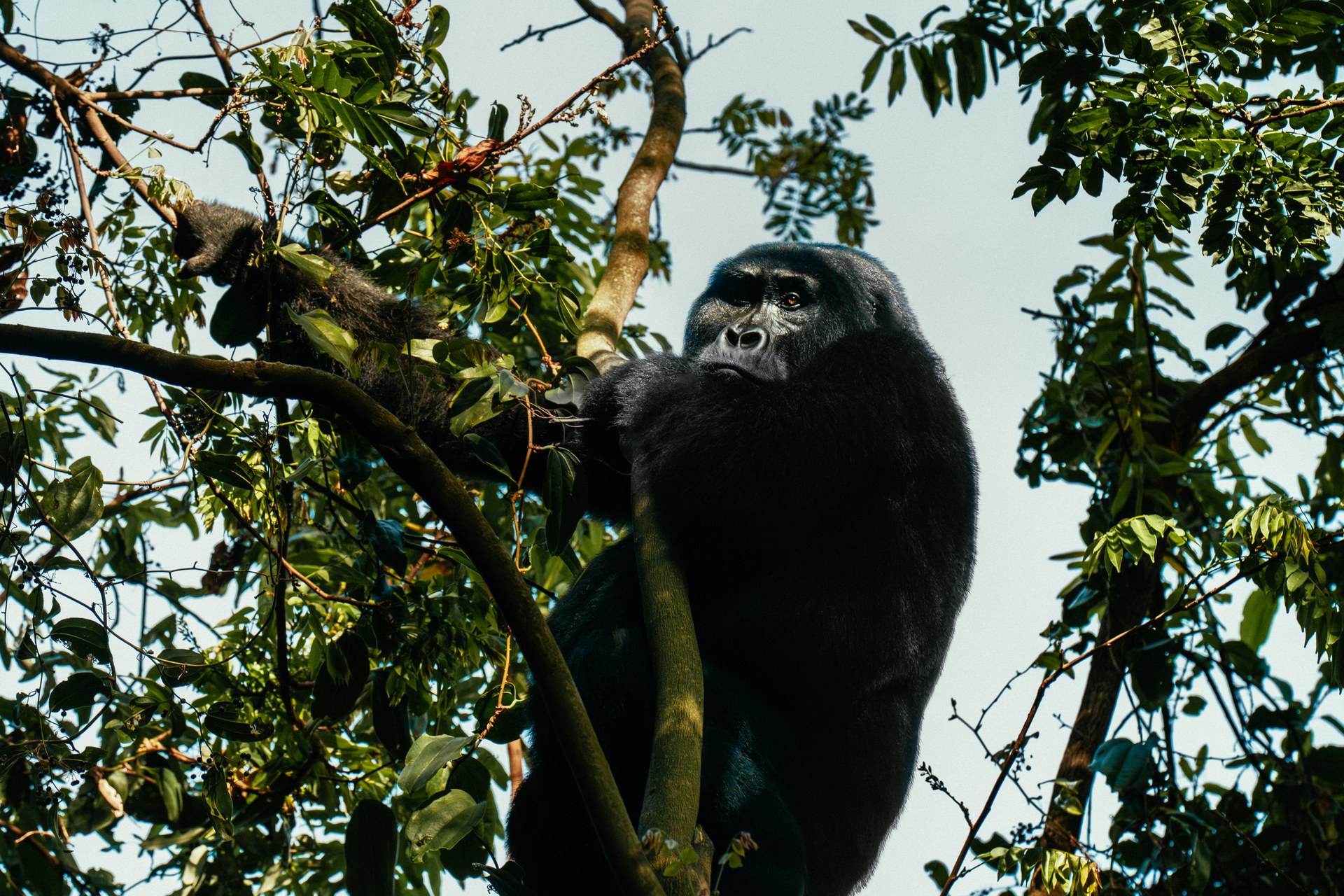
Silverback sitting majestically in Bwindi rainforest
Mountain Gorilla (Silverback)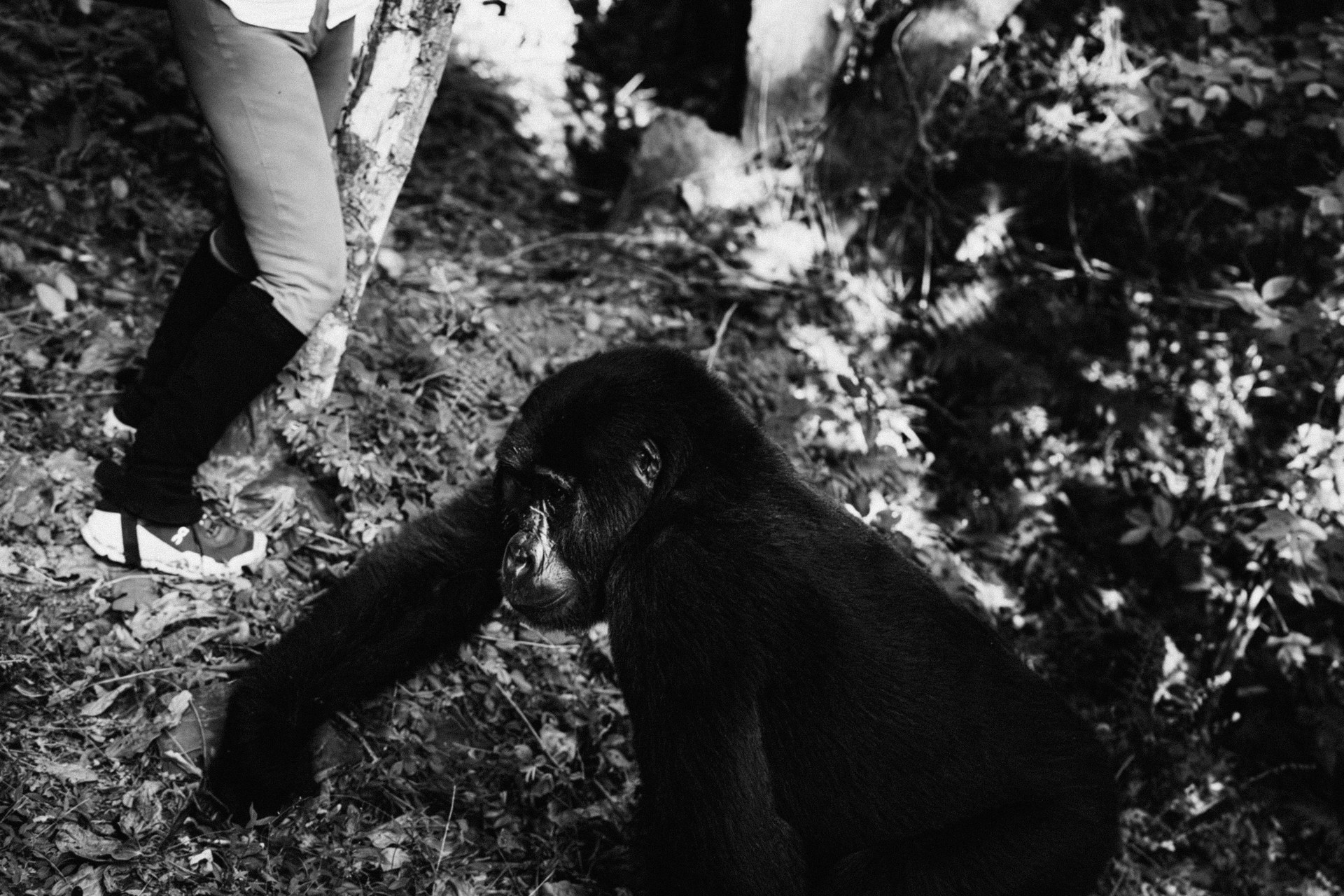
Young mountain gorilla on the forest floor in Bwindi
Mountain Gorilla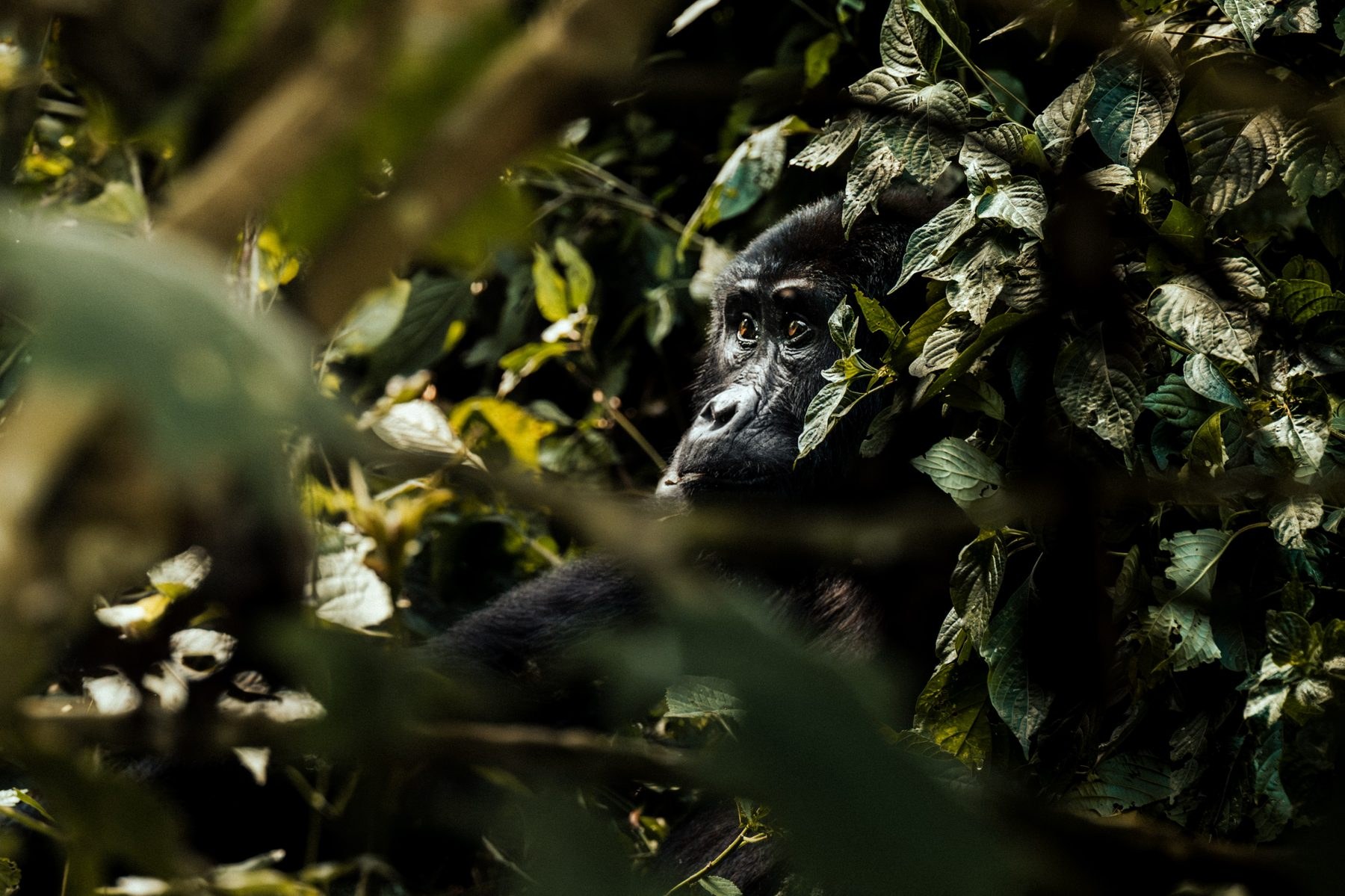
Gorilla in the thickets of Bwindi Impenetrable Forest
Mountain GorillaA Daily Rhythm
A gorilla's day follows a predictable rhythm. The group rises at dawn, typically around 6:00 am, and begins foraging immediately. The morning feeding session lasts several hours as individuals move slowly through the undergrowth, stripping leaves, peeling bark, and digging for roots. By midday, the group settles for a rest period. Adults doze or groom one another while juveniles play, wrestling and chasing through the vegetation with an energy that is unmistakably childlike.
The afternoon brings another foraging session before the group constructs fresh nests for the night. Each gorilla over three years of age builds its own nest, bending and weaving branches and leaves into a platform. Silverbacks usually nest on the ground, while females and younger individuals may build nests in low trees. By dusk, the forest falls quiet as the group settles in for the night.
Threats and Hope
Despite remarkable population recovery, mountain gorillas remain classified as Endangered by the IUCN. Their entire range covers less than 800 square kilometres of fragmented forest. Human encroachment, disease transmission from neighbouring communities, climate change, and the ever-present risk of political instability in the region all pose ongoing threats. A single epidemic could devastate a population this small and geographically concentrated.
Yet the trend is decisively positive. Gorilla tourism generates millions of dollars annually for Uganda, providing a powerful economic argument for conservation. Revenue sharing with local communities has reduced poaching and improved livelihoods. Veterinary teams monitor gorilla health, intervening when individuals suffer snare injuries or respiratory infections. And international research partnerships continue to deepen our understanding of gorilla ecology, genetics, and behaviour. The mountain gorilla's story is far from over, but it is, for now, a story of hope.
Frequently Asked Questions
Related Articles
Bwindi Complete Guide
Gorilla Families of Bwindi
Understanding Gorilla Behavior
Gorilla Conservation
The Habituation Experience
Gorilla Trekking Explained
Gorilla Research in Bwindi
Gorilla Population in Uganda
Gorilla Species and Subspecies
Mountain Gorilla Facts & Numbers
Gorilla Trekking FAQ
Bwindi vs Mgahinga
Gorilla Trekking Safety
Safari Picture Duel — Vote for the best wildlife photo
Mountain Gorilla Portrait: Life and Behavior in Bwindi
Gorilla Trekking for Beginners: What You Need to Know
Gorilla Trekking Safety at Bwindi
Bwindi vs Other Gorilla Parks
Bwindi Gorilla Trek: First-Hand Guide
A Day on the Trek: Start to Finish
Habituated Gorilla Groups of Bwindi
Gorilla Health Monitoring at Bwindi
The Bwindi Population Census
Gorillas and the People of Buhoma
Gorilla Tourism, Regulation and Conservation
The Buhoma Community and What Tourism Means Here
The Habituation Debate
Gorilla Habituation & Community Benefit
Gorilla Habitat & Vegetation in Bwindi
Gorilla Habitat in Bwindi: What Makes Good Habitat
Climate Change & Trekking Conditions
Climate Change & Gorilla Habitat
Gorillas & Forest Degradation