The Social Life of Gorillas
To spend an hour in the presence of a mountain gorilla family is to witness a society of remarkable depth. Every interaction — a glance between a mother and her infant, a young male testing his strength against a sibling, a silverback settling a dispute with a quiet vocalization — reflects relationships built over years of shared experience. Mountain gorillas are among the most social of all primates, and their behaviour reveals cognitive and emotional capacities that challenge simplistic distinctions between human and animal minds.
The Silverback's Role
The dominant silverback is the fulcrum of the group. His decisions determine where the family travels, when they rest, and where they sleep. He is protector, mediator, and, in a real sense, the emotional centre of the group. When a silverback is calm, the group is calm. When he is alert, tension ripples through every individual. Females cluster near the silverback for safety, and infants often play on or around him, enjoying a tolerance that the largest male in the group extends to the smallest.
Silverbacks resolve conflicts through a graduated system of displays rather than outright violence. A hard stare may be enough to settle a minor dispute. If that fails, a standing display, a ground slap, or a charge through vegetation usually restores order. Actual physical combat between silverbacks is rare within a group but can occur between rival males from different families, sometimes resulting in serious injuries. These confrontations are most common when a lone silverback attempts to attract females away from an established group.
Communication
Mountain gorillas possess a vocal repertoire of more than 25 distinct calls, each associated with specific contexts. The belch vocalization, a deep rumbling sound often compared to a purr, is the most frequently heard. Groups produce it almost continuously during feeding, and it appears to signal contentment and maintain contact among individuals hidden from one another by dense vegetation. The absence of belch vocalizations can itself be a signal: silence often indicates tension or the presence of something unusual.
Alarm barks, screams, grunts, hiccup-like sounds, and a range of other calls round out the vocal toolkit. But gorillas communicate at least as much through body language. A direct stare is a challenge. Averted gaze signals submission. The positioning of arms, the angle of the head, the pace of movement — all carry information that other group members read and respond to instantly.
Maternal Care and Infant Development
Gorilla mothers are attentive, patient caregivers. Infants are carried almost continuously for the first five months, clinging to the mother's chest. By six months, they begin riding on her back and tentatively exploring their surroundings, though they remain within arm's reach. Weaning is gradual, typically occurring around age three to four, though the emotional bond between mother and offspring persists much longer.
Infant gorillas develop in ways strikingly parallel to human children. They begin walking at around five months but rely heavily on their mothers for transport until well into their second year. Play is constant and inventive: young gorillas wrestle, climb, tumble, and chase one another with evident delight. They experiment with food by watching their mothers and sampling what she eats. The learning process is social and observational, laying the groundwork for the foraging skills they will need as adults.
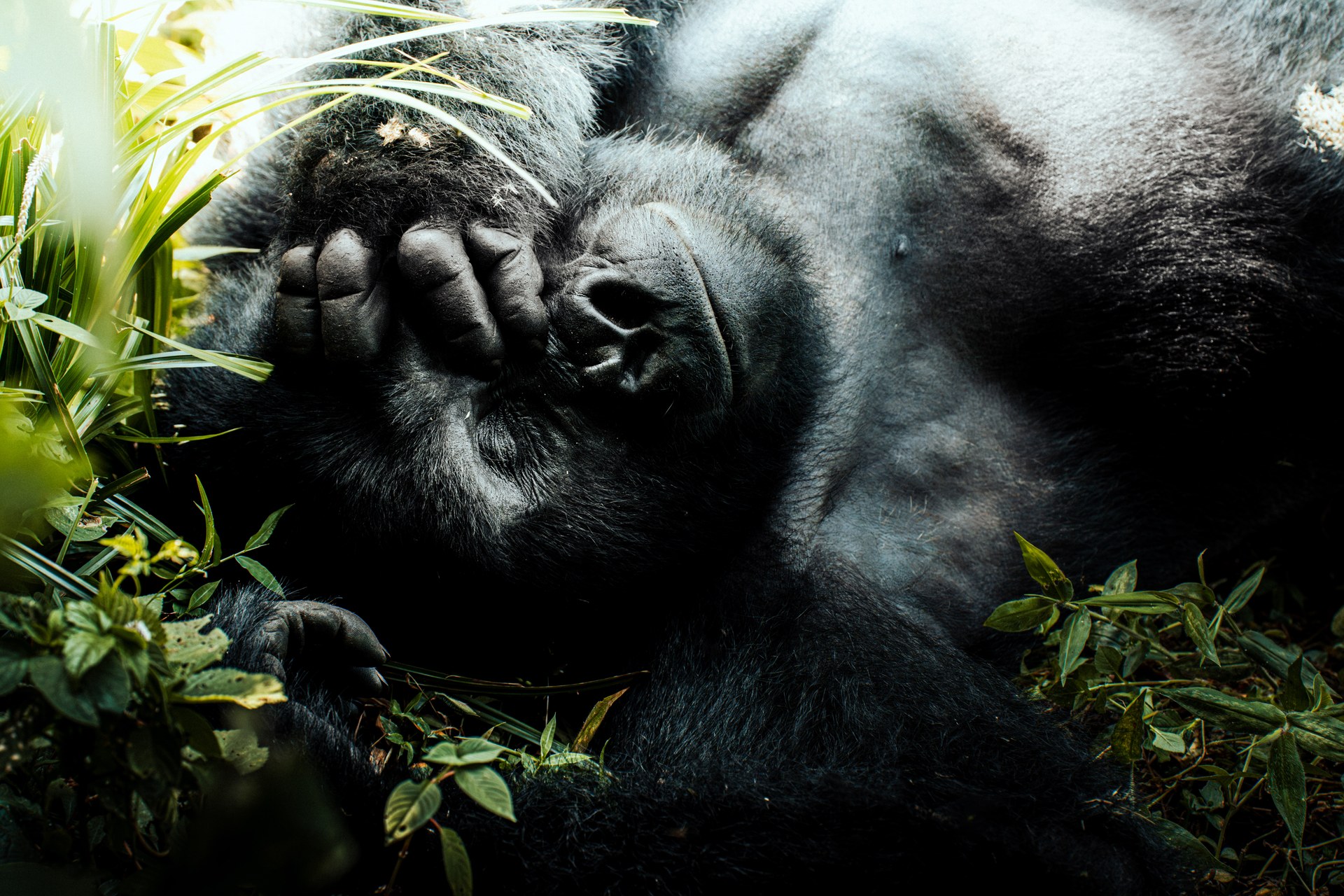
Silverback resting in Bwindi Impenetrable Forest
Mountain Gorilla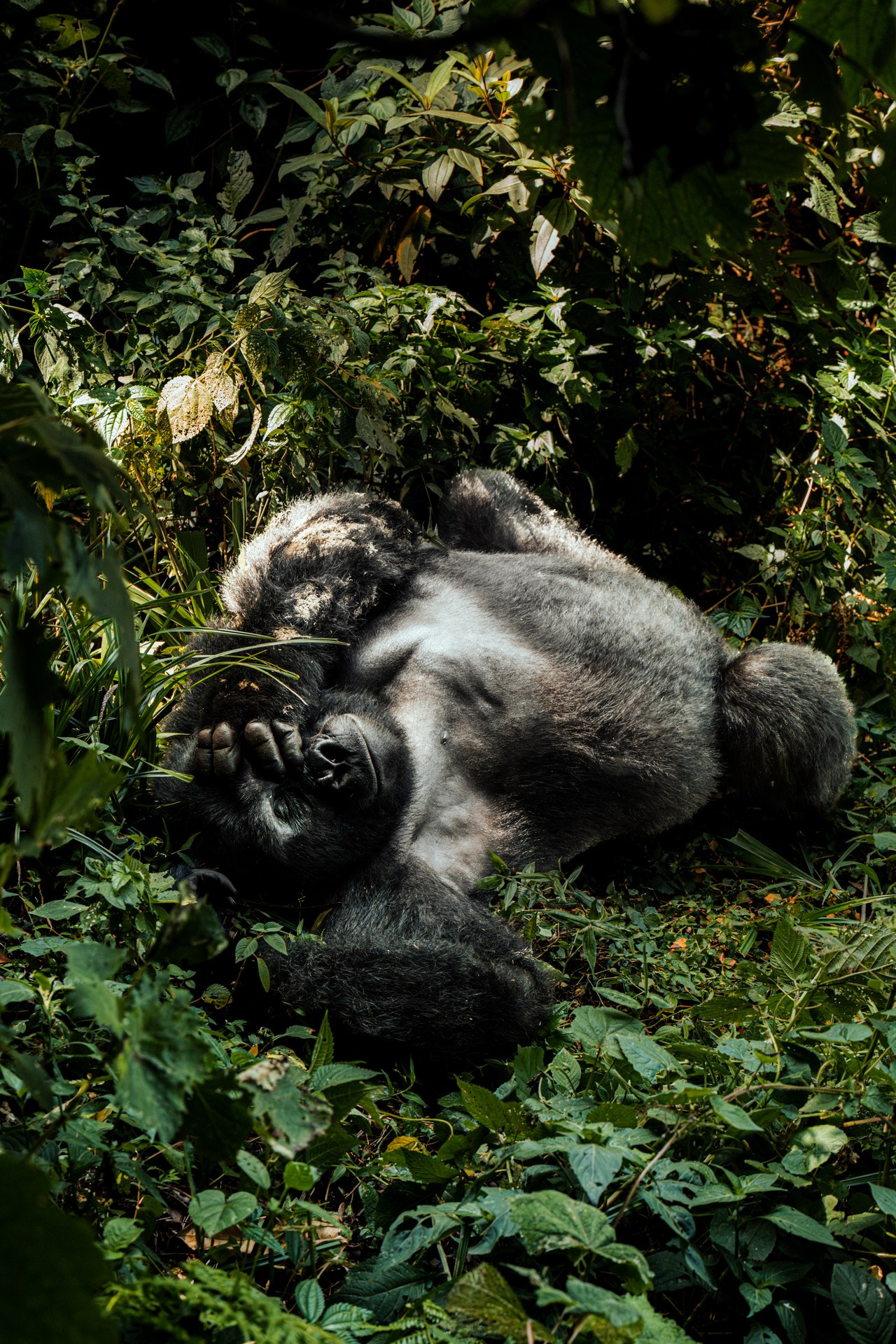
Silverback relaxing in Bwindi rainforest
Gorillas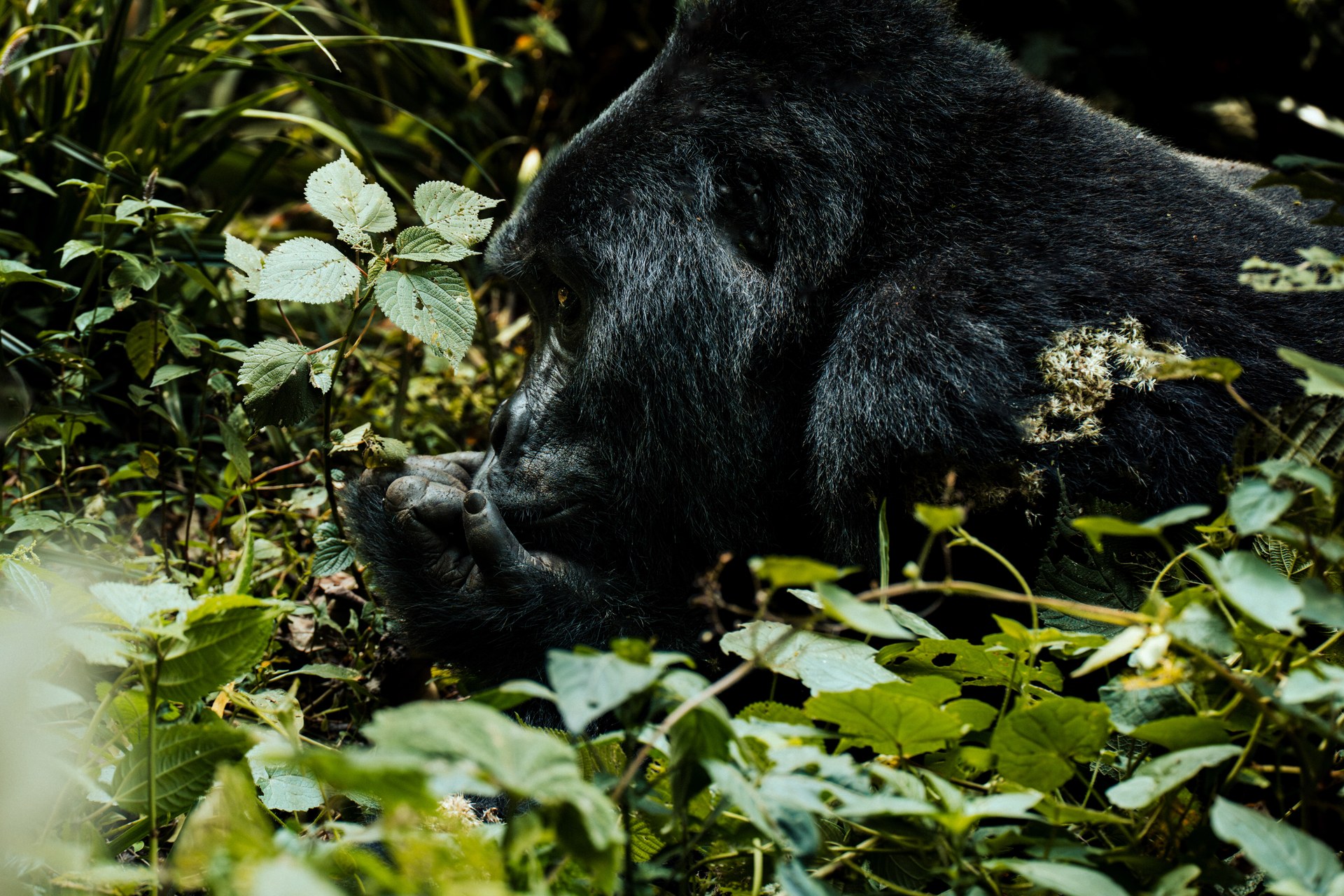
Mountain gorilla resting in the thickets of Bwindi forest
Mountain Gorilla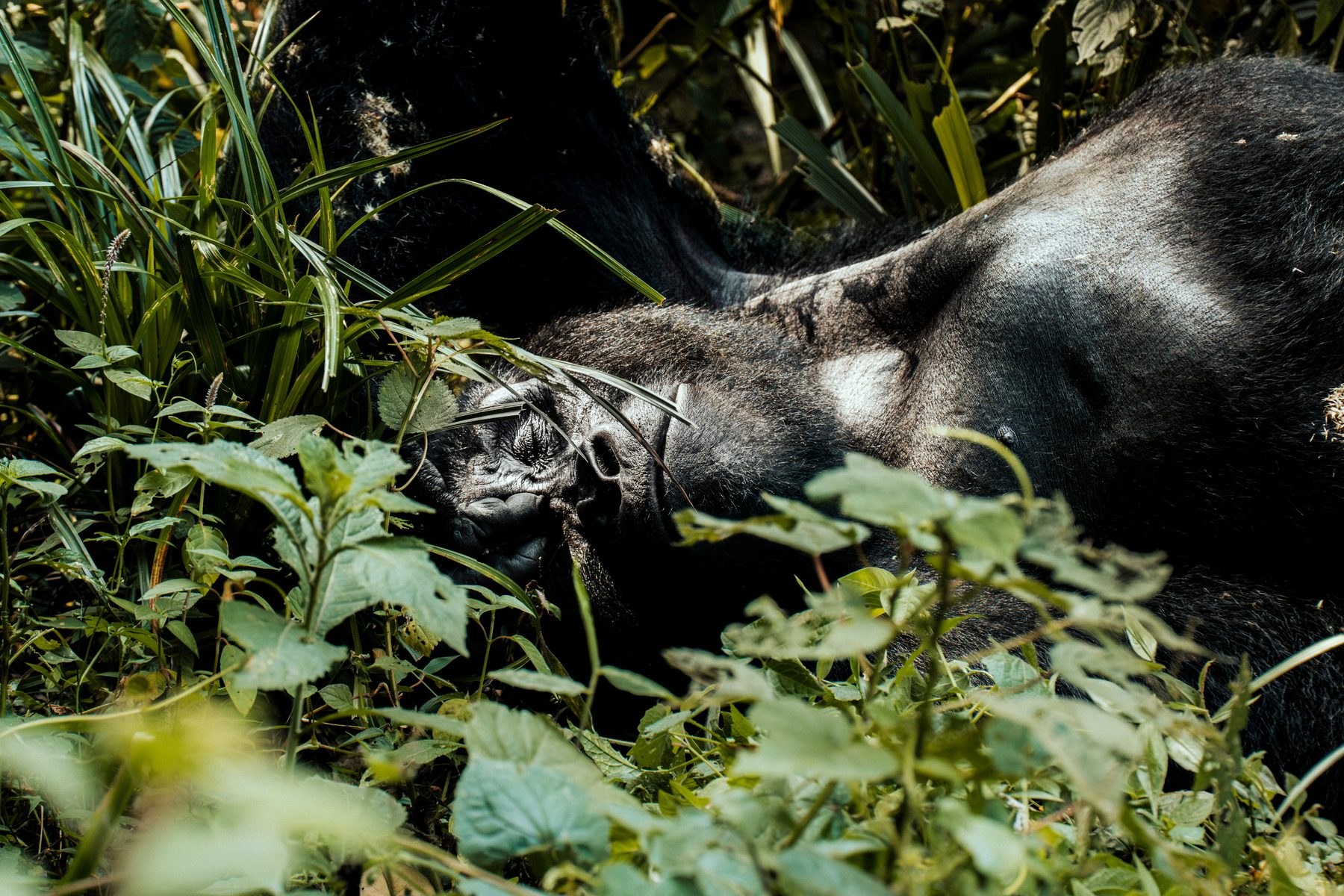
Silverback gorilla resting in the thickets of Bwindi forest
Mountain Gorilla (Silverback)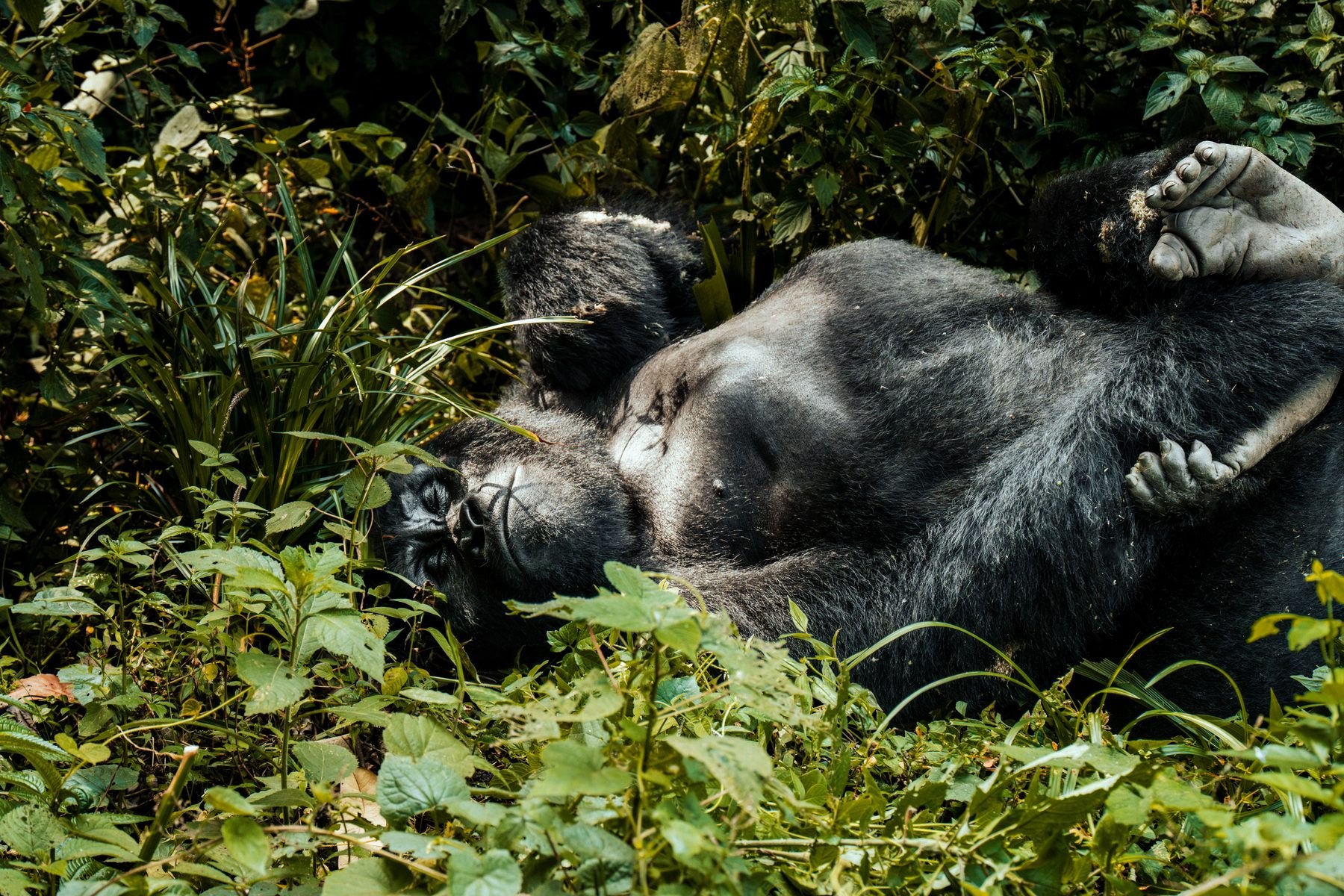
Silverback resting deep in Bwindi rainforest
Mountain Gorillas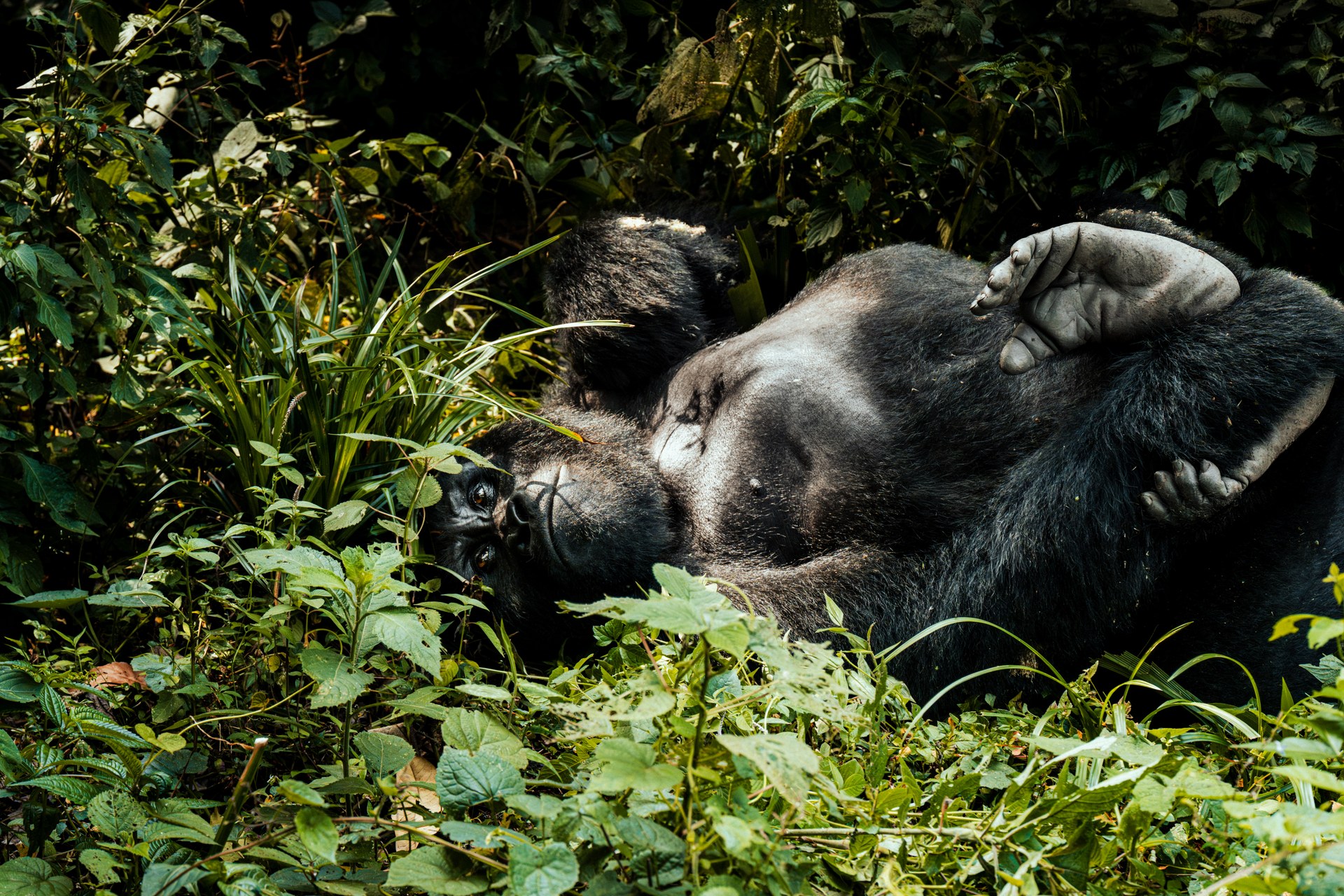
Silverback resting peacefully in Bwindi rainforest
Mountain Gorilla (Silverback)Feeding Behaviour
Mountain gorillas spend roughly 30 percent of their day feeding and another 30 percent travelling between feeding sites. An adult can consume up to 30 kilograms of vegetation daily, selecting from a diet of over 100 plant species. In Bwindi, where fruit trees are more abundant than in the Virunga volcanoes, gorillas incorporate significant amounts of fruit into their diet, a behaviour that influences their ranging patterns and social interactions.
Feeding is a social activity. Group members forage in loose proximity, maintaining contact through belch vocalizations. The silverback's position often determines the direction of travel, and his choice of feeding sites reflects knowledge of the forest accumulated over years. Younger individuals learn foraging skills by observing adults, gradually expanding their repertoire of food plants as they mature.
Nesting and Rest
Every evening, each gorilla over the age of three constructs a fresh nest. This is not a trivial behaviour: nests are carefully assembled from bent branches, leaves, and other vegetation, creating a platform that provides insulation from the cold ground. Silverbacks almost always nest on the ground, their bulk requiring the most robust construction. Females and juveniles may nest in low trees, bending branches into a supportive cradle.
The location and construction of nests provide valuable data for researchers and trackers. By examining nests from the previous night, trackers can determine group size, approximate composition, and the direction of morning travel. Nest counts are one of the primary methods used in gorilla population censuses.