How Visitors Get Around Buhoma
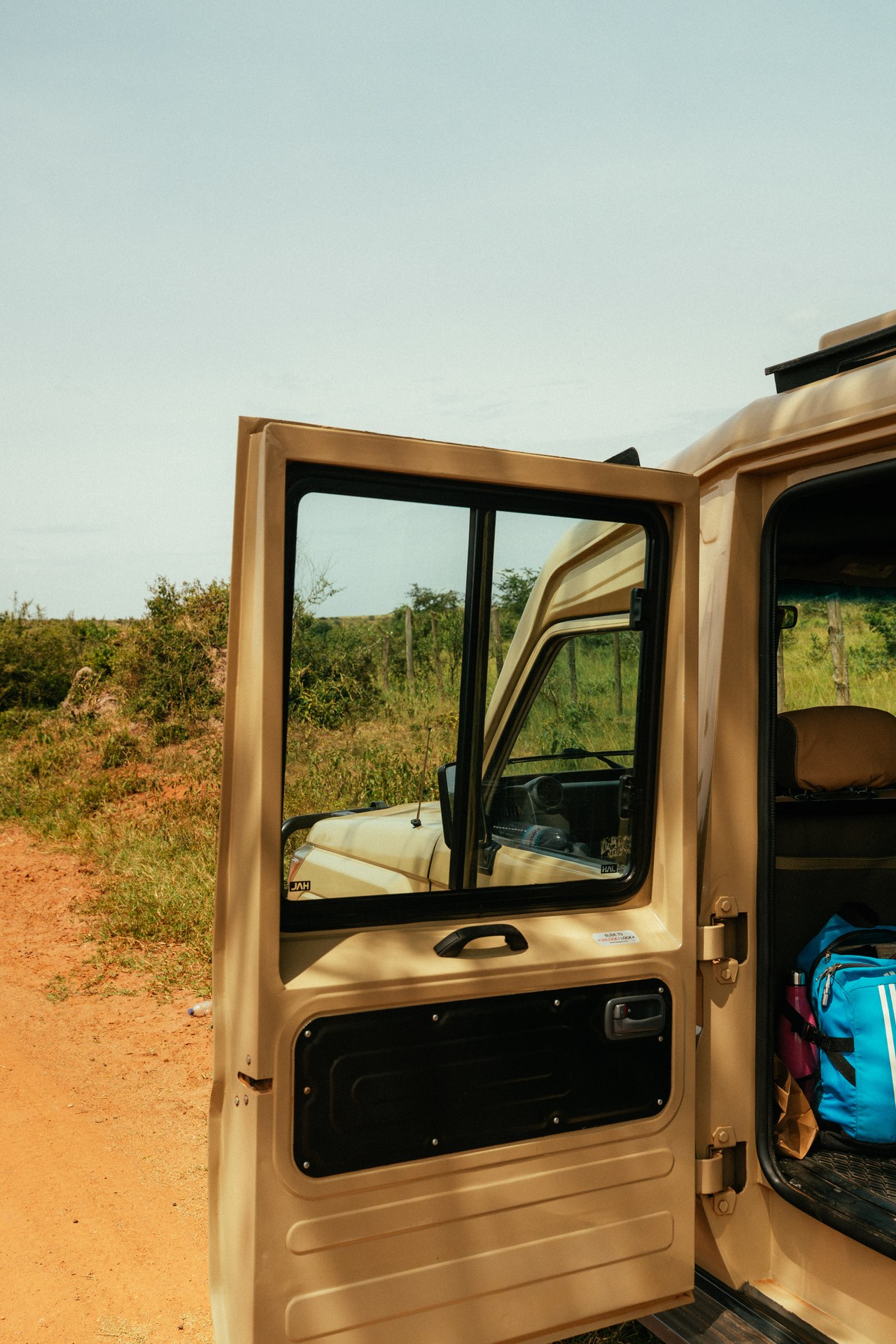
Buhoma is a compact village, but nothing here runs on pavement and flat ground. The main road into the sector is a red laterite track, and the paths between lodges, the park gate, and the village centre wind across hillside terrain that quickly exhausts anyone carrying luggage. BodaBoda motorcycle taxis fill this gap entirely. They are not a tourist novelty — they are the primary short-distance transport for everyone in the community, from market vendors to lodge workers to park visitors.
Drivers wait near the Buhoma Sector entrance and at points throughout the village. A typical ride from the village centre to the park briefing room takes around five minutes and costs between UGX 2,000 and 5,000. During our January 2026 visit — eleven days based in Buhoma — we used BodaBodas several times a day. They are fast, available on demand, and driven by people who know every shortcut in the area.
Norman Noel: Hustling Toward a Better Life
Norman Noel is a BodaBoda driver based in Buhoma. He did not choose motorcycles as a long-term plan — he chose them as a starting point. "The reason why I joined BodaBoda," he says, "I am hustling to get a good drive. If I get money, I advance. I get from BodaBoda, I join tourism, I also become like a tour guide, like that."
Norman's immediate goal is a driving licence for a car. "If I can get a chance of getting a driving licence, I will have to expand my business of driving. At least I advance from a motorcycle to a car." The logic is straightforward: cars carry more passengers and luggage, command higher fares, and open doors to the multi-day driving work that brings in consistent income. He already has an international clientele in mind. "I meet my friends from USA, UK, Germany, everywhere. I start exploring Uganda as my dream for exploring."
What Norman describes is a recognisable progression in Uganda's tourism economy: BodaBoda driver → private car driver → tour guide. Each step requires capital he does not yet have access to. "I lack enough capital to start with, because I have no support at all." The gap between ambition and means is not unusual — it is a structural feature of rural tourism economies, where proximity to a valuable asset (the national park, the mountain gorillas) does not automatically translate into a fair share of the revenue it generates.
When the Tourists Stop Coming
BodaBoda work in Buhoma is entirely dependent on tourist footfall. There is no secondary market — no industrial freight, no commuter traffic to fall back on. When visitor numbers drop, drivers feel it immediately. Norman described one such period: "I have spent a week riding, but no customers at all, because now we have got a problem. Uganda discovered a border case, and we as people here in Buhoma, we survive on tourism, and we have got a problem here. Tourists are few because of the Ebola."
Ebola outbreaks — whether in Uganda or across the border in eastern DRC — reliably trigger travel advisories that reduce international arrivals to Bwindi. The geographic distance between an outbreak zone and Buhoma often makes little difference to cautious travellers or government advisories. For BodaBoda drivers, lodge workers, and market traders, the effect is immediate and has no safety net behind it. This pattern repeated during the 2018–2019 North Kivu outbreak and again during the 2022 Sudan virus outbreak in western Uganda. Both times, Bwindi saw sharp drops in international arrivals within weeks of outbreak announcements, regardless of whether Bwindi itself was affected.
Three-Wheelers and Other Options
Not all transport in Buhoma runs on two wheels. During an October 2024 visit we came across something less common: a three-wheeled motorcycle with a covered flatbed at the rear — a cargo BodaBoda built for heavy loads on unpaved roads. The driver sits under a small canopy while the load rides on a red-painted platform behind. It is an impressive piece of practical engineering, and a reminder of how creatively Ugandan communities adapt to infrastructure gaps.
For tourists, the transport picture around Buhoma looks like this:
- BodaBoda (motorcycle taxi): Fastest for single passengers travelling light. Ideal for village-to-gate rides and between lodges. Agree the fare before departing — UGX 2,000 to 5,000 for local routes.
- Three-wheeled cargo motorcycle: Handles heavy luggage on unpaved roads where a standard BodaBoda would struggle. Less comfortable for passengers but practical for transfers.
- Walking: Practical within the village. Distances are short, the community is welcoming, and walking gives you the best chance of spontaneous encounters. Bring sturdy footwear — the red laterite mud is serious when wet.
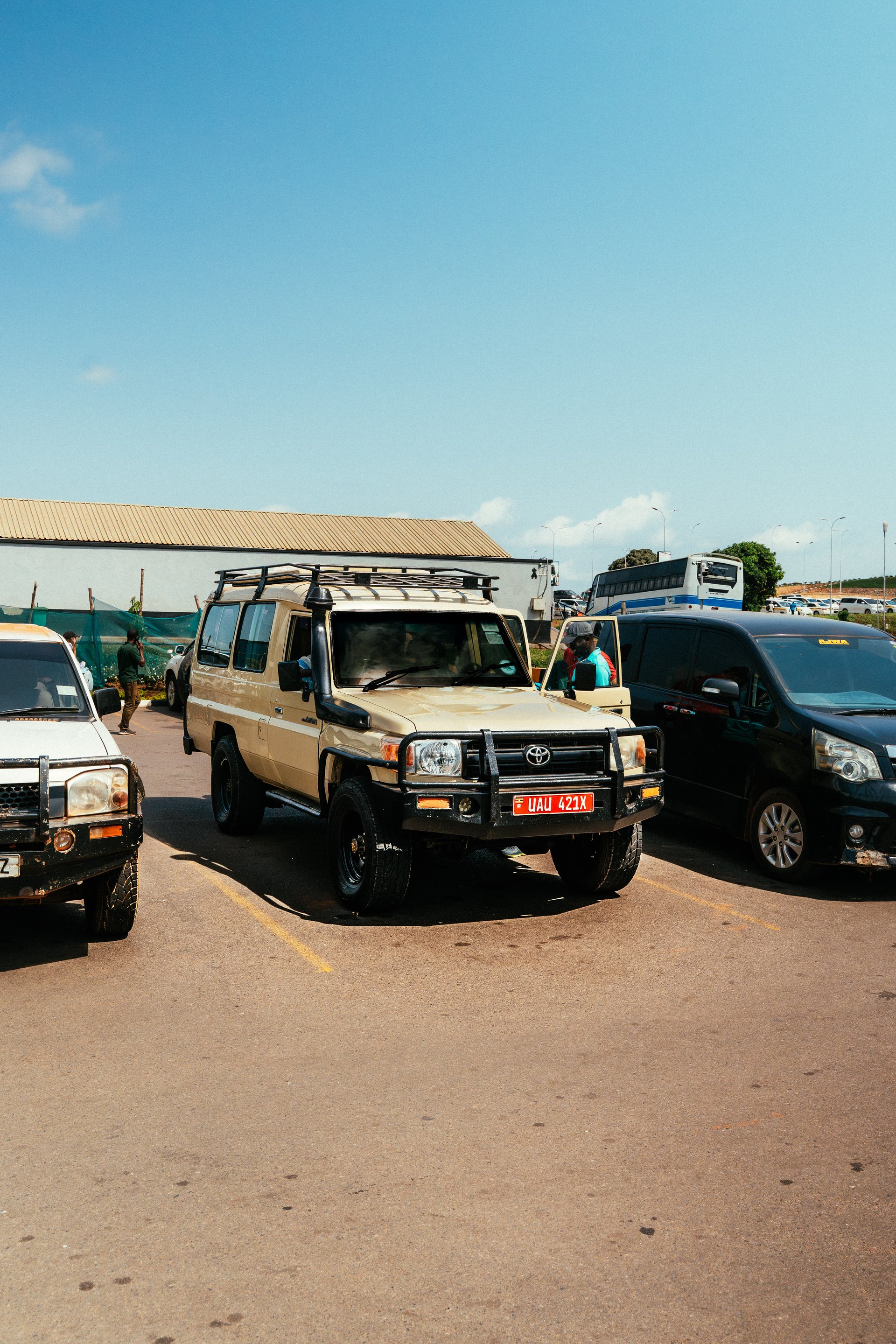
- Private car hire: Standard for half-day and full-day trips to other sectors, Lake Bunyonyi, Kisoro, or Queen Elizabeth National Park. Arrange through your lodge. [RECHERCHE NOETIG: current daily rates for private car hire from Buhoma]
The BodaBoda Fare as a Direct Contribution
Hiring a BodaBoda is not just practical — it puts money directly into the hands of someone whose livelihood depends on tourism. The gorilla trekking permit system channels $800 into UWA, conservation funds, and lodge operations. The BodaBoda fare channels UGX 3,000 directly to a driver trying to save for a driving licence. Both matter. Norman's ambition — to advance from BodaBoda to car to tour guide — is exactly the kind of economic mobility that makes tourism meaningful at a community level. His barrier is not skill or drive. It is capital.
Whether that gap closes depends partly on whether Bwindi's tourism economy develops more accessible support mechanisms for informal workers. For now, the most direct contribution is to hire, pay fairly, and engage. Norman's dream of becoming a tour guide starts with enough riders to buy the licence.