Mountain Gorillas in Uganda: The Numbers That Matter
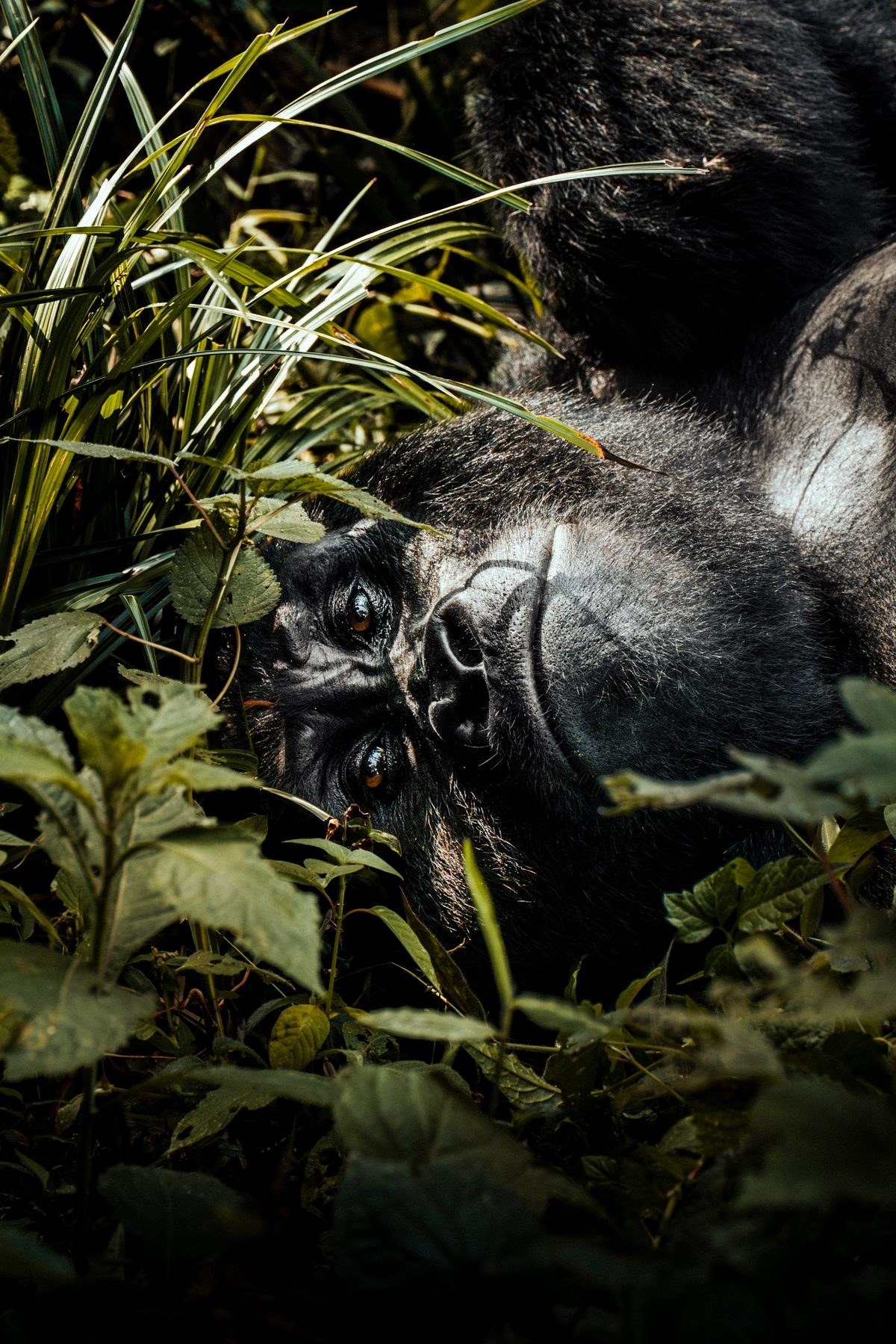
Uganda is home to the largest single concentration of mountain gorillas on Earth. The 2018 Great Ape Census counted 459 mountain gorillas (Gorilla beringei beringei) living within Bwindi Impenetrable National Park — approximately 43 percent of the estimated global population of 1,063. A second, smaller population inhabits Mgahinga Gorilla National Park in south-western Uganda; Mgahinga's gorillas form part of the Virunga Massif population.
There are no mountain gorillas in captivity anywhere in the world. Every individual alive exists in a narrow chain of montane forest spanning Uganda, Rwanda, and the Democratic Republic of Congo: Bwindi in Uganda, the Virunga Massif shared across all three countries, and the Mgahinga extension. The two populations — Bwindi and Virunga — have been geographically isolated for thousands of years and are genetically distinguishable.
IUCN Status: Endangered, Not Critically Endangered
Mountain gorillas are listed as Endangered on the IUCN Red List — a meaningful step back from Critically Endangered, where they sat for decades. The 2018 reclassification reflected a genuine population increase: from an estimated 620 individuals in 2008 to over 1,000 by 2018. This was attributed to sustained anti-poaching operations, veterinary interventions by the Gorilla Doctors programme, and habituation and monitoring work carried out by Uganda Wildlife Authority (UWA), Rwanda Development Board, and the Institut Congolais pour la Conservation de la Nature (ICCN).
Endangered does not mean safe. The species faces continued pressure from habitat encroachment at park boundaries, respiratory disease transmission (gorillas share 98.3% of human DNA and are highly susceptible to common human illnesses), and political instability in parts of the Virunga range. Every gorilla family that remains habituated, monitored, and protected is irreplaceable.
What a Gorilla Trek Actually Looks Like
On our gorilla trek in January 2026, we were accompanied by a lead guide and two armed rangers. The weapons felt incongruous for about thirty seconds — then the terrain explained it. The forest is genuinely dense, the paths unmarked, and the rangers are there not just for security but as experienced forest navigators who communicate with trackers by radio and keep the group moving safely through terrain that goes from muddy track to vertical scramble without warning. They were also remarkably good at helping people over the harder sections.
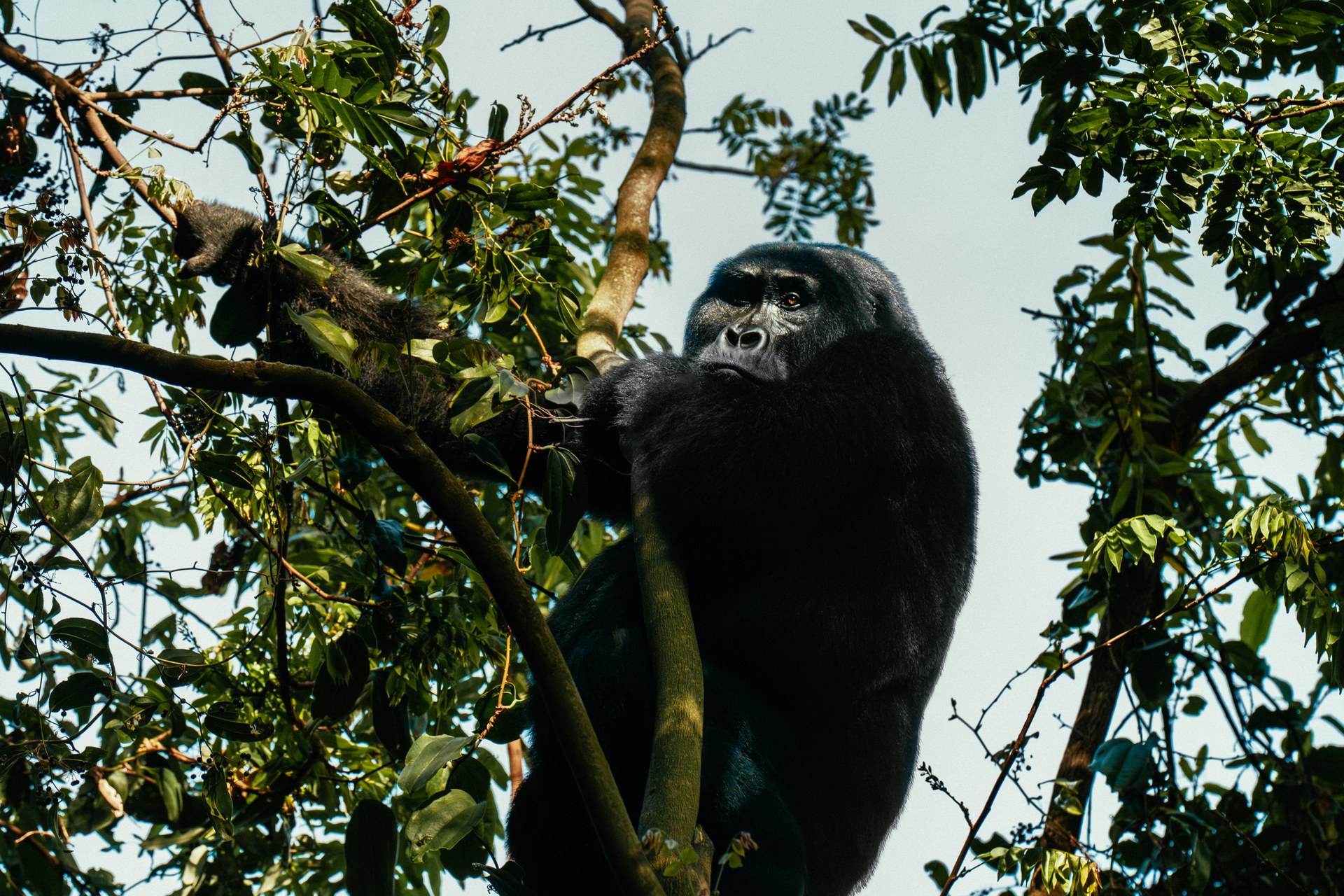
After one hour of trekking, we found the first gorilla family. The first individual was sitting high in a tree, calmly feeding on leaves — aware of our presence, entirely unbothered. That composure is the result of years of daily ranger visits during habituation: gradual, patient exposure until the gorillas accept humans as a neutral presence. Maintaining that acceptance requires ongoing careful management of every visit.
The 9 Trekking Rules That Protect the Gorillas
Uganda Wildlife Authority enforces strict conduct rules during every gorilla encounter. Rangers will end a trek early if rules are broken. The rules exist primarily to protect the gorillas from human disease and behavioural disruption — not as bureaucratic formality.
Maximum 8 visitors per gorilla family per day
Reduces disturbance and disease exposure
Maximum 1 hour with the gorillas
Limits cumulative stress on the family group
Maintain at least 7 metres distance at all times
Reduces airborne and contact disease transmission
No trekking if you have a cold, cough, or respiratory illness
Gorillas share 98.3% of human DNA and are highly susceptible to our diseases
Masks must be worn during the gorilla encounter
Additional barrier against airborne pathogens
No flash photography
Prevents startling gorillas and disrupting behaviour
No eating or drinking near the gorillas
Avoids attracting gorillas to human food and its associated risks
Do not touch the gorillas — even if they approach
Disease transmission works in both directions; maintain the distance
Minimum age: 15 years
UWA regulation; younger children cannot participate regardless of fitness
How the $800 Permit Funds Conservation
The gorilla trekking permit costs $800 USD per person (2026 UWA rate). This pricing is a deliberate conservation tool: a high cost per visitor limits daily numbers, reduces disturbance, and generates concentrated revenue from a small group rather than mass tourism. The revenue funds ranger operations, snare removal, veterinary care through the Gorilla Doctors programme, and habitat monitoring across the park's 321 km².
UWA's community revenue-sharing programme returns a percentage of park entrance fees to communities surrounding Bwindi. This creates a direct financial connection between gorilla survival and local wellbeing — a mechanism that has consistently shown measurable results in reducing poaching pressure. UWA's community revenue-sharing scheme returns 20% of park gate fees to surrounding parishes.
Mountain Gorilla Quick-Reference Table
| Scientific name | Gorilla beringei beringei |
| IUCN status | Endangered (reclassified 2018) |
| Global population | ~1,063 (2018 Great Ape Census) |
| Population in Bwindi | 459 (2018 Great Ape Census) |
| Countries with wild populations | Uganda, Rwanda, Democratic Republic of Congo |
| Captive population | None — no mountain gorillas exist in captivity |
| Average silverback weight | ~195 kg |
| Daily range | 300 m to 3 km depending on food availability |
| Primary diet | Leaves, stems, bark, fruit — predominantly foliage |
| Permit price (Uganda, 2026) | $800 USD per person |
| Habituated families in Bwindi | ~19 families (UWA, 2025–2026) |
Data reflects the 2018 Great Ape Census and current UWA permit schedule.