
The Frontline of Gorilla Protection
Anti-poaching in Bwindi Impenetrable National Park is a daily, ground-level effort. Uganda Wildlife Authority (UWA) rangers patrol the park's 321 square kilometers of dense tropical forest every day, traversing some of the most physically demanding terrain in East Africa. Their work includes removing snares, tracking gorilla groups, gathering intelligence on illegal activities, and maintaining a visible deterrent presence throughout the park. Without this persistent effort, the gorilla population gains of the past three decades could be reversed.
Snare Removal: A Constant Battle
Wire and rope snares set by bushmeat hunters are one of the most pervasive threats to gorillas and other wildlife in Bwindi. These snares are typically intended for smaller animals such as duikers and bush pigs, but gorillas — especially curious juveniles — can become entangled in them. The consequences range from severed fingers and infected wounds to death. Dedicated snare-removal teams sweep the forest systematically, and thousands of snares are confiscated and destroyed each year. Despite this effort, new snares continue to appear, particularly in areas near the park boundary.
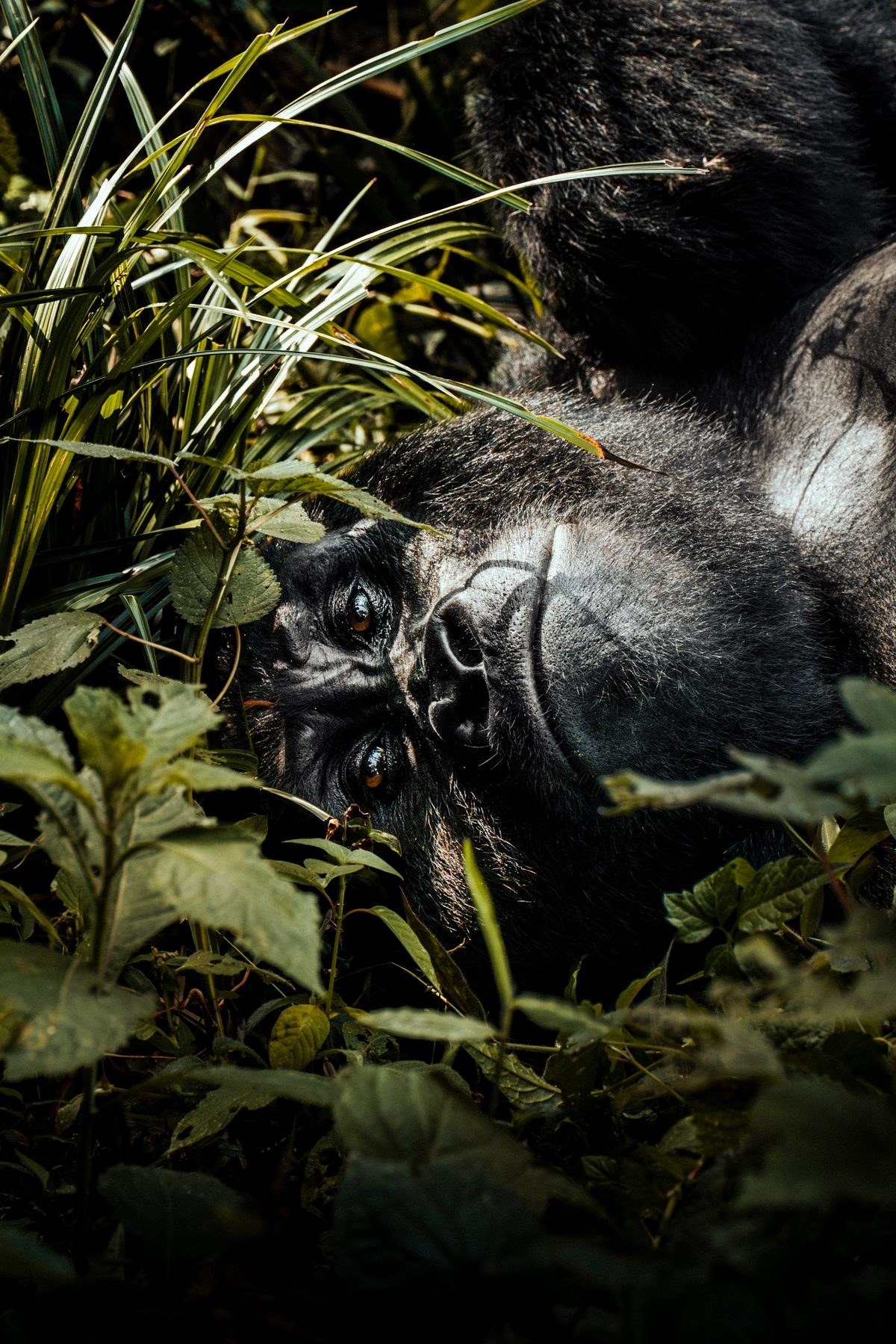
Silverback in the thicket, gazing into ancient eyes
Gorillas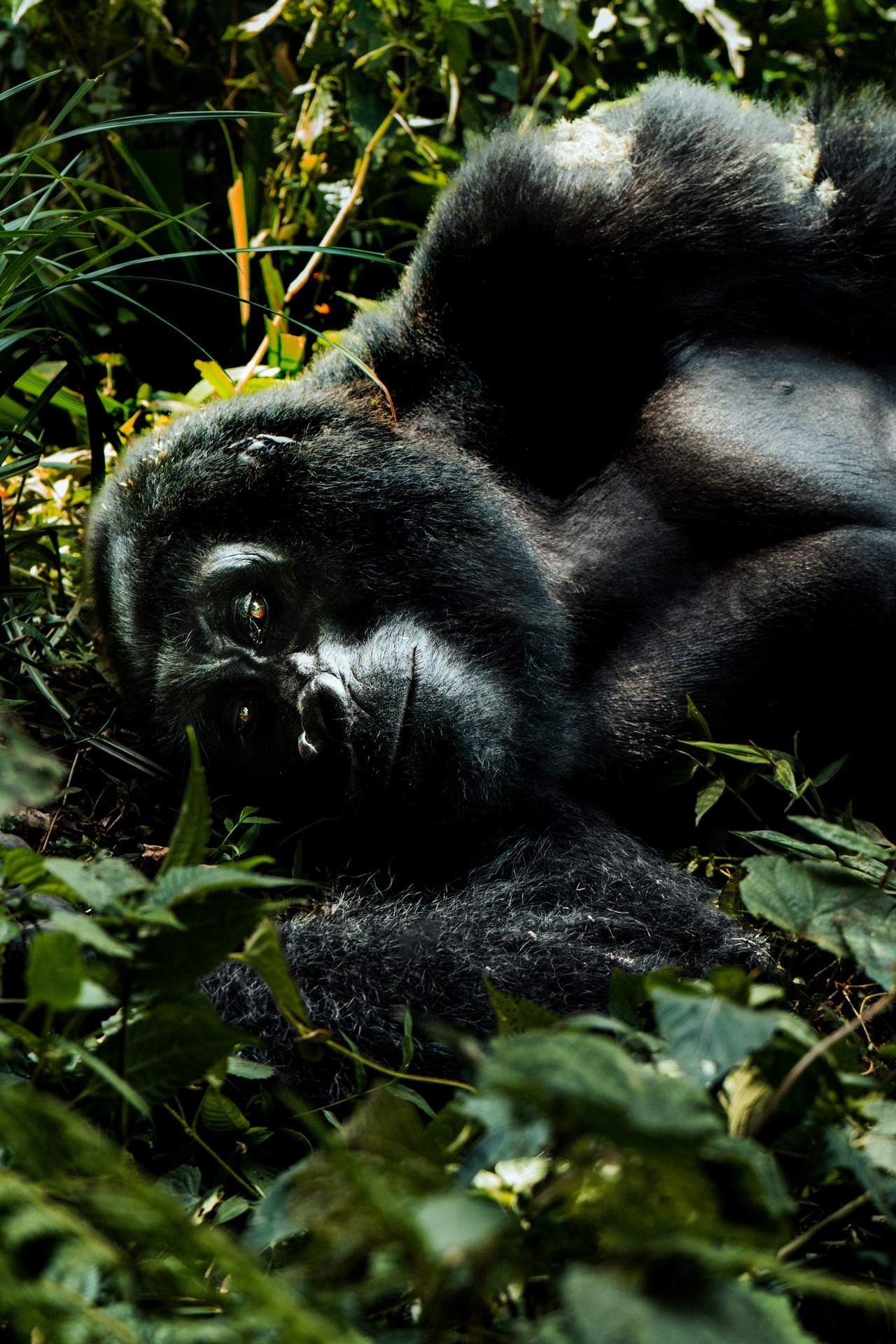
Silverback resting in Bwindi rainforest
Mountain Gorilla (Silverback)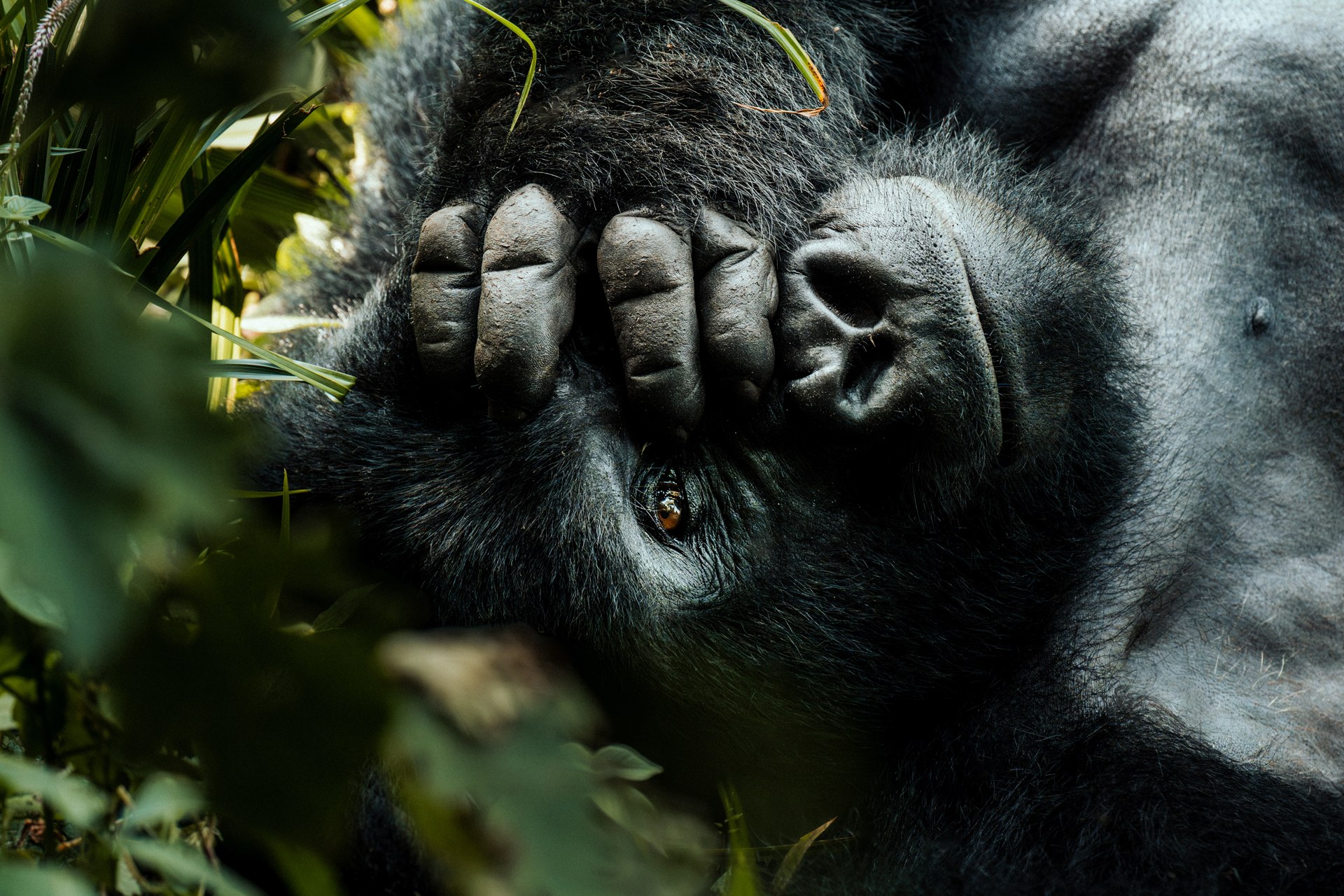
Gorilla covering its face with its hand
Mountain GorillaThe Gorilla Doctors Program
When a gorilla is found injured, ill, or caught in a snare, the Gorilla Doctors veterinary team provides critical medical intervention. Operating across all mountain gorilla habitats in Uganda, Rwanda, and the Democratic Republic of Congo, the program monitors gorilla health, performs field surgeries, administers medication, and manages disease outbreaks. In Bwindi, their interventions have saved numerous gorilla lives, particularly in cases of snare injuries where rapid treatment prevents infection and loss of limbs.
Intelligence and Community Networks
Effective anti-poaching relies not only on patrols within the park but also on intelligence from surrounding communities. UWA has developed networks of community informants who report suspicious activities, illegal encroachment, and the presence of snare-setters. This community-based intelligence system has proven highly effective, enabling rangers to target their patrols more efficiently and to apprehend individuals engaged in illegal hunting before damage is done. The system works because communities increasingly see conservation as serving their own interests, particularly through the revenue-sharing program.
From Poacher to Protector
One of the most effective strategies has been the recruitment of former poachers as conservation workers. Many individuals who once set snares or hunted in the forest now work as park rangers, tourist porters, or community scouts. Their intimate knowledge of the forest, wildlife movements, and poaching techniques makes them uniquely valuable to anti-poaching operations. These programs not only reduce poaching directly but also demonstrate that conservation can provide sustainable livelihoods.
Challenges and Scale
Despite significant progress, anti-poaching in Bwindi remains challenging. The forest's dense canopy and steep terrain make surveillance difficult. The park's long boundary, shared with densely populated agricultural land, creates numerous potential entry points for illegal activities. Ranger numbers, while substantial, are stretched thin across the park's four sectors. Sustained funding, ongoing community engagement, and improved technology — including camera traps and GPS-based patrol management systems — are all essential to maintaining and strengthening protection.