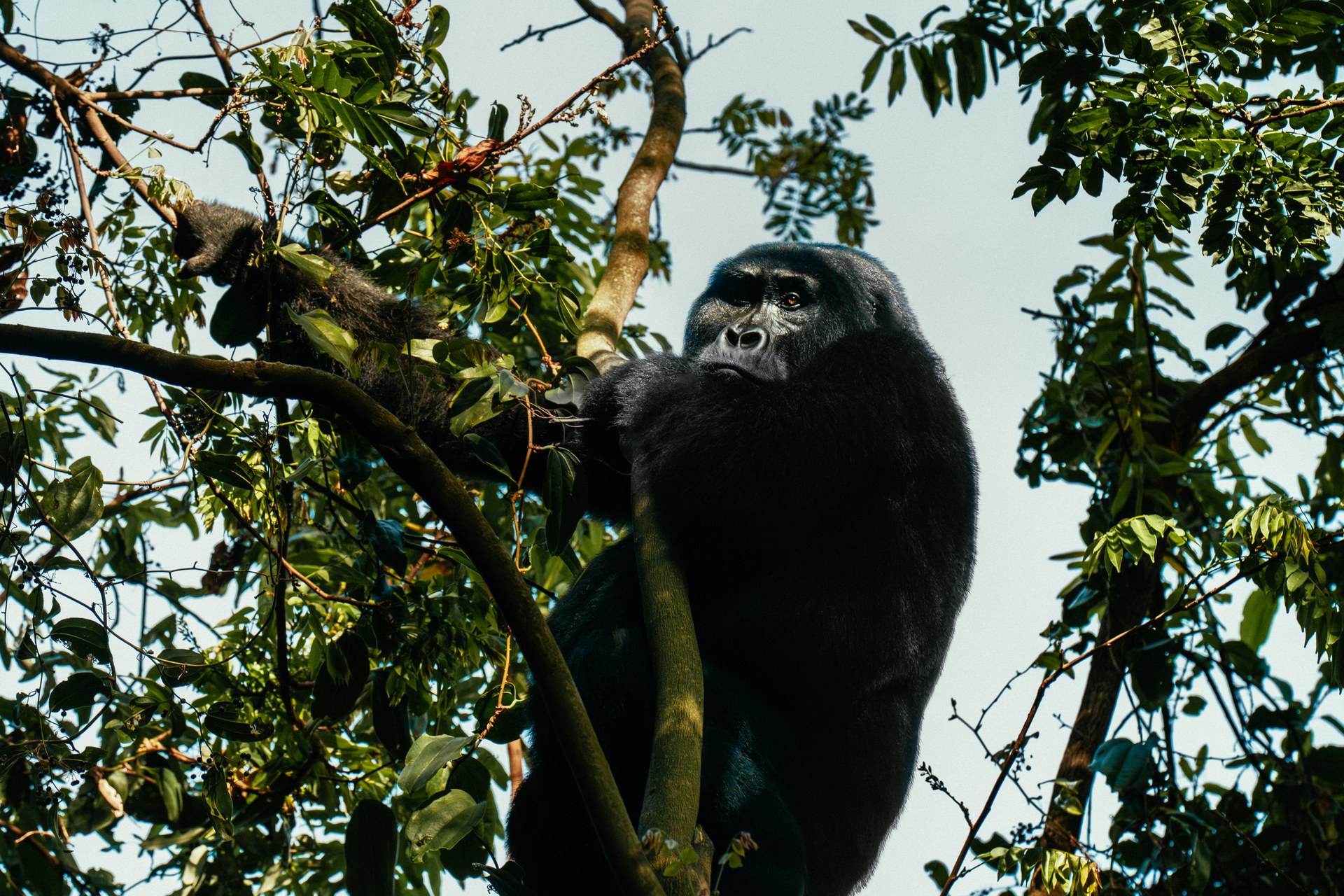
An Ancient Forest Under Threat
Bwindi Impenetrable Forest is one of the oldest rainforests in Africa, estimated to have existed for over 25,000 years, surviving the ice ages when much of Africa's tropical forest cover disappeared. For millennia, the Batwa people lived within the forest as hunter-gatherers, coexisting with its wildlife in a low-impact relationship. As surrounding populations grew and colonial administration arrived, the forest faced new pressures: logging, mining, and commercial hunting threatened to degrade an ecosystem that had endured for tens of thousands of years.
1932: Gazettement as a Forest Reserve
In 1932, the British colonial administration gazetted Bwindi as a Crown Forest Reserve. This designation provided some protection against wholesale clearance but still permitted selective logging, pit-sawing, and the extraction of forest products. Mining for gold and other minerals continued in some areas. The Batwa and surrounding communities retained some access rights, though these were increasingly restricted. While the forest reserve status prevented the complete destruction of the forest, it was insufficient to protect the gorilla population and the broader ecosystem from cumulative degradation.
1991: National Park Establishment
Uganda's government established Bwindi Impenetrable National Park in 1991, upgrading the area from a forest reserve to full national park status. This decision was driven by growing scientific evidence of the forest's exceptional biological diversity, international advocacy for mountain gorilla protection, and the Ugandan government's recognition of the area's potential for wildlife tourism. The gazettement was deeply contentious locally. Communities lost access to forest resources they had relied upon for generations. The Batwa were displaced entirely. Tensions between the park and surrounding communities would shape conservation policy for decades to come.
1993: The First Gorilla Tourism
In April 1993, the Mubare gorilla group in the Buhoma sector became the first group habituated for tourism in Uganda. The habituation process, which involved years of patient, daily approaches by trackers, was modeled on the pioneering work done in Rwanda's Volcanoes National Park. The launch of gorilla tourism was transformative. It provided a compelling economic justification for the park's existence, generating revenue that would eventually fund ranger patrols, community programs, and park infrastructure. Buhoma became the gateway to Bwindi, and gorilla trekking became Uganda's premier wildlife tourism experience.
1994: UNESCO World Heritage Site
Just three years after becoming a national park, Bwindi was inscribed as a UNESCO World Heritage Site in 1994. The designation recognized the forest's outstanding universal value: its exceptional biological diversity, its role as a critical habitat for mountain gorillas, and its significance as one of Africa's most ancient forests. UNESCO status brought international visibility, increased conservation funding, and created a framework for ongoing monitoring and reporting. It also strengthened the park's position against development pressures and extractive interests.
1997 and Beyond: Tragedy and Resilience
Conservation in Bwindi has not been without tragedy. In March 1999, a group of Interahamwe rebels crossed into Uganda from the Democratic Republic of Congo and attacked tourists and park staff in the Buhoma sector, killing eight tourists and four Ugandans. The attack devastated tourism for several years and exposed the security challenges facing conservation in a region affected by armed conflict. The park's recovery from this event demonstrated the resilience of both the institution and the local communities whose livelihoods depended on tourism. Security measures were strengthened significantly, and tourism gradually returned.
The 2000s and 2010s: Expansion and Professionalization
The decades following the park's establishment saw steady expansion of both conservation programs and tourism infrastructure. Additional gorilla groups were habituated across all four sectors — Buhoma, Ruhija, Rushaga, and Nkuringo. The revenue-sharing program matured, directing funds to community projects. The Gorilla Doctors veterinary program expanded its capacity for field interventions. Research programs, including long-term ecological monitoring and gorilla behavioral studies, deepened scientific understanding of the ecosystem. By the 2018 census, the mountain gorilla population had surpassed 1,000 globally, with Bwindi accounting for nearly half of that number — a milestone that few conservationists had dared to predict when the park was established.
Present Day
Today, Bwindi Impenetrable National Park is widely regarded as one of Africa's greatest conservation success stories. The gorilla population continues to grow, tourism revenue supports both park management and community development, and the forest ecosystem remains largely intact. Yet the challenges are far from resolved. Population pressure, climate change, disease risk, and the complexities of community relations all require sustained attention. The history of conservation in Bwindi is a reminder that protecting a place of extraordinary natural value is not a one-time achievement but an ongoing commitment.