Why There Are No Lodges Inside Bwindi
Bwindi Impenetrable National Park covers 321 km² of montane forest in southwestern Uganda. The entire area is managed as a protected zone under the Uganda Wildlife Act, which prohibits any residential or commercial development inside the park boundary. No lodge, guesthouse, or permanent camp is permitted within the forest itself. All accommodation sits on private land outside the park, clustered near each of the four trekking sectors.
The Uganda Wildlife Authority's General Management Plan 2014–2023 identified Management Challenge #20 as the "lack of low-level (price) accommodation facilities like guest houses inside the park." This framing is notable: the challenge is not that accommodation is absent from inside the park — that is by design — but that affordable options close to the park remain scarce. The existing accommodation supply is heavily weighted toward mid-range and luxury properties, leaving budget travellers with limited choices.
The practical consequence of this arrangement is straightforward. Visitors staying outside the boundary must drive to their sector trailhead each morning for the 7:00 AM briefing. Most lodges organize these transfers as part of their standard package, so the logistics are usually handled without additional planning.
Choosing Your Sector: The Accommodation Logic
Bwindi has four trekking sectors — Buhoma, Ruhija, Rushaga, and Nkuringo — and each has its own distinct cluster of accommodation properties nearby. Your gorilla permit is issued for a specific sector, and you must trek from that sector on the day of your permit. This means your choice of sector determines where you need to stay the night before trekking.
Geographically, Buhoma and Ruhija form the northern cluster, while Rushaga and Nkuringo form the southern cluster. The drive between the northern and southern clusters takes 2–3 hours on roads that range from tarmac to rough dirt track depending on the route and season. Crossing between clusters on trekking days is not practical, which means that if you hold permits for sectors in different clusters on consecutive days, you will need to move lodges between those nights.
The most important booking principle is this: decide on your sector first, confirm accommodation availability in that sector, then secure your gorilla permit. Reversing that order — booking a permit and then searching for accommodation — risks ending up with a permit for a sector where all nearby properties are full during your dates.
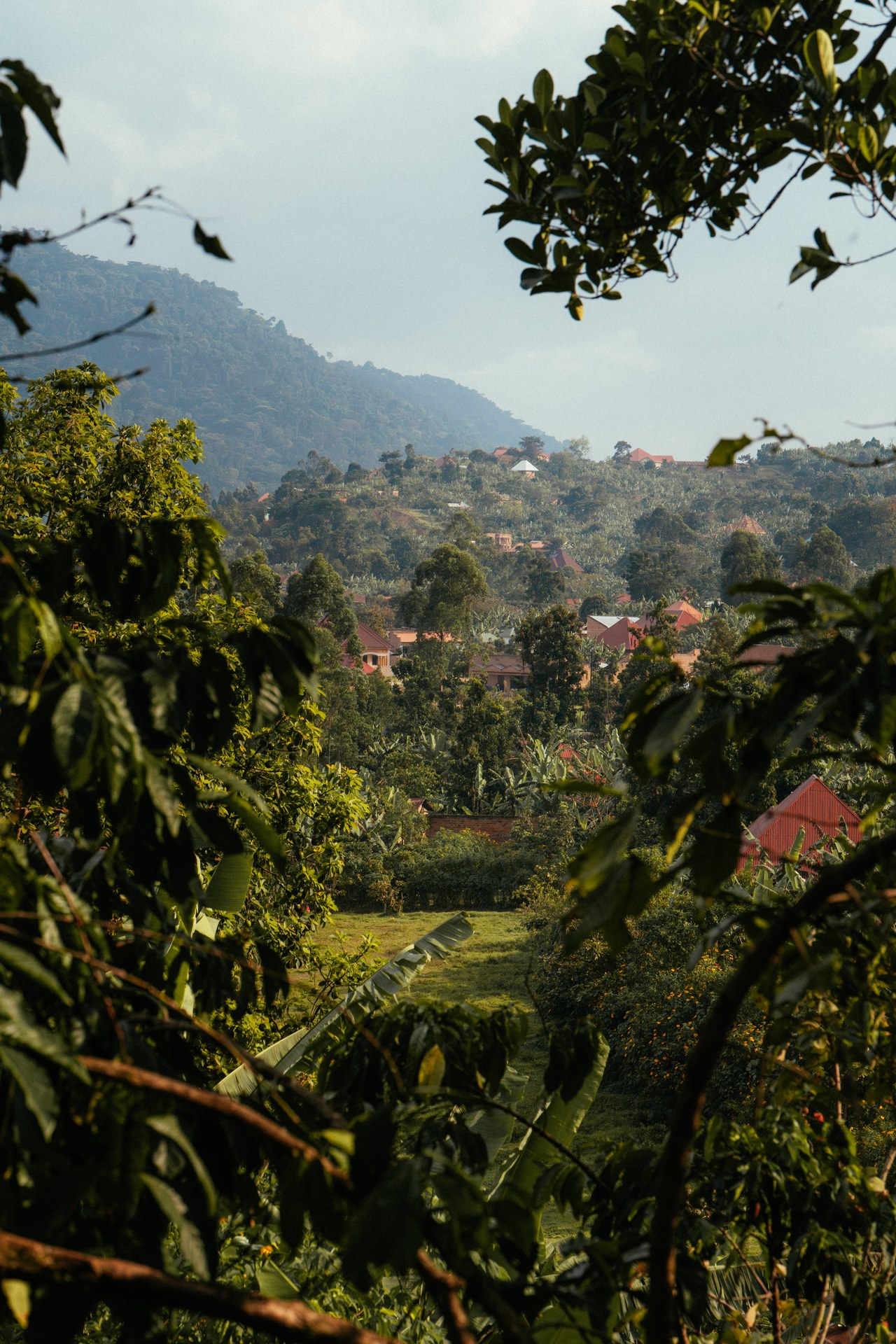
Buhoma: green valley with houses on the hillside
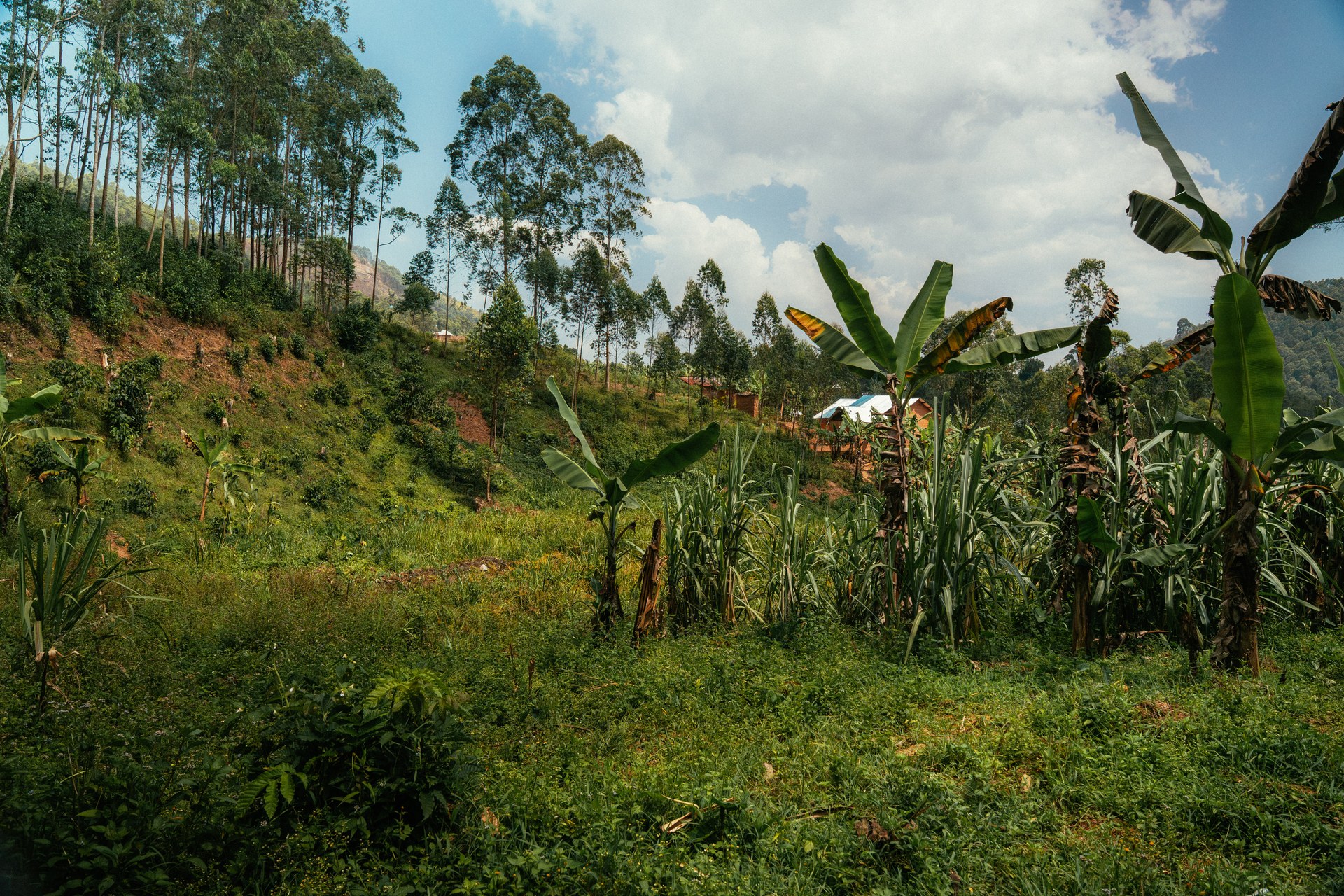
Green valley near Buhoma
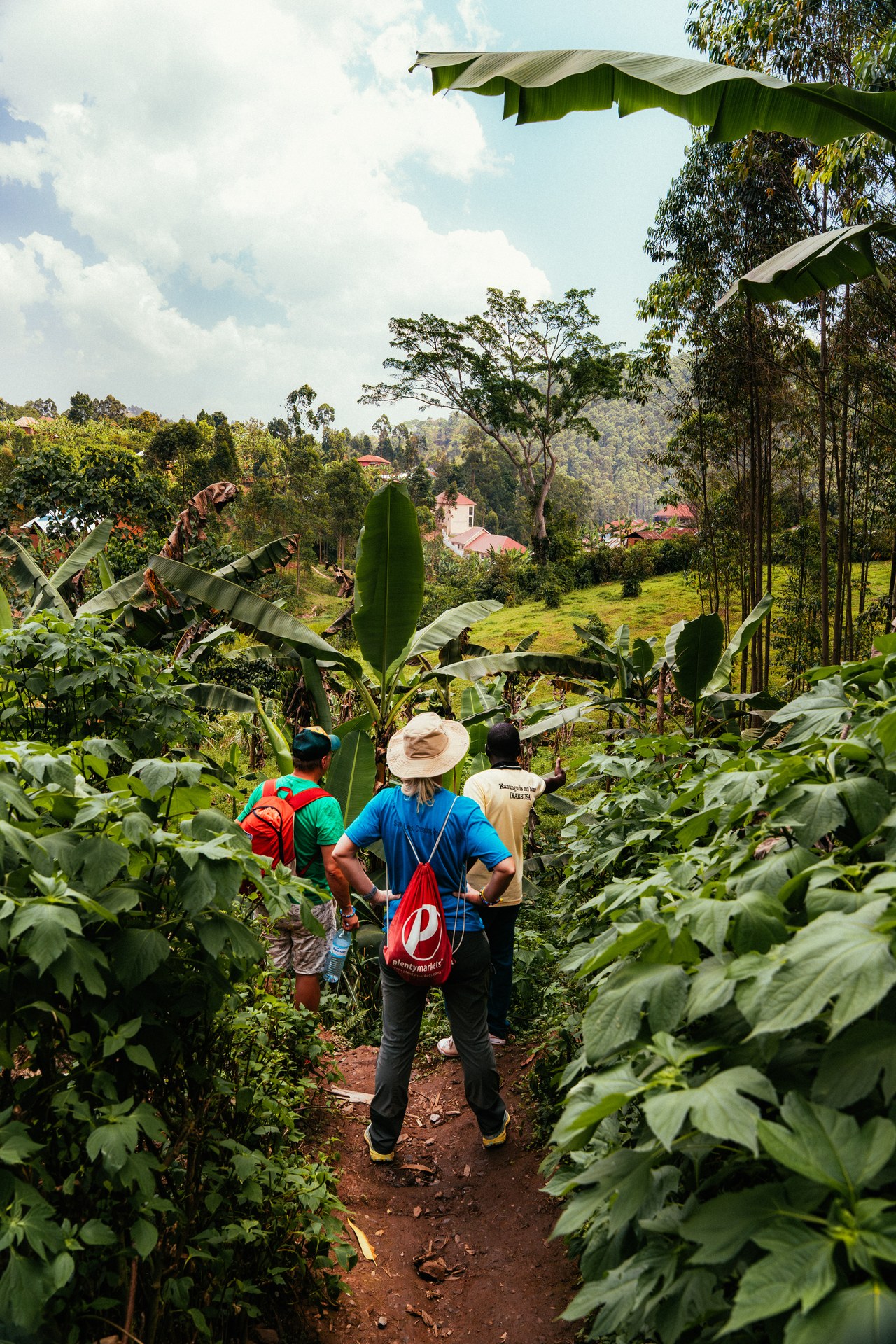
Through the jungle, path to Buhoma orphanage
Buhoma: The Original Gorilla Tourism Base
Buhoma was the first sector opened to gorilla tourism in Bwindi and remains the most developed in terms of accommodation range. The village sits at the park's northern edge and offers everything from the community-owned Buhoma Community Rest Camp — one of the few genuinely budget-friendly options near the park, with rooms from approximately $50 per night — through to mid-range lodges and upmarket forest camps.
Beyond gorilla trekking, Buhoma has a community walk that takes visitors through nearby villages to meet local craftspeople and cultural practitioners. The sector headquarters hosts the 7:00 AM permit briefing before each trek, and rangers assign groups to specific gorilla families at that point. Most lodges in Buhoma are within a 10–20 minute drive of the trailhead.
Because Buhoma is the best-known sector and has the widest infrastructure, it also fills fastest during peak season. Travellers targeting Buhoma specifically should plan to book both accommodation and permits well ahead — six months or more during the June–September and December–January high seasons.
Ruhija: High-Altitude and Birding Focused
Ruhija sits at approximately 2,350 metres above sea level, making it the highest and coolest of Bwindi's four sectors. The altitude shapes the experience: expect cold mornings, frequent mist, and a distinctly montane atmosphere. Temperatures can drop significantly at night, so warm layers are essential regardless of the season.
Accommodation options at Ruhija are fewer than at Buhoma or Rushaga, but the sector attracts a specific type of visitor. Ruhija is home to the Institute of Tropical Forest Conservation (ITFC), a research station affiliated with Mbarara University of Science and Technology that has conducted long-term ecological research in Bwindi. The sector also hosts some of Uganda's most sought-after Albertine Rift endemic bird species, making it the primary destination for serious birders visiting the park.
Access to Ruhija is via Kabale town, following the Ruhija road northeast into the mountains. The road can be challenging in wet conditions. Because Ruhija sees fewer visitors than Buhoma or Rushaga, gorilla permits here are sometimes easier to obtain during shoulder season, though this can vary year to year based on which gorilla groups are assigned to which sector.
Rushaga and Nkuringo: The Southern Sectors
Rushaga is the sector with the greatest number of habituated gorilla groups available for tourism permits, making it the most permit-rich destination in the park. The accommodation supply around Rushaga has expanded significantly in recent years to meet growing demand, ranging from tented bush camps through to mid-range lodges. Rushaga's location in the southern part of the park also makes it a convenient base for combining gorilla trekking with a visit to Lake Bunyonyi, one of Uganda's most scenic highland lakes, which is roughly an hour's drive away.
Nkuringo occupies a dramatic position on a ridge above the southwestern corner of the forest, with views across the park canopy and into the Democratic Republic of Congo on clear days. The elevation at Nkuringo is higher than Rushaga, which means cooler conditions and a more remote feel. Accommodation options are growing but remain limited compared to Rushaga, with several camps and lodges perched along the ridge.
Both Rushaga and Nkuringo are reached from Kisoro town in the southwest, which itself is connected to Kabale and the rest of Uganda's road network. Travellers combining the southern sectors with Rwanda's Volcanoes National Park will find that Kisoro is also the nearest Ugandan town to the Cyanika border crossing.
Practical Booking Advice
The single most important rule for booking Bwindi accommodation is to confirm your lodge before your permit, not after. Gorilla permits are sold by sector, and the accommodation cluster for each sector is small. If you secure a permit for Ruhija sector and then discover that the only guesthouse there is fully booked for your dates, you have a logistical problem with no easy solution. By confirming accommodation availability first, you ensure that your permit and your bed are in the same place.
Lead times vary significantly by season. During peak season — June through September, and December through January — both gorilla permits and popular lodges can sell out 6–12 months in advance. During the low season, particularly April, May, and November, bookings of 4–8 weeks ahead are usually sufficient, though the most sought-after properties at Buhoma may still require longer notice. The Uganda Wildlife Authority's General Management Plan identified low-season visitation as a challenge for the park, and some lodges offer reduced rates during these months.
Most mid-range and upmarket lodges include a morning transfer to the sector trailhead as part of their package. Porter hire is available at the trailhead itself and is strongly recommended — the terrain in Bwindi is steep and the trek duration is unpredictable, ranging from 2 to 8 hours depending on where the gorillas have moved that day. Porters are paid directly at the park and their hire supports the local community economy around the park boundary.
Frequently Asked Questions
Related Articles
Travel Overview: Planning Your Bwindi Visit
How to Reach Bwindi National Park
Buhoma Sector: The Original Gorilla Base
Ruhija Sector: High Altitude and Birding
Rushaga Sector: Southern Gorilla Groups
Nkuringo Sector: The Ridge Above the Forest
Gorilla Trekking Permits: How to Book