Uganda's 10 national parks recorded close to 467,000 visitor entries in 2025, part of a sustained recovery from the Covid-period low of roughly 101,000 in 2020. The infrastructure is catching up with demand — new gate buildings, paved approach roads, and expanded lodge capacity are all visible in the parks we visited in 2024 and 2025. The more immediate question for a visitor planning a trip is simpler: which park deserves your time?
The honest answer is that no single park covers everything. Uganda's parks are geographically spread and ecologically distinct: the montane rainforest of Bwindi has almost nothing in common with the open savanna of Kidepo Valley. The comparison below is designed to help you build an itinerary around what you specifically want to see.
All 10 Uganda National Parks at a Glance
| Park | Size | Key Wildlife | Best For |
|---|---|---|---|
| Bwindi Impenetrable NP | 321 km² | Mountain gorillas | Gorilla trekking |
| Murchison Falls NP | 3,840 km² | Elephant, giraffe, hippo, crocodile | Big game, boat safari |
| Queen Elizabeth NP | 1,978 km² | Lion, hippo, chimp, elephant | Game drives, Kazinga Channel |
| Kibale Forest NP | 795 km² | Chimpanzees (highest density in Uganda) | Chimp trekking |
| Kidepo Valley NP | 1,442 km² | Lion, cheetah, eland, ostrich | Wilderness, solitude |
| Lake Mburo NP | 370 km² | Zebra, impala, hippo | Walking safari, en-route stop |
| Mgahinga Gorilla NP | 30 km² | Mountain gorillas, golden monkeys | Gorilla + golden monkey combo |
| Rwenzori Mountains NP | ~1,000 km² | Rwenzori endemic birds, leopard | Multi-day mountain trekking |
| Mt. Elgon NP | ~1,110 km² | Elephant, sitatunga, birds | Hiking, cave exploration |
| Semuliki National Park | 220 km² | 400+ bird species, forest mammals | Birding, Ituri Forest species |
Park sizes: Bwindi (UWA), Mgahinga 30 km² (travel guide, 2020 edition), Rwenzori ~1,000 km² (travel guide, 2020 edition). Other sizes approximate. Best months are guidelines — most parks are accessible year-round.
Murchison Falls: Uganda's Largest Park in Practice
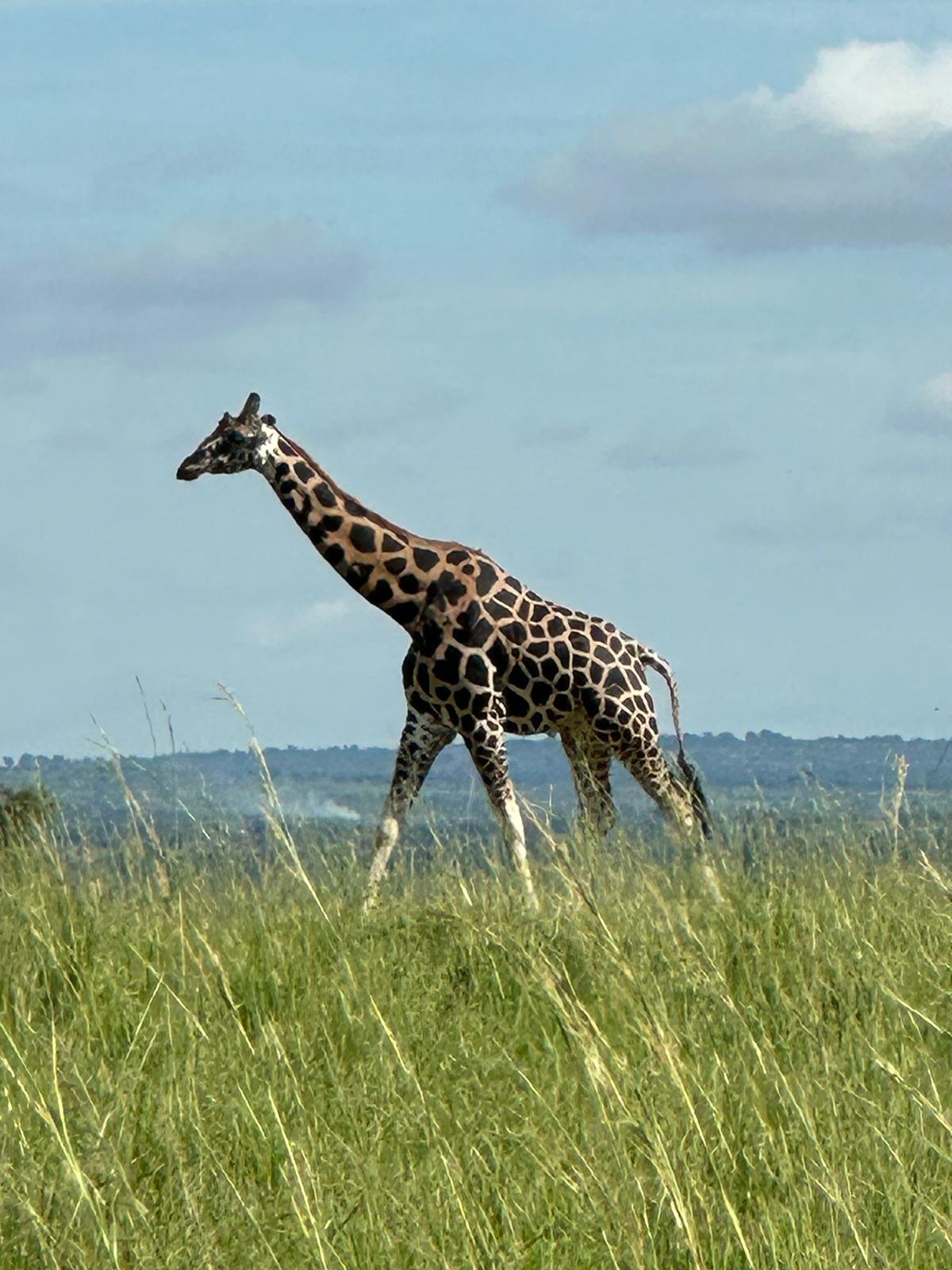
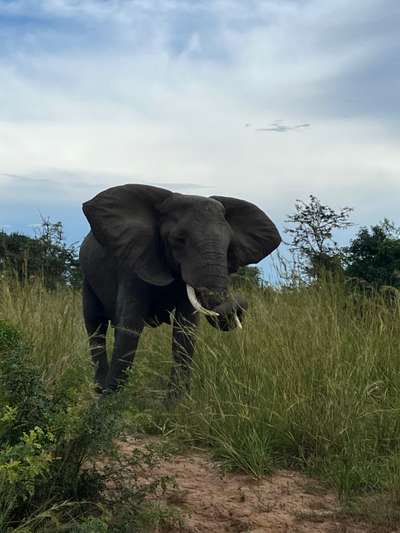
At approximately 3,840 km², Murchison Falls National Park is Uganda's largest protected area and the one most comparable to East African safari benchmarks. The Nile runs through it. Elephants, Rothschild giraffes, hippos, buffalos, lions, leopards, and crocodiles all occur here at densities high enough to make sightings on a single morning game drive reliable rather than lucky.
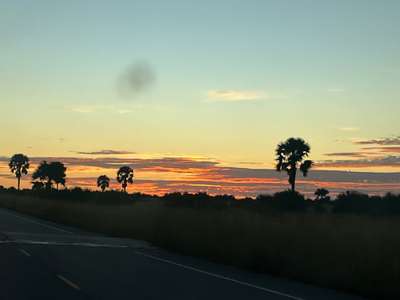
We visited Murchison Falls in October 2024. We drove out from the lodge before sunrise to catch the game drive in the first light — the kind of sunrise that makes you understand why people come back to this park twice. The savanna opens up on the north bank of the Nile into long flat plains where visibility is wide enough to spot animals from distance; the Rothschild giraffe we encountered was calm and completely unbothered by the vehicle.
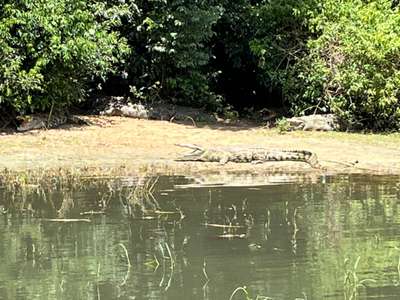
The boat trip up the Nile to the base of Murchison Falls is the other non-negotiable activity. From the boat, crocodiles rest on sandbanks close enough to assess properly — larger and faster than photographs suggest. Hippo pods line the banks. The falls themselves narrow the entire Nile into a 7-metre channel; the force of it is something a photograph does not translate.
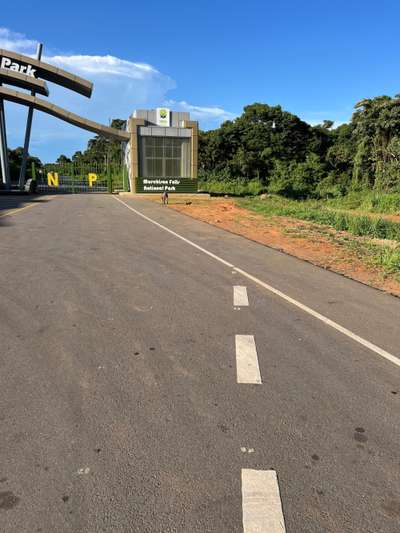
The entrance gate itself was a noticeable data point: a newly constructed building on a freshly asphalted road, built to handle a significantly larger throughput than the park has seen historically. Uganda's UWA recorded UGX 105 billion in tourism revenue in the twelve months to June 2023, and the park infrastructure reflects that reinvestment.
The Southwest Cluster: Bwindi, Queen Elizabeth, and Kibale
The southwestern parks form a natural itinerary circuit. Bwindi Impenetrable National Park holds nearly half the world's mountain gorilla population across four sectors (Buhoma, Ruhija, Rushaga, Nkuringo); a gorilla trekking permit here costs USD 800 (2026 rate, UWA). Queen Elizabeth National Park to the north covers almost 2,000 km² and offers one of Uganda's most varied game drive experiences: elephants, hippos, lions, and the Kazinga Channel boat trip. Kibale Forest NP, another two hours north of Bwindi, has the highest chimpanzee density in Uganda.
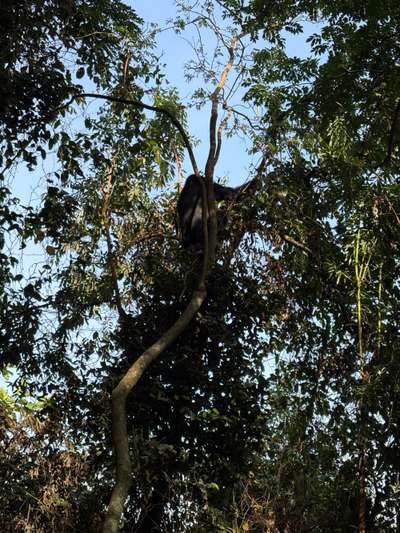
A 10–12 day trip from Kampala can realistically cover all three: drive to Kibale (chimp trekking), continue to Queen Elizabeth (game drives, Kazinga Channel), then Bwindi (gorilla trekking), returning via Lake Mburo NP. This is the route most independent travellers use, and the one most tour operators package as their flagship Uganda itinerary.
Remote Parks: Kidepo Valley and the Specialist Destinations
Kidepo Valley National Park in the far northeast is consistently rated as one of Africa's top wilderness parks by travellers who have been — and consistently overlooked by first-timers who choose accessibility over remoteness. Kidepo has lion, cheetah, eland, and ostrich in a landscape that looks nothing like the rest of Uganda: dry, wide open, and almost completely tourist-free outside the main season. Getting there requires either a full day of driving from Kampala or a domestic flight to Kidepo airstrip.
Semuliki National Park, at the DRC border in the west, has recorded over 400 bird species (travel guide, 2020 edition) — a figure that makes it one of Uganda's premier birding destinations. The park protects a section of Ituri Forest flora and fauna that does not occur elsewhere in Uganda, including several Congo Basin specials. Rwenzori Mountains National Park (~1,000 km²) offers technical multi-day trekking to snow-capped peaks on the equator — the mountain circuit can take 6–9 days at high-altitude camp.
Mgahinga: The Smallest Park with a Specific Purpose
At just 30 km² (travel guide, 2020 edition), Mgahinga Gorilla National Park is Uganda's smallest. It has a single habituated gorilla family — the Nyakagezi group — and permits can only be booked 14 days in advance due to the family's cross-border ranging behaviour between Uganda, Rwanda, and the DRC. What Mgahinga offers that Bwindi does not is golden monkey trekking (permit USD 50, 2020 rate — verify current pricing with UWA). The hub town of Kisoro has around 18,000 inhabitants (travel guide, 2020 edition) and sits 75 km west of Kabale.
Mgahinga is best approached as a complement to Bwindi rather than an alternative. If your primary goal is the gorilla encounter with maximum certainty, Bwindi's larger number of habituated families and its four-sector system make it the more reliable choice. If you want the combination of gorillas and golden monkeys in a single park — and are flexible on dates — Mgahinga is worth the extra planning.
Which Park for Which Traveller
First-time Uganda visitor (7–10 days)
Recommended: Murchison Falls NP + Kibale Forest NP + Bwindi Impenetrable NP
Covers big game, chimpanzees, and gorillas. The three most distinct experiences Uganda offers.
Short trip from Kampala (3–4 days)
Recommended: Lake Mburo NP + Kibale Forest NP or Queen Elizabeth NP
Lake Mburo is just 4 hours from Kampala. Kibale is reachable in under 6 hours.
Wildlife enthusiast / safari-focused
Recommended: Murchison Falls NP + Kidepo Valley NP
The two parks with the broadest species diversity and the largest open landscapes.
Gorilla and primate specialist
Recommended: Bwindi Impenetrable NP (2 nights) + Kibale Forest NP
Bwindi for mountain gorillas; Kibale for the highest-density chimp trekking in Uganda.
Birder
Recommended: Semuliki NP + Queen Elizabeth NP + Kibale Forest NP
Semuliki holds Congo Basin endemics. Queen Elizabeth adds savanna and wetland species.
Trekker / mountain enthusiast
Recommended: Rwenzori Mountains NP + Mt. Elgon NP
Rwenzori for the technical equatorial snow peak; Mt. Elgon for a more accessible crater trek.
Who Visits Uganda's Parks: Domestic vs International
The 2024–2025 visitor records reveal a striking divide in how Uganda's national parks are used. Queen Elizabeth and Murchison Falls attract the largest numbers of domestic Ugandan visitors — 100,845 and 72,269 domestic entries respectively in 2025. Bwindi is a different case entirely: of its approximately 45,800 total visitors in 2025, only 1,874 — 4.1% — were domestic. The remaining 95.9% were international visitors.
The explanation is straightforward: an USD 800 gorilla trekking permit is beyond reach for most Ugandan households. Bwindi functions as Uganda's flagship international wildlife experience; Queen Elizabeth, Murchison Falls, and Lake Mburo serve a much broader domestic visitor base at significantly lower entry costs. The pattern matters for itinerary planning — Bwindi will feel different from a domestic crowd perspective than any other park on this list.
| Park | Dom. 2024 | Dom. 2025 |
|---|---|---|
| Queen Elizabeth NP | 73,869 | 100,845 |
| Murchison Falls NP | 93,133 | 72,269 |
| Semuliki NP | 37,737 | 40,192 |
| Lake Mburo NP | 23,748 | 24,479 |
| Rwenzori Mountains NP | 3,546 | 8,749 |
| Kibale Forest NP | 1,825 | 1,571 |
| Bwindi Impenetrable NP | 1,692 | 1,874 |
Domestic (Ugandan national) visitor entries per park, 2024 and 2025. Bwindi's domestic entries represent 4.1% of its total 2025 visitors — the lowest domestic share of any park tracked. The Rwenzori Mountains figure (+146.5%) reflects new trail access and growing interest in high-altitude trekking among Ugandan visitors. Kidepo Valley, Mgahinga, and Mt. Elgon not shown — below the threshold in this dataset.
Tourism Revenue and Conservation Investment
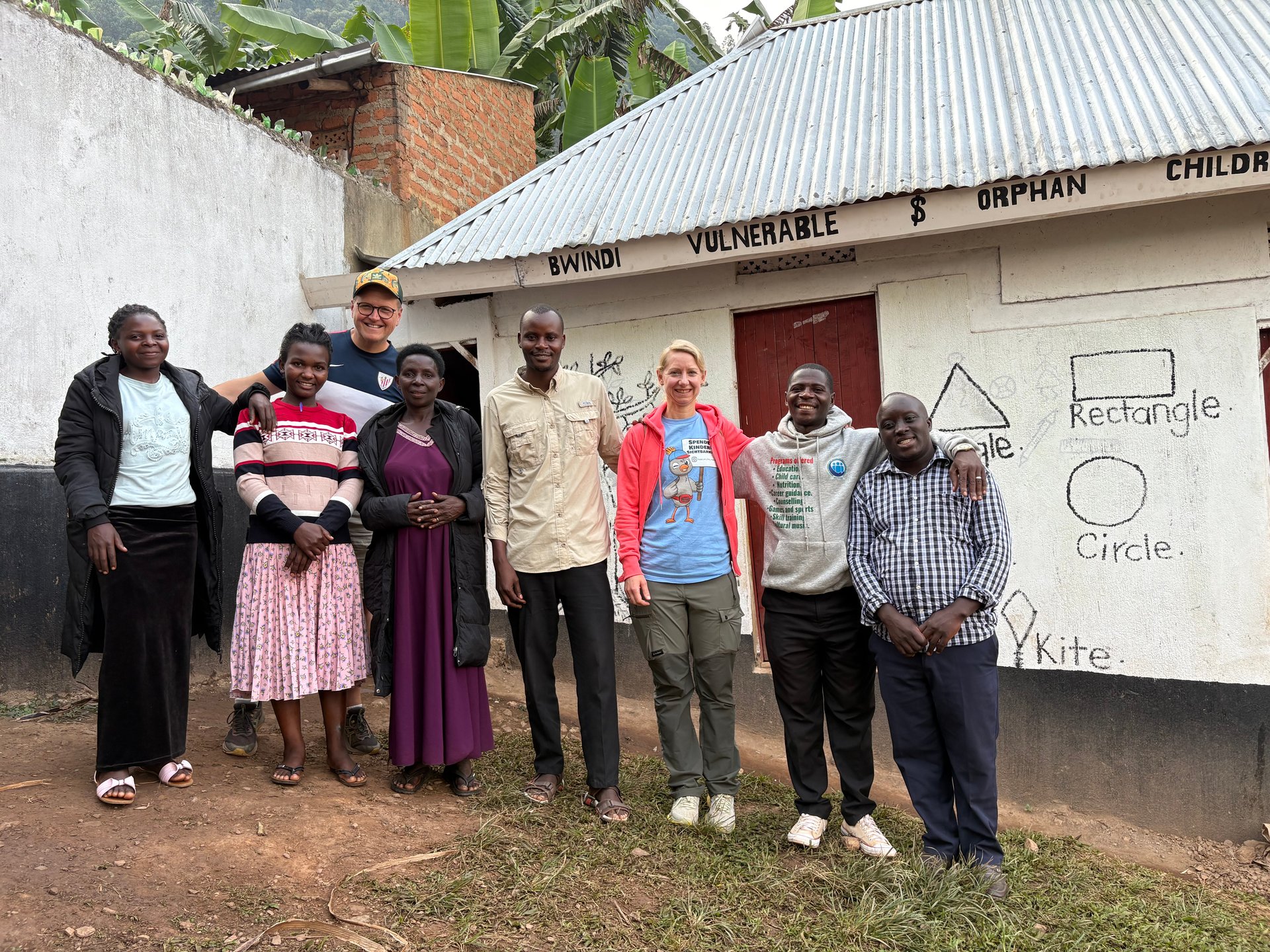
UWA employs more than 1,500 rangers across its protected area network. Twenty percent of gate fee collections are returned directly to communities surrounding the parks — a revenue-sharing mechanism that gives local populations a direct financial stake in park viability. Uganda's broader tourism sector generated USD 736 million in visitor exports in 2022, a 44.4 percent increase from the previous year, though still below the pre-pandemic 2019 level.
The infrastructure trajectory from our October 2024 visit to Murchison Falls was clear: the road network around the main park entry points has been substantially upgraded in the past three years. The pace of investment reflects both the revenue recovery and a deliberate UWA strategy to absorb higher visitor volumes without degrading the wildlife experience that drives the revenue in the first place.