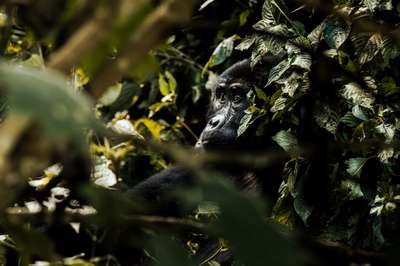
Bwindi Impenetrable National Park
Africa's oldest rainforest. Home to nearly half the world's mountain gorillas. Four trekking sectors, 321 km² of ancient forest, and Uganda's most rewarding wildlife experience.
Bwindi Impenetrable National Park is a 321 km² rainforest in south-western Uganda and the primary habitat of the endangered mountain gorilla. Inscribed as a UNESCO World Heritage Site in 1994, the park shelters approximately 459 mountain gorillas (2019 census) — nearly half the world's entire remaining population. It is divided into four trekking sectors — Buhoma, Ruhija, Rushaga, and Nkuringo — each with its own habituated gorilla families and accommodation options.
This guide covers the four sectors, what gorilla trekking in Bwindi is actually like, lodges at every budget level, and the community conservation work that ties visitor spending directly to the forest's survival.
Gorilla Trekking in Bwindi: What to Expect
A gorilla trekking permit in Bwindi costs $800 per person (2026, Uganda Wildlife Authority). The permit covers one guided trek through the forest and exactly one hour with a habituated gorilla family, with groups limited to eight visitors per family per day. Treks begin at dawn from the sector's briefing point; rangers radio ahead to trackers who locate the family overnight.
During our June 2026 trek in Bwindi, the first gorilla family appeared after just one hour on the trail. A large male sat high in the canopy, feeding calmly on leaves — completely unbothered by our presence. On an earlier visit, after roughly three hours of steep climbing, the family we reached moved through the undergrowth within a few metres of the group. Both times the silence in those moments was the thing that stayed.
Trek duration varies from one hour to a full day, depending on how far the family has moved since morning. Physically prepare for steep, often muddy terrain. Porters are available for hire at every trailhead and make a genuine difference on the longer routes.
Full gorilla trekking guide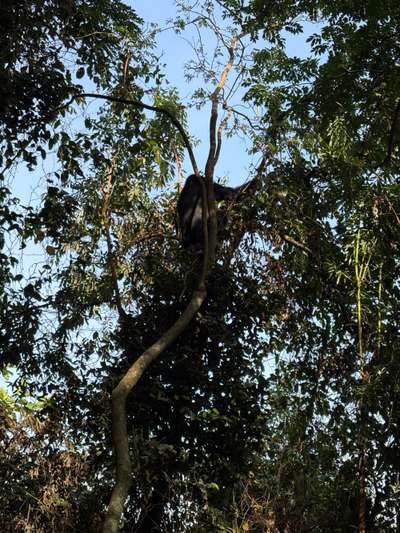
The Four Trekking Sectors
Which sector to choose depends on budget, how remote you want to be, and what else you are combining with the trek. Buhoma and Rushaga are the most accessible; Ruhija and Nkuringo require more effort to reach and reward it.
Buhoma
NorthThe original and most visited sector, on the northern park boundary in Kanungu District. The most developed infrastructure, including the Buhoma Community Rest Camp and the majority of mid-range lodges.
Sector guideRuhija
Northeast, 2,340 mThe highest and most remote of the four sectors, 36 km from Kabale (source: Reiseführer Uganda 2020). Outstanding birding destination with a quieter atmosphere than Buhoma.
Sector guideRushaga
SouthThe sector with the largest number of habituated gorilla families, making it the most reliable option when permits for other sectors are unavailable. Good mid-range lodge options.
Sector guideNkuringo
SouthwestThe most dramatic approach — a steep ridge walk to reach the sector gate. Gateway to the Buniga Forest Trail run by NCCDF through Batwa community lands. Base for the Nkuringo Bwindi Gorilla Lodge and Bwindi Backpackers Lodge.
Sector guideWhere to Stay at Bwindi
Accommodation at Bwindi spans the full range from camping to high-end luxury bandas. All prices below are sourced from Reiseführer Uganda 2020 — confirm current rates directly with each property before booking.
Volcanoes Bwindi Lodge
LuxuryFrom $445 (single) / $740 (double)
Full board included
Eight thatched bandas set within the park boundary, renovated in 2018. The most polished option at Bwindi for travellers whose trekking experience anchors a longer luxury Uganda itinerary.
Source: Reiseführer Uganda 2020 — verify current rates directly with Volcanoes Safaris.
Nkuringo Bwindi Gorilla Lodge
Mid-rangeFrom $200 (double)
Full board included
Community-oriented lodge at the Nkuringo sector gate, 2,090 m above sea level, with 18 rooms and sweeping views across the park. Run by the NCCDF (Nkuringo Community Conservation and Development Foundation). Guests can contribute $20 to the lodge's local tree-planting initiative (source: Reiseführer Uganda 2020).
Source: Reiseführer Uganda 2020 — verify current rates directly with the lodge.
Bwindi Backpackers Lodge
BudgetFrom $40 (single) / $100 (double)
Camping from $10
Located 5 km from the Nkuringo sector gate and operated by the Kabale Tourism Information Centre. Options include single rooms ($40), doubles ($100), two-person cottages ($150), and tent camping ($10 per person). A daily shuttle runs from Kabale (source: Reiseführer Uganda 2020).
Source: Reiseführer Uganda 2020 — verify current rates directly with the lodge.
Community Conservation at Bwindi
The NCCDF (Nkuringo Community Conservation and Development Foundation) manages the Buniga Forest Trail near the Nkuringo sector — a guided walk through Batwa community lands. Seventy per cent of trail proceeds fund NCCDF community programmes; 30% go to Kisoro Municipal Council (source: Reiseführer Uganda 2020). It is one of the most transparent community revenue models at any Uganda park.
Ride 4 a Woman is an NGO founded in 2009 and based in Buhoma, just outside the north park gate. It runs guided mountain bike tours through the surrounding villages and uses the income to fund vocational training programmes for women. Both organisations are examples of how local infrastructure has grown directly from the park's visitor economy.
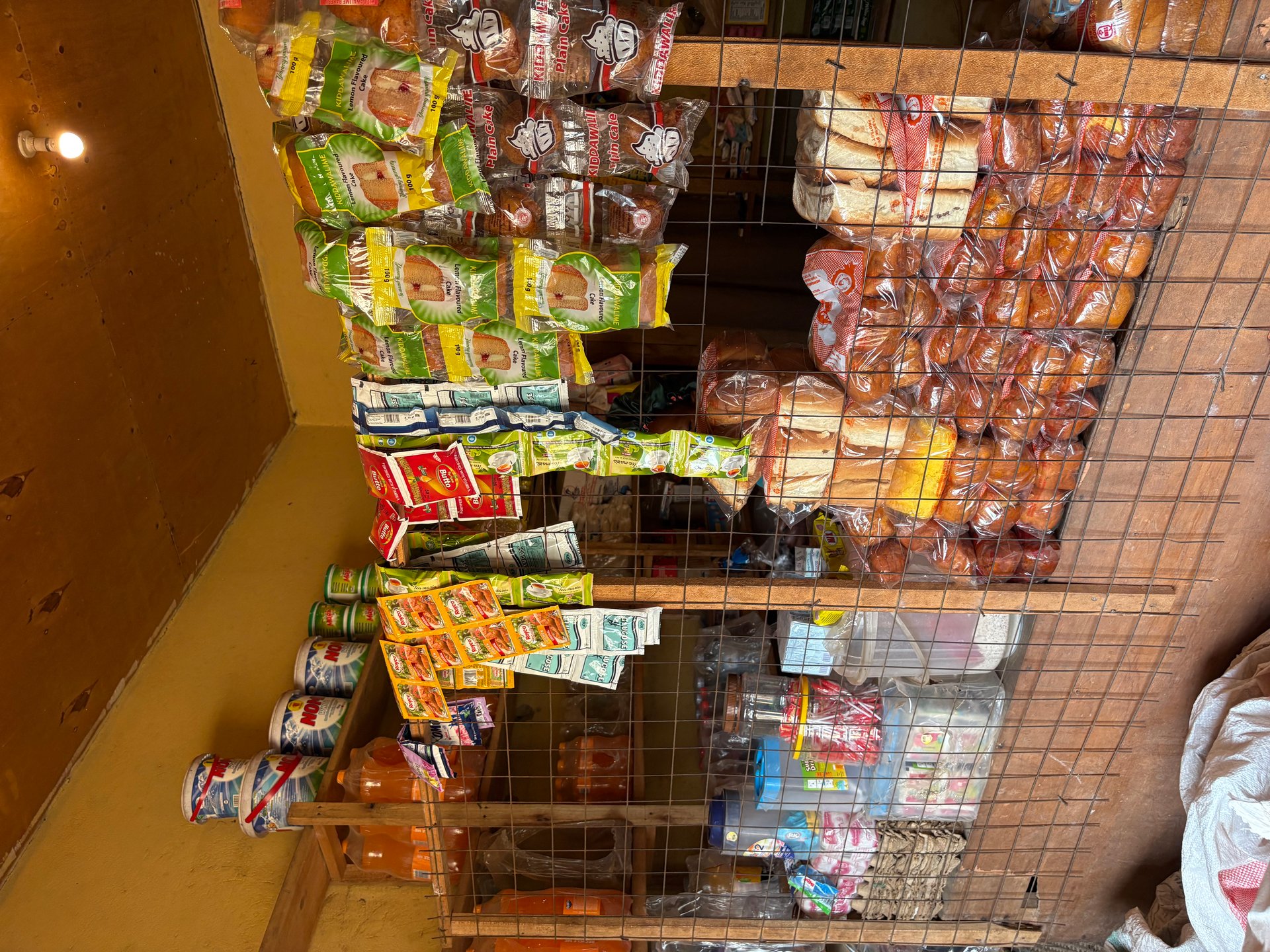
During our visits to Buhoma in January 2026, the village immediately adjacent to the sector gate showed that economic footprint clearly: small shops run by local women entrepreneurs, craft markets, guesthouses. Choosing to buy supplies locally — rather than exclusively at lodges — is one of the simplest ways travellers reinforce that connection between visitor spending and community income.
How to Get to Bwindi
By Road from Kampala
Route 1 via Ntungamo and Rukungiri to Buhoma — 472 km, 8–10 hours, fastest. Route 2 via Kabale — 534 km, approximately 11 hours. The final stretch to any sector gate is unpaved; a 4WD is recommended.
By Air
Daily scheduled flights from Entebbe to Kisoro and Kihihi airstrips (approximately 1 hour 10 minutes). A road transfer of 1–2 hours brings you to your sector. Combining both airstrips on the same trip is possible.
For Nkuringo Sector
The Bwindi Backpackers Lodge runs a daily shuttle from Kabale, 5 km from the sector gate. It is the easiest budget-friendly option for travellers arriving overland from Kabale.
For Ruhija Sector
Ruhija lies 36 km from Kabale at 2,340 m altitude (source: Reiseführer Uganda 2020). The approach road is unpaved and steep in places; a 4WD is essential during the wet season.