Uganda's most-visited parks are Murchison Falls and Bwindi — but the country has ten national parks, a specialist rhino sanctuary, a wildlife education centre in Entebbe, and several non-park attractions that belong on serious Uganda itineraries. This guide covers what each major attraction actually offers, not just that it exists.
| Attraction | Type | Key experience |
|---|---|---|
| Bwindi Impenetrable NP | Rainforest NP | Mountain gorilla trekking ($800 permit) |
| Murchison Falls NP | Savanna NP | Boat safari + game drive, Nile, giraffe, elephant |
| Queen Elizabeth NP | Savanna NP | Tree-climbing lions, Kazinga Channel boat safari |
| Kibale Forest NP | Forest NP (est. 1993) | Chimpanzee trekking near Fort Portal |
| Rwenzori Mountains NP | Mountain NP (~1,000 km²) | Hiking Africa's third-highest massif |
| Kidepo Valley NP | Remote savanna NP | Zebra, remote wilderness — 4WD or charter flight required |
| Mgahinga Gorilla NP | Forest NP (30 km²) | Gorillas + golden monkey tracking + Virunga volcanoes |
| Semliki NP | Forest NP (220 km²) | 400+ birds, 300+ butterflies, Sempaya Hot Springs |
| Ziwa Rhino Sanctuary | Private sanctuary | Walking safari with white rhinos (not in any NP) |
| Source of the Nile, Jinja | Natural/cultural site | White-water rafting, history, 2h from Kampala |
| UWEC, Entebbe | Education centre | Wildlife introduction pre-safari, 3 km from airport |
Park sizes: Uganda travel guide (2020 edition). Permit prices: UWA 2026.
Murchison Falls National Park: The Complete Safari Experience
Murchison Falls National Park, in north-western Uganda, is the country's largest national park and offers what no other Ugandan park can: two completely distinct wildlife encounters in one destination. The Nile boat safari runs from Paraa upstream to the base of the falls, where the entire Nile forces itself through a 7-metre rock cleft — the most powerful waterfall on the river. From the boat, the wildlife is on both banks: hippos in pods, Nile crocodiles on sandbars, African fish eagles overhead, and elephant herds walking to the water's edge to drink.
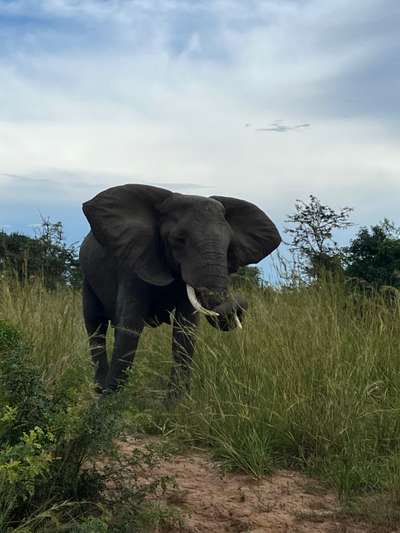
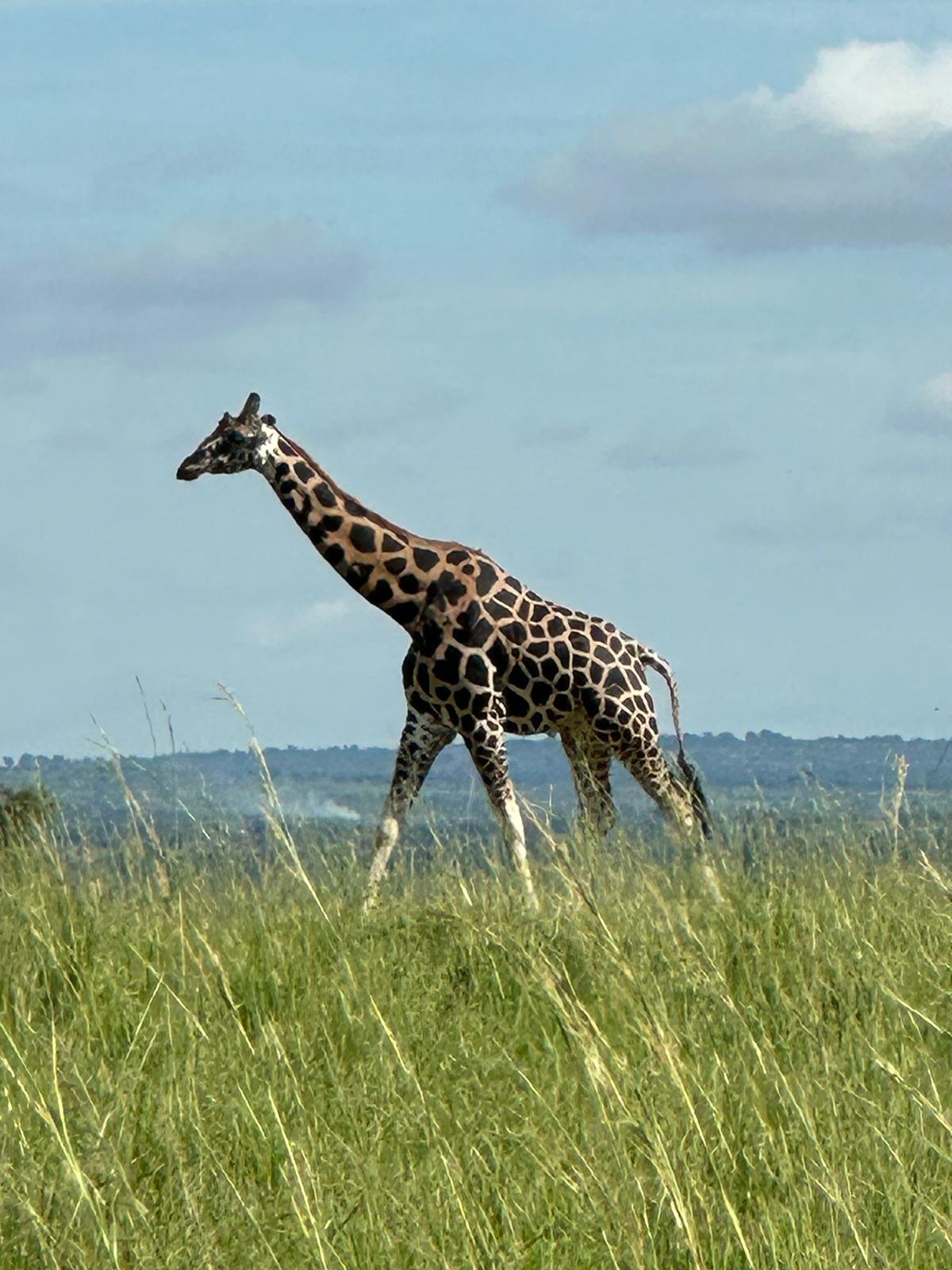
The savanna game drive in the park's northern section adds a completely different dimension. During an October 2024 visit, the morning drive began before sunrise — leaving the lodge before the sky had brightened, specifically to catch the light breaking over the open plains. Rothschild's giraffes were moving through the grass in the early gold. Later in the same drive, a large elephant crossed the road perhaps twenty metres ahead. Both encounters happened within hours of each other, without travel between locations.
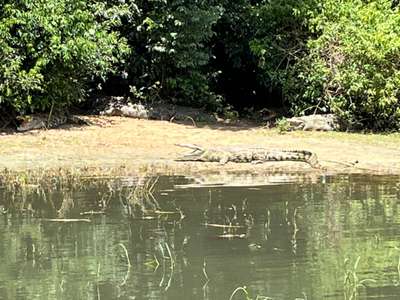
On the afternoon boat safari on the same day, Nile crocodiles rested on sandbars along the southern bank — large animals, visible from the boat at a comfortable distance, remarkable for their size and the complete stillness they maintain on land. Their speed in water is the detail that the guides emphasise: these animals can move faster than they appear capable of.
Ziwa Rhino Sanctuary: Uganda's Only Wild Rhinos
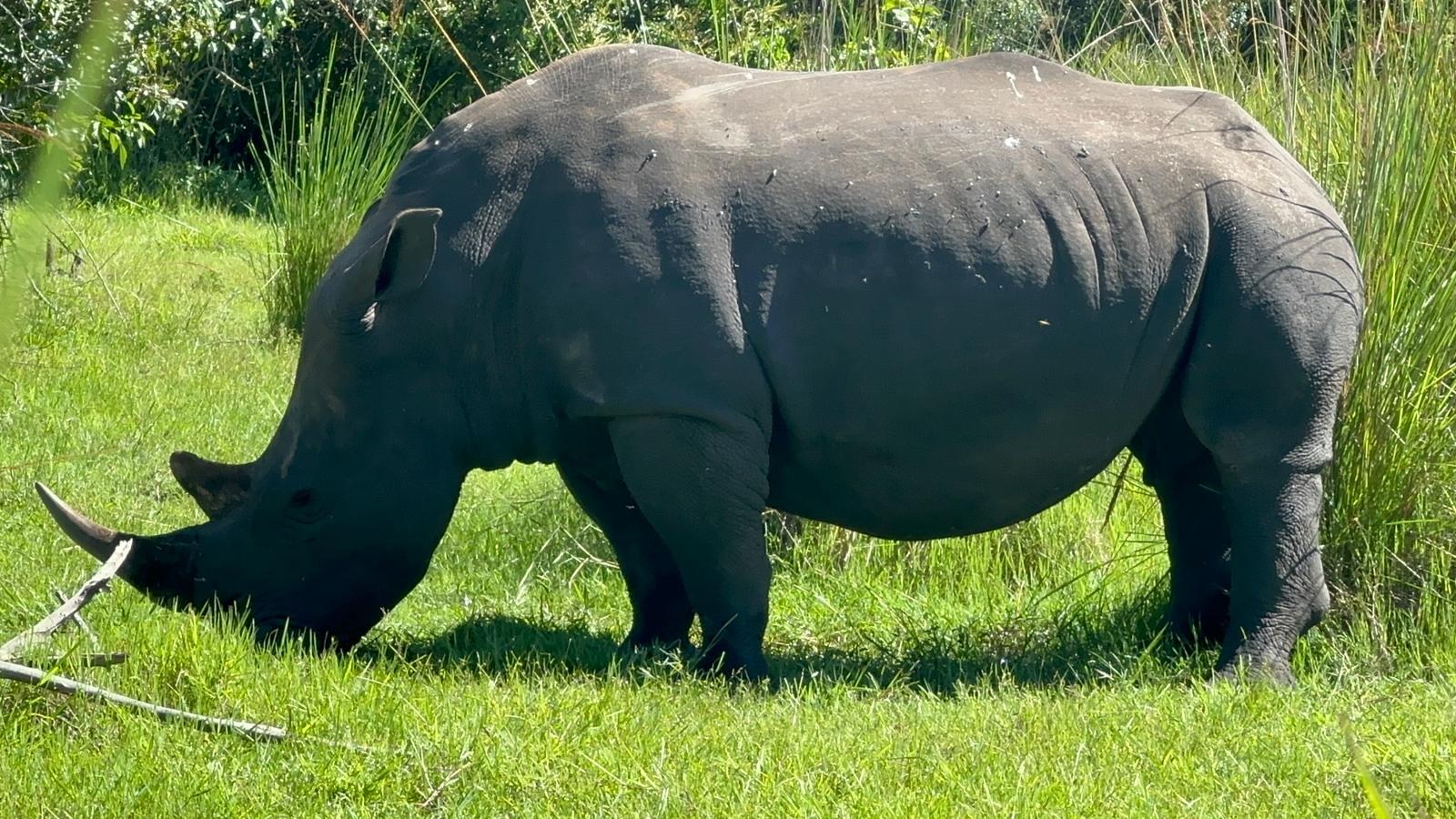
Southern white rhinos were functionally extinct in Uganda until a reintroduction programme at Ziwa Rhino Sanctuary began in 2005. Ziwa is a private conservation ranch in Nakasongola District, approximately four hours north of Kampala on the road to Murchison Falls — making it a practical transit stop rather than a detour.
The experience is categorically different from a national park game drive: visitors walk into the sanctuary on foot with a ranger escort. During a January 2026 visit, the rhino we found was grazing alone in an open field. The scale of a rhinoceros at close range without the barrier of a vehicle is not something that photographs convey accurately — these are extremely large, heavy animals, and the encounter is correspondingly grounding.
Kidepo Valley National Park: Uganda's Remote Wilderness
Kidepo Valley National Park occupies the far north-eastern corner of Uganda, on the borders with South Sudan and Kenya. It is the most isolated major national park in the country. A Uganda travel guide (2020 edition) describes the access road from Kitgum as a 115 km unpaved track requiring a 4WD vehicle, with conditions dangerous in rainy season. Most international visitors reach Kidepo by charter flight from Entebbe (approximately 1.5 hours).
The effort serves a clear purpose. Kidepo is the only place in Uganda where visitors can see plains zebras (not found in any other Ugandan national park), alongside large herds of buffalo, lions, elephants, and a significant cheetah population. The park sits at the intersection of the East African and Sudano-Guinean savanna zones, giving it a unique species composition. Visitor numbers are the lowest of any major Ugandan national park, which means the bush is genuinely quiet — no traffic, no convoys of vehicles around predator sightings.
Semliki National Park: Lowland Forest and Hot Springs
Semliki National Park (220 km² — Uganda travel guide, 2020 edition) protects one of the most biologically distinct habitats in Uganda: a patch of Congolian lowland rainforest on the floor of the Albertine Rift, geologically part of Central Africa rather than East Africa. The park records over 400 bird species and over 300 butterfly species (2020 source), with a high proportion of Congo Basin species found nowhere else in Uganda. Guided nature trails cost $30 USD per person plus park entry fees (2020 rate — verify with UWA).
The Sempaya Hot Springs, within the park, reach approximately 106 degrees Celsius (Uganda travel guide, 2020 edition) — hot enough to boil an egg in the natural pools, which guides sometimes demonstrate. The trail passes through old-growth forest and is walkable in two to three hours.
UWEC and Entebbe: A Practical First Stop
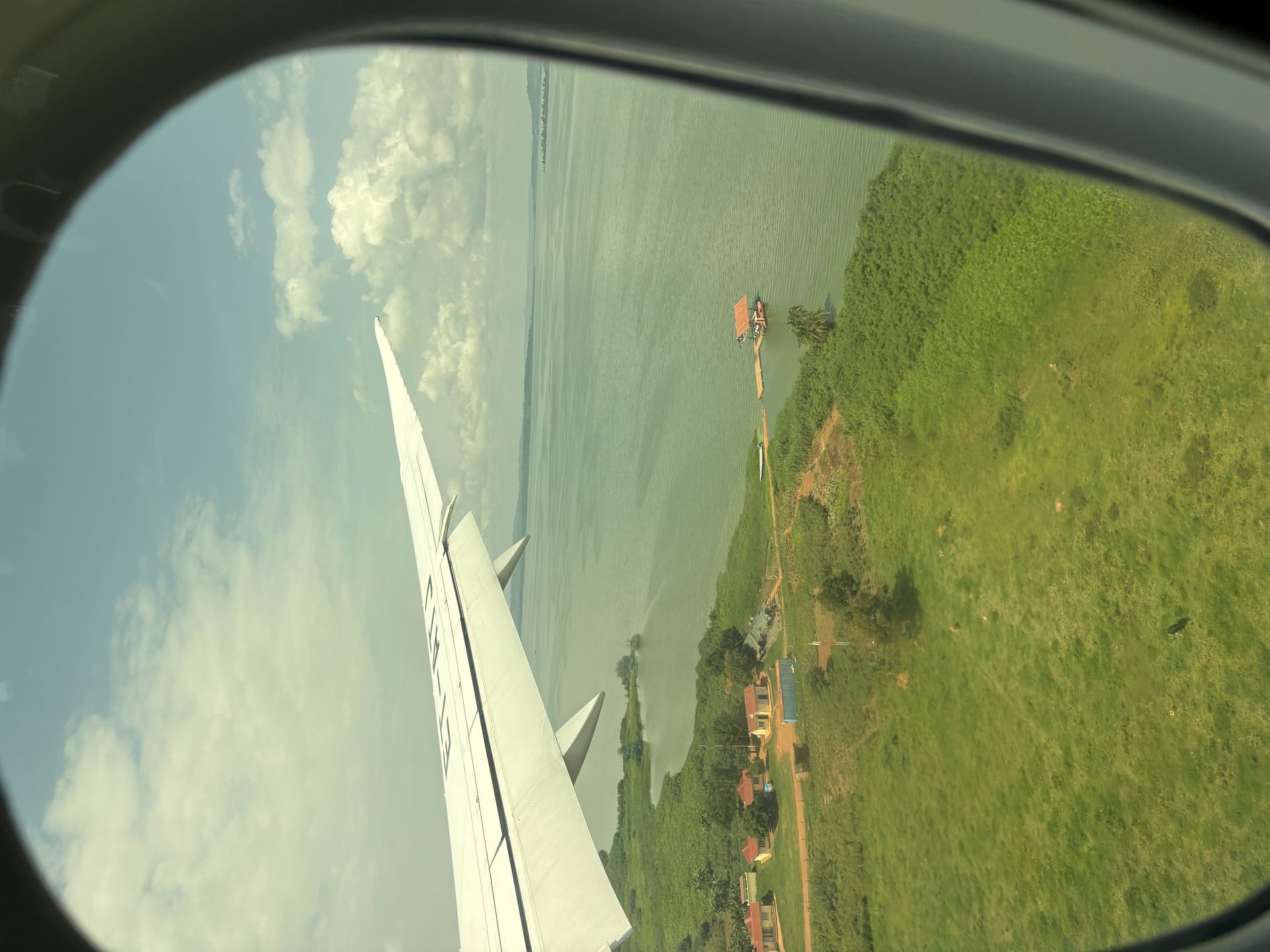
The Uganda Wildlife Education Centre (UWEC) in Entebbe sits on the Lake Victoria shoreline approximately 3 km from the international airport. It houses animals that cannot be returned to the wild — rescued chimpanzees, lions, crocodiles, and a large aviary — and functions as both a conservation education facility and the best quick introduction to Uganda's wildlife that exists near Kampala. For a visitor arriving on an early flight with an afternoon transfer, UWEC fills a morning without competing with the parks. Admission fees support the centre's rescue and rehabilitation work.
Choosing by Travel Style
Classic safari first-timer
Best choice: Murchison Falls + Ziwa Rhino Sanctuary
Best combination of accessible savanna wildlife, two distinct safari formats (boat + game drive), plus rhino.
Primate specialist
Best choice: Bwindi Impenetrable NP + Kibale Forest NP
Mountain gorillas at Bwindi ($800 permit) and chimpanzee trekking at Kibale — the two flagship primate experiences in one western Uganda circuit.
Adventure traveller
Best choice: Kidepo Valley NP + Sipi Falls + Source of the Nile, Jinja
Remote northeast, waterfall hikes, white-water rafting. Requires more logistics but minimal tourist traffic.
Birder or naturalist
Best choice: Semliki NP + Ruhija sector of Bwindi + Queen Elizabeth NP
400+ Semliki bird species, 350+ at Bwindi, plus the endemic species of the Albertine Rift.
Mountain trekker
Best choice: Rwenzori Mountains NP (~1,000 km²)
Multi-day glacier hike to Margherita Peak (5,109 m). Requires physical fitness and advance booking of hut accommodation. Best tackled as a standalone trip.
Practical Notes on Gorilla Trekking
Gorilla trekking at Bwindi Impenetrable National Park requires a permit booked through Uganda Wildlife Authority (UWA) — $800 per person in 2026. The permit covers a single trek to one gorilla family, with a maximum of one hour in the family's presence. Demand consistently outpaces supply in peak season (June to September and December to February); booking three to six months in advance is standard. For full planning information, including sector selection and family assignment, see the gorilla trekking FAQ.