Current situation (2026)
Gorilla trekking at Bwindi Impenetrable National Park is safe. The park operates with professional armed ranger escorts on every trek. The Bwindi area is politically stable, and international travel advisories do not single out the park as a high-risk destination. Hundreds of thousands of tourists have visited without serious incident since the late 1990s.
What You Will Notice on Your Trek
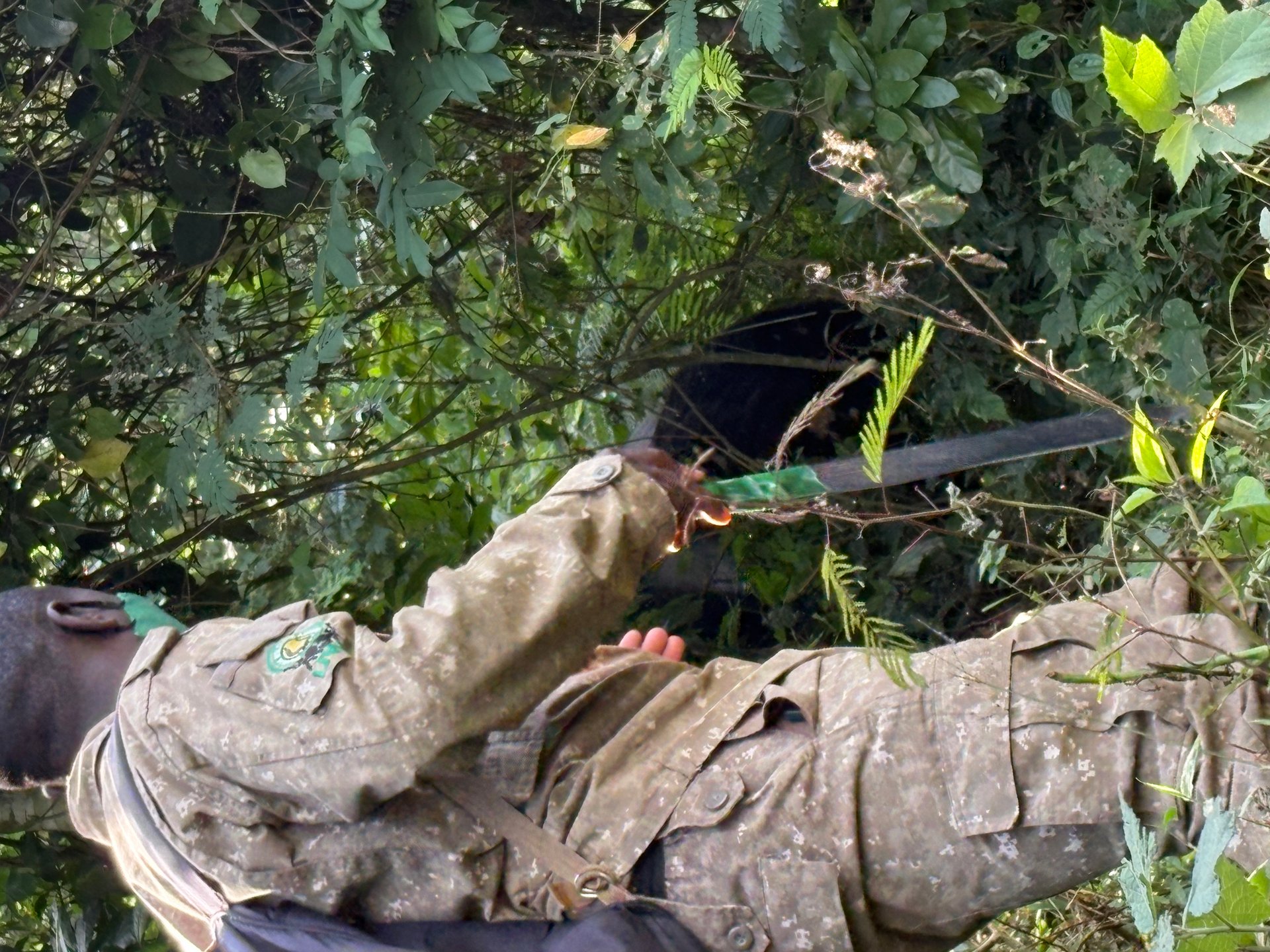
When you join a gorilla trek at Bwindi, your group is accompanied by a lead guide, one or more porters and trackers, and at least one ranger carrying a rifle. The ranger walks with the group throughout the trek, moving quietly through the forest.
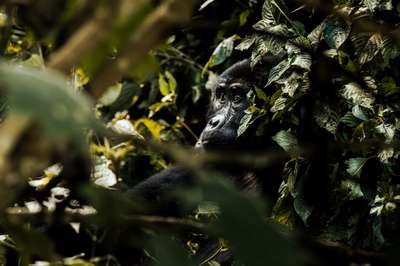
During our January 2026 trek from Buhoma, we were a group of eight visitors guided by one lead ranger and two additional armed rangers. Their manner was calm and professional — they were wildlife professionals navigating difficult terrain, not a military escort. The weapons did feel unusual at first. Within twenty minutes of entering the forest, we had stopped thinking about them entirely, focused instead on the trail, the vegetation, and the sounds of the forest. After about an hour of walking, we reached our first gorilla family. The rangers stepped back and let the experience unfold.
Why Rangers Carry Weapons: The Full Picture
The armed escort protocol serves two distinct purposes. The first is wildlife safety: Bwindi's forest is home to forest elephants, forest buffaloes, and other large animals that share the same terrain as the gorilla families. A chance encounter with a buffalo on a narrow trail is a more realistic concern than any human threat. The second purpose is broader security — a protocol that was established and professionalized in the years following the park's worst moment.
March 1999: What Happened and Why
On the night of 1 March 1999, a group of approximately 150 armed rebels affiliated with the Interahamwe — the Hutu extremist militia responsible for the 1994 Rwandan genocide — crossed from the Democratic Republic of Congo into Uganda and attacked the tourist campsite near the Bwindi Buhoma ranger post. Eight foreign tourists were killed, along with several Ugandan nationals. The tourists were taken from their tents, marched into the forest, and murdered. It was the single deadliest attack on tourists in Uganda's recorded history.
The attack was not random. It took place during one of the most violent periods in the Great Lakes region's modern history: the Second Congo War had begun the previous year, Rwanda was still rebuilding after the genocide, and armed Interahamwe groups were operating across the border areas of eastern DRC, western Uganda, and northwestern Rwanda. The targeting of Western tourists was a deliberate attempt to damage Uganda's economy and generate international attention.
Gorilla tourism at Bwindi was suspended following the attack. The Ugandan government, UWA, and international conservation partners undertook a comprehensive security review. The result was a restructured ranger force, intelligence-sharing agreements between Uganda, Rwanda, and the DRC, and the mandatory armed escort system for every trek that remains in place today.
Security Since 1999: 27 Years Without a Comparable Incident
Tourism resumed at Bwindi within months of the 1999 attack. In the years that followed, the security architecture around the park was transformed. The regional context also changed fundamentally: the Interahamwe's operational capacity in the Ugandan border areas was degraded through Ugandan and Rwandan military operations, and the political stabilisation of Rwanda removed the movement's primary ideology-driven base.
Bwindi has welcomed hundreds of thousands of international visitors since 2000 without a comparable security incident. Successive census cycles have tracked growing gorilla populations and increasing tourist numbers simultaneously — the conservation model depends on a functioning, safe tourism industry, and all stakeholders have a strong interest in maintaining that safety.
Proximity to the DRC border
Bwindi borders the DRC, and the security situation in eastern DRC remains complex and at times volatile. Some Uganda travel advisories include elevated warnings for the Kasese area and the DRC border zone. Bwindi's Buhoma, Ruhija, Rushaga, and Nkuringo sectors are all on Ugandan territory and under UWA management. The relevant risk is not the park itself but the general regional context — travellers should read current advisories from their government before departure and purchase comprehensive travel insurance that covers evacuation.
Practical Safety Guidance for Visitors
Check your government's current travel advisory
UK FCDO, US State Department, German Auswärtiges Amt, and Australian DFAT all publish regularly updated Uganda advisories. These are the authoritative source — not travel forums or outdated guidebooks.
Book through a registered tour operator
Reputable operators know current ground conditions and maintain direct contact with UWA. Avoid booking permits through informal brokers. UWA permits are sold directly on the UWA website.
Follow ranger instructions without hesitation
During the trek and especially during the gorilla encounter, do exactly what the lead ranger says, immediately. This applies to distance, position, noise level, and when to retreat. The rangers' decisions are final.
Travel with comprehensive insurance
Standard health insurance does not cover evacuation from a remote forest. Ensure your policy explicitly covers medical evacuation and includes the activity of wildlife trekking.
Respect the 7-metre distance rule
This exists for the gorillas' health as much as your safety. Mountain gorillas are highly susceptible to human respiratory illnesses. Keeping distance protects them. If a gorilla approaches you — which they sometimes do — stand still, look away, and let it pass.