Conservation Begins at the Boundary
Bwindi Impenetrable National Park is surrounded by one of the most densely populated rural areas in Africa. Approximately 100,000 people live within five kilometers of the park boundary, many of them subsistence farmers cultivating small plots of land on steep hillsides. For conservation to succeed, these communities must see the park as an asset rather than a burden. Decades of experience have shown that enforcement alone cannot protect a forest; lasting conservation requires the active participation and support of the people who live closest to it.
Revenue Sharing: Making Conservation Pay
Uganda's revenue-sharing policy directs 20% of park entrance fees to communities surrounding national parks. In Bwindi, this translates into significant funding for community infrastructure projects. Schools have been built, health centers equipped, roads improved, and clean water systems installed with these funds. The policy creates a direct financial link between the presence of gorillas and community development, giving local people a tangible reason to support conservation. While the program has its critics — some argue the funds are insufficient or poorly distributed — it has fundamentally changed the relationship between communities and the park.
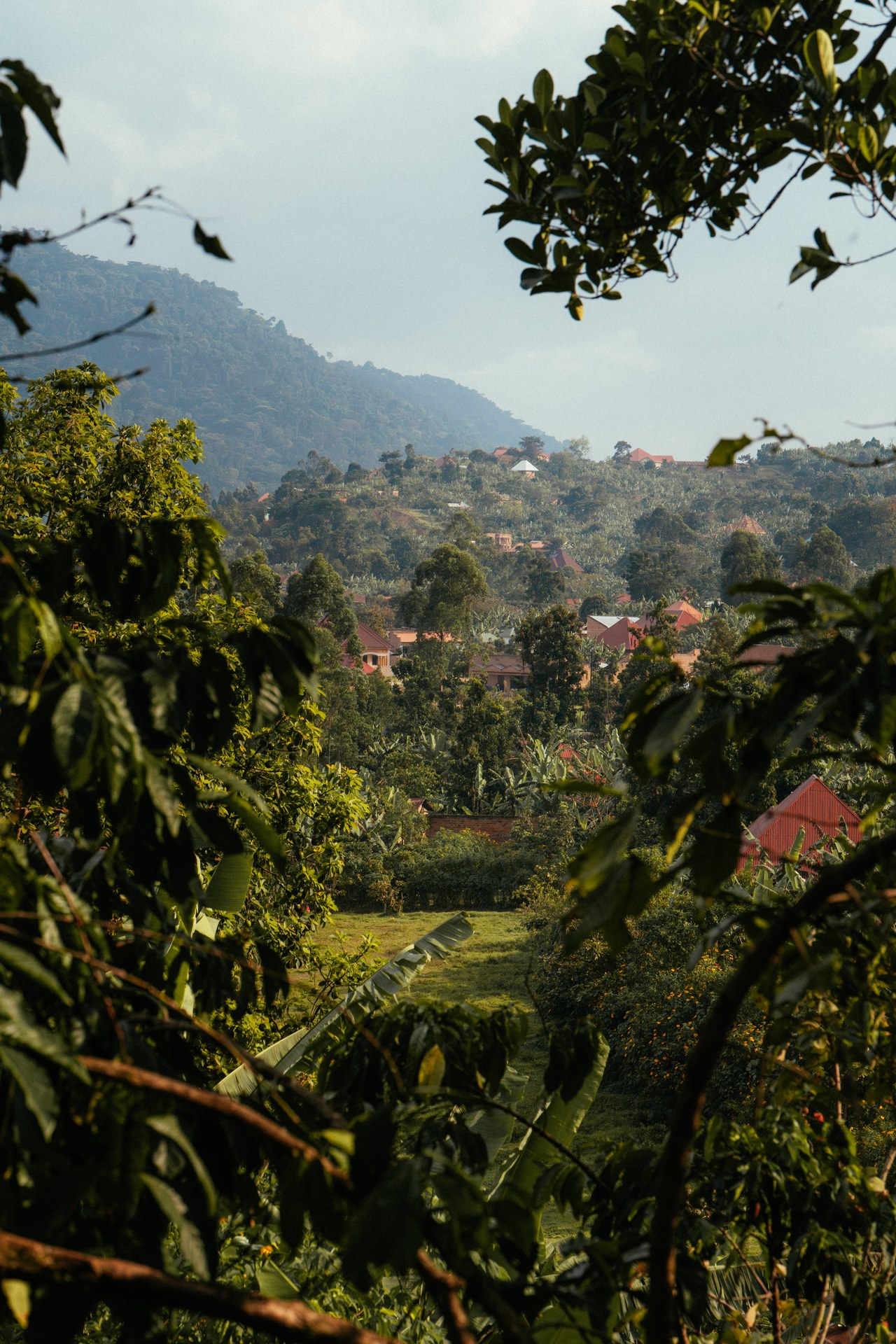
Buhoma: green valley with houses on the hillside
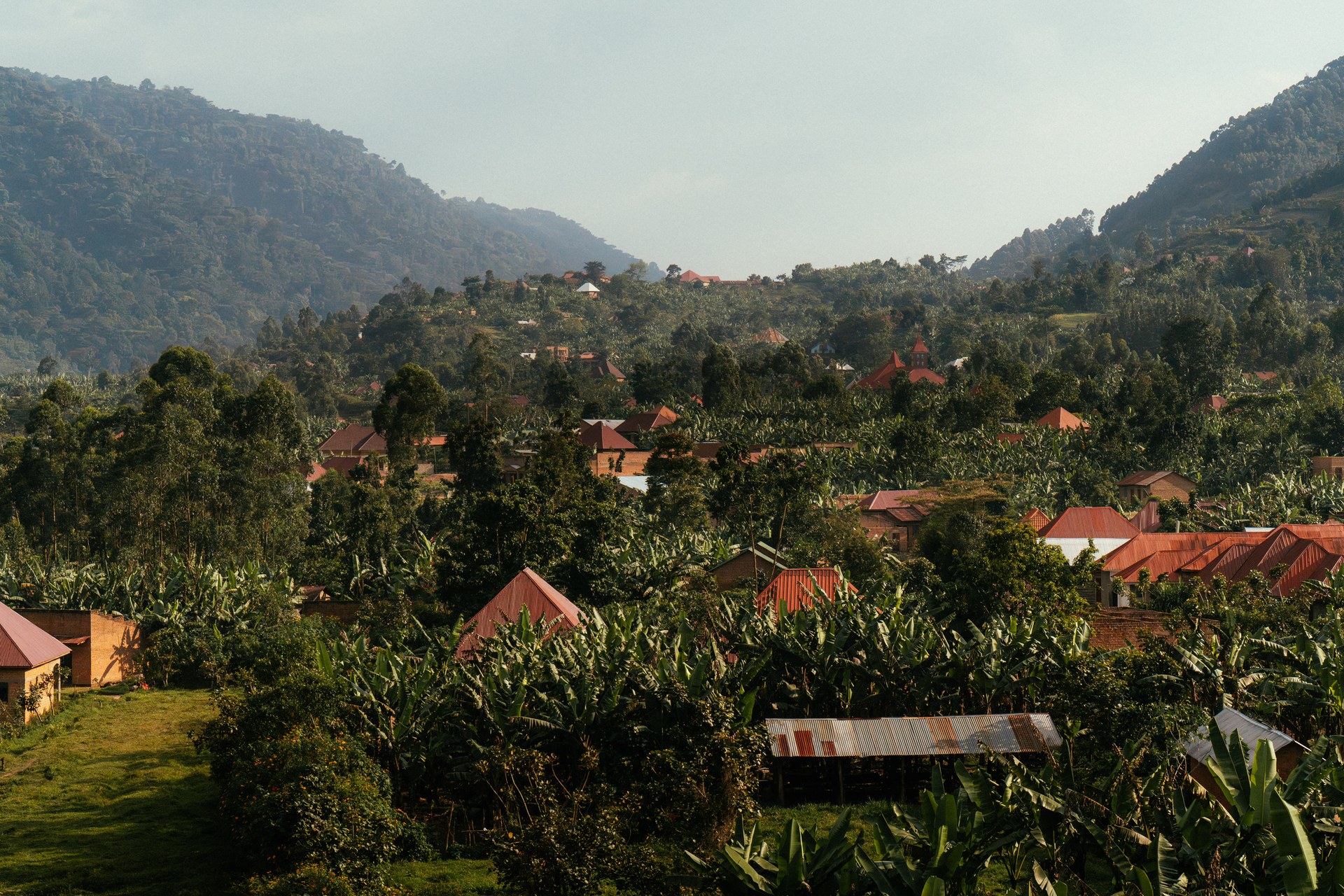
Buhoma: a village between mountains and hope
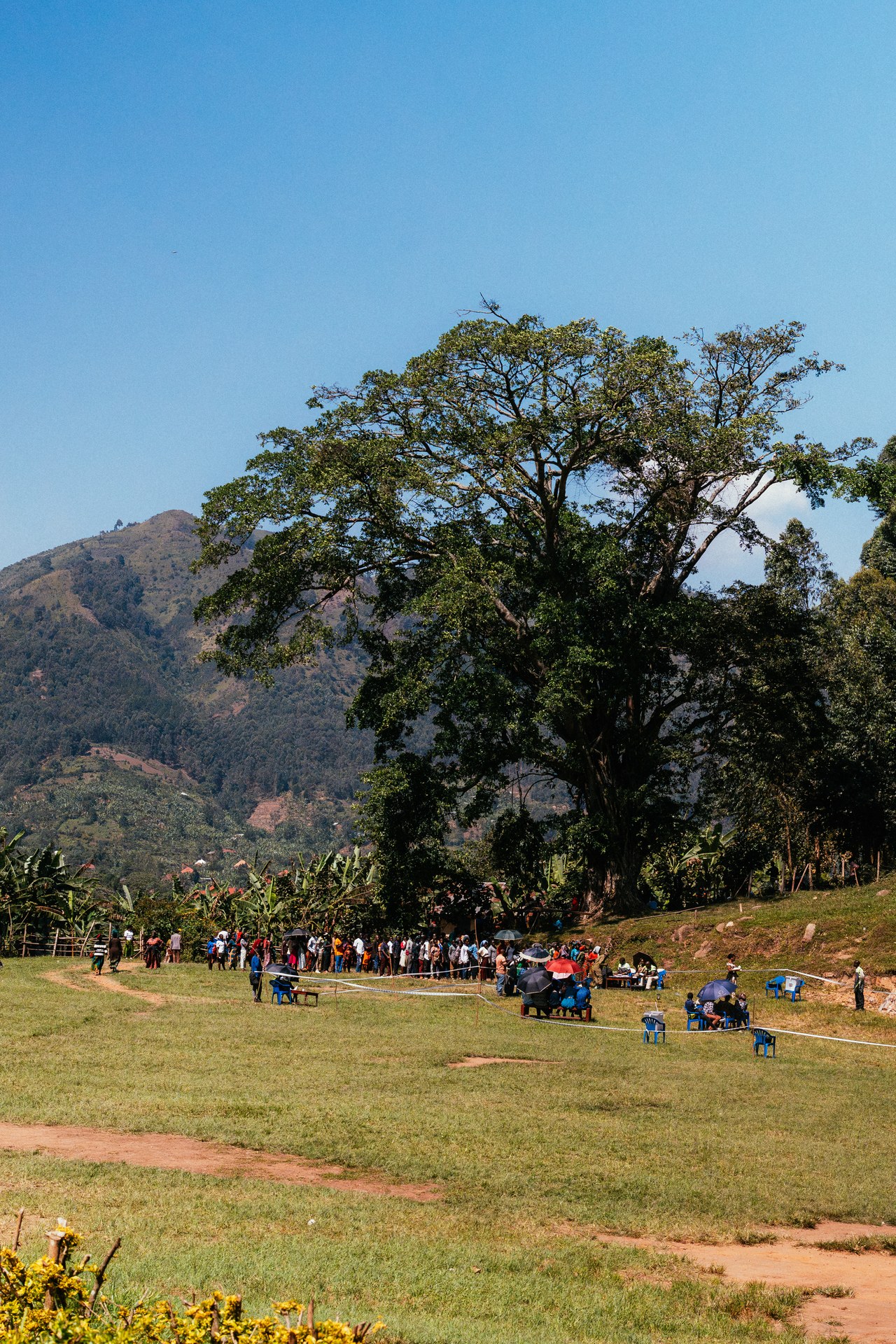
Buhoma: community gathers in the shadow of the mountain
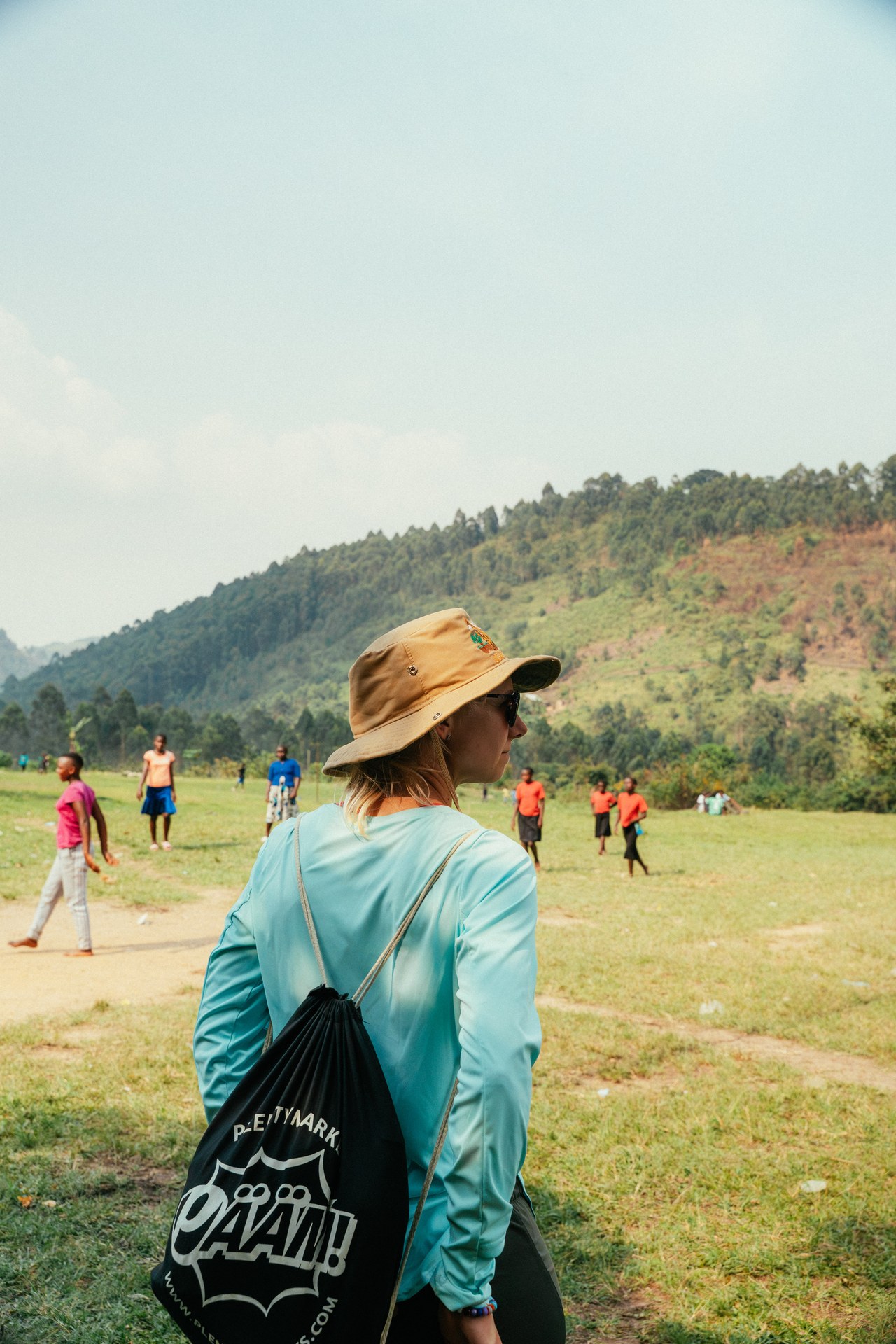
Visitor watching children play in Buhoma
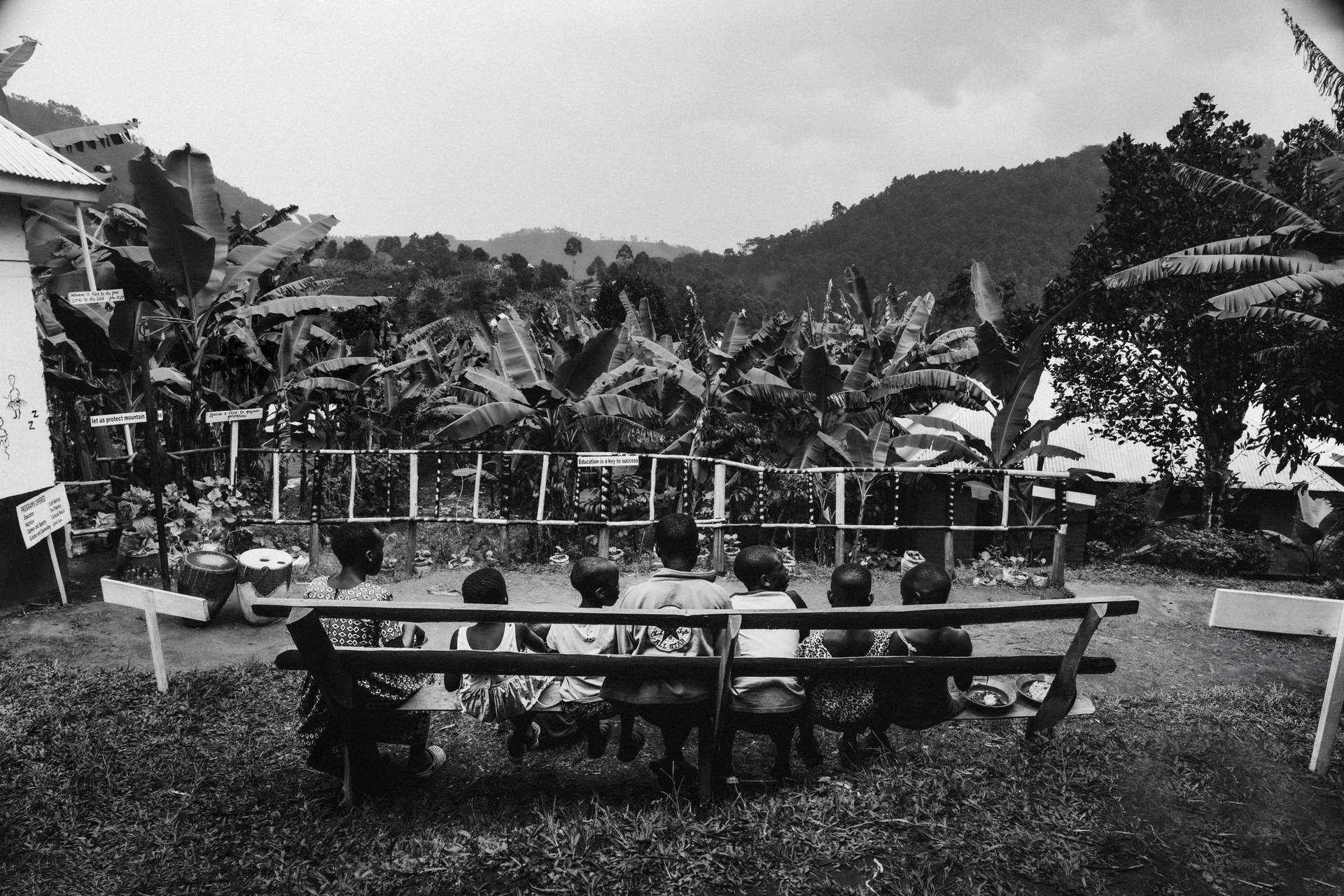
Community on a bench gazing at the Ugandan landscape
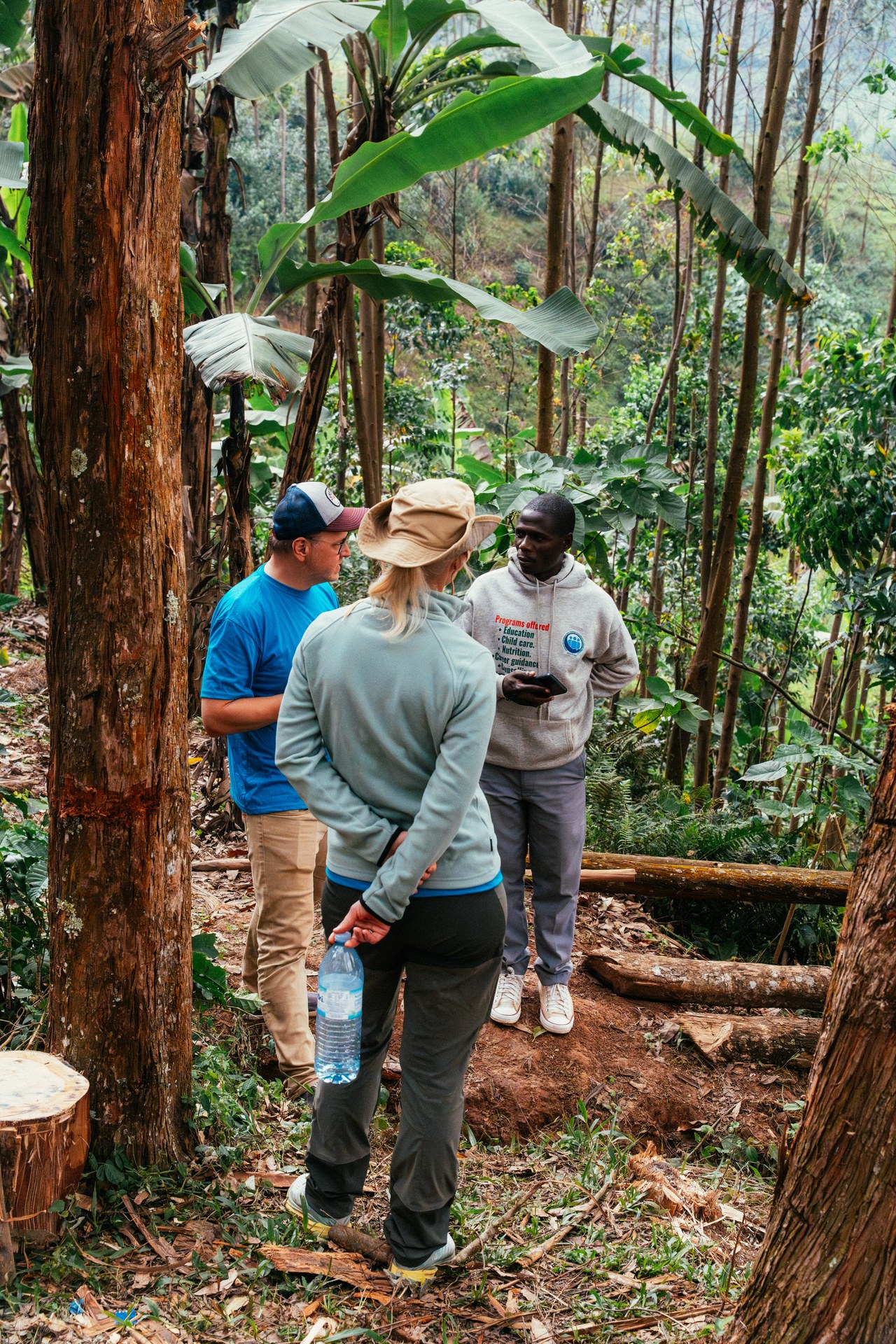
Meeting in the forest: three people in conversation
The Batwa: Displaced by Conservation
The establishment of Bwindi as a national park in 1991 displaced the Batwa, an indigenous forest-dwelling people who had lived in the forest for thousands of years. The Batwa lost access to their ancestral lands, hunting grounds, and sacred sites, plunging many into poverty and cultural dislocation. This history remains a difficult chapter in Bwindi's conservation story. In recent years, efforts to address Batwa marginalization have included land purchases, cultural tourism enterprises such as the Batwa Trail experience, and education programs. However, many Batwa communities continue to face significant social and economic challenges.
Community-Based Tourism Enterprises
Tourism has created opportunities for community-run enterprises around Bwindi. Cultural performances, village walks, handicraft cooperatives, and community-managed lodges allow local people to earn income directly from the tourism economy. These enterprises diversify the economic benefits of tourism beyond the gorilla permit revenue and create employment for community members who might not otherwise benefit from the park's presence. Several organizations, including the Uganda Community Tourism Association, support the development and marketing of these initiatives.
Alternative Livelihoods
Reducing community dependence on forest resources is a key component of Bwindi's conservation strategy. Programs promoting modern beekeeping, mushroom cultivation, improved agricultural techniques, and tree nurseries provide alternative income sources. Tea and eucalyptus plantations along the park boundary serve a dual purpose: they provide income to farmers while creating a buffer zone that reduces direct contact between wildlife and crops. These livelihood programs are most effective when they address genuine economic needs rather than simply offering substitutes for prohibited activities.
Challenges in Community Conservation
Community conservation around Bwindi faces ongoing challenges. Rapid population growth increases demand for agricultural land. Crop raiding by elephants, baboons, and other wildlife strains community tolerance. Revenue-sharing funds, while appreciated, often fall short of community expectations. The benefits of tourism are not always distributed equitably, and some communities feel excluded. Addressing these challenges requires continuous dialogue, adaptive management, and a genuine commitment to ensuring that conservation serves community interests alongside ecological ones.