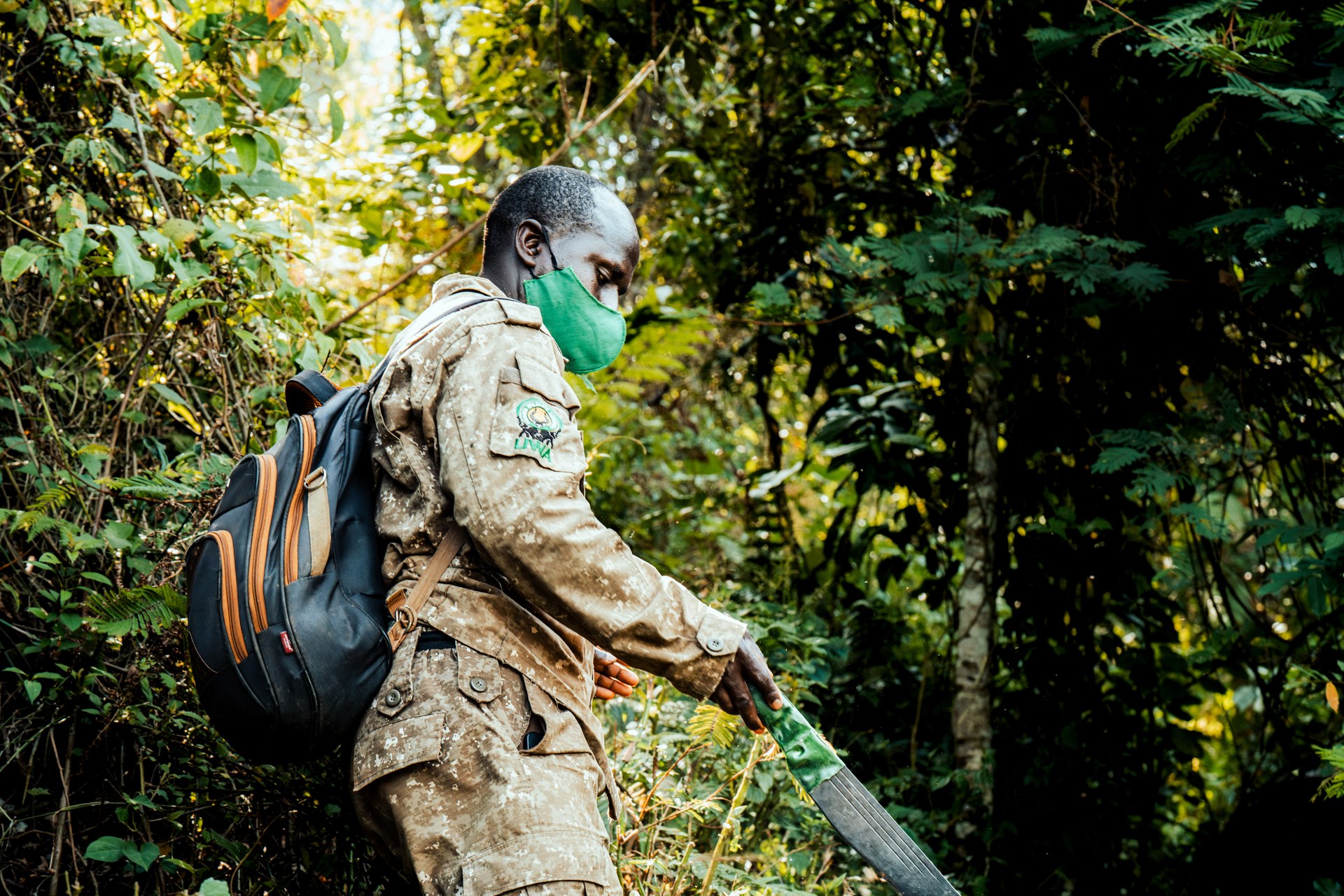
Life on the Boundary
Bwindi Impenetrable National Park shares approximately 100 kilometers of boundary with some of the most densely populated rural land in Africa. Smallholder farms press right up against the forest edge, and the boundary between park and cropland is often nothing more than a narrow path or a shallow trench. For the farming communities who live here, wildlife is not an abstraction. Elephants can flatten a banana plantation overnight. Baboons strip maize fields. Bush pigs uproot cassava. And occasionally, gorillas wander out of the forest to feed on crops. These encounters define the lived experience of conservation for tens of thousands of people.
The Uganda Wildlife Authority's General Management Plan 2014-2023 formally identified 25 distinct management challenges facing Bwindi, and human-wildlife conflict runs through many of them. Incompatible land use practices along the boundary, increasing human population pressure, gorillas ranging outside the park, and weak integration between district development planning and park management are all part of the same interlocked problem. Addressing conflict is not a single technical task; it is the central challenge of keeping Bwindi ecologically intact while maintaining the goodwill of the people who live beside it.
Crop Raiding: The Scale of the Problem
Crop raiding is the most visible and most damaging form of human-wildlife conflict around Bwindi. Elephants, though relatively few in number in Bwindi (estimated at around 30 individuals), cause disproportionate damage because of their size and the volume of crops they consume or trample. A single elephant raid can destroy an entire season's harvest for a subsistence farmer with no savings to fall back on. Baboons are perhaps the most persistent raiders, operating in large troops and targeting a wide variety of crops including maize, beans, sweet potatoes, and fruit. Bush pigs, porcupines, and smaller mammals also contribute to losses.
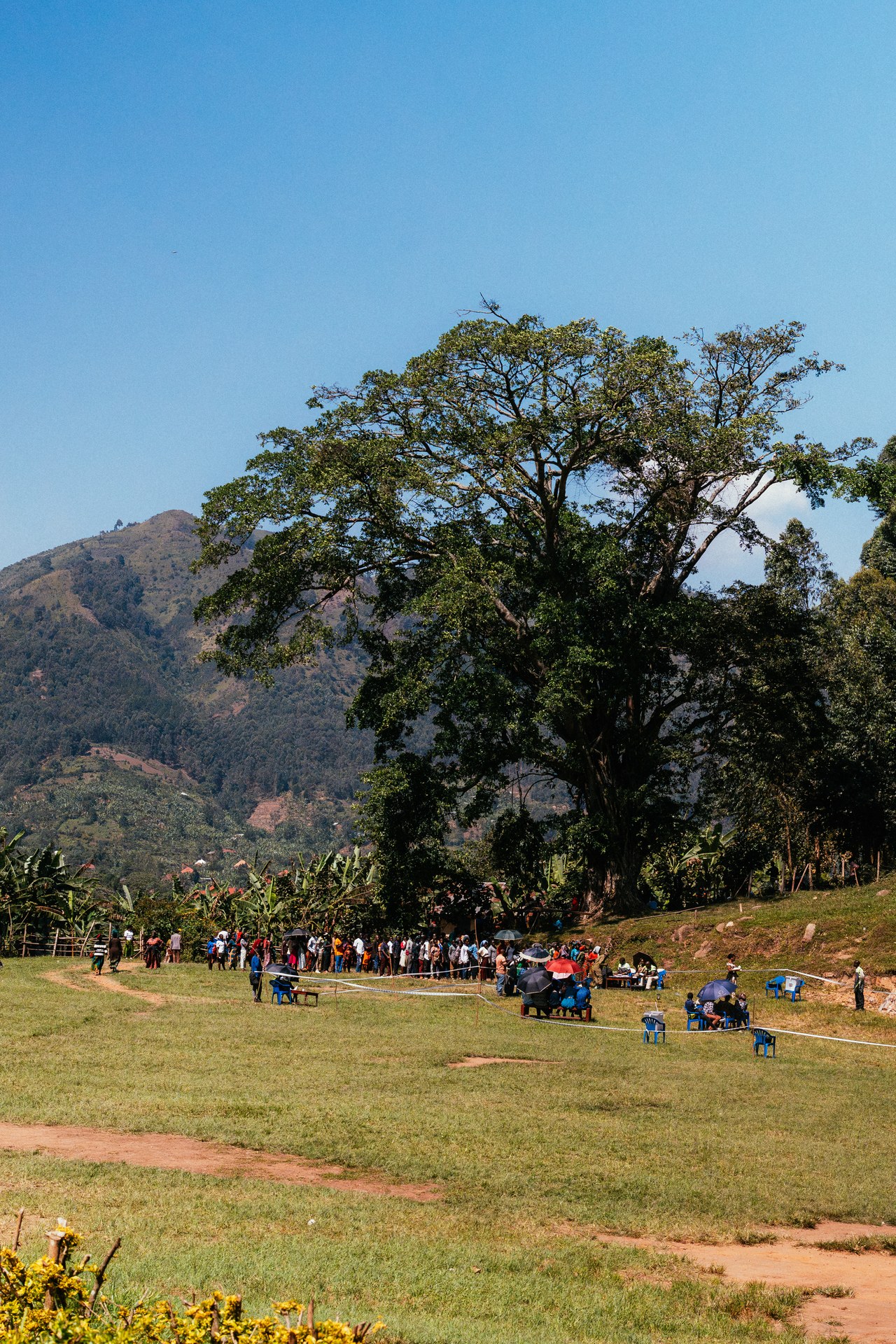
Buhoma: community gathers in the shadow of the mountain
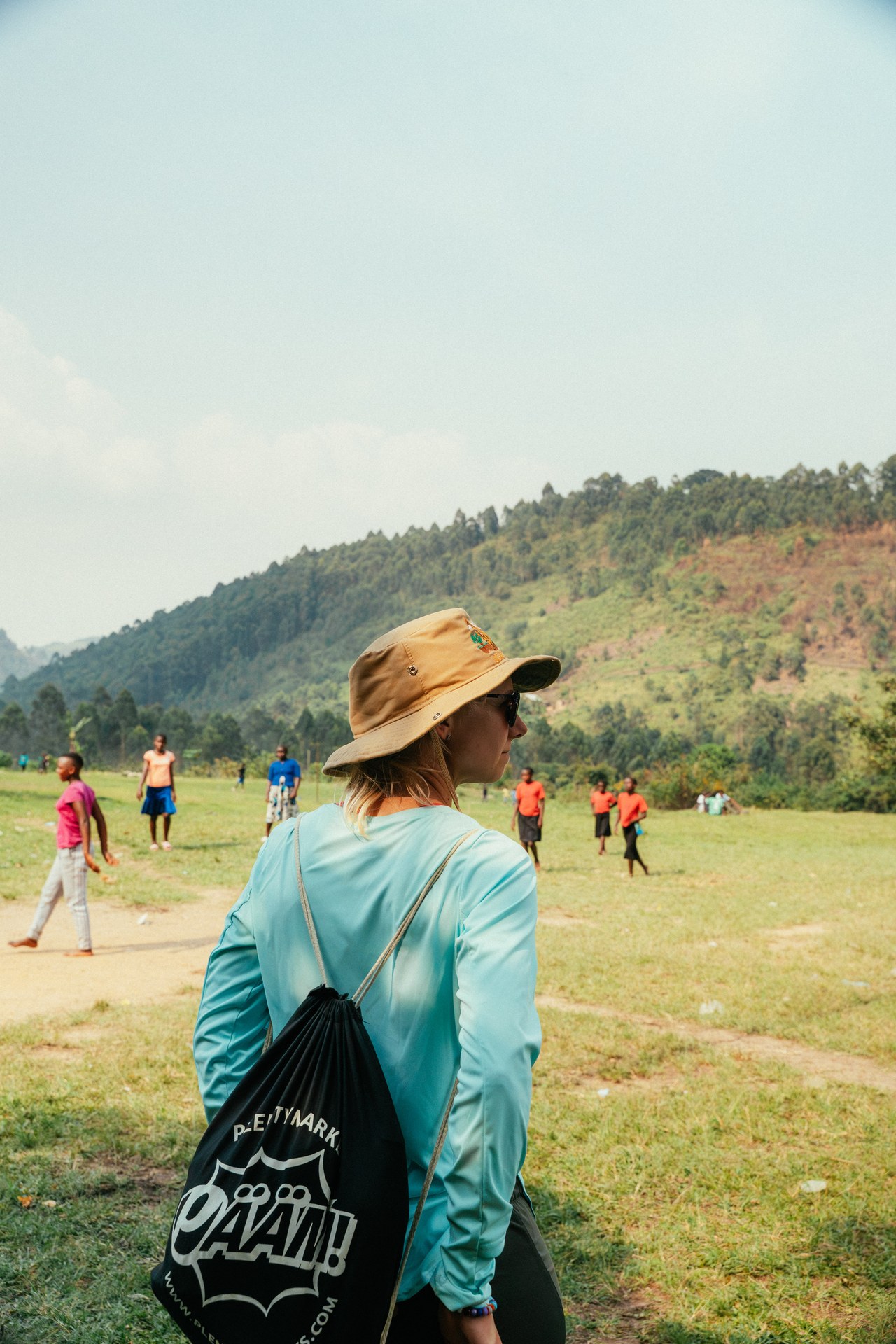
Visitor watching children play in Buhoma
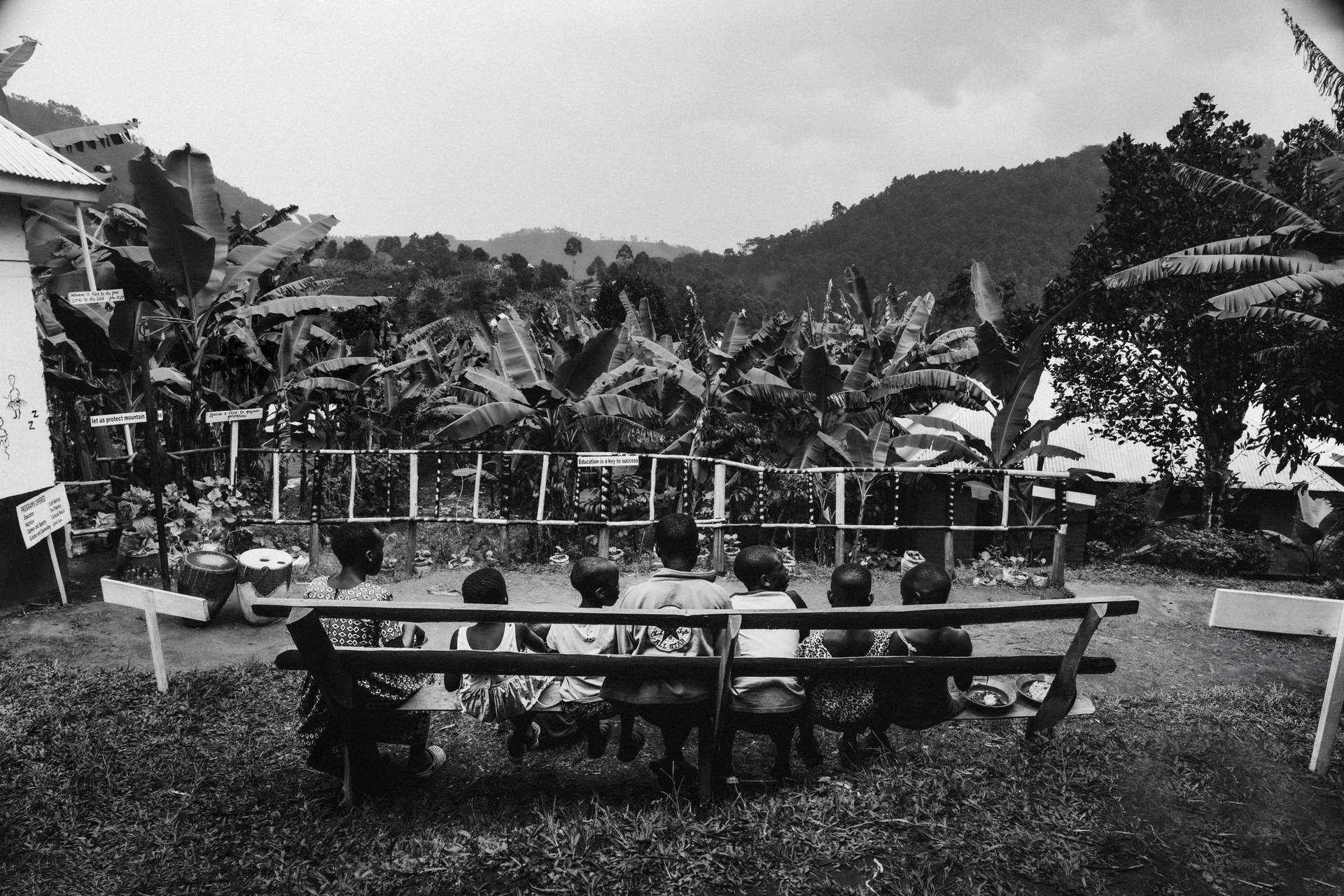
Community on a bench gazing at the Ugandan landscape
The HuGo System: Human-Gorilla Conflict Response
Among the specialised tools UWA has developed to manage conflict at Bwindi, the HuGo system stands apart. HuGo — short for Human-Gorilla conflict — refers to dedicated response teams trained specifically for encounters involving mountain gorillas. These units are distinct from the general Problem Animal Management squads that handle elephants, baboons, and other species. Their specialisation reflects both the legal protection gorillas carry as a critically endangered species and the particular sensitivity required when managing animals that are deeply habituated to human presence.
Gorillas ranging outside the park boundary is one of the 25 official management challenges catalogued in UWA's General Management Plan 2014-2023. The problem is concentrated in specific areas: Nkuringo, Buhoma, Bujengwe, and Nyabaremure are all identified as zones where gorilla groups regularly cross into farmland. The challenge is compounded by the fact that some habituated gorilla groups have home ranges that naturally straddle the boundary, meaning their movements outside the park are not aberrations but part of normal ranging behaviour shaped by decades of forest use.
When a group crosses the boundary, HuGo teams respond with a clear protocol. They locate the gorillas, assess the proximity of farmers and homesteads, establish a safe perimeter, and use practiced techniques — position, movement, noise — to redirect the group back toward the forest without causing panic or aggression. Trackers who know individual animals by sight are central to this process. Every incident is documented, building a longitudinal record that researchers at the Institute of Tropical Forest Conservation (ITFC) use to study changing gorilla home ranges and to evaluate whether current management responses are adequate. Beyond crop damage, out-of-park ranging creates a disease transmission risk: gorillas coming into contact with livestock and people increases the potential for pathogens to move in either direction, which is why CTPH (Conservation Through Public Health) maintains a joint veterinary laboratory with UWA to monitor health at this interface.
Tea Gardens: A Proven Solution
Of all the physical interventions tested around Bwindi, tea gardens have emerged as the most consistently effective buffer between farmland and wildlife. UWA's General Management Plan explicitly recommends sensitizing communities to plant tea gardens adjacent to the park boundary, reflecting years of field experience with what works and what does not. The reason tea is so effective is straightforward: it is unpalatable to virtually all of Bwindi's wildlife. Elephants, baboons, and gorillas will not eat tea leaves or move through a dense tea plantation in search of food beyond it. A well-maintained tea buffer is a genuine deterrent, not merely a symbolic barrier.
The dual benefit of tea is what makes it viable as a long-term solution. Unlike stone walls or trenches, which cost money to build and maintain and provide nothing back, a tea plantation generates income. Farmers who establish tea gardens along the boundary earn a cash crop from the same land that protects their food crops on the other side. This economic logic transforms the buffer zone from an imposition into an asset. UWA works with communities, local government structures, and partner organisations to facilitate tea planting programs, assist with seedlings and training, and connect farmers to tea-buying schemes. Communities interested in registering for tea garden programs along the boundary can approach the UWA sector office nearest to them — at Buhoma, Nkuringo, Rushaga, or Ruhija — or make contact through their local government agricultural extension officer.
Buffer Zones and Physical Barriers
Beyond tea, buffer zone plantations more broadly have become one of the most successful strategies for reducing human-wildlife conflict around Bwindi. Eucalyptus and other fast-growing tree species serve a similar purpose in areas less suited to tea, providing timber income while creating physical distance between wildlife and crops. Stone walls and trenches have also been employed in some sections, particularly in areas with frequent elephant movement. In practice, the most effective approaches combine multiple methods: a tea or tree buffer closest to the park boundary, with alert systems and rapid PAM response available for animals that nevertheless cross into farming areas.
Problem Animal Management
UWA maintains problem animal management (PAM) teams that respond to reports of crop-raiding wildlife. These teams use a range of non-lethal deterrence methods to drive animals back into the park, including noise-making devices, flares, and chili-pepper-based deterrents. Community scouts trained in wildlife monitoring provide early warning when animals approach farmland, allowing farmers to take protective measures. For habituated gorilla groups that stray near the boundary, trackers can often redirect the group back into the forest before crop damage occurs.
The GMP identifies inadequate PAM interventions as one of Bwindi's 25 official management challenges. UWA's planned response includes recruiting and training standby PAM squads in areas most prone to wildlife incursions, equipping both PAM teams and wildlife committees with the tools they need, and lobbying for PAM to be formally integrated into district development plans. The goal is to shift PAM from reactive crisis response to a coordinated, adequately resourced system embedded in the governance structures that plan land use around the park.
Mining: A Growing Threat
While crop raiding dominates day-to-day headlines around Bwindi, a more structural threat has been building in the surrounding landscape. Mining pressure — for wolfram (tungsten), gold, and iron ore — is formally listed among the 25 management challenges in UWA's General Management Plan 2014-2023. The deposits that attract artisanal and commercial mining operations are concentrated in areas adjacent to or occasionally overlapping with the park boundary.
The impacts of mining on conservation at Bwindi are multiple. Forest clearance for access roads, settlement, and mine workings destroys gorilla habitat and fragments the connectivity between Bwindi and adjacent forest blocks. Mining activity disturbs the watersheds that feed the five major rivers draining out of Bwindi toward Lake Edward — rivers on which downstream communities and ecosystems depend. Artisanal mining camps also generate populations of workers who may place additional pressure on forest resources through bushmeat hunting and firewood extraction. UWA's response includes advocacy for stronger mining regulations in the areas surrounding the park, engagement with the district and national governments whose land-use approvals govern what can be extracted and where, and collaboration with research institutions to document and communicate the ecological costs of unregulated mining in this globally significant landscape.
The Compensation Question
Compensation for wildlife damage remains one of the most contentious issues in Bwindi's conservation landscape. Currently, there is no comprehensive compensation scheme for individual crop losses caused by wildlife in Uganda. The 20% revenue-sharing program provides collective benefits to communities but does not address individual farmers' losses. Some pilot programs have tested crop insurance and direct payment schemes, but scaling these to the entire park boundary has proven difficult. The absence of fair compensation erodes community goodwill toward conservation and can push affected individuals toward retaliatory measures against wildlife.
The GMP identifies both the inadequacy of current revenue-sharing arrangements and the mismanagement of gorilla levy funds as management challenges requiring attention. The planned output is equitable revenue sharing promoted among target communities by 2017, monitored and evaluated against community benefit targets. Whether this goal was fully met is a matter of ongoing assessment, but the formal acknowledgment that revenue must reach the people most affected by wildlife — rather than flowing primarily to district project management committees — represents an important shift in institutional thinking.
Toward Coexistence
Managing human-wildlife conflict at Bwindi requires a combination of physical barriers, economic incentives, rapid response systems, and community engagement. No single approach is sufficient. Tea buffer zones must be maintained and expanded. PAM teams and HuGo units need adequate resources and rapid response capability. Revenue-sharing and compensation mechanisms must evolve to address the real costs borne by individual households. Mining pressure must be met with policy advocacy and stronger regulation. And communities must be full partners in designing and implementing solutions. The long-term success of gorilla conservation depends on finding a sustainable balance between human needs and wildlife protection — a balance that requires honest accounting of where that balance currently falls short.