A Living Network of Families
Every mountain gorilla in Bwindi belongs to a family. These are not loose associations but tightly bonded social units, held together by the authority of a dominant silverback, the loyalty of females, and the playful chaos of young. Each group has a character shaped by its leader's temperament, the terrain it inhabits, and the events of its collective history. Some are large and stable, numbering more than twenty individuals. Others are small and recently formed, still finding their equilibrium.
The process of habituation — the gradual acclimatization of wild gorillas to the neutral presence of humans — has been underway in Bwindi since the early 1990s. It typically takes two to three years of daily visits by dedicated tracking teams before a group is calm enough to receive visitors. Today, 25 groups across the park's four sectors have been habituated. Of these, 9 are designated for tourism, meaning that up to eight permit holders per day may spend one hour in their presence. One group is reserved exclusively for scientific research.
Buhoma Sector
Buhoma, in the park's northwest, is where gorilla tourism in Bwindi began. The Mubare group, habituated in April 1993, was the first family to receive visitors anywhere in Uganda. Named after Mubare Hill where they were first found, this group has a storied history. Over the decades it has weathered the loss of silverbacks, the departure of females, and periods of instability, yet it endures as a living symbol of Bwindi's conservation journey.
The Habinyanja group, habituated shortly after Mubare, was once one of the largest in the park and famously split into two when a subordinate silverback led a breakaway faction. Buhoma's relatively accessible terrain and well-developed community infrastructure make it a popular starting point for visitors, though the gorilla groups here can range across steep, densely vegetated ridges that demand real physical effort to reach.
Ruhija Sector
Ruhija sits at the park's highest elevations, around 2,300 metres above sea level. The air is thinner here, the forest draped in moss and mist. The Bitukura group, one of the sector's most visited families, is known for its multiple silverbacks — an unusual configuration that provides fascinating insights into male social dynamics. Watching two or three silverbacks negotiate proximity and status within a single group is an experience that researchers and visitors alike find extraordinary.
The Oruzogo group, also based in Ruhija, tends to range through particularly challenging terrain. Treks here can be arduous, with steep ascents and descents through thick bamboo and undergrowth. But the high-altitude forest has a quiet grandeur that rewards the effort, and the birding along Ruhija's trails is among the best in the park.
Rushaga Sector
The southern sector of Rushaga has the highest concentration of habituated gorilla groups in Bwindi. Several families — including Nshongi, Mishaya, Kahungye, Busingye, and Bweza — range through the sector's varied topography. The density of groups here reflects the richness of the habitat: abundant fruit trees, dense undergrowth, and a complex mosaic of ridges and valleys that provide ample forage and nesting sites.
Rushaga's gorilla families have provided some of the most dramatic moments in Bwindi's recent history. Group splits, silverback confrontations, and the formation of entirely new families have all been documented here, offering an ongoing natural drama that keeps researchers engaged and visitors spellbound. The sector is also the base for Bwindi's gorilla habituation experience, which allows visitors to spend up to four hours with a group still in the process of becoming accustomed to human presence.
Nkuringo Sector
Nkuringo, on the park's western flank, offers perhaps the most dramatic landscape of any sector. The Nkuringo gorilla family, from which the sector takes its name, ranges across steep hillsides with sweeping views of the Albertine Rift. The group was habituated in the early 2000s and quickly became known for its confident, relaxed demeanour around visitors.
Reaching the Nkuringo gorillas often involves a demanding descent into the valley followed by an equally taxing climb back out. The physical challenge is real, but the setting is spectacular: trekking through bamboo zones and across open ridgelines before entering the forest proper. For visitors seeking a more adventurous and less crowded experience, Nkuringo consistently delivers.
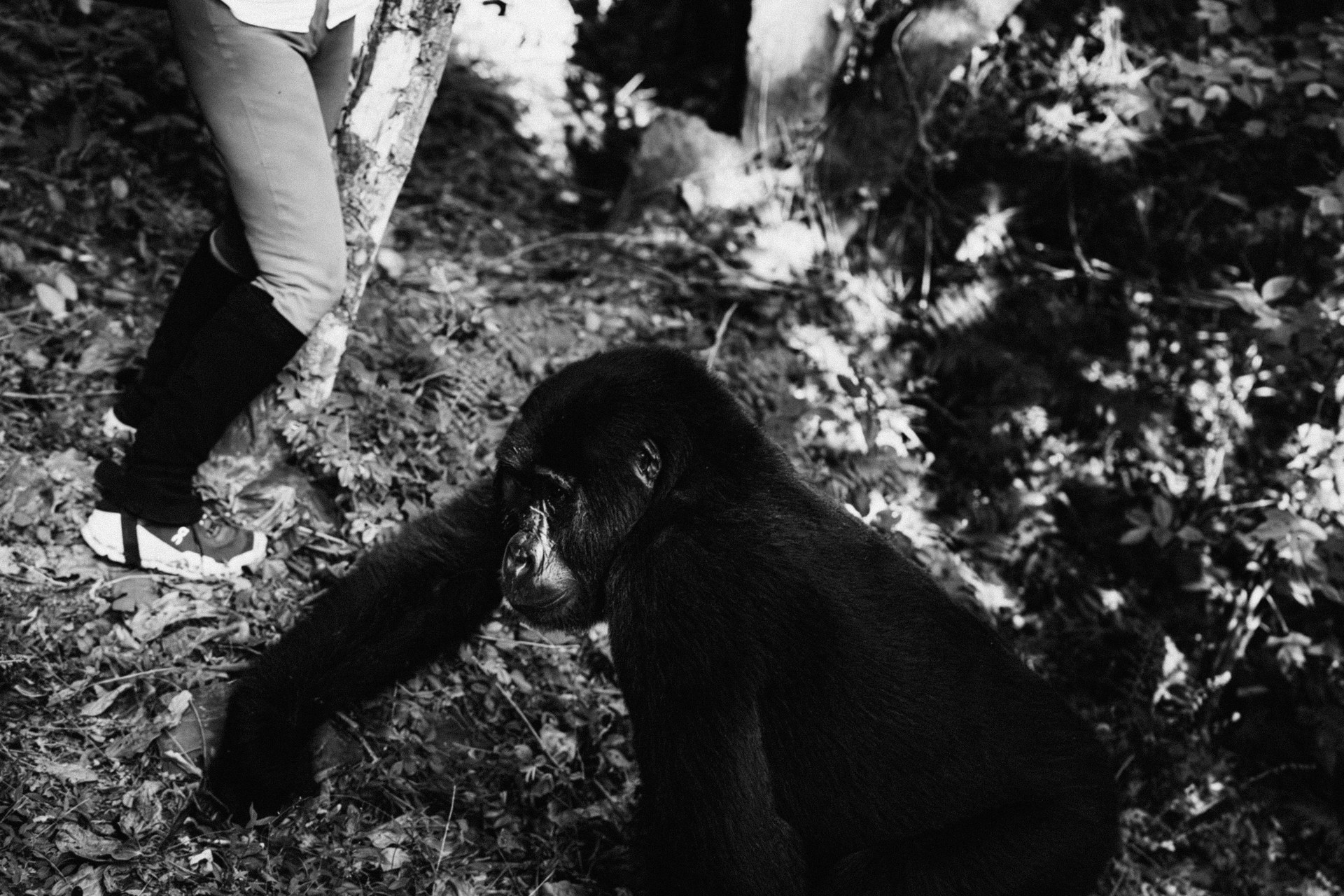
Young mountain gorilla on the forest floor in Bwindi
Mountain Gorilla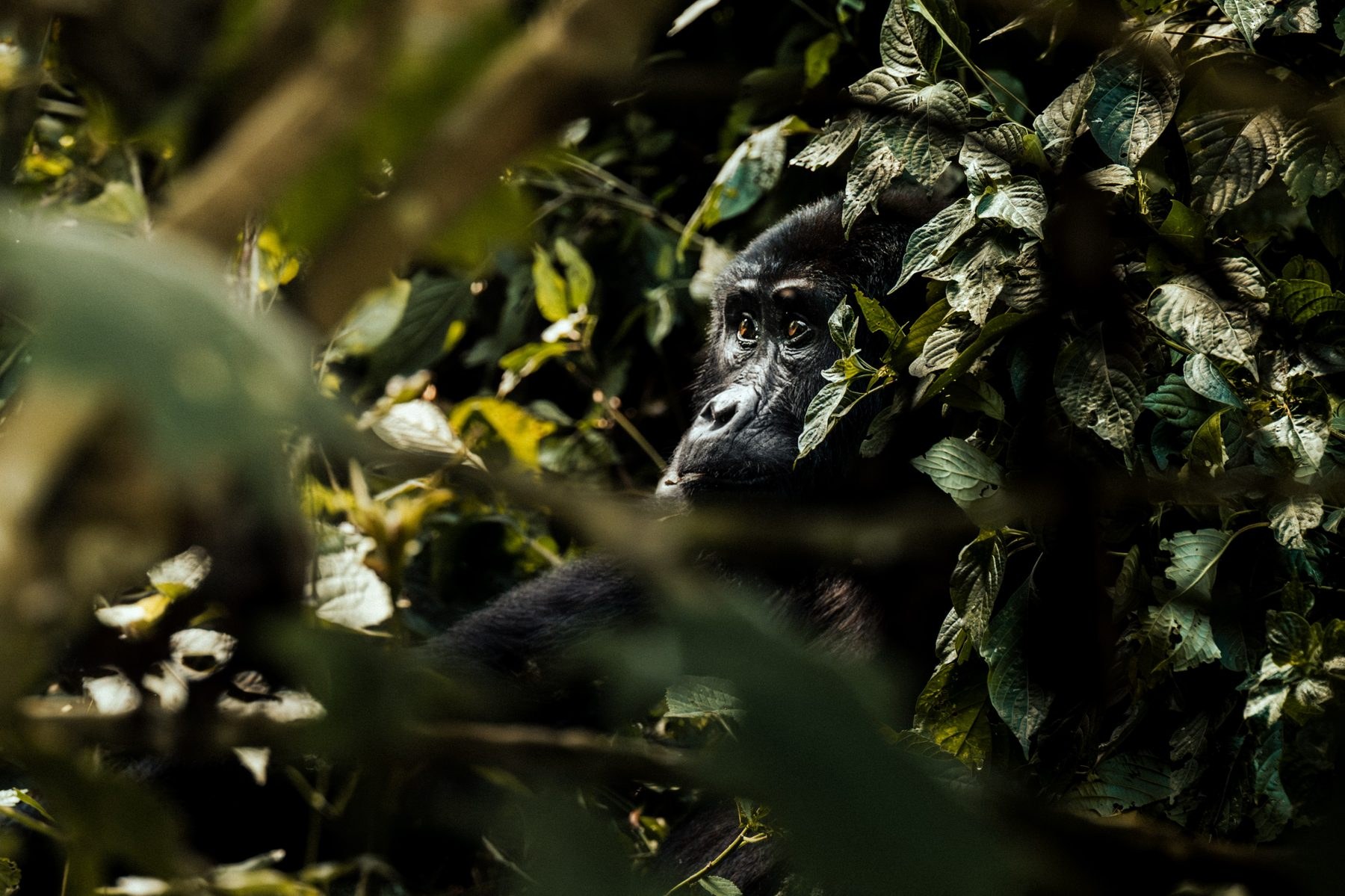
Gorilla in the thickets of Bwindi Impenetrable Forest
Mountain Gorilla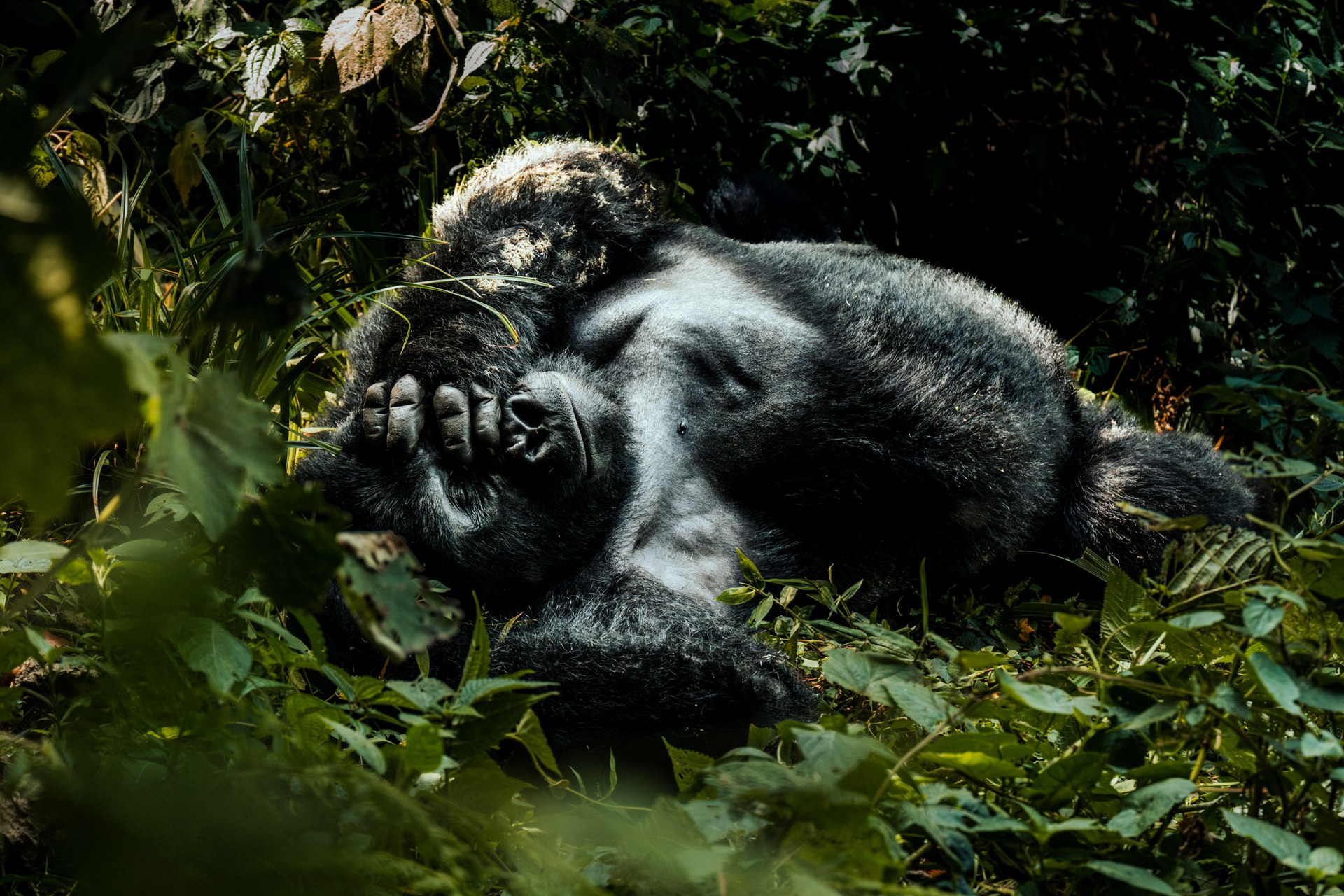
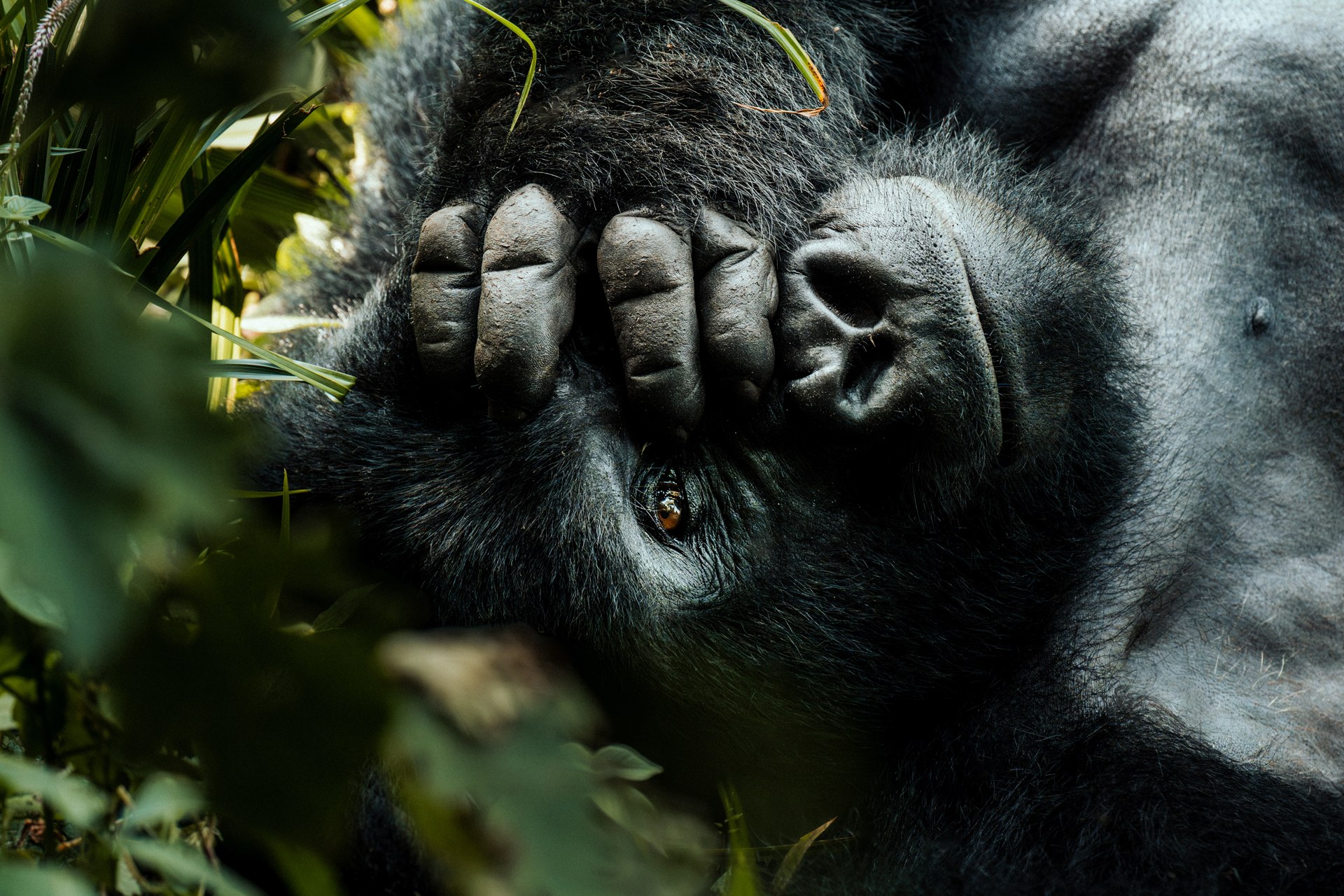
Silverback resting in the dense greenery of Bwindi
Mountain Gorilla (Silverback)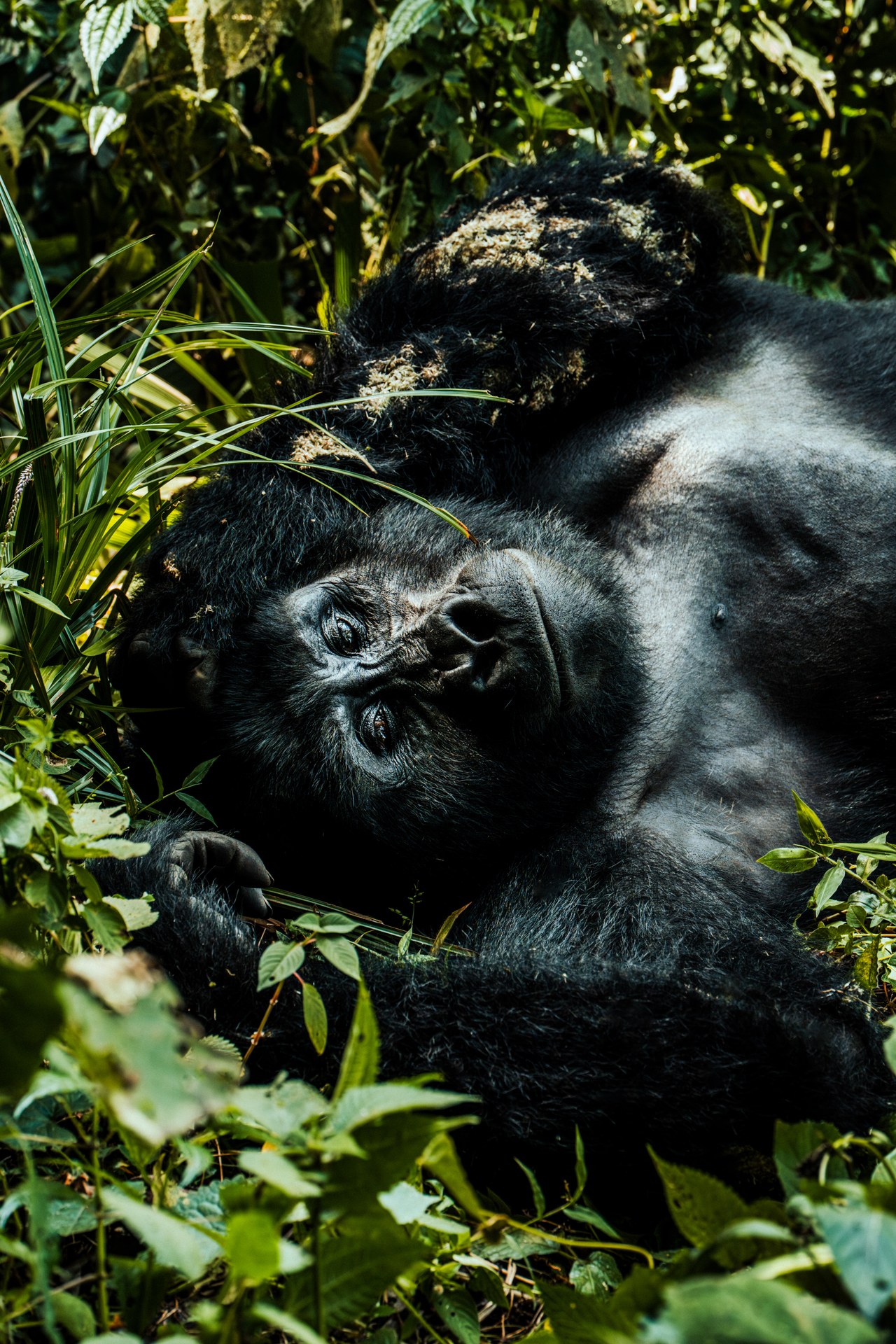
Silverback resting in the thickets of Bwindi forest
Mountain Gorilla (Silverback)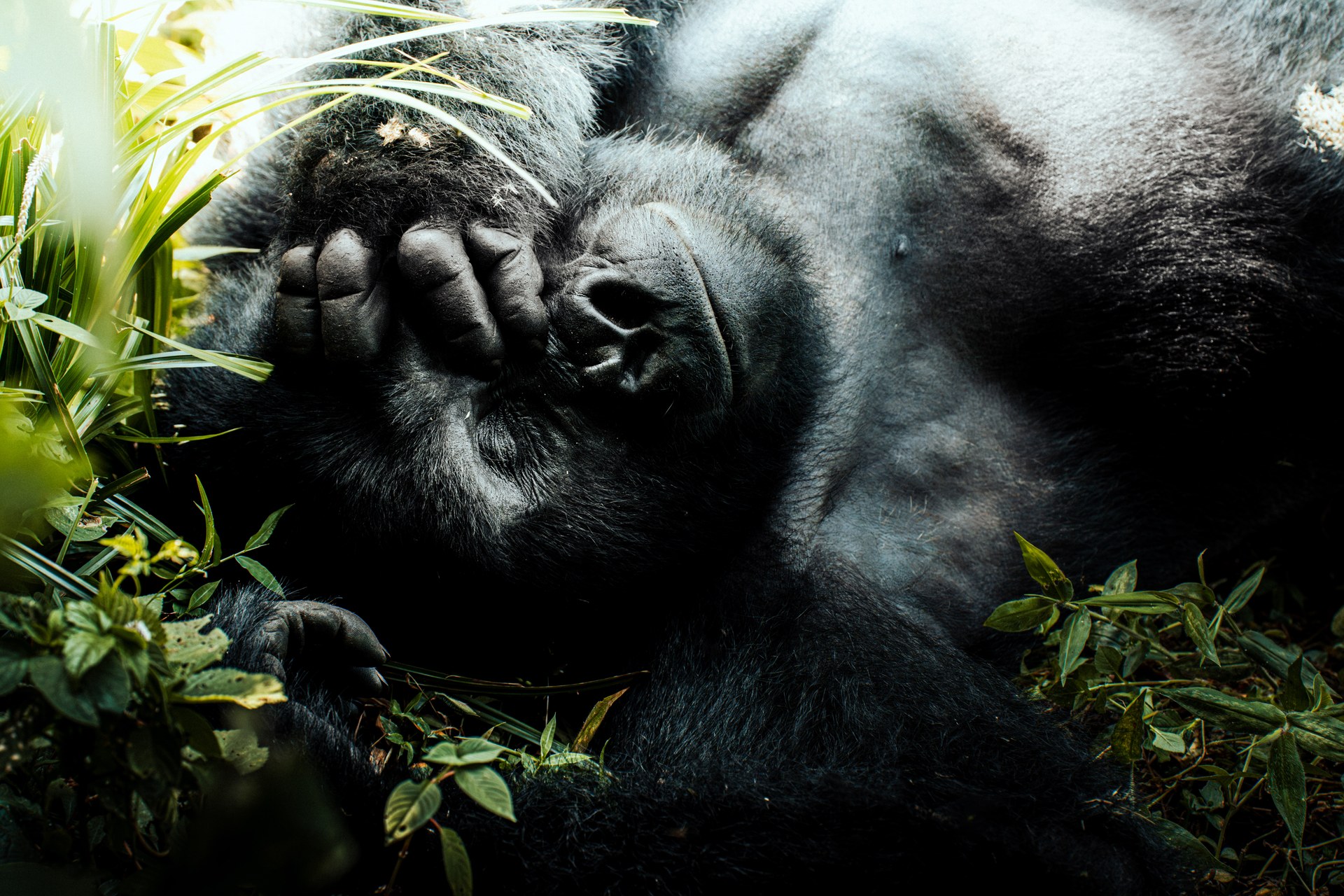
Silverback resting in Bwindi Impenetrable Forest
Mountain Gorilla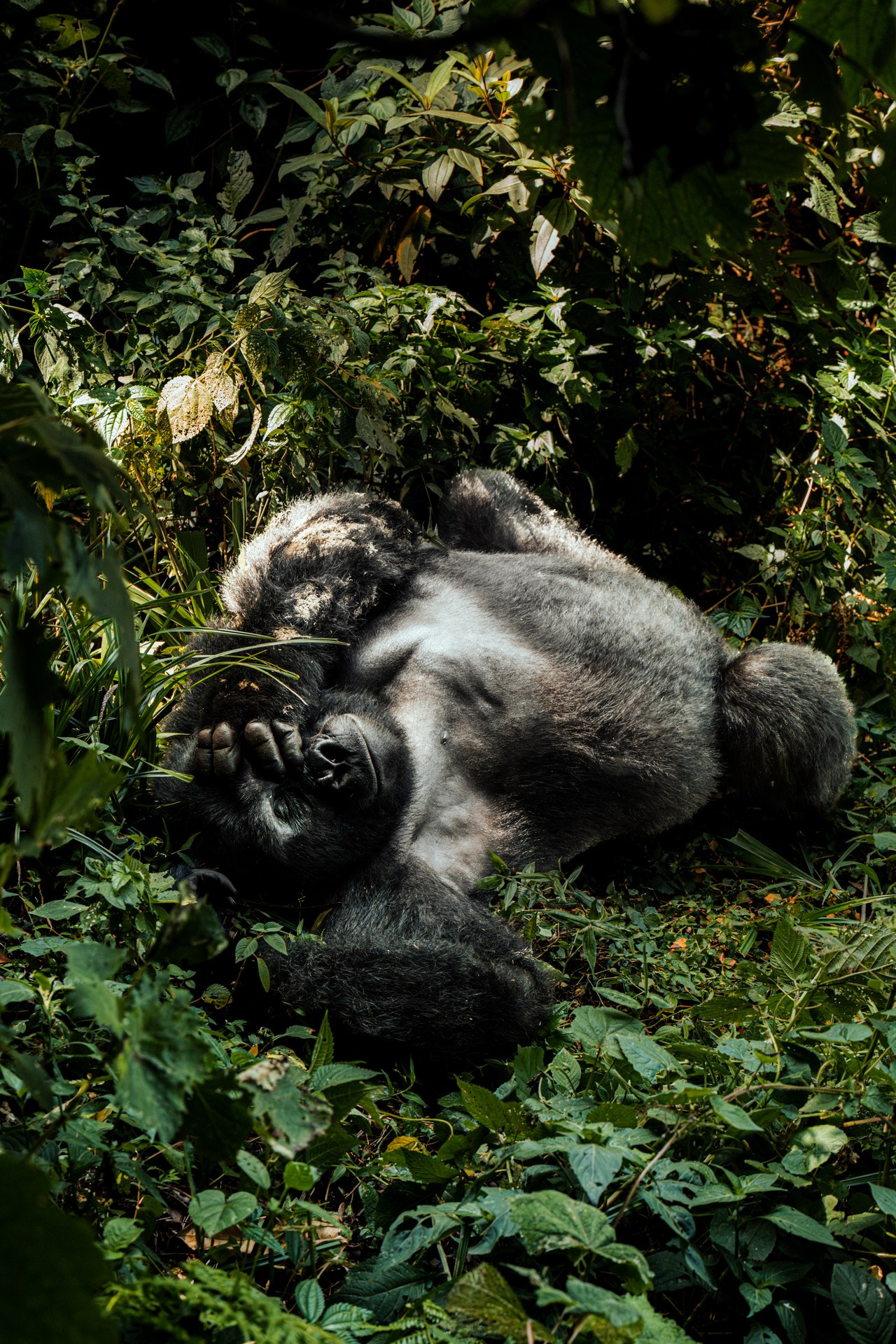
Silverback relaxing in Bwindi rainforest
GorillasUnderstanding Group Dynamics
Gorilla families are not static entities. They grow, contract, split, and merge over time in response to births, deaths, male challenges, and female migrations. A dominant silverback may lead a group for a decade or more, but his death or decline can trigger a cascade of changes: females may leave to join another group or follow a young silverback striking out on his own. Occasionally, outside silverbacks attempt to take over a group by force, a process that can be violent and disruptive.
Uganda Wildlife Authority rangers and researchers track every habituated group daily, recording group composition, health observations, ranging patterns, and behavioural events. This continuous monitoring provides an unparalleled dataset on gorilla social ecology and ensures that any health concerns or threats are detected early. The intimate knowledge that trackers develop of individual gorillas — their personalities, relationships, and histories — is a cornerstone of both conservation management and the quality of the visitor experience.