A Living Laboratory
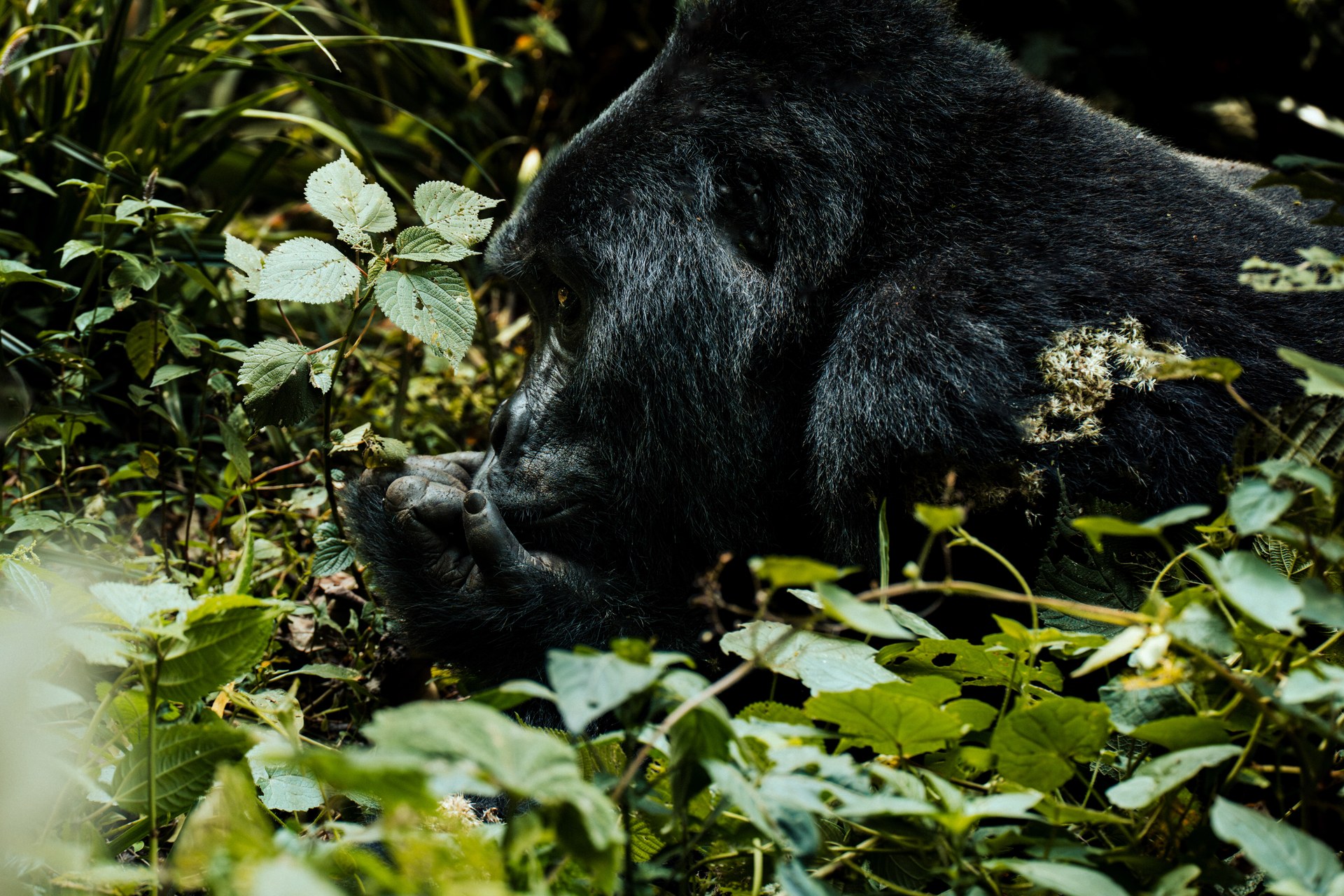
Bwindi Impenetrable National Park is not only a sanctuary for mountain gorillas but also one of the most significant long-term research sites for any great ape species. Since the early 1990s, researchers from Ugandan institutions, international universities, and conservation organizations have maintained continuous monitoring of the gorilla population, generating a dataset of extraordinary depth and duration.
The Institute of Tropical Forest Conservation, based at Ruhija within the park, serves as the primary research station. From this outpost at 2,350 metres above sea level, researchers coordinate studies spanning ecology, genetics, health, and behaviour. The station has hosted hundreds of graduate students and visiting scientists, and the publications emerging from Bwindi research have shaped conservation policy not only for gorillas but for endangered species management worldwide.
Population Monitoring and Censuses
Knowing how many gorillas exist is fundamental to conservation planning. Mountain gorilla censuses are massive undertakings, requiring coordinated sweeps through hundreds of square kilometres of difficult terrain across multiple countries. Teams locate gorilla nest sites, collect fresh dung samples, and submit them for genetic analysis. DNA extracted from dung identifies individual gorillas through their unique genetic fingerprints, providing an accurate population count without the need to observe every animal directly.
The most recent complete census, conducted in 2018 across Bwindi and the adjacent Sarambwe Nature Reserve in the Democratic Republic of Congo, estimated 459 gorillas in the Bwindi-Sarambwe ecosystem. Combined with the Virunga population of approximately 604, this brought the total known mountain gorilla population to over 1,000 for the first time since surveys began. This milestone, while cause for cautious optimism, also highlighted the fragility of a species whose entire range can be measured in hundreds of square kilometres.
Genetics and Evolutionary History
Genetic research has been one of the most productive areas of gorilla science in Bwindi. Analysis of DNA from dung samples, hair, and occasional blood draws from sedated individuals has revealed the deep genetic structure of the population. Bwindi gorillas are genetically distinguishable from those in the Virunga volcanoes, separated by thousands of years of isolation. Some researchers have argued that the level of divergence warrants recognition as a distinct subspecies, though this remains debated.
Within Bwindi, genetic studies have mapped relatedness across groups, identified patterns of male dispersal and female transfer, and assessed the population's overall genetic diversity. Paternity analysis has confirmed that dominant silverbacks sire the majority of offspring but that subordinate males occasionally father young as well. These findings have direct implications for understanding population viability and planning for the genetic management of a small, isolated species.
Behavioural Ecology
Long-term behavioural studies in Bwindi have documented how gorilla groups use their habitat, what they eat, how social relationships form and change, and how individual personalities influence group dynamics. One dedicated research group, habituated but not open to tourists, provides a controlled setting for behavioural observation unaffected by the presence of visiting groups.
Key findings include the importance of fruit in the Bwindi gorilla diet, which is significantly higher than in the Virunga population. This dietary difference influences ranging behaviour: when fruit is abundant, groups travel further and faster, and inter-group encounters become more frequent as families converge on fruiting trees. The social consequences of these encounters — displays, female transfers, and occasional violent confrontations between silverbacks — are a major focus of ongoing research.
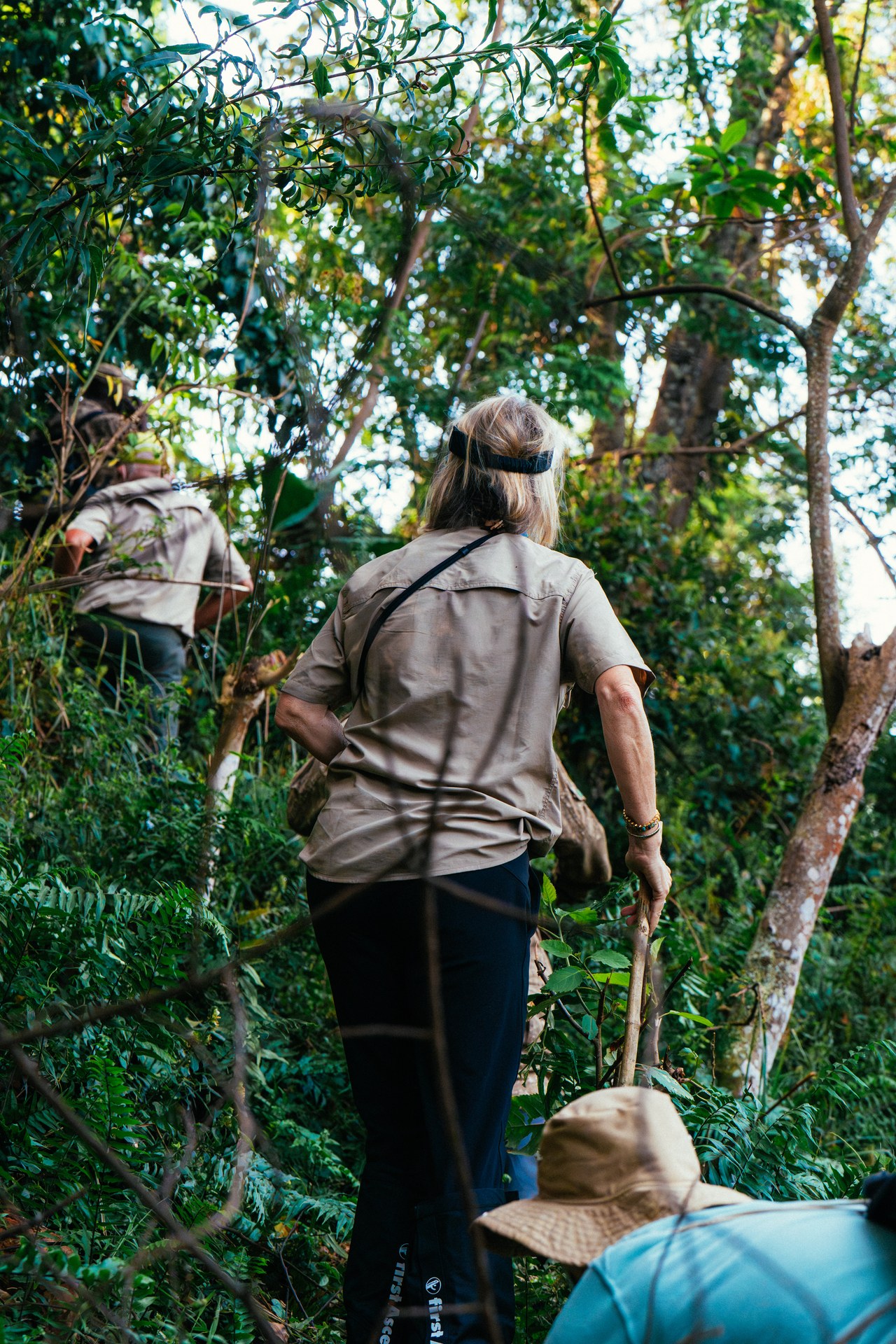
Through Bwindi forest on the trail of gorillas
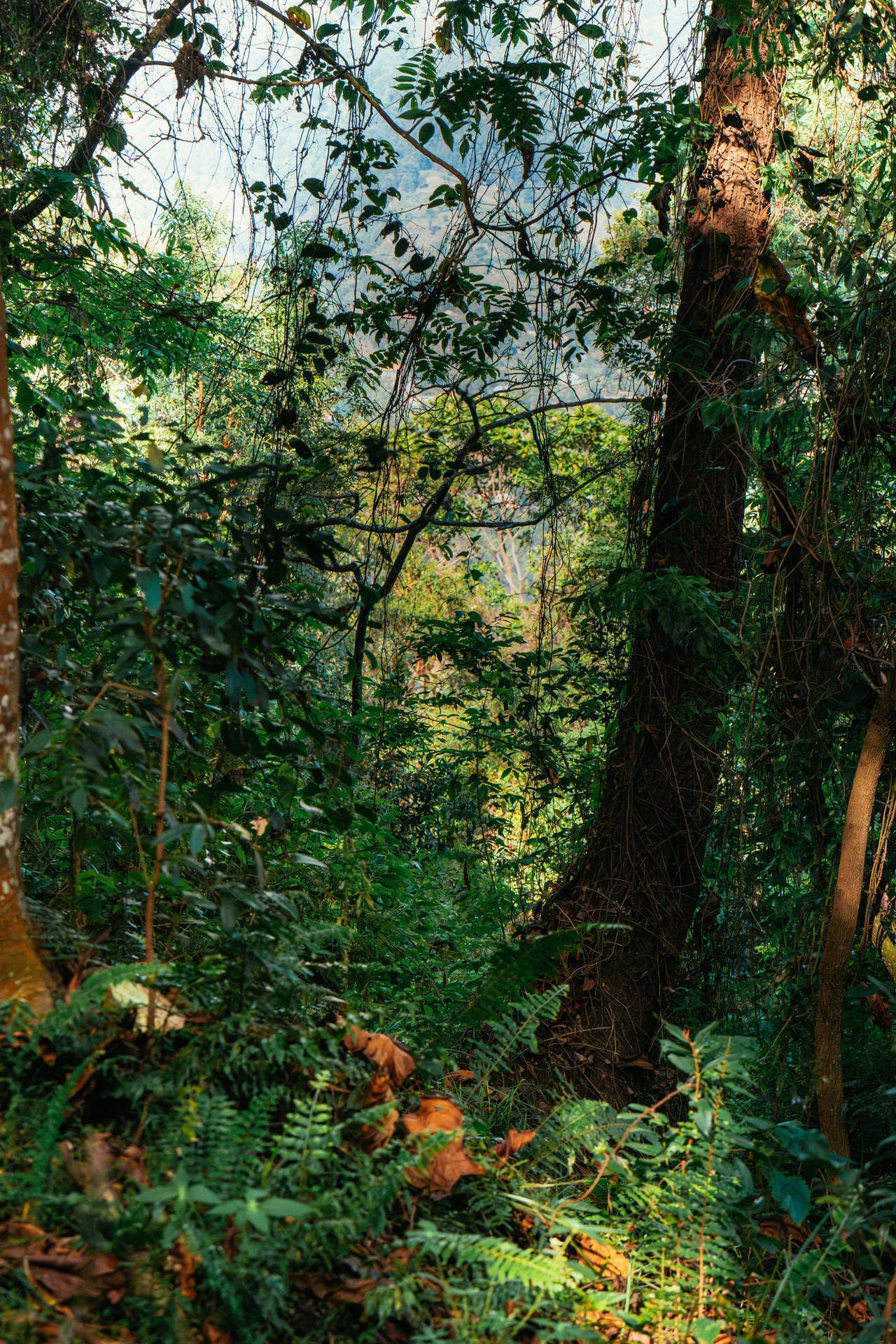
Dense jungle at the start of the gorilla trekking trail
Mountain Gorilla Peering Through Dense Forest Foliage
Mountain GorillaHealth and Disease
The health of Bwindi's gorillas is monitored continuously by veterinarians from the Gorilla Doctors programme and by rangers who observe each habituated group daily. Non-invasive health assessment techniques — observation of behaviour, body condition, and faecal analysis — allow early detection of illness without the need for stressful captures.
Respiratory disease is the single greatest health concern. Mountain gorillas are highly susceptible to human respiratory pathogens, and outbreaks have caused fatalities in both Bwindi and the Virungas. Research into the epidemiology of respiratory disease in gorilla populations has informed the strict rules governing tourist proximity and the exclusion of symptomatic visitors from treks. Studies of gastrointestinal parasites, wound healing, and the long-term effects of snare injuries have also contributed to improved veterinary protocols.
The Impact of Tourism on Gorilla Behaviour
A persistent question in gorilla conservation is whether tourism itself alters gorilla behaviour in ways that may be harmful. Researchers in Bwindi have studied cortisol levels in gorilla dung as a measure of physiological stress, compared the behaviour of tourism and non-tourism groups, and tracked long-term changes in ranging patterns and social structure.
Results are nuanced. Some studies have found elevated cortisol in groups receiving frequent tourist visits, while others have found no significant difference. Behavioural changes appear subtle: tourism groups may spend slightly less time feeding during visits and slightly more time in vigilance. The consensus among researchers is that well-managed tourism, with strict adherence to group size limits, distance rules, and visit duration, is compatible with gorilla welfare, but that ongoing monitoring is essential to detect any negative trends early.
Future Directions
Gorilla research in Bwindi continues to evolve. New technologies, including camera traps, GPS tracking of ranger patrols, acoustic monitoring, and advanced genomic analysis, are expanding the scope and precision of data collection. Climate change modelling is being applied to predict how shifts in temperature and rainfall may affect forest composition and gorilla food availability over the coming decades.
Collaborative research networks linking Bwindi with the Virunga volcanoes and other great ape study sites are enabling comparative analysis at scales that were previously impossible. The ultimate goal remains the same as it was when the first researchers entered the forest decades ago: to understand mountain gorillas well enough to ensure their survival in a rapidly changing world.