Why Counting Gorillas Is Hard
Bwindi Impenetrable National Park is 321 square kilometres of steep, mist-covered rainforest with virtually no roads and visibility measured in metres rather than kilometres. The conventional tools of wildlife survey — aerial counts, camera trap grids, road transects — are either impractical or give incomplete pictures in terrain like this. You cannot fly a small plane over the canopy and count individual animals the way you might count elephants on an African savanna.
The problem is compounded by the gorillas themselves. The roughly twenty habituated groups that are visited daily by trackers and tourists are, in survey terms, easy — their size, composition, and location are updated every single day. The remaining gorillas, living in unhabituated groups, may not be seen by humans for months or years at a time. A census that only counted what people could see would miss a significant portion of the population and produce a serious undercount.
Researchers must therefore rely on indirect evidence: sleeping nests, fresh dung, footprints in soft ground, and the occasional vocalisation drifting through the forest. Building a reliable population estimate from these fragments requires careful field methodology, laboratory science, and statistical modelling — a combination that was not available to the first biologists who worked in Bwindi in the 1980s.
Census Methods
Three main approaches are combined to produce a credible population estimate. The first is nest counting. Mountain gorillas construct a new sleeping nest every night — a fresh platform of bent branches and leaves — and abandon it by morning. Survey teams walk systematic transects through the forest, recording the location of every nest cluster they find. The number of nests in a cluster indicates group size, and the age of the nest — estimated from decomposition — indicates how recently the group was present. Repeated transects allow a density estimate to be extrapolated across the whole park.
The second method is DNA analysis from dung. Every gorilla individual has a unique genetic profile, and that profile is present in every dung sample they leave behind. Field teams collect dung samples systematically across the park, and laboratories — including international partners — extract and sequence DNA from each sample. By identifying which samples came from the same individual, analysts can count the number of distinct gorillas represented in the dataset without the risk of counting the same animal twice when its range overlaps with the survey area of another team.
The third method is direct observation. For habituated groups, Uganda Wildlife Authority trackers record every individual they see during daily follows, noting births, deaths, immigrations, and emigrations. This continuous dataset anchors the statistical model, providing known reference points against which the indirect evidence from unhabituated areas can be calibrated. Integrating all three sources of data produces a population estimate with a defined confidence interval rather than a single uncertain number.
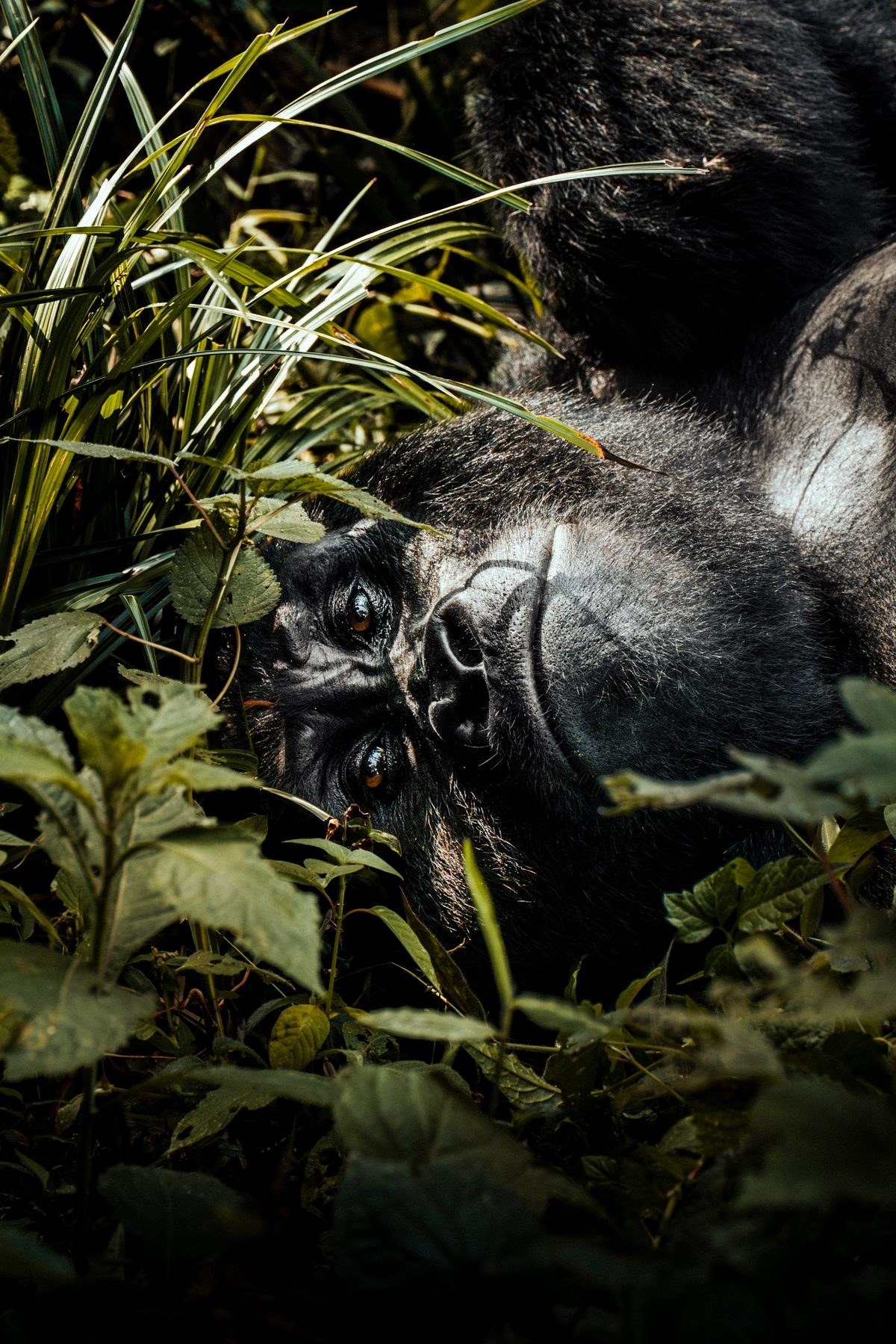
Silverback in the thicket, gazing into ancient eyes
Gorillas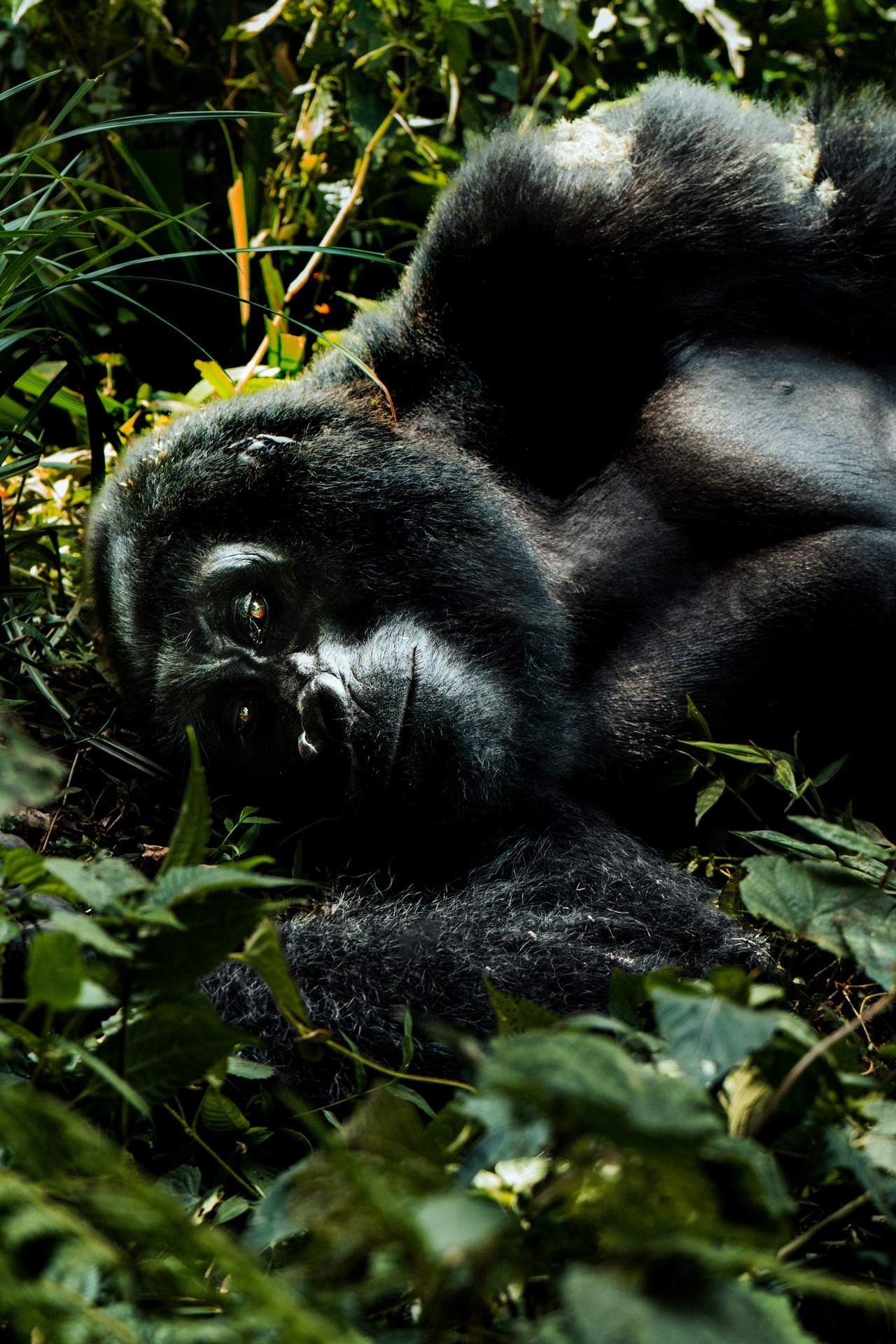
Silverback resting in Bwindi rainforest
Mountain Gorilla (Silverback)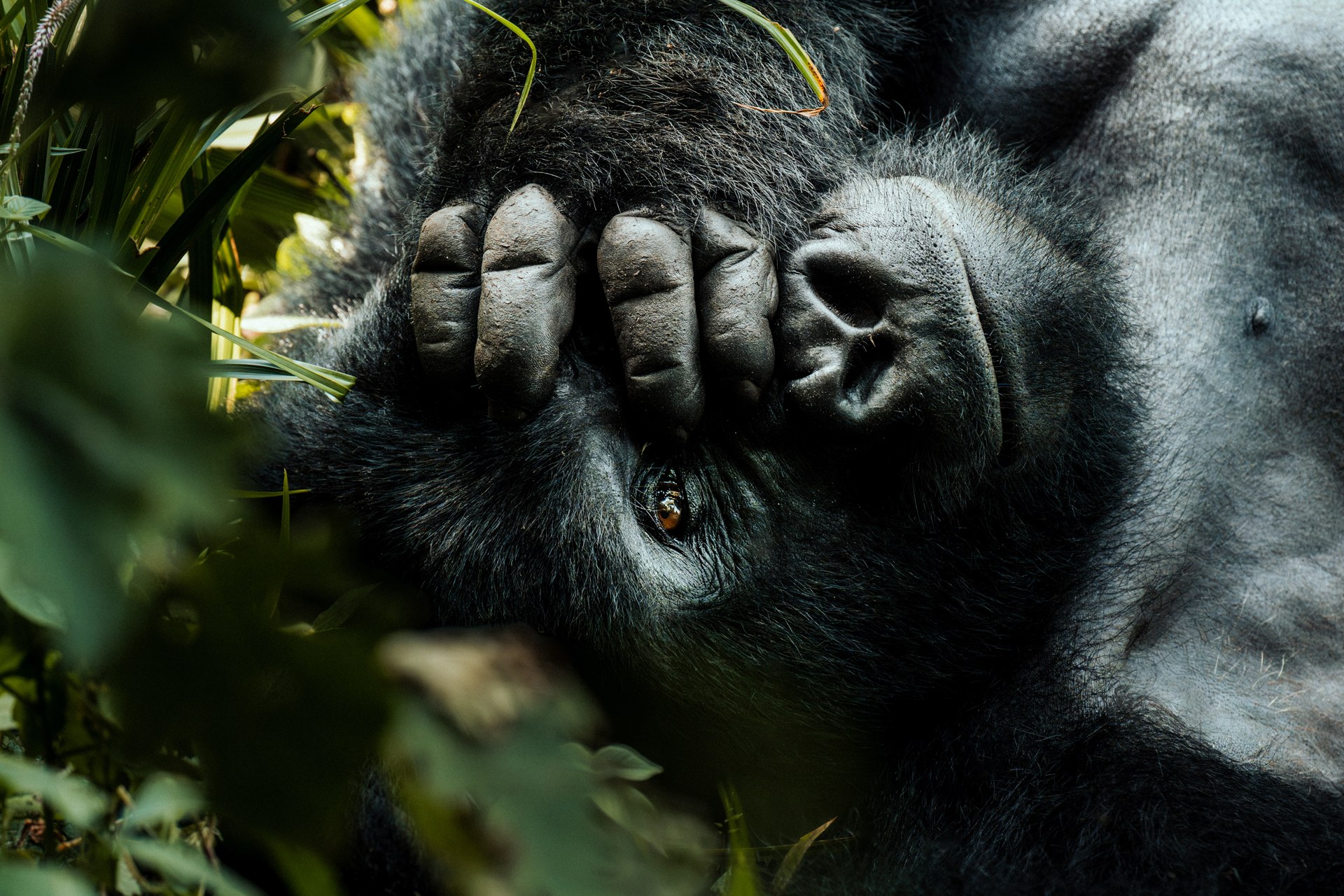
Gorilla covering its face with its hand
Mountain GorillaThe Census History: From 300 to 1,063
The first systematic count of Bwindi's gorillas was conducted in 1989 and found approximately 300 individuals — a number that was simultaneously a baseline and an alarm call. A second survey in 1997 returned a similar figure, suggesting the population had not yet begun to grow despite the 1991 gazettal of the national park. The 2002 census recorded 340 gorillas, and the 2006 survey confirmed the figure had remained at around 340, offering cautious grounds for optimism that the downward trend had been halted without yet showing clear recovery.
The 2011 census was the first to count Bwindi and the Virunga population together as a single mountain gorilla population, producing a combined figure of 786 — of which approximately 400 were in Bwindi. That result confirmed genuine growth. The 2018 census, which incorporated the improved DNA methodology alongside traditional nest surveys, returned the landmark figure of 1,063 mountain gorillas worldwide, with approximately 459 in Bwindi and 604 in the Virungas. For a great ape species, an increase of this magnitude over three decades is almost without precedent.
Three factors explain the recovery. First, sustained anti-poaching work reduced the snaring and hunting that had suppressed the population through the 1970s and 1980s. Second, the revenue-sharing programme introduced after gazettement gave surrounding communities — more than 500,000 people live in the parishes bordering Bwindi — a direct financial reason to support the park rather than encroach on it. Third, a functioning veterinary programme meant that injuries and diseases that would previously have been fatal could be treated.
UWA's Periodic Census Commitment
Uganda Wildlife Authority's General Management Plan for Bwindi (2014–2023) includes a formal research action to "conduct periodic population census of key wildlife species (Elephants, Gorillas, Chimpanzees)." The commitment reflects an understanding that population data is not simply an academic exercise — it is the foundation on which management decisions are made. Without reliable numbers, it is impossible to evaluate whether interventions are working or to justify the level of resource allocation the park receives.
Gorillas are the flagship species, but the census mandate extends to the park's other large mammals. Bwindi is estimated to hold around thirty forest elephants, a population that is rarely seen and poorly understood because elephants in closed forest canopy cannot be counted from the air. Chimpanzees are present in Bwindi but have not been habituated for tourism, making systematic counts challenging. Regular surveys of all three species allow UWA to track population trends, assess whether management is achieving its objectives, and respond to emerging threats before they become crises.
The GMP also includes a specific research action to "initiate research in partnership with other organizations to investigate the optimal level of gorilla groups that can be habituated without negatively impacting on the resource base." This reflects a tension that census data directly informs: tourism generates the revenue that funds conservation, but habituation itself carries costs, and the census provides the evidence base for deciding how many groups can responsibly be brought into contact with visitors.
What the Numbers Mean for Conservation
Mountain gorillas are the only great ape species whose wild population is currently increasing. All other great apes — chimpanzees, bonobos, western gorillas, and orangutans — are in decline. The Bwindi and Virunga populations represent the entire global wild population of mountain gorillas; there are none in zoos. In 2018, the IUCN downlisted the mountain gorilla from Critically Endangered to Endangered, the first such improvement for any great ape species in modern times.
But the numbers also reveal how precarious the recovery remains. A total wild population of just over 1,000 individuals, confined to two isolated and surrounded forest blocks, has almost no buffer against catastrophe. A respiratory disease outbreak — gorillas are susceptible to human respiratory viruses and have been treated for them — moving through unhabituated groups where veterinary intervention is impossible could kill dozens of animals before it was even detected. A period of armed conflict in eastern Democratic Republic of Congo, which borders the Virungas, has repeatedly interrupted census work and threatened the rangers who protect the gorillas.
The census is therefore not just a scientific document — it is a conservation report card. An upward trend confirms that the investment is working. A plateau or decline would trigger an urgent review of what had changed. Regular, rigorous counting is the mechanism by which the global conservation community holds itself accountable for one of the most remarkable recoveries in the history of wildlife management.
ITFC's Role in Long-Term Monitoring
The Institute of Tropical Forest Conservation, based at Ruhija in Bwindi's eastern sector and affiliated with Mbarara University of Science and Technology, is the primary academic institution responsible for long-term population monitoring in the park. ITFC maintains continuous records of gorilla group compositions, home ranges, inter-group interactions, and demographic events — births, deaths, transfers between groups — that go back decades and constitute an irreplaceable longitudinal dataset.
Central to this work is the Kyaguriro research group, the single habituated gorilla group in Bwindi that is designated exclusively for research rather than tourism. Unlike tourism groups, which are visited by paying guests for limited hours each day, the Kyaguriro group is followed continuously by researchers throughout the day, providing a level of behavioural and demographic detail that is not possible with the tourism groups. Decades of continuous observation data from Kyaguriro underpin much of what is known about mountain gorilla ecology and social structure.
ITFC also coordinates with Uganda Wildlife Authority on the planning and implementation of periodic censuses, contributes data to IUCN Red List assessments, and trains the next generation of Ugandan field researchers and conservation scientists. In a park where the management challenge is not a lack of will but a chronic shortage of data and analytical capacity, ITFC's role as a knowledge anchor is as important as any anti-poaching patrol or veterinary intervention.