The Pressure to Habituate More
Management Challenge number 11 in the Uganda Wildlife Authority's General Management Plan 2014–2023 reads plainly: "Increasing pressure to habituate more gorillas for tourism." Behind that line sits a collision of competing interests that UWA must navigate every year. Gorilla trekking permits sell out months in advance, sometimes more than a year ahead for the peak months of June, July, and August. That scarcity is a signal that demand far exceeds what nine tourism groups can supply.
Tour operators push for more groups because their clients cannot get permits. The Ugandan government sees gorilla tourism as a flagship source of foreign exchange and wants to grow the sector. Local communities surrounding Bwindi — more than 500,000 people in the adjacent parishes — depend on revenue sharing from park fees and want to see that income grow. Each of these interests is legitimate. None of them automatically outweighs the question of what more habituation does to the gorillas themselves.
The economic argument for expanding habituation is straightforward. Each additional tourism group adds up to 8 permits per day at $800 each, generating roughly $2.3 million per year in permit revenue alone before accounting for guides, porters, accommodation, and downstream tourism spending. That is not a trivial sum in a country where conservation competes for funding with urgent development priorities. But permit revenue is also the reason the decision cannot be made on economics alone.
What Habituation Actually Does to Gorillas
The habituation process takes two to three years of daily, consistent human presence near a wild gorilla group. Trackers and researchers follow the group every day, gradually reducing the distance at which they observe, allowing the gorillas to acclimatize to human proximity at their own pace. The silverback's tolerance is the key indicator: when he no longer displays aggressively at human presence within seven metres, the group is considered habituated for tourism.
What that process produces is a permanent behavioral change. Habituated gorillas accept human proximity as a normal feature of their environment. They continue their natural activities — feeding, resting, playing, ranging — in the presence of observers. This is what makes trekking possible and what makes it so compelling as an experience. But the same process also erodes the wariness that wild gorillas maintain toward humans and, by extension, toward human-associated threats.
Once a group is habituated, it cannot be meaningfully de-habituated. The behavioral shift is too deeply embedded to reverse by withdrawing contact. A group that has spent years learning that humans are harmless will not quickly relearn that humans represent danger. This is why UWA treats each habituation decision as effectively irreversible — it is a permanent commitment on both sides.
The Disease Cost
Every tourism visit to a gorilla group is a disease exposure event. Humans and mountain gorillas share roughly 98 percent of their DNA, which means the pathogens that cause common human respiratory illnesses — influenza, rhinovirus, respiratory syncytial virus — can infect gorillas with comparable or greater severity. The seven-metre distance rule, mask requirements, and restrictions on trekking while ill are all designed to reduce this risk, but they do not eliminate it.
With nine tourism groups and eight visitors per group, there are 72 high-risk human- gorilla contacts every day that trekking takes place. A 2008 respiratory disease outbreak at Bwindi illustrated the stakes: multiple gorillas in habituated groups fell ill, and the event prompted UWA and its partners to tighten protocols significantly. The outbreak was contained, but it demonstrated that disease transmission is not a theoretical risk — it is an ongoing management challenge that scales directly with the number of habituated tourism groups.
GMP Research Action #2 specifically calls for UWA to "initiate research in partnership with other organizations to investigate the optimal level of gorilla groups that can be habituated without negatively impacting on the resource base." That phrasing acknowledges what the disease data implies: there is a level of habituation beyond which the cumulative disease burden on the population outweighs the conservation benefits of the revenue it generates.
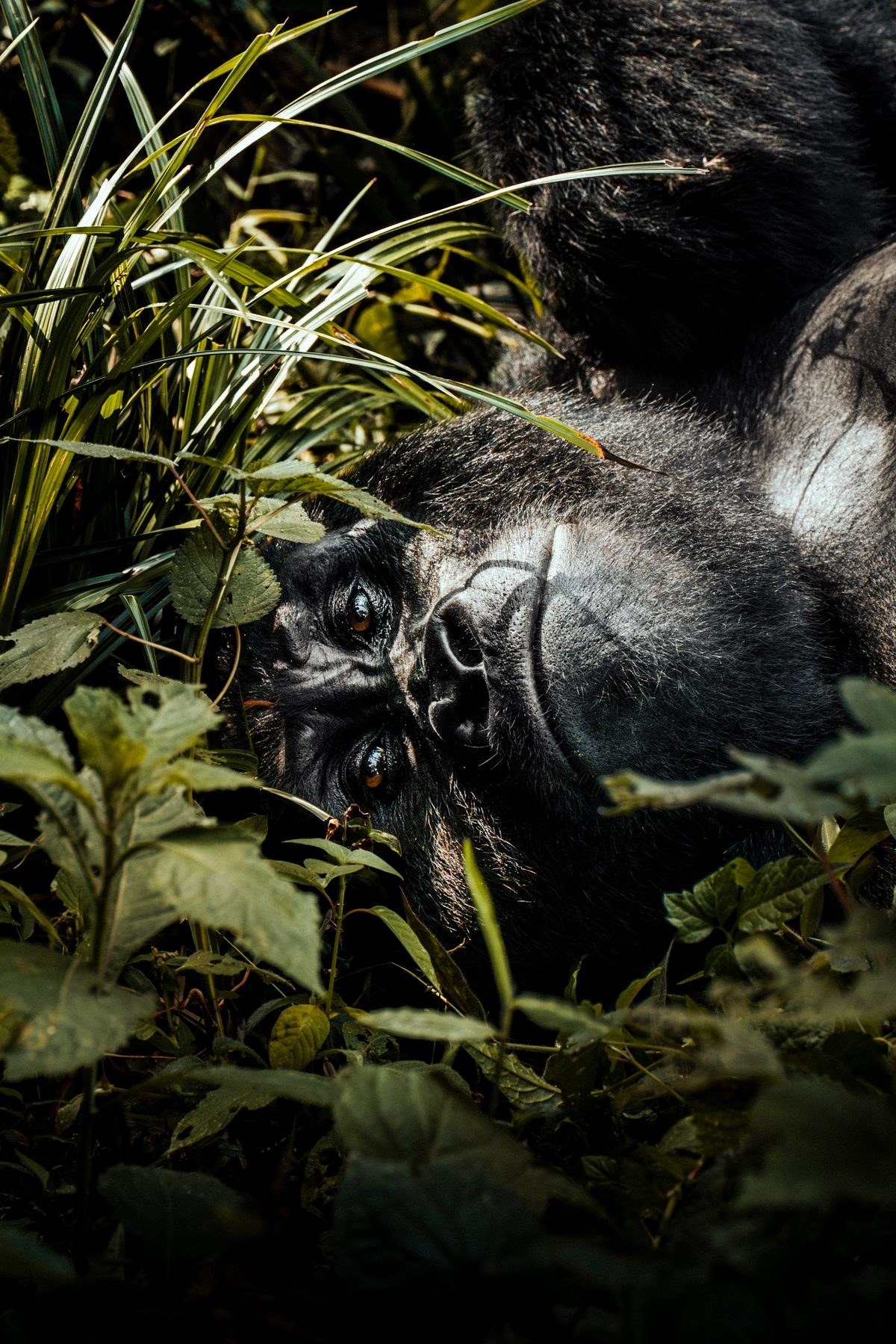
Silverback resting in Bwindi rainforest
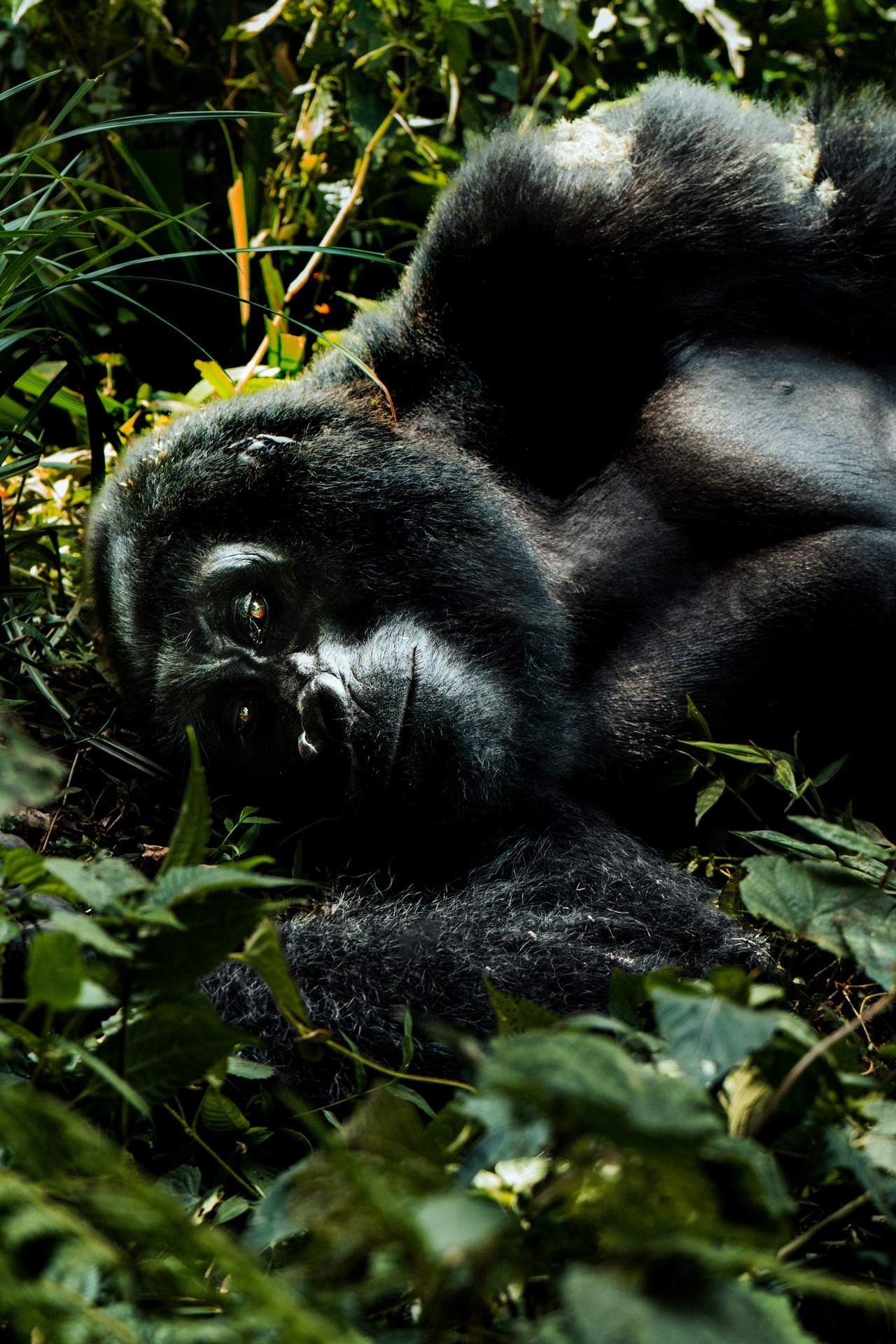
Mountain Gorilla (Silverback)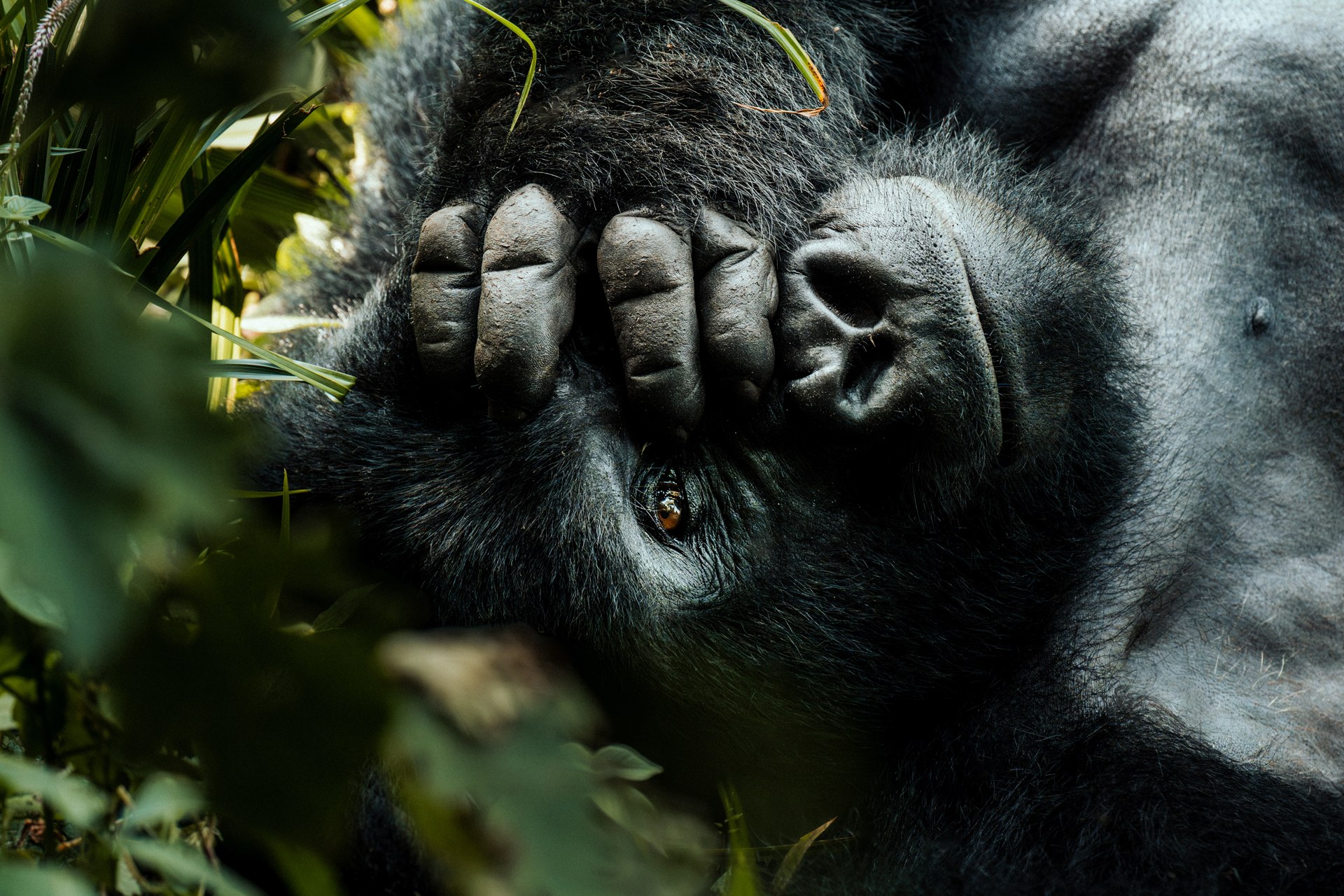
Gorilla covering its face with its hand
Mountain Gorilla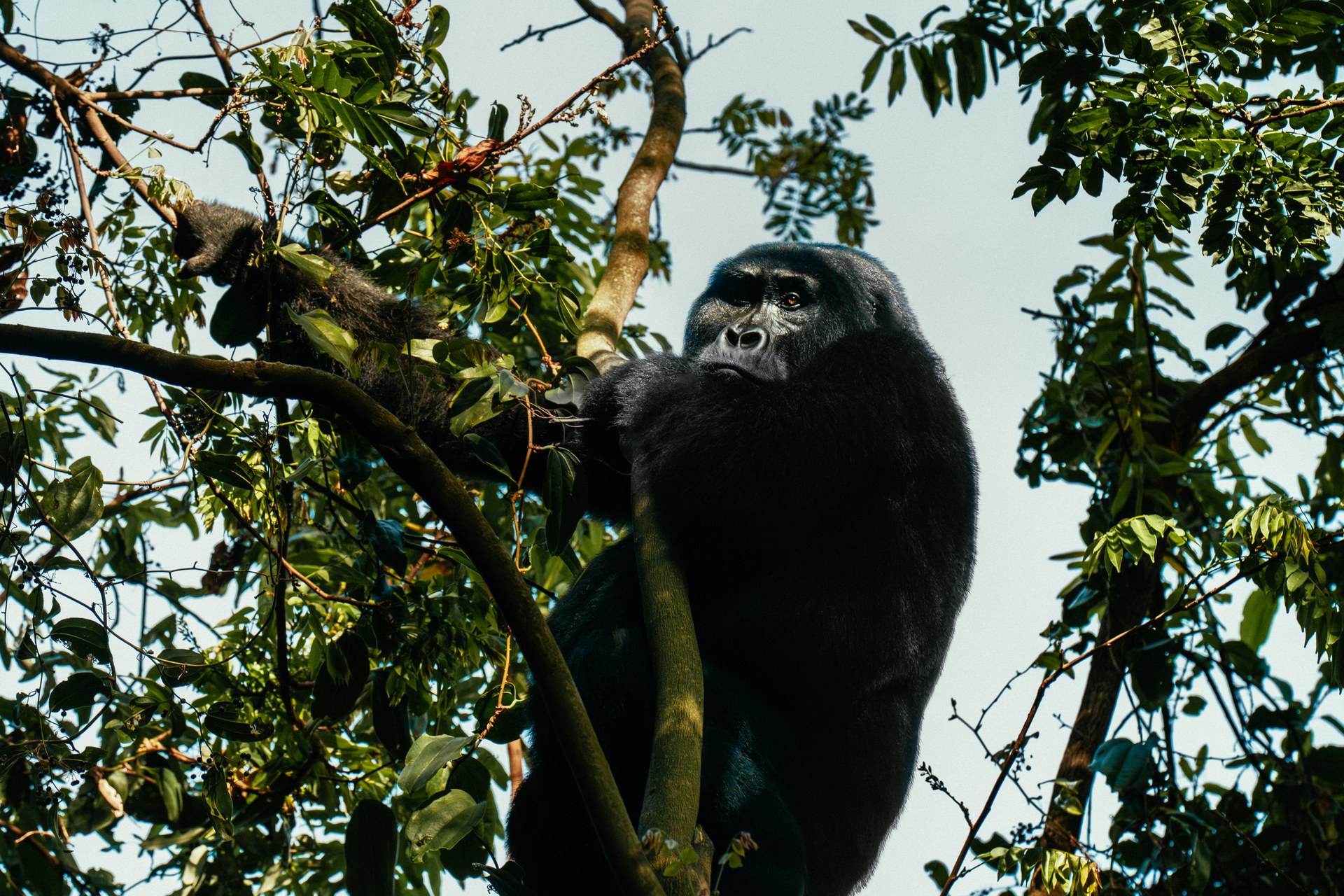
Silverback sitting majestically in Bwindi rainforest
Mountain Gorilla (Silverback)The Science of Optimal Habituation
Defining the optimal number of habituated groups is not a simple calculation. It requires balancing three variables simultaneously: gorilla welfare, which demands minimizing disease exposure and behavioral disruption; conservation funding, which requires sufficient permit revenue to sustain park operations and community programs; and community benefit, which depends on enough tourism activity to generate meaningful revenue sharing for the 500,000 people living around the park. An optimal solution has to satisfy all three.
Bwindi's current ratio — nine tourism groups drawn from a population of approximately 459 gorillas — represents the result of cautious expansion over three decades. The Institute of Tropical Forest Conservation, based at Ruhija in the park's northern sector, has conducted long-term research on gorilla home ranges, inter-group interactions, and the behavioral effects of habituation. That research informs UWA's decisions, though the question of what the upper limit should be remains open.
The Kyaguriro group in the Ruhija sector offers an important reference point. Kyaguriro is habituated for research purposes only, visited by scientists rather than tourists. It generates data on gorilla behavior, genetics, and ecology without the volume of human contact that tourism requires. The group demonstrates that habituation can serve conservation science at a lower disease-risk profile than tourism habituation — a model that has influenced how UWA thinks about the spectrum of possible habituation uses.
What UWA Has Decided So Far
The GMP commits UWA to completing research on optimal habituation levels before making further expansion decisions. That is a deliberate pause, not a refusal to expand. GMP Research Action #3 also calls for reviewing and implementing relevant recommendations from ongoing studies on gorillas ranging outside the protected area — a recognition that habituation decisions affect not just groups inside the park but the broader gorilla population and its relationship with the surrounding landscape.
The Gorilla Habituation Experience, currently offered in the Rushaga sector of Bwindi, represents one middle path that UWA has already implemented. This product allows four visitors to spend up to four hours with a partially habituated group, compared to the one hour permitted for standard trekking. At $1,500 per permit, it generates more revenue per visitor while actually reducing the number of people entering the forest. It threads the needle between commercial pressure and conservation caution.
The pace of new habituation decisions reflects the same caution. UWA does not begin habituating a new group in response to seasonal demand spikes or short-term operator pressure. Each decision involves assessment of the target group, its home range, proximity to existing tourism groups, and the capacity of surrounding infrastructure to absorb additional visitor numbers. The deliberateness of that process is itself an answer to the pressure described in Management Challenge #11.
The Visitor's Role in the Debate
The case for expanding the number of habituated tourism groups depends partly on whether the current groups are being managed safely enough to justify the additional disease risk. Every visitor who respects the seven-metre rule, wears a mask, and stays home when ill contributes to that case. Every visitor who ignores those protocols weakens it. The protocols exist because the research is clear: close contact and respiratory transmission are the primary disease vectors, and human behavior is the variable that park management can most directly influence.
Visitors who take the rules seriously are, in a practical sense, participating in the argument that more tourism groups can be managed responsibly. Those who treat the guidelines as optional are making the opposite argument on behalf of the gorillas who cannot make it themselves. The habituation debate will ultimately be resolved by science and policy, but it plays out in the behavior of every person who enters the forest.