The Genetic Overlap Problem
Mountain gorillas share approximately 98.3 percent of their DNA with humans — more than any other animal except chimpanzees. This genetic closeness, which makes observing them feel so profoundly intimate, is also their most significant vulnerability. It means that the same viruses, bacteria, and parasites that infect people can infect gorillas. And because gorillas have never been exposed to the diseases that have circulated in human populations for centuries, they carry no acquired immunity. A cold that barely inconveniences a healthy adult visitor can spread through an entire gorilla family and kill the most vulnerable individuals.
This is not a theoretical risk. In 2008, an outbreak of respiratory disease at Bwindi — traced to a human-strain rhinovirus — killed several gorillas and infected a significant proportion of one habituated group. Earlier outbreaks in the Virunga Massif, affecting the closely related but geographically distinct gorilla population, have similarly been linked to human pathogens. Disease is, after habitat loss and human-gorilla conflict, among the most significant threats to mountain gorilla survival.
CTPH: Conservation Through Public Health
The most significant partner in gorilla disease management at Bwindi is CTPH — Conservation Through Public Health — an NGO founded by Ugandan veterinarian Dr. Gladys Kalema-Zikusoka. CTPH operates under a formal Memorandum of Understanding with Uganda Wildlife Authority, and jointly manages the veterinary laboratory infrastructure at Bwindi.
CTPH's approach is built on a powerful insight: human health and gorilla health are inseparable. Communities living adjacent to the park are the primary transmission vector for diseases that reach gorillas. If those communities have access to basic healthcare, clean water, and family planning services, they are healthier — and healthier communities transmit fewer pathogens to the gorillas they encounter. CTPH runs community health clinics and outreach programmes near Bwindi, addressing human health as a conservation strategy.
On the gorilla side, CTPH's veterinary team monitors the health status of all habituated gorilla groups through regular observation, documenting symptoms, behavioural changes, and body condition. When disease is detected, the team assesses intervention options — ranging from increased monitoring and distance protocols to, in serious cases, veterinary treatment under strict health and safety procedures.
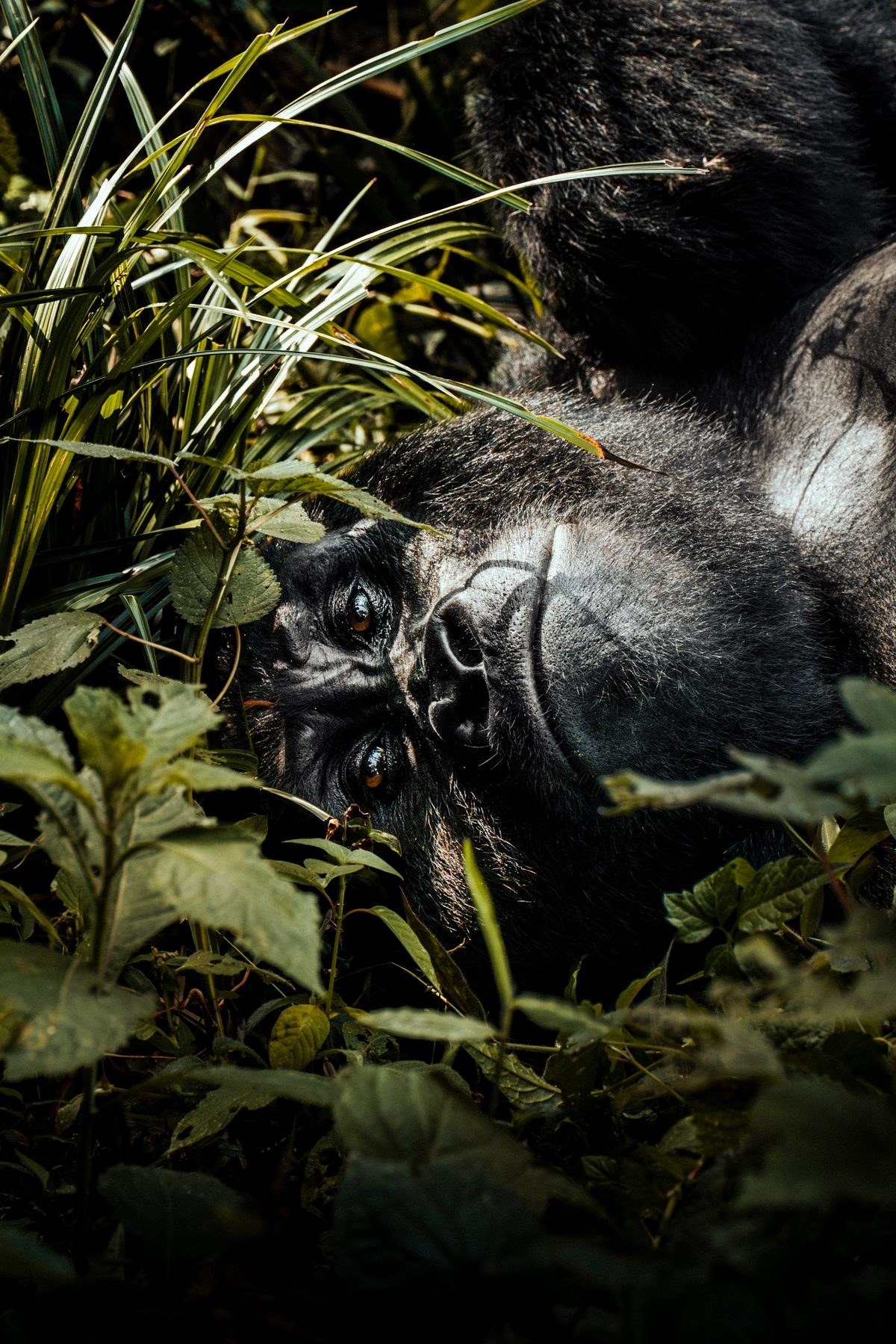
Silverback in the thicket, gazing into ancient eyes
Gorillas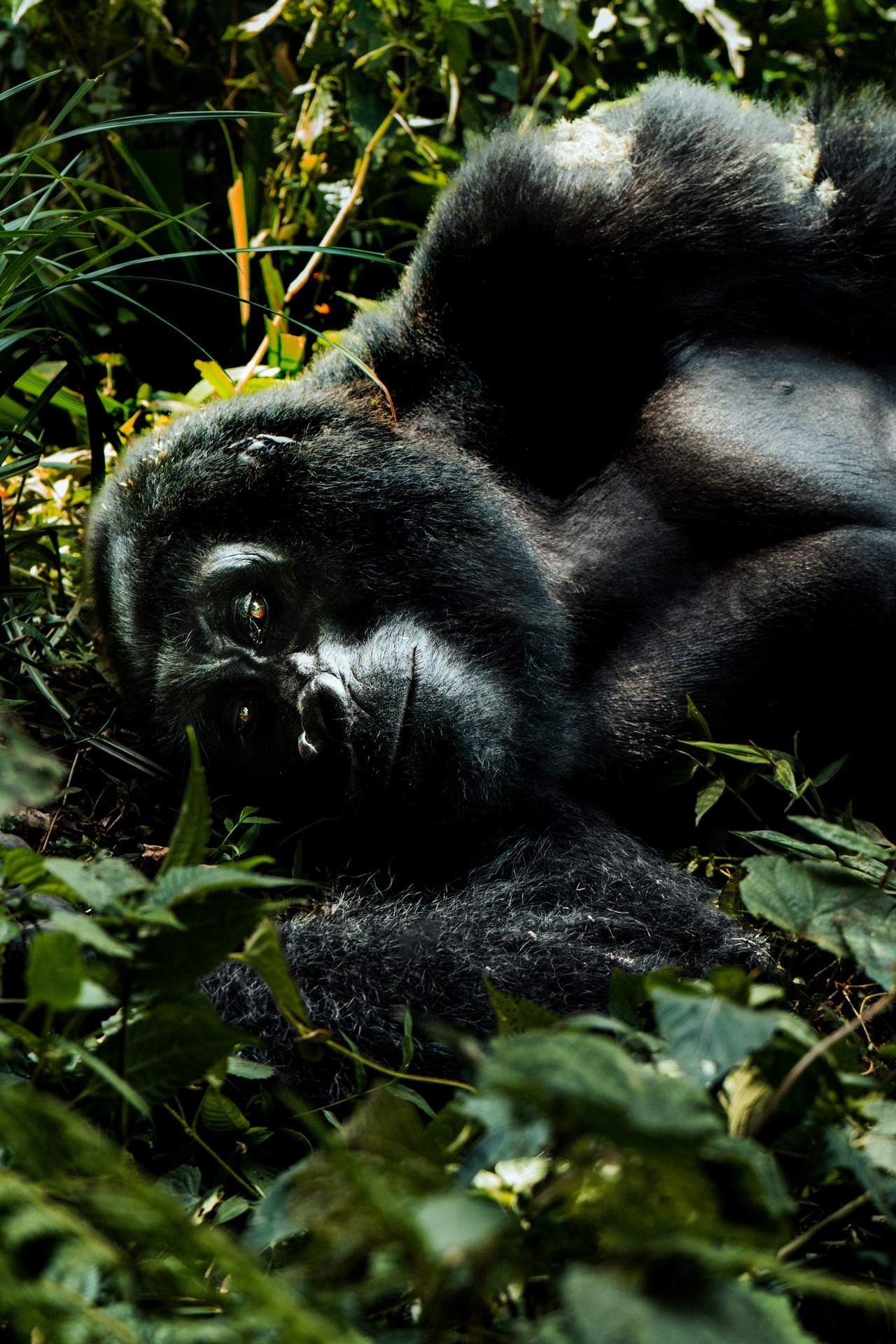
Silverback resting in Bwindi rainforest
Mountain Gorilla (Silverback)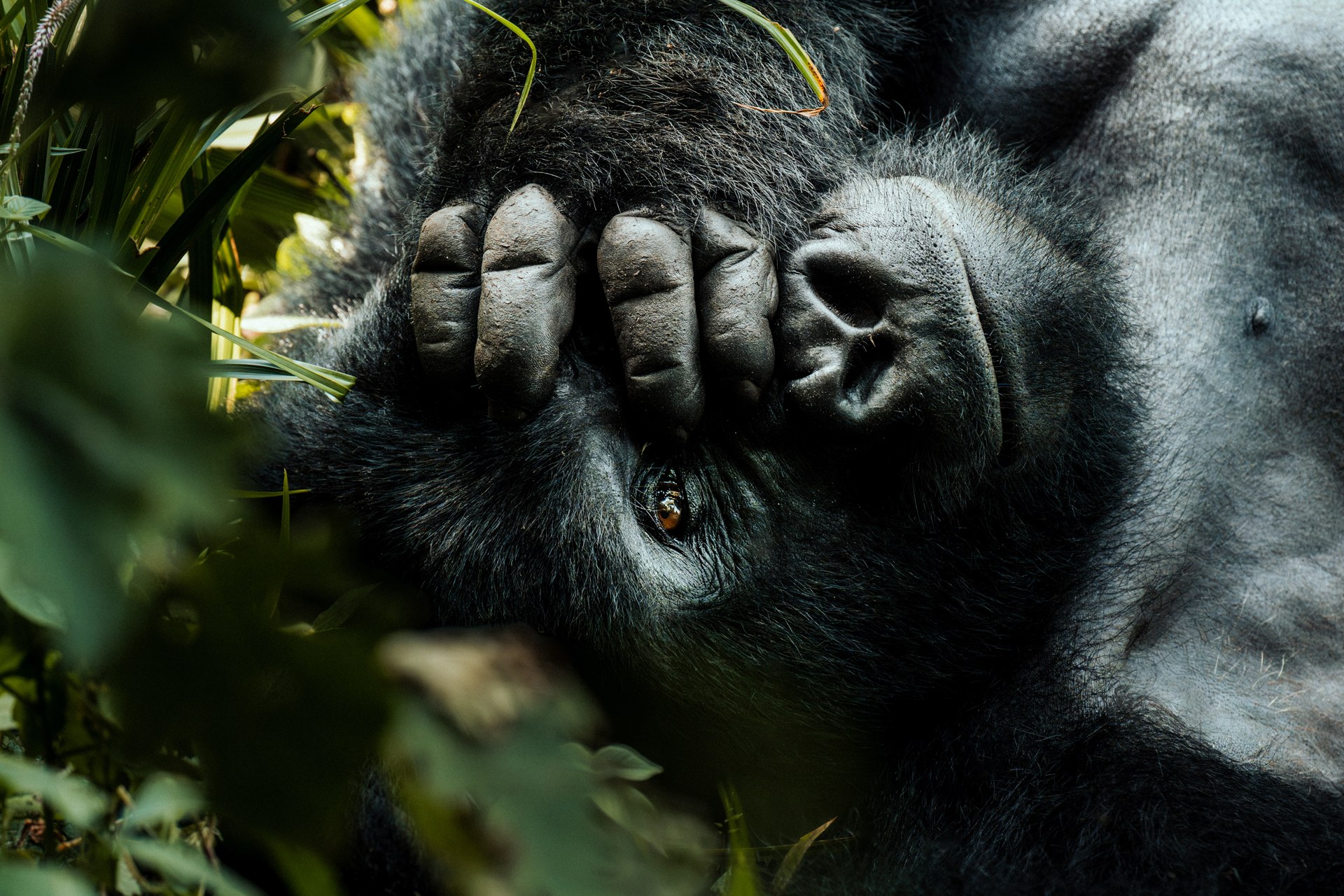
Gorilla covering its face with its hand
Mountain GorillaDisease Surveillance: What UWA Monitors
Uganda Wildlife Authority's General Management Plan 2014–2023 establishes a formal output for zoonotic disease management, with six planned actions: building staff capacity to handle disease issues; working with NGOs to monitor, detect, and manage outbreaks; establishing a full Veterinary Unit with a resident Veterinary Doctor (a significant upgrade from current arrangements); preparing and signing the MoU with CTPH for joint laboratory management; conducting ongoing disease surveillance; and managing disease outbreaks when they occur.
Disease surveillance at Bwindi is both passive and active. Passively, trackers and rangers who spend time daily with gorilla groups are trained to notice and report changes in group behaviour, signs of respiratory illness (coughing, nasal discharge, lethargy), and any injuries or unusual deaths. Actively, the CTPH veterinary team conducts periodic assessments, and biological samples can be collected non-invasively from gorilla faeces for laboratory analysis of parasites, bacteria, and viral markers.
The gorillas' genetic closeness to humans means that standard human medical diagnostic tools can often be adapted for gorilla health assessment — another manifestation of the biological overlap that creates the risk in the first place.
The Boundary Risk: Gorillas Outside the Park
One of the 25 management challenges formally identified by UWA in the General Management Plan is gorilla groups ranging outside the park boundary — a documented occurrence at Nkuringo, Buhoma, Bujengwe, and Nyabaremure. When gorillas leave the protected area, the disease management calculus changes dramatically.
Outside the park, gorillas encounter domestic dogs (a vector for scabies and canine distemper), cattle and goats, and the full range of pathogens circulating in dense rural human communities. Scabies — caused by a mite and highly transmissible from dogs to gorillas — has caused serious outbreaks in mountain gorilla populations. Foot and mouth disease, Newcastle disease, and other livestock pathogens pose additional risks.
The UWA HuGo (Human-Gorilla conflict) teams that respond to boundary excursions serve a dual purpose: reducing crop damage and human-gorilla confrontation, and limiting the duration of gorilla contact with domestic animals and unscreened humans. Every hour a gorilla group spends outside the park is an hour of uncontrolled disease exposure. Getting them back inside quickly is both an agricultural and a veterinary imperative.
What Visitors Can Do
The gorilla trekking rules — 7-metre minimum distance, masks required, no trekking if ill, no eating or drinking near gorillas, group size limited to 8 — exist specifically to minimise disease transmission. They are not bureaucratic conventions. They are the first line of veterinary defence.
The most important thing any visitor can do is honest self-assessment before trekking. If you have cold or flu symptoms, respiratory congestion, or diarrhoea, do not trek — regardless of permit cost or schedule pressure. UWA and most reputable operators will offer a permit transfer or postponement for genuine illness. The risk to a critically endangered species is not abstract. The 2008 outbreak that killed Bwindi gorillas was caused by a virus that is, in humans, a common cold.
If you are ill before your trek
Contact your lodge or tour operator immediately. Do not trek. Most operators and UWA can arrange a permit date change for medically documented illness. The 7-metre rule and mask requirement must be strictly observed by all visitors regardless of how you feel. Flash photography is prohibited — it stresses gorillas and a stressed gorilla immune system is more susceptible to infection.