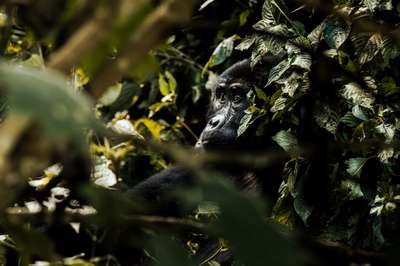
Three hours into the forest, the tracker stopped without a word and raised one hand. Twenty meters ahead, partially hidden behind a curtain of leaves, a mountain gorilla was watching us — not with alarm, not with aggression, but with the calm, unhurried attention of an animal that has learned humans mean no harm. This was June 2026, in the Buhoma sector of Bwindi Impenetrable National Park, GPS coordinates logged at -0.9665°N, 29.6126°E. The family moved slowly through the understorey — mothers with infants, younger animals tumbling through the vegetation, a silverback somewhere just out of frame. We had one hour. We stayed as still as the forest allowed.
That morning, after three hours of walking through some of the densest terrain in East Africa, I understood again why Bwindi is not simply a stop on a wildlife itinerary. It is the destination. This was one of nine visits I have made to the park across multiple seasons, including stays in October 2024, January 2026, and May 2026, and each time the forest and the gorillas make the question of which park to choose feel straightforward — from the inside, at least.
What follows is a comparison built from those visits, not from brochures. The question of Bwindi versus Volcanoes National Park in Rwanda — and, for those considering it, the DRC option at Virunga — deserves a direct answer. This is that answer.
Bwindi vs. Volcanoes National Park: The Core Comparison
When travelers research gorilla trekking, two destinations consistently dominate the comparison: Bwindi Impenetrable National Park in southwestern Uganda and Volcanoes National Park in northwestern Rwanda. A third option exists in the DRC's Virunga National Park, managed by the Institut Congolais pour la Conservation de la Nature, though security conditions there require careful individual assessment before planning. For most travelers, the real decision is between Uganda and Rwanda — between Bwindi and Volcanoes. Both parks protect habituated mountain gorilla families and offer hour-long permits for small groups to observe them at close range. The surface similarities, however, obscure meaningful differences that should inform any serious comparison between the two.
The primary physical difference is landscape. Bwindi sits within one of Africa's oldest and most biodiverse forests, a dense montane ecosystem where canopy cover, undergrowth, and steep terrain create an experience of genuine wilderness. Volcanoes National Park occupies the Rwandan slopes of the Virunga volcanic chain — open elevated grassland and bamboo zones give way to forest, but the overall density and enclosed character of the landscape differs markedly from Bwindi. Gorilla families in the Virunga sector are frequently reported as more easily visible during tracking, partly because vegetation is less dense. In Bwindi, the forest works harder to conceal everything, including gorillas — which is part of what makes encounters there feel earned in a way that stays with a traveler.
The choice between these destinations is ultimately a question of what kind of experience a traveler is seeking. Bwindi connects to a broader Uganda itinerary with genuine ecological diversity: twelve national parks and three game reserves, all managed by the Uganda Wildlife Authority, offer everything from Nile river safari to chimpanzee habituation to savannah game drives within a single country. Rwanda's national parks offer less geographic breadth, but Volcanoes National Park benefits from Kigali's well-developed international hub and the high concentration of premium lodges around the gateway town of Musanze. Neither advantage cancels the other — they serve different traveler profiles.
The Mountain Gorillas of Uganda — Population, Protection, and Conservation Status
Uganda's mountain gorilla population was documented at 459 individuals during census work conducted between 2018 and 2020. This figure represents Uganda's share of the total mountain gorilla population, which spans the Bwindi ecosystem and the Virunga massif across Uganda, Rwanda, and the Democratic Republic of Congo. Mountain gorillas do not exist in captivity anywhere in the world — they have never successfully adapted to zoo conditions. The only way to see them is in the wild, in one of these three countries. The total global population sits in the hundreds rather than thousands, making the mountain gorilla one of the most precisely monitored large mammals on earth and one of very few whose numbers have increased rather than declined over the past two decades.
Conservation work at Bwindi is structured around the Uganda Wildlife Authority, which has managed Uganda's national parks since 1996. Tracking fees paid by visitors fund ranger salaries, anti-poaching operations, veterinary monitoring of gorilla families, and community programs in the buffer zones around the park. Visitor numbers to Uganda's national parks grew by 41 percent between 2009 and 2013 — from 151,818 to 213,950 visitors annually — with foreign non-residents accounting for 47 percent of the total in 2013. This growth trajectory reflects the growing international recognition of Bwindi as a premier wildlife destination, with gorilla tourism as its primary economic engine.
Habituated gorilla families at Bwindi are groups that have undergone multi-year processes of daily, non-threatening exposure to human presence — a process that takes years of patient fieldwork by experienced rangers before a family is considered ready for tourist visits. Only fully habituated families are accessible for tracking. Each habituated group can be visited by a maximum of eight tourists per day, for no more than one hour at a time. This constraint is designed to minimize behavioral disruption to the animals and is enforced at all gorilla tracking destinations, regardless of country. The number of habituated groups at Bwindi has grown over the decades as ranger capacity has increased and demand has continued to outpace available permits.
The Trekking Experience at Bwindi — What the Forest Actually Feels Like
During a visit in June 2026, in the Buhoma sector of Bwindi, the tracking group walked for approximately three hours through dense forest before reaching the assigned gorilla family. The terrain descends and climbs without warning, the undergrowth requires constant navigation, and the humidity inside the forest canopy is substantial throughout. GPS records from that morning place the encounter area at -0.9665°N, 29.6126°E — well within the forest interior, removed from any road or infrastructure. This is not a managed enclosure or a simulated experience. The gorillas were exactly where the trackers' advance team had left them at first light: feeding, resting, and moving with complete indifference to the small group of humans watching from a few meters away.
Bwindi tracking days begin early. Groups are briefed at the sector headquarters before dawn, permits are checked, and ranger assignments are made based on which gorilla family is being visited. Trek distances vary considerably depending on a family's location that morning — some families are reached within an hour from the trailhead, others require most of a day's walking. There is no reliable way to predict which will apply on any specific day, though Uganda Wildlife Authority trackers have deep knowledge of each family's typical ranging patterns. The consistent recommendation across multiple visits to Bwindi between October 2024 and June 2026 is to arrive physically prepared for a full day in difficult terrain, regardless of what the briefing suggests about likely trek length.
The one-hour rule in the presence of the gorillas is genuinely constraining in the best possible sense. Sixty minutes with a habituated mountain gorilla family passes faster than almost any other experience in travel. Families with infants are particularly striking — young gorillas behave with exactly the combination of curiosity, clumsiness, and proximity-seeking that makes them feel simultaneously alien and recognizable. Silverbacks typically remain peripheral during tourist hours, present but not visually dominant. Occasionally they move closer. When they do, rangers signal the group to hold still, step back slowly, and avoid direct eye contact — not because the animals are dangerous, but because direct gaze functions as a dominance challenge in gorilla communication that polite guests should not initiate.
“The ones who have been to Rwanda before, they come in expecting to find the gorillas quickly and to see them clearly. Bwindi is different. The forest makes you work. And then when you find them, inside this forest, something changes in people. They become quiet in a different way. That is what I always watch for — that moment when the forest has done something to them that a clear view never can.”
— Uganda Wildlife Authority ranger guide, Buhoma sector, Bwindi Impenetrable National Park
Volcanoes National Park and the Rwanda Alternative
Volcanoes National Park in Rwanda occupies the Rwandan slopes of the Virunga volcanic chain and is administered by the Rwanda Development Board. It was the base for Dian Fossey's research from the 1960s onward, and the Karisoke Research Center she established remains one of the world's most important mountain gorilla research stations. The park's association with Fossey's work has given it a particular cultural resonance that continues to draw visitors who come with that history in mind. The Bisate Lodge, a multiple-award-winning eco-luxury property near the park, represents the Rwanda approach to premium gorilla tourism: architecturally significant thatched villas built from local materials, integrated with active reforestation programs on previously degraded land, and positioned to offer panoramic views across the volcanic chain.
Gorilla families in the Virunga sector share the same mountain gorilla species as Bwindi — these are not different animals — but the terrain around them is different enough to affect the character of the encounter. The more open volcanic slopes mean that viewing angles are less obstructed, and family groups in the Virunga are in some cases larger and more clearly visible than typical Bwindi families. Whether this produces a preferable experience is a matter of individual preference. Some travelers value the easier sightlines of Rwanda's landscape; others find the enclosed forest atmosphere of Bwindi more affecting. What does not differ significantly is the behavior of the gorillas themselves, because the habituation process produces comparable results across both ecosystems.
From a logistics perspective, Rwanda has a clear advantage for travelers flying into the region. Kigali International Airport is well-connected internationally, and the drive to Musanze takes approximately two hours on good road. The lodging concentration around the park is high and the infrastructure for premium travel is mature. Uganda's Bwindi, reached via Entebbe and then a long overland drive into the southwest, involves more total travel time but rewards the effort with the diversity of what Uganda offers beyond the gorillas. For the DRC's Virunga option, permit applications are handled online through the park's official channels, though current security conditions in that part of the DRC should be verified independently before planning any visit there.
Permits, Logistics, and What to Know Before You Book
A gorilla trekking permit for Bwindi costs $600 per person. This is a fixed fee set by the Uganda Wildlife Authority and does not vary by sector or season. Comparable pricing applies at Volcanoes National Park in Rwanda. Advance booking rates for Bwindi permits run at approximately 80 percent through tour operators, which reflects the sustained demand for limited daily slots at each habituated group. Standby permits — which were historically available at reduced prices for travelers arriving without a prior booking — are no longer reliably obtainable given this level of advance take-up. The practical implication is clear: a Bwindi gorilla permit should be the first item secured when planning a Uganda trip, ideally three to six months before the intended travel date, booked either directly through the Uganda Wildlife Authority or via a licensed operator.
One logistical detail that applies in both Uganda and Rwanda: the gorilla group name is specified on the permit at time of booking, because each habituated family is tracked by a different ranger team operating from a different sector base. Lodge selection should therefore follow, not precede, permit assignment — choosing accommodation near the wrong sector can mean unnecessary long driving on the morning of the trek. This is a detail that first-time visitors routinely overlook and that experienced guides consistently flag as one of the more avoidable planning errors in gorilla trek logistics. In Uganda, the Buhoma, Ruhija, Rushaga, and Nkuringo sectors each host different gorilla families and require different positioning.
Two additional rules apply everywhere that mountain gorilla trekking is offered. Children under 15 years of age are not permitted to participate, without exception. Guests showing respiratory illness symptoms are asked not to proceed on trekking day. The age restriction is firm and non-negotiable across all three gorilla-range countries. The respiratory restriction exists because mountain gorillas share sufficient genetic material with humans to be susceptible to certain human pathogens, and minimizing disease transmission risk is a core element of gorilla conservation management. Both rules apply equally in Uganda, Rwanda, and the DRC. Gorilla trekking is available year-round in Bwindi, including public holidays, with no seasonal closures — though trail conditions during heavy rain periods in the forest require appropriate footwear and physical preparation.
Bwindi and the Community Around It — A Dimension That Changes the Calculation
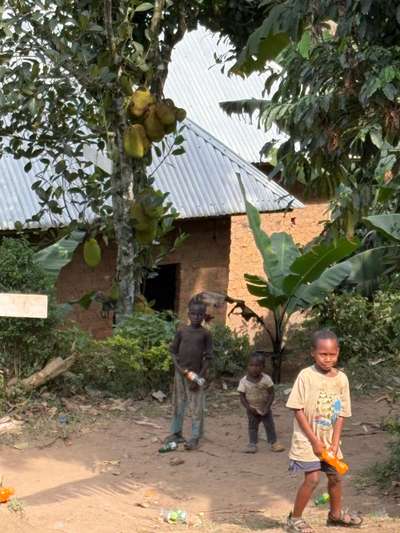
What distinguishes Bwindi from a straightforward wildlife destination is the density of human life immediately surrounding the park. The Buhoma sector, at the northern edge of the forest, sits adjacent to a settlement where community farming, small enterprise, and daily life unfold in direct proximity to gorilla habitat. Conservation at Bwindi has always had to negotiate this adjacency — the park was formally gazetted in 1991 from land that local communities had used for generations, and the ongoing legitimacy of conservation there depends on the economic and social relationship between the park and the people around it. That relationship is not decorative or theoretical. It is structural.
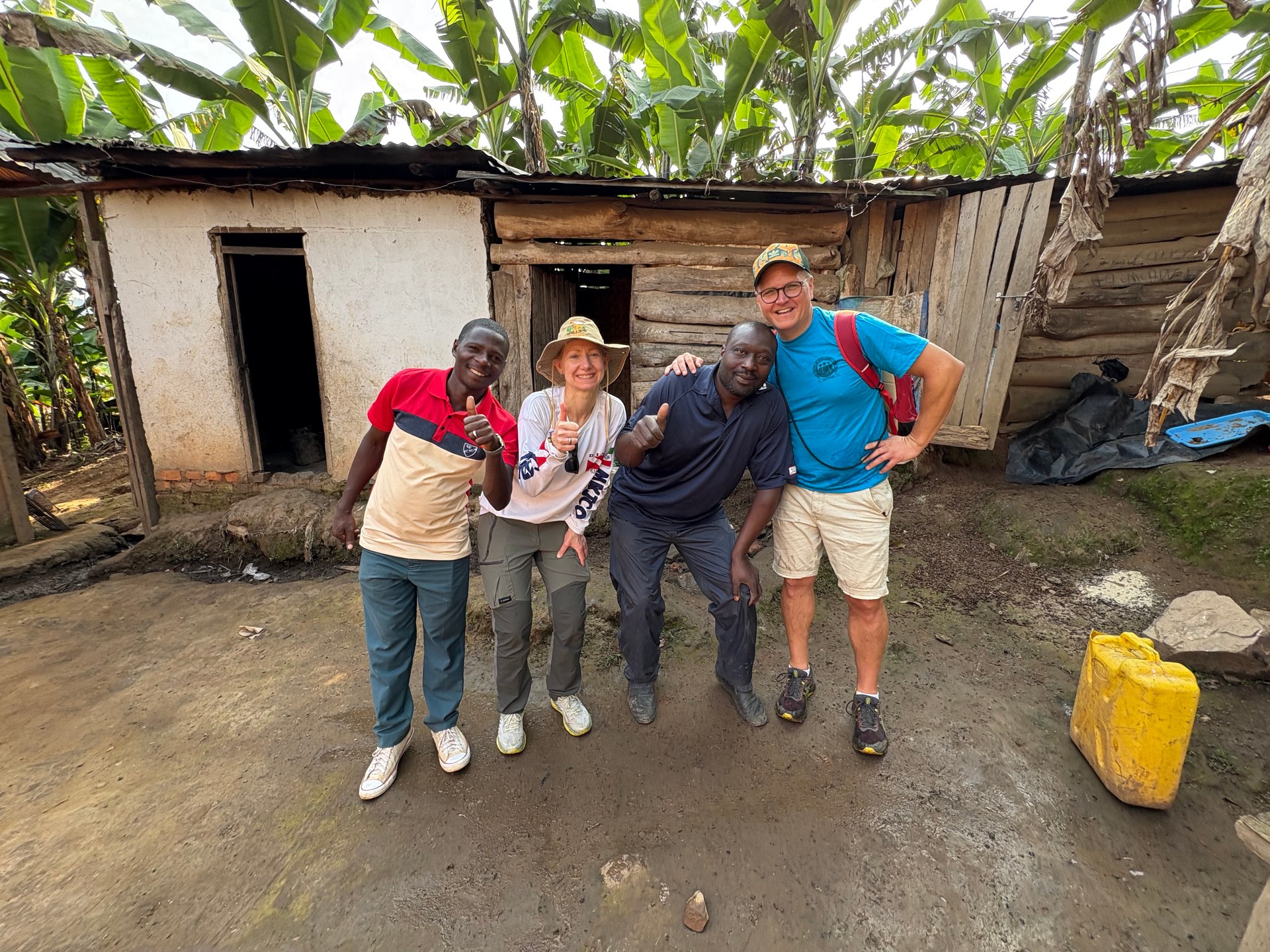
On a visit to the Buhoma area in June 2026, this relationship was visible in concrete terms. Local agricultural enterprises — including poultry farmers who supply nearby institutions with eggs and meat — operate in the buffer zone, and their economic viability is connected, directly and indirectly, to the tourism activity that Bwindi generates. We visited one such farmer, a man who keeps his flock with evident care and whose operation functions as both a livelihood and a supply chain for the community around the park. This is the practical architecture of how conservation funding works its way through a local economy when the system is functioning as intended. The Uganda Wildlife Authority's management model for Bwindi explicitly incorporates community benefit-sharing mechanisms, and the results are observable on the ground.
For travelers, this community layer adds a dimension to a Bwindi visit that a pure wildlife experience does not offer. The option to engage with community projects, local farms, or cultural programs alongside the gorilla trek is genuine and substantive. It is also what makes Bwindi specifically — rather than gorilla trekking generically — a compelling destination for travelers who want their visit to connect to something beyond the hour spent in the forest. The comparison with Volcanoes National Park is not unfavorable to Rwanda in this regard — community programs exist there too — but the particular character of the Buhoma community, shaped by its long and sometimes difficult relationship with the park and with the organisations working in the area, gives it a specific weight that a first-time visitor can feel immediately.
Frequently Asked Questions
Related Articles
Gorilla Trekking in Bwindi: The Complete Guide
Mountain Gorilla Facts: Biology, Behavior, and Conservation Status
Buhoma Sector: Bwindi's Most Accessible Entry Point
Gorilla Trekking Permits: Prices, Booking Process, and What to Expect
Endangered Species in Uganda: Conservation Priorities and Progress