A Close Encounter That Raises a Question
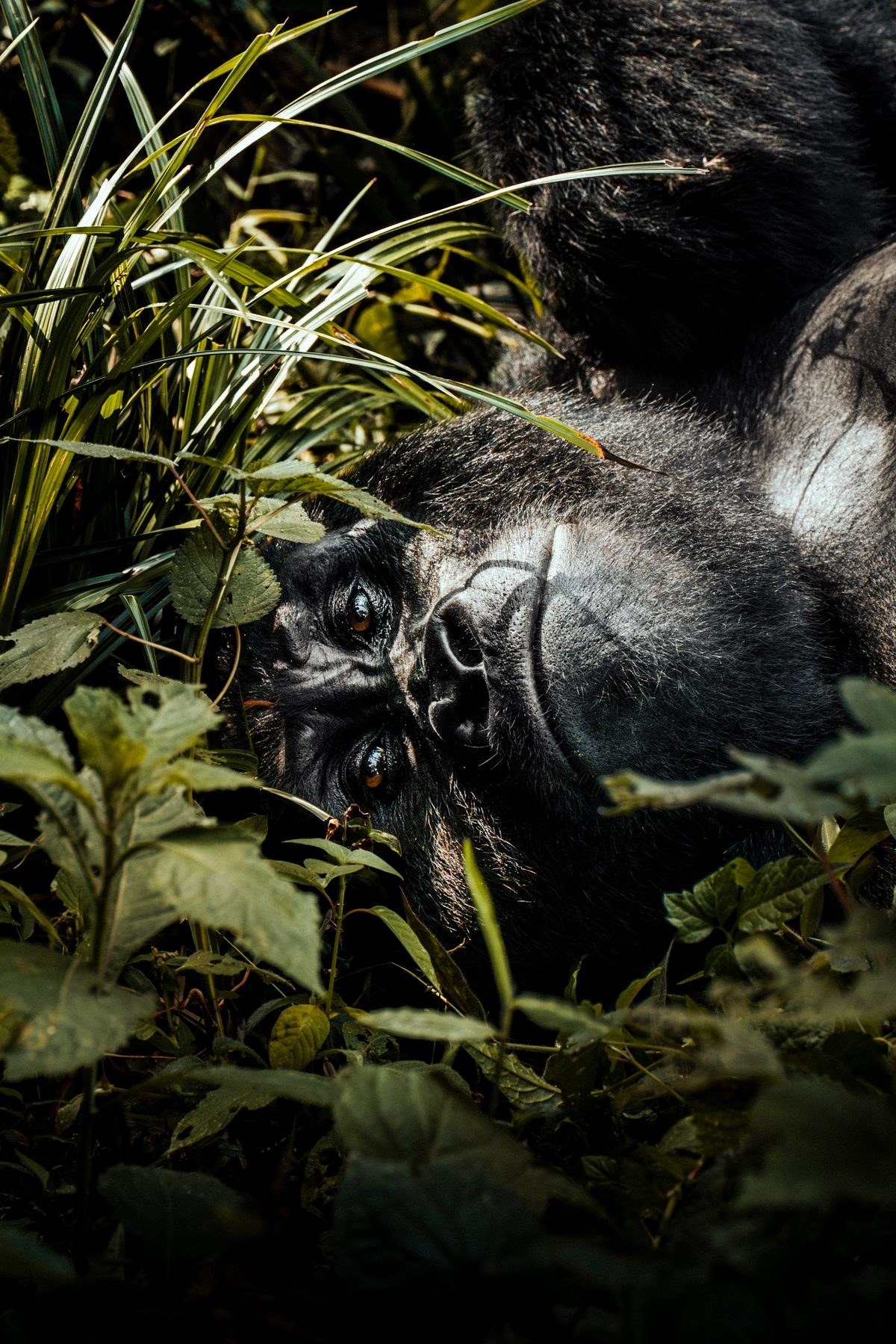
After about an hour of walking through the dense understorey of Buhoma sector, our group came to a halt. The tracker held up a hand. Ahead, barely ten metres away, a large silverback sat in the lower branches of a tree, methodically stripping leaves and pulling them to his mouth. He glanced at us once, then returned to his meal with complete indifference. During my visit in June 2026 — one of several trips to Bwindi over the preceding months — that moment stayed with me not just as a wildlife encounter but as a question: why here? What is it about this particular forest, in this corner of southwestern Uganda, that has allowed nearly half the world's remaining mountain gorillas to survive and slowly increase in number?
The answer has less to do with luck than with a specific set of ecological qualities that Bwindi possesses in unusual combination. Understanding what makes a forest good gorilla habitat also helps explain why the protection of this 321-square-kilometre block of ancient rainforest matters so much — and why its degradation, even at the margins, carries consequences that are difficult to reverse.
The Forest That Has Always Been Here
Bwindi Impenetrable National Park has been continuously forested for at least 25,000 years. That continuity is not an incidental detail. It means that the plants, animals, and fungi within the park have had an unbroken evolutionary relationship across ice ages and climate cycles, developing interdependencies that a younger or more fragmented forest simply cannot replicate. For mountain gorillas, this ancient stability translates into a food web they are intimately adapted to — one in which the precise species of herbs, bark, root, and fruit they prefer have been reliably present across countless gorilla generations.
The park rises from 1,160 metres in its lowest, southwestern valleys to 2,607 metres on the Ruhija ridge in the northeast. This altitudinal range, spanning nearly 1,500 vertical metres within a single protected area, creates a mosaic of distinct vegetation zones. Lowland mixed forest gives way to mid-altitude rainforest, then to montane forest and hagenia-hypericum woodland near the upper boundary. Each zone has its own characteristic plant community, and gorillas move between them across seasons. The width of this ecological gradient is one of Bwindi's most important qualities as gorilla habitat: it provides insurance. When food is scarce at one elevation, another zone offers alternatives.
Plant Diversity as the Foundation of Habitat Quality
A gorilla is, above all, a creature of the forest floor and lower canopy. Its diet is dominated by herbaceous plants — the stems, leaves, shoots, and bark of species that grow in the gaps and understorey where light reaches the ground. An adult mountain gorilla can consume up to 30 kilograms of vegetation per day, which means that the density, variety, and year-round availability of edible plants directly determines how many gorillas a forest can support.
Bwindi has recorded more than 1,000 plant species, including over 160 species of trees, 100 fern species, and a rich array of Acanthaceae, the family that provides many of the herbaceous stems that gorillas favour. Crucially, the park also contains a greater density of fruit-bearing trees than the Virunga volcanoes, the other major gorilla stronghold. This means Bwindi's gorillas supplement their predominantly herbivorous diet with seasonal fruit, which provides concentrated energy and micronutrients. Research has suggested that this dietary flexibility may contribute to better body condition and higher infant survival rates in Bwindi compared to Virunga populations.
The rarity of some of Bwindi's plant species underscores the forest's global significance beyond gorillas alone. Rotheca violacea subsp. kigeziensis, for example, is classified as Critically Endangered and is endemic to a handful of sites near Bwindi, including Kibale Forest and Mulole Hill. The presence of such narrow endemics in and around the park is a signal of long evolutionary isolation and ecological specificity — conditions that, by extension, also shaped the gorilla population that evolved here.
Altitude, Climate, and the Microhabitat Gorillas Need
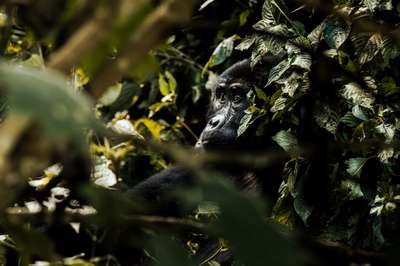
Mountain gorillas are cold-adapted primates. Their thick, dark fur provides insulation against the cool, often misty conditions of high-altitude forest, and they are far more tolerant of cold than their lowland relatives. Bwindi's bimodal rainfall pattern, delivering roughly 1,130 to 1,750 millimetres of rain per year across two wet seasons, keeps the vegetation lush and productive throughout the year. Dry spells exist but are rarely severe enough to cause widespread food stress for a population that ranges across such a large and varied territory.
Temperature variation across the park's altitudinal gradient also matters for habitat use. The cooler upper slopes, where the forest transitions to more open hagenia woodland, attract gorillas during warmer months partly because the lower vegetation density makes movement easier and the cooler air more comfortable. The denser, wetter mid-altitude zones are preferred when fruit is in season or when groups need the structural cover provided by a tighter canopy. Gorillas are not passive inhabitants of a fixed forest type; they are active managers of their own habitat use, adjusting daily and seasonally in response to conditions that only a forest of Bwindi's topographic complexity can provide.
GPS-tagged photographs taken at coordinates −0.9735°N, 29.6281°E during a June 2026 visit to Buhoma sector confirmed that groups were using mid-altitude mixed forest heavily in that season, with individuals frequently ascending into the lower canopy to feed — behaviour consistent with fruit availability in that zone at that time of year.
Territory Size and the Need for Unbroken Forest
A single gorilla group in Bwindi may have a home range of between 15 and 40 square kilometres. This means that a viable population requires not just productive forest but sufficient area for multiple groups to coexist without constant territorial pressure. Bwindi's 321 square kilometres, while modest by the standards of some protected areas, is large enough to support 25 habituated groups and an unknown number of wild, unhabituated ones because the forest is essentially unbroken — no roads, no agricultural clearings, and no human settlements penetrate its interior.
That integrity is increasingly rare in the region. Bwindi and Echuya Forest Reserve, situated nearby, are identified as the primary stronghold for at least one endangered cat species on the Uganda Red List — a fact that reflects how few intact, connected forest blocks remain in southwestern Uganda. For gorillas, as for other forest-dependent species, connectivity matters not only for daily ranging but for the long-term genetic exchange between family groups that prevents inbreeding. Bwindi's isolation from the Virunga gorilla population — a separation of thousands of years — has already produced measurable genetic divergence. Further habitat fragmentation at the park boundary would compound this isolation within the park itself.
Between 2020 and 2025, Bwindi recorded between 20 and 60 incidents of non-timber forest product extraction per year — a figure that points to continued pressure at the forest edge despite strong legal protection. Each incident represents a small intrusion, but repeated over time and across the park boundary, such pressures can subtly degrade the understorey vegetation in peripheral zones, reducing food availability precisely where gorilla groups encounter human activity most often.
What Distinguishes Bwindi From Other Gorilla Forests
The Virunga volcanoes — straddling Rwanda, Uganda, and the Democratic Republic of Congo — shelter the other half of the world's mountain gorilla population and are frequently described as the archetypal gorilla habitat. But Bwindi is different in ways that matter ecologically. The Virungas are dominated by high-altitude Afromontane vegetation above 2,000 metres, with limited fruit availability. Bwindi's lower elevation range, greater plant diversity, and higher fruit biomass support gorillas with a richer and more flexible diet.
The Virunga gorillas also live in a more politically complex landscape, with their range divided across three countries. Bwindi's gorillas are contained almost entirely within Uganda's jurisdiction, under the management of the Uganda Wildlife Authority, which has maintained consistent protection for three decades. This administrative coherence has made long-term monitoring, anti-poaching enforcement, and veterinary intervention more effective than would be possible across a fragmented international boundary.
Mgahinga Gorilla National Park, which borders Bwindi to the south and forms the Ugandan section of the Virunga range, illustrates the challenge of habitat management at the forest edge. A 16-kilometre stone wall maintained by the Uganda Wildlife Authority there is designed specifically to prevent gorillas from raiding crops in adjacent communities — a measure that reflects the pressure that comes when a small park is entirely surrounded by densely settled agricultural land. Bwindi's larger size and more complex topography afford its gorilla population considerably more buffer from the boundary, but the pressure is real in all sectors.
[QUOTE: local guide on how the forest has changed near the park boundary in the past ten years]
Habitat Quality and the Future of Bwindi's Gorillas
The population of mountain gorillas in Bwindi has grown from fewer than 300 individuals in the early 1990s to approximately 459 (recorded between 2018 and 2020). That increase is not simply the result of protection from poaching. It reflects the sustained productivity of the habitat itself. A forest that can feed, shelter, and support the social complexity of nearly 460 individuals is doing something right.
The long-term challenge is maintaining that habitat quality in the face of climate change, which is already shifting rainfall patterns and altering the phenology of fruit production across East Africa. Changes in when fruiting trees produce their crops can disrupt the seasonal movement patterns that gorilla groups have developed over generations. NatureUganda, which has conducted systematic wildlife monitoring in the region, and other organisations working in the Albertine Rift are tracking these shifts, but predicting how they will affect gorilla ranging behaviour requires long-term data that is only now accumulating.
Gorilla tourism, which funds the conservation infrastructure that makes Bwindi's success possible, also introduces risks. Respiratory pathogens transmitted from humans to gorillas are a documented threat, and tourism infrastructure development has been linked to disturbance of wildlife corridors connecting Bwindi to surrounding forest landscapes. Balancing the economic importance of tourism with the ecological needs of the gorilla population is not a problem that has a permanent solution — it requires continuous management and honest monitoring.
What is clear is that good gorilla habitat is not simply a matter of trees. It is the product of geological history, climate, plant diversity, forest continuity, and decades of human decisions about what to protect and how. Bwindi has all of these in its favour. Whether that remains the case into the second half of the century will depend on choices being made now.