Guido had been filming for a few seconds when the silverback shifted position, and the short clip he shared afterwards captures something that is difficult to articulate in writing: the physical closeness of an animal that has decided you are not a threat, in a forest so old and so dense that the light barely reaches the ground. That moment — seven metres of open space, mutual stillness, the sound of the canopy — is what Bwindi Impenetrable National Park exists to make possible.
Guido had come from Hamburg. He described the encounter in a single five-star review and a short video. What neither the review nor the video could easily contain was the legal and ecological architecture that makes the encounter possible: a national park gazettement that prohibits every form of extraction and conversion, a UNESCO World Heritage designation, a formal categorisation as a critical habitat under the frameworks used by international financiers and conservation bodies, and more than three decades of sustained ranger operations. Without that structure, the silverback is not in the forest. He is in a different kind of story.
This article explains what “critical habitat” means — both under international standards and Ugandan law — which ecosystems across Uganda qualify, what activities are prohibited inside them, and why Bwindi meets the definition under multiple independent criteria. The information draws on documented visits to Bwindi in October 2024, January 2026, and June 2026, on Uganda's domestic conservation legislation, and on the IFC Performance Standards framework that governs what development projects can and cannot proceed in areas of high ecological value.
What IFC Performance Standard 6 Actually Defines
The International Finance Corporation's Performance Standard 6 — formally titled “Biodiversity Conservation and Sustainable Management of Living Natural Resources” — is the global benchmark most commonly applied when evaluating whether a development project is acceptable in or near a sensitive ecosystem. It creates a hierarchy of ecosystems, with “critical habitats” at the top.
A critical habitat, under PS6, is an area that meets at least one of five criteria. First: it contains habitat of significant importance to Critically Endangered or Endangered species on the IUCN Red List. Second: it supports habitat of significant importance to endemic or restricted-range species. Third: it contains globally significant concentrations of migratory or congregatory species. Fourth: it includes highly threatened or unique ecosystems. Fifth: it contains areas associated with key evolutionary processes, such as speciation, refugia, or centres of genetic diversity.
Critically, a site does not need to hold formal protected-area designation to qualify. An area that has never been gazetted as a national park can still be a critical habitat under PS6 if it meets any of the ecological criteria. The reverse is also true: not every national park necessarily qualifies. The criteria are ecological, not administrative.
The practical consequence of a critical habitat designation under PS6 is significant. Clients seeking IFC financing for projects that would have significant adverse impacts on a critical habitat cannot proceed unless they can demonstrate that all technically feasible alternatives have been considered and that the project will result in no net loss of biodiversity — and in some cases, a net gain. For many project types, this requirement amounts to an effective prohibition. The threshold for “significant adverse impact” is interpreted broadly, and the standard explicitly includes indirect impacts and downstream effects.

Why Bwindi Qualifies as a Critical Habitat
Bwindi Impenetrable National Park meets multiple IFC PS6 critical habitat criteria independently, which is unusual even among the world's most protected ecosystems. This is not a borderline case.
The first criterion — presence of IUCN Endangered or Critically Endangered species — is satisfied by the mountain gorilla (Gorilla beringei beringei), currently classified as Endangered. More than half of the world's remaining mountain gorillas, approximately 459 individuals according to the 2018 Great Ape Census, live within Bwindi's 321 square kilometres. A second distinct subspecies of gorilla, the eastern lowland gorilla, does not occur here, but the Bwindi gorilla population's genetic distinctiveness from the Virunga population means that the two cannot substitute for each other. The loss of Bwindi's gorillas would mean the permanent loss of a unique genetic lineage.
The second criterion — endemic or restricted-range species — is met by more than 30 Albertine Rift endemic species recorded in Bwindi, including birds, mammals, and amphibians found nowhere else on Earth. The Albertine Rift is itself considered one of Africa's most important centres of endemism. Bwindi sits at the southern end of this chain and holds a disproportionately large share of its endemic diversity relative to its area.
The fourth criterion — highly threatened or unique ecosystems — applies to the montane rainforest itself. Bwindi is one of the few African forests to have persisted through the last Ice Age as a refugium, maintaining a continuous ecological history of more than 25,000 years. This antiquity has produced plant communities and forest structures that are not replicated elsewhere in the region. The forest is not simply old; it is irreplaceable in composition.
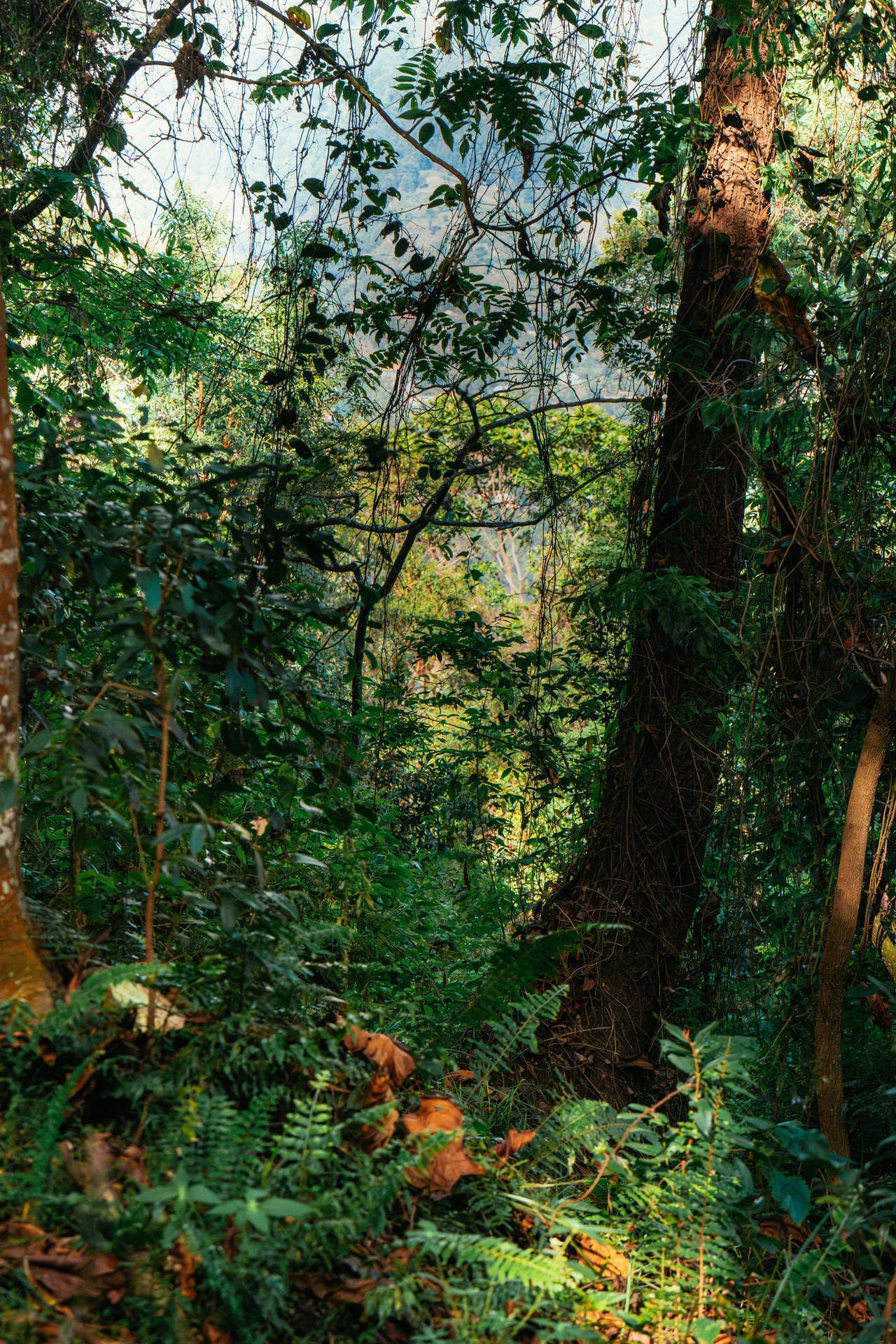
During visits to Buhoma in January and June 2026, the density and vertical complexity of the forest is immediately apparent even from the park boundary. The canopy closes within fifty metres of the gate. Below it, multiple understorey layers stack down to a floor covered in mosses, ferns, and fungi. This structural complexity is not ornamental. It is the physical architecture that supports the species diversity that triggers the critical habitat designation in the first place.
Uganda's National Legal Framework for Protected Ecosystems
Uganda does not use the phrase “critical habitat” in its domestic legislation, but the protections it applies to ecologically sensitive areas are comprehensive and, in some respects, more rigidly enforced than equivalent designations in other African jurisdictions.
The Uganda Wildlife Act, as revised in 2019, establishes national parks as the highest category of protected area in the country. Within a national park, the following activities are explicitly prohibited without specific UWA authorisation: hunting, trapping, or poisoning any animal; agricultural cultivation of any kind; the cutting, removal, or destruction of vegetation; the extraction of minerals, stones, or soil; any construction, including temporary structures; and the introduction of non-native species. The Act further specifies that a national park may only be degazetted or have its boundaries altered through a formal process requiring a parliamentary resolution and public consultation — a threshold deliberately set to resist informal boundary erosion.
Central Forest Reserves are governed by the National Forestry and Tree Planting Act of 2003, which places their management under the National Forestry Authority. More than 700 Central Forest Reserves are gazetted across Uganda, covering a wide range of forest types from lowland tropical forest to mid-altitude transitional forest. Within a CFR, selective logging under an approved management plan may be licensed, but commercial deforestation, large-scale agriculture, and permanent land conversion are prohibited. Maramagambo Central Forest Reserve, which adjoins Queen Elizabeth National Park, is an example of a CFR with exceptional ecological value — including the famous Python Cave and one of Uganda's largest bat colonies. Mount Elgon Protected Area, which spans the border with Kenya, falls under both CFR and national park designations in different zones, with corresponding differences in the permissible activities.
Uganda's wetlands are protected under the National Environment Act (2019) and the National Environment (Wetlands, River Banks and Lakeshores) Regulations. Wetlands cover approximately 13% of Uganda's total land area — an unusually high proportion that reflects the country's position within the East African rift system, with large inland lakes and extensive papyrus swamps. The Kyoga basin, the Aswa drainage zone in the north, and numerous smaller systems are gazetted wetlands under NEMA oversight. Drainage, reclamation, and any activity altering a wetland's hydrological function require an Environmental Impact Assessment and ministerial approval. In practice, approvals for major interventions in high-value wetlands are rarely granted, and those that are approved typically require compensatory measures.
The Ramsar Convention on Wetlands designates sites of international importance for waterfowl and wetland biodiversity. Lake George, which receives five rivers originating in Bwindi, is a Ramsar site. Lake Victoria is also listed. These designations do not create new national legal obligations beyond those already established by Ugandan law, but they signal international recognition and trigger reporting requirements that add accountability to the domestic framework.
What Activities Are Prohibited in Uganda's Critical Ecosystems
The practical effect of Uganda's conservation framework is a layered set of prohibitions that vary by ecosystem type but share a common logic: extractive and conversion activities that reduce biological integrity are either prohibited outright or require authorisation that is, in practice, withheld for high-value sites.
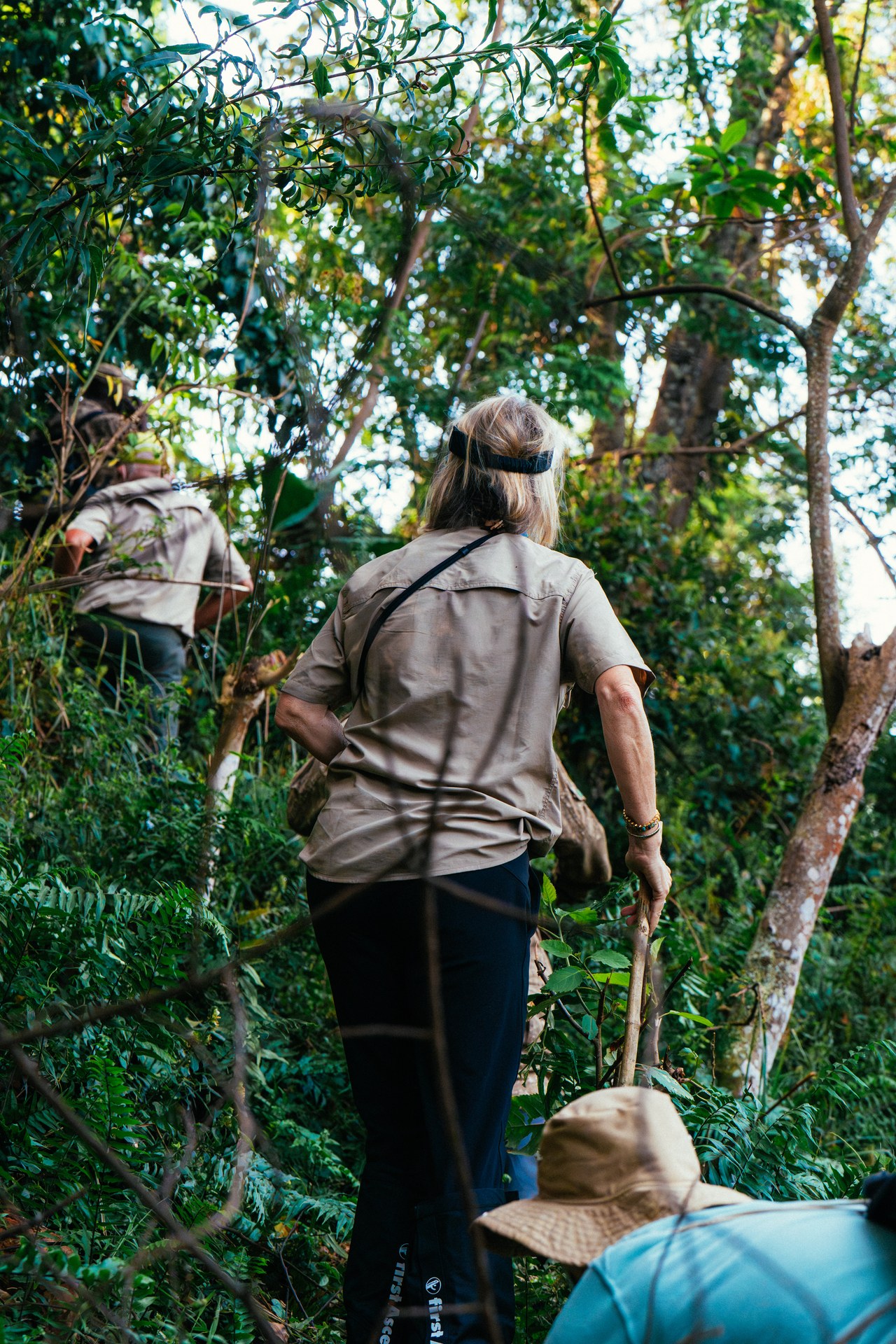
In national parks, the prohibition is near-total. Gorilla trekking itself is permitted under a controlled access regime — each habituated family group can be visited by a maximum of eight people per day, for a maximum of one hour. Trekking groups must stay at least seven metres from gorillas and wear masks when closer. These rules are enforced. They reflect a considered judgement that the economic and conservation value of trekking justifies a carefully managed human presence, but that unmanaged access would be damaging. The gorilla permit fee — $800 in 2026 — is not incidental to this framework. It is the mechanism that finances the ranger operations that enforce the prohibitions.
Commercial logging, mining, and agricultural encroachment are among the activities most tightly restricted in both national parks and Central Forest Reserves. The history of illegal encroachment into Uganda's CFRs in the 1990s and early 2000s prompted a significant policy response, including boundary demarcation programmes and enhanced enforcement by the National Forestry Authority. Kibale Protected Area in western Uganda, which adjoins one of the country's most important chimpanzee habitats, has been a focal point for anti-encroachment operations. Boundary demarcation there, as at Bwindi, is an ongoing technical and political challenge.
Infrastructure development — roads, power lines, pipelines — within or passing through critical ecosystems requires an Environmental Impact Assessment under the National Environment Act and, for national parks, specific UWA authorisation. The practical standard applied is whether the infrastructure can avoid the sensitive area entirely; where it cannot, the EIA must demonstrate that impacts will be mitigated to below-significance levels and that biodiversity offsets are in place. Development finance institutions applying IFC PS6 add a further layer: if a project with significant adverse impacts cannot demonstrate net gain, it cannot be financed.
Activities related to invasive species introduction, waste disposal, and water abstraction from rivers originating in sensitive catchments are regulated under the National Environment (Waste Management) Regulations and associated secondary legislation. These prohibitions matter particularly for Bwindi's five river systems, which drain into Lake Edward and support communities and agriculture across a large area downstream. Compromising the hydrological function of the Bwindi catchment would affect ecosystems and livelihoods far beyond the park boundary.
The Gap Between Legal Protection and Effective Enforcement
Uganda's legal framework for protecting critical ecosystems is comprehensive. The gap is not in the statute book; it is in enforcement capacity, political will, and the economic pressures that make encroachment rational for communities living at park boundaries.
Bwindi's boundary in the Buhoma sector, where the main visitor infrastructure is located, runs close to settled agricultural land. On visits across October 2024, January 2026, and June 2026, the proximity of the park edge to active farmland is visible from the guesthouse. This is not illegal; the farms are outside the gazetted boundary. But it illustrates the fundamental challenge of managing a critical habitat whose boundary is not a buffer zone but an immediate transition to dense smallholder agriculture.
The revenue-sharing mechanism — which returns 20% of Bwindi's gate fees to surrounding parishes — is designed to address this challenge economically rather than through enforcement alone. If neighbouring communities experience a direct financial benefit from the park's continued existence and ecological integrity, the economic case for encroachment weakens. The mechanism has functioned as designed during periods of high tourism. During the COVID-19 closure and prior disruptions caused by disease outbreaks in eastern DRC, when visitor numbers fell sharply and gate fees with them, the revenue transfers stopped. The enforcement cost and the ecological value of the park did not.
Mount Elgon Protected Area on Uganda's eastern border presents a different version of the same challenge. It holds important montane forest and bamboo zones, is home to species with restricted Albertine Rift ranges, and faces documented pressure from illegal bamboo extraction and small-scale cultivation in forest margins. The site qualifies as a critical habitat under multiple PS6 criteria but receives significantly less international conservation attention than Bwindi, reflecting a pattern visible across Uganda: protection is concentrated where tourism value is highest, and thinner where it is not.
For anyone assessing a project in Uganda — whether under IFC standards, other development finance frameworks, or domestic EIA requirements — the practical starting point is the same: map the site against gazetted national parks, Central Forest Reserves, gazetted wetlands, and Albertine Rift endemic species ranges before any other analysis. If the project falls within or adjacent to any of these categories, the critical habitat question is live from the outset, and early engagement with UWA, the National Forestry Authority, or NEMA is not optional. The experience of watching a silverback move through the canopy seven metres away, as Guido filmed on his visit, exists because a legal and institutional architecture made it possible. That architecture has real limits. It is also, as far as this forest is concerned, the only thing standing between that moment and its absence.