Endemic Species
The Albertine Rift biodiversity hotspot has produced species found nowhere else on Earth. Bwindi is their stronghold.
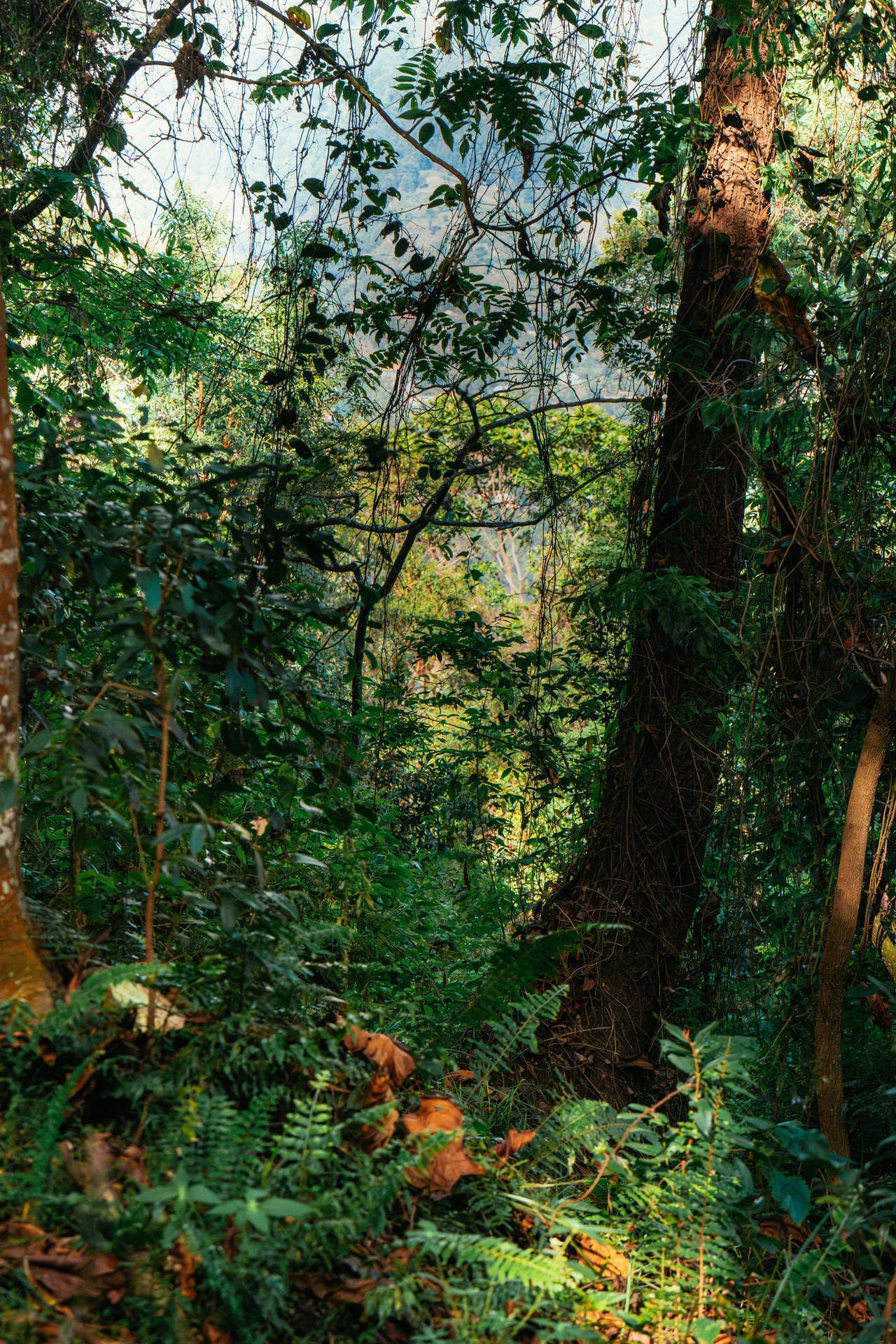
Bwindi Impenetrable National Park occupies a position of global significance for biological conservation. Situated within the Albertine Rift — a branch of the East African Rift System that harbors more endemic vertebrate species than any other region on the African continent — the park shelters an extraordinary concentration of species found nowhere else on Earth.
The concept of endemism is central to understanding Bwindi's conservation value. While the park's total species counts are impressive, it is the proportion of range-restricted species that elevates Bwindi from a nationally important park to a globally irreplaceable one. The loss of Bwindi's forest would mean the permanent extinction of species that have no other home.
Origins of Endemism: The Pleistocene Refugium
Bwindi's exceptional endemism traces back to the Pleistocene epoch. As global climates oscillated between wet and dry periods over the past two million years, Africa's tropical forests expanded and contracted repeatedly. During the driest periods, vast stretches of forest retreated to a few stable “refugia” — pockets where rainfall remained sufficient to sustain closed-canopy forest.
Bwindi was one of these refugia. Protected by the Albertine Rift's topography, which captures moisture from the Congo Basin, the forest persisted while surrounding areas turned to grassland and savanna. Species that survived in Bwindi became increasingly isolated from populations in other refugia, and over thousands of generations, they evolved into distinct species.
Endemic Birds
Bwindi harbors 23 of the approximately 40 Albertine Rift endemic bird species — the highest concentration of any single forest in the region. These include:
- African green broadbill (Pseudocalyptomena graueri) — A small, vivid green bird of the forest undergrowth. Bwindi and a handful of neighboring forests are its only known habitat.
- Shelley's crimsonwing (Cryptospiza shelleyi) — A rare finch associated with bamboo zones at higher elevations. Classified as Vulnerable by the IUCN.
- Rwenzori turaco— A striking bird with crimson flight feathers, common in Bwindi's canopy and one of the easier endemics to observe.
- Handsome francolin— A ground-dwelling bird of the forest floor, heard more often than seen.
- Kivu ground thrush— One of Africa's most elusive forest birds, favoring dense undergrowth in undisturbed forest.
Endemic Butterflies
Eight butterfly species in Bwindi are classified as Albertine Rift endemics. These species are associated with specific microhabitats within the forest, from high-altitude clearings to shaded stream banks. Their presence serves as an indicator of forest integrity, as they depend on particular host plants and environmental conditions that exist only in well-preserved montane forest.
Endemic Mammals
The mountain gorilla (Gorilla beringei beringei) is itself an Albertine Rift endemic, restricted to just two forest blocks: the Virunga volcanoes and the Bwindi-Sarambwe ecosystem. Several small mammal species, including shrews and rodents, are also endemic or near-endemic to the Albertine Rift, though the taxonomy of these groups is still being resolved through ongoing molecular studies.
Endemic Plants and Other Organisms
Bwindi's plant communities include numerous Albertine Rift endemics, particularly among the epiphytic orchids, ferns, and mosses that drape the forest's ancient trees. The park's 400+ documented plant species include several that are found only in the Albertine Rift montane forests. Among amphibians and reptiles, several species are endemic or near-endemic, though this group remains under-surveyed.
Why Endemism Matters
Endemic species are conservation's highest priority because they cannot be conserved anywhere else. If a species is found in only one forest and that forest is destroyed, the species is lost forever. This is not a theoretical concern: habitat loss in the Albertine Rift is ongoing, and Bwindi is one of the few remaining large blocks of intact montane forest in the region.
The protection of Bwindi's 321 square kilometers therefore has consequences that extend far beyond Uganda's borders. The park's endemic species represent millions of years of evolutionary history that, once lost, can never be recovered. This is the fundamental reason Bwindi was inscribed as a UNESCO World Heritage Site.