Primates of Bwindi
Home to 10+ primate species including nearly half the world's mountain gorillas, chimpanzees, and seven monkey species.
Bwindi Impenetrable National Park is one of the most important primate habitats in Africa. With more than 10 documented species ranging from the critically endangered mountain gorilla to tiny nocturnal galagos, the park supports a primate community of exceptional diversity and conservation significance.
The forest's complex structure — multiple canopy layers, dense understory, bamboo zones, and emergent trees — provides niches for primates of every size and ecological strategy. This vertical and horizontal habitat diversity allows multiple species to coexist, each exploiting different food resources and forest strata.
Great Apes
Mountain Gorilla
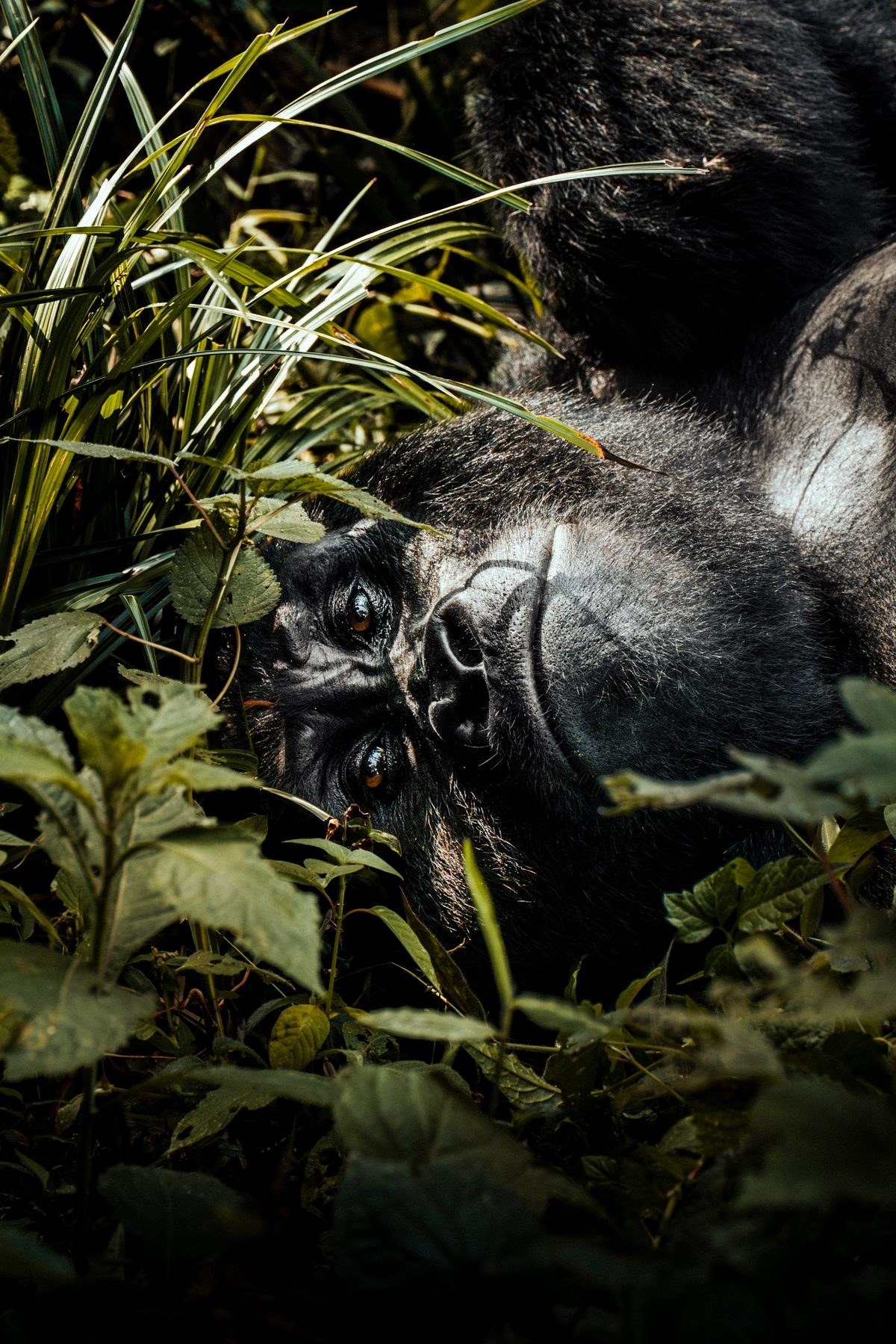
The mountain gorilla (Gorilla beringei beringei) is Bwindi's most iconic resident. Approximately 459 individuals inhabit the park, representing nearly half the global population. Twenty-five family groups have been habituated to human presence, with nine groups available for tourism and one dedicated to scientific research. Each group is led by a dominant silverback male and typically includes several females, juveniles, and infants.
Chimpanzee
Chimpanzees (Pan troglodytes schweinfurthii) are present in Bwindi, primarily in the lower-altitude sectors of the park. While their exact population size is not well established, they are regularly detected through vocalizations and nest surveys. Unlike in Kibale National Park, Bwindi's chimpanzees have not been habituated for tourism, making encounters infrequent but not impossible.
Old World Monkeys
Black-and-White Colobus
The Angolan black-and-white colobus (Colobus angolensis) is one of Bwindi's most visible primates. Groups of 5 to 15 individuals move through the canopy, their striking black-and-white pelage and long white tail tufts making them relatively easy to spot. They are specialized leaf-eaters, with a complex stomach that allows them to digest mature leaves that other primates cannot.
L'Hoest's Monkey
L'Hoest's monkey (Allochrocebus lhoesti) is a montane forest specialist classified as Vulnerable by the IUCN. Recognizable by its dark coat and prominent white beard, this species forages primarily on the ground and in the lower canopy. Bwindi is one of the best locations in East Africa to observe L'Hoest's monkey in the wild.
Other Monkey Species
Red-tailed monkeys (Cercopithecus ascanius) are abundant throughout the forest, often forming mixed-species groups with blue monkeys. Blue monkeys (Cercopithecus mitis) occupy the mid to upper canopy. Grey-cheeked mangabeys (Lophocebus albigena) are large, vocal monkeys whose distinctive “whoop-gobble” calls carry far through the forest. Olive baboons (Papio anubis) are found primarily at forest edges and in areas near human settlement.
Nocturnal Primates
Demidoff's galago (Galagoides demidovii), one of Africa's smallest primates, is widespread in Bwindi's canopy. Its high-pitched calls are a characteristic sound of the forest at night. The potto(Perodicticus potto), a slow-moving nocturnal primate, clings to branches in the mid-canopy, feeding on fruit, gum, and insects. Both species are best detected during guided night walks.
Primates in Their Habitat
Silverback in the thicket, gazing into ancient eyes
Gorillas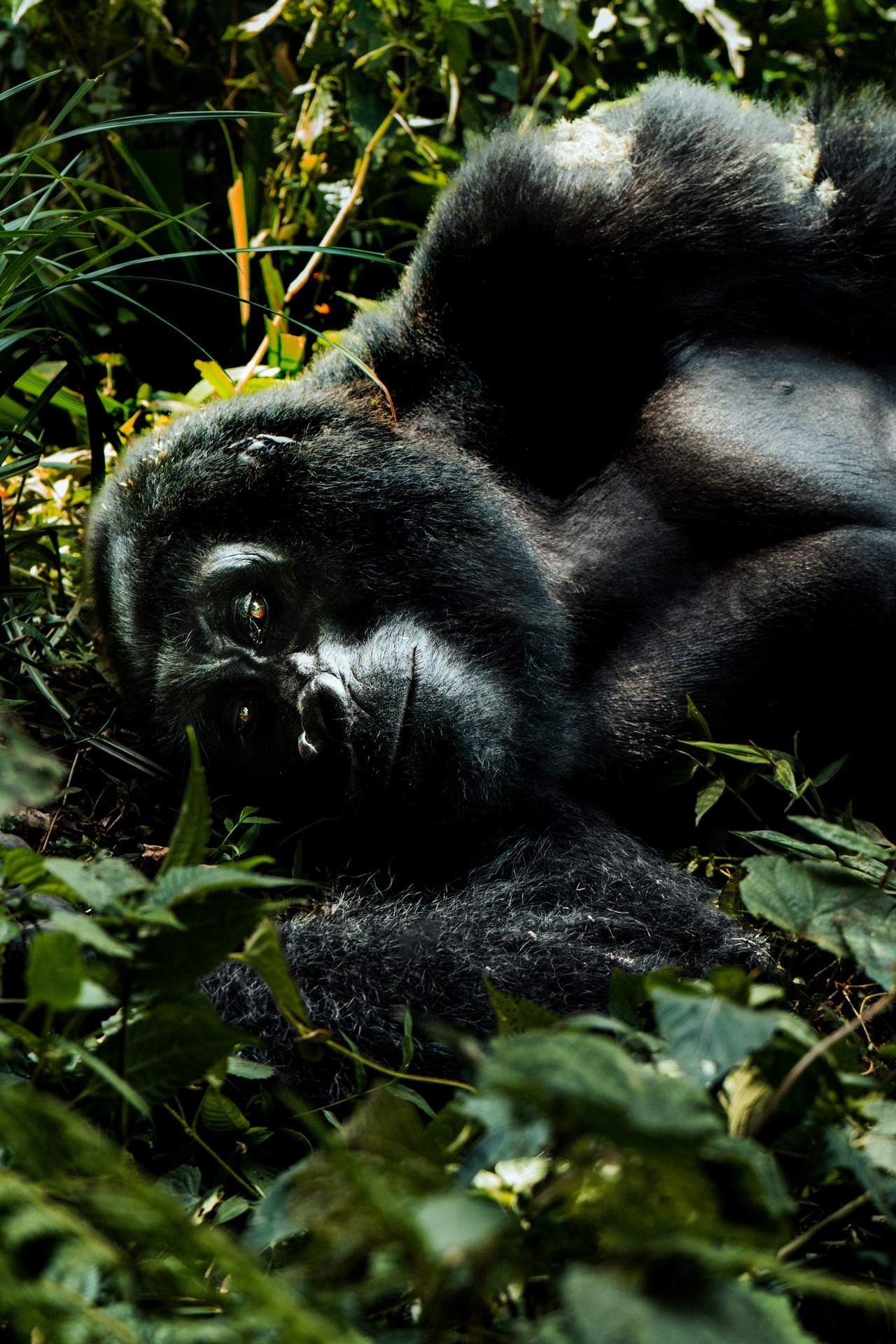
Silverback resting in Bwindi rainforest
Mountain Gorilla (Silverback)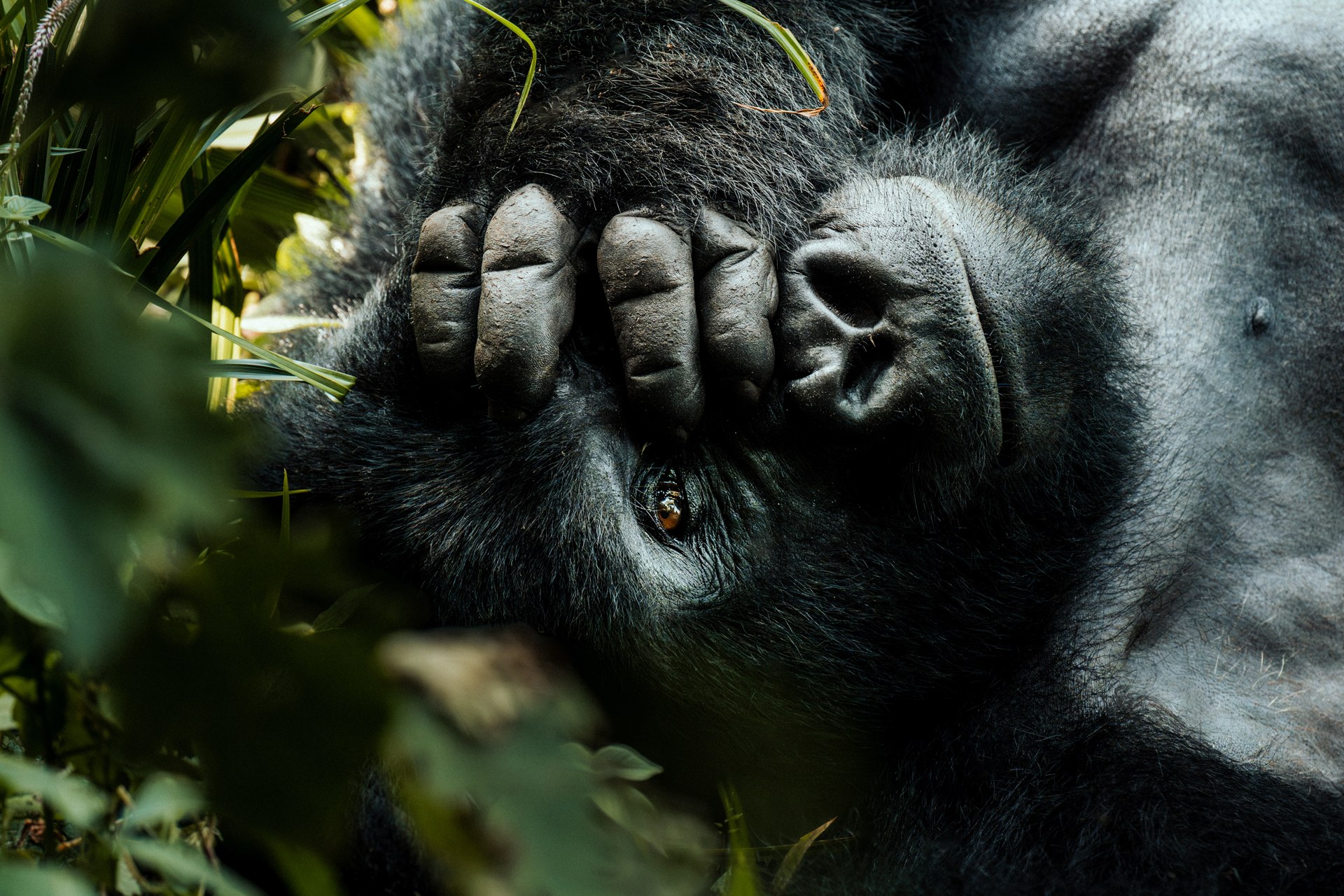
Gorilla covering its face with its hand
Mountain Gorilla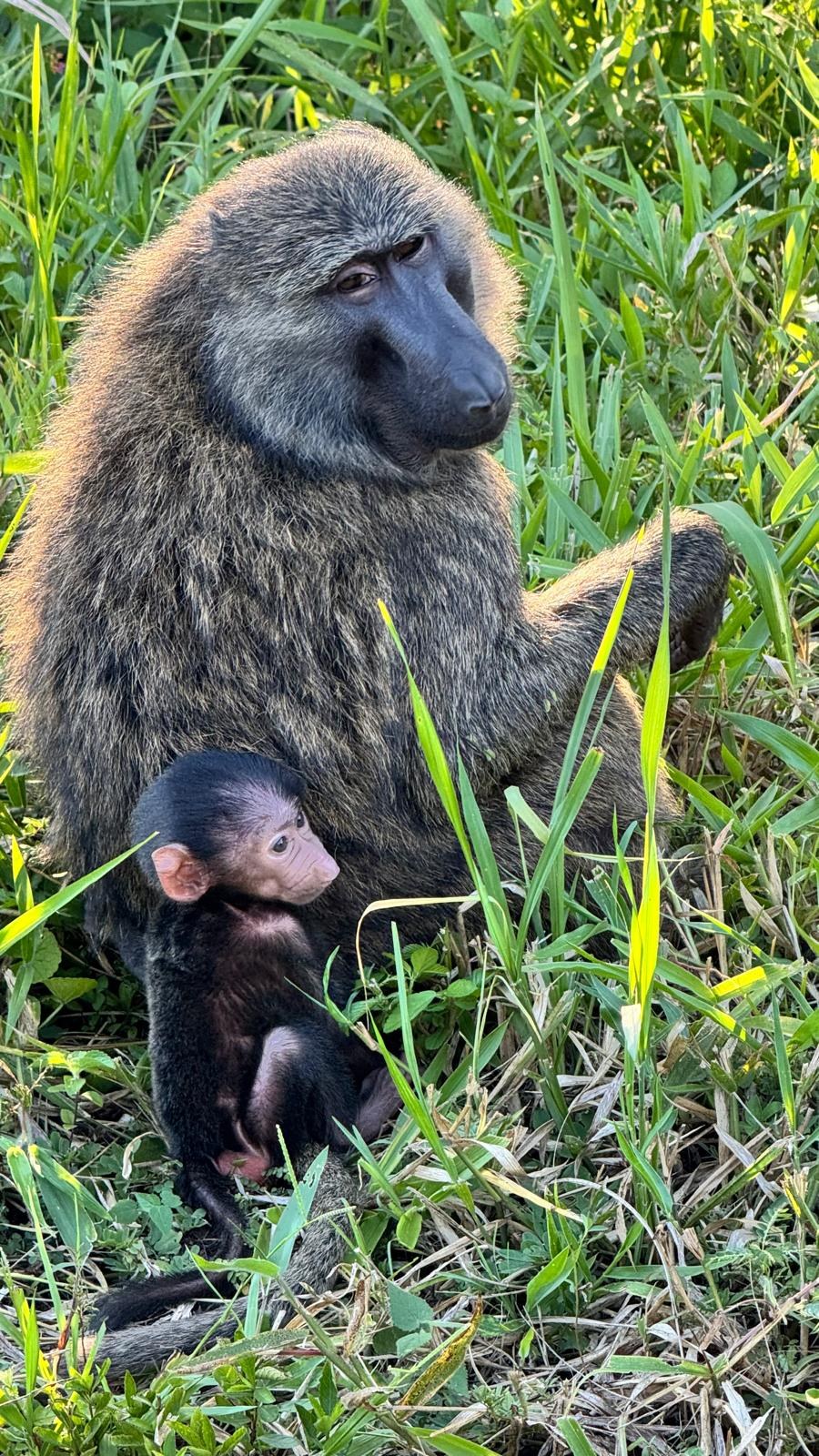
Mother baboon with baby in Murchison Falls Park
Baboons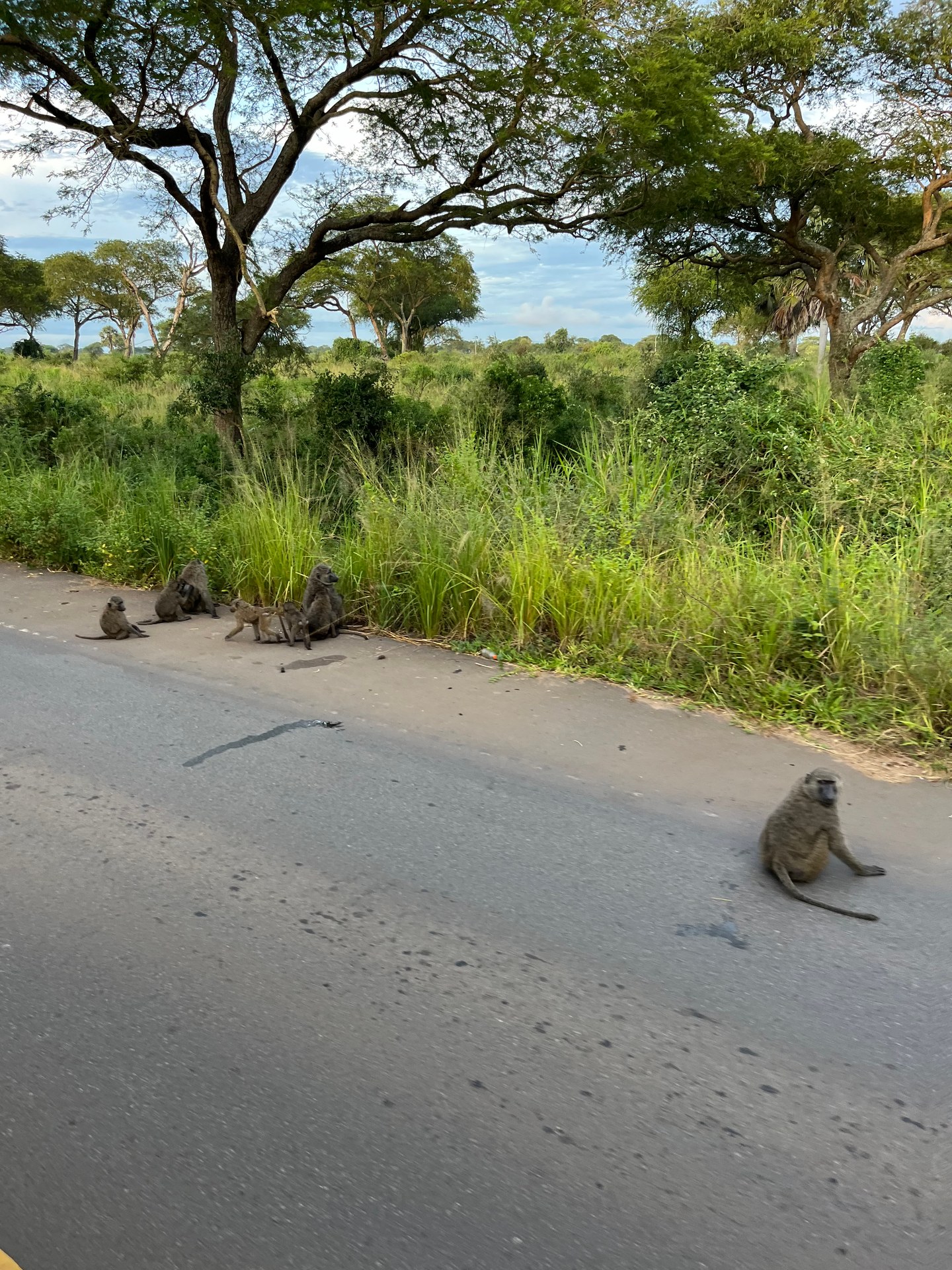
Baboons on the road in Murchison Falls National Park
Olive Baboons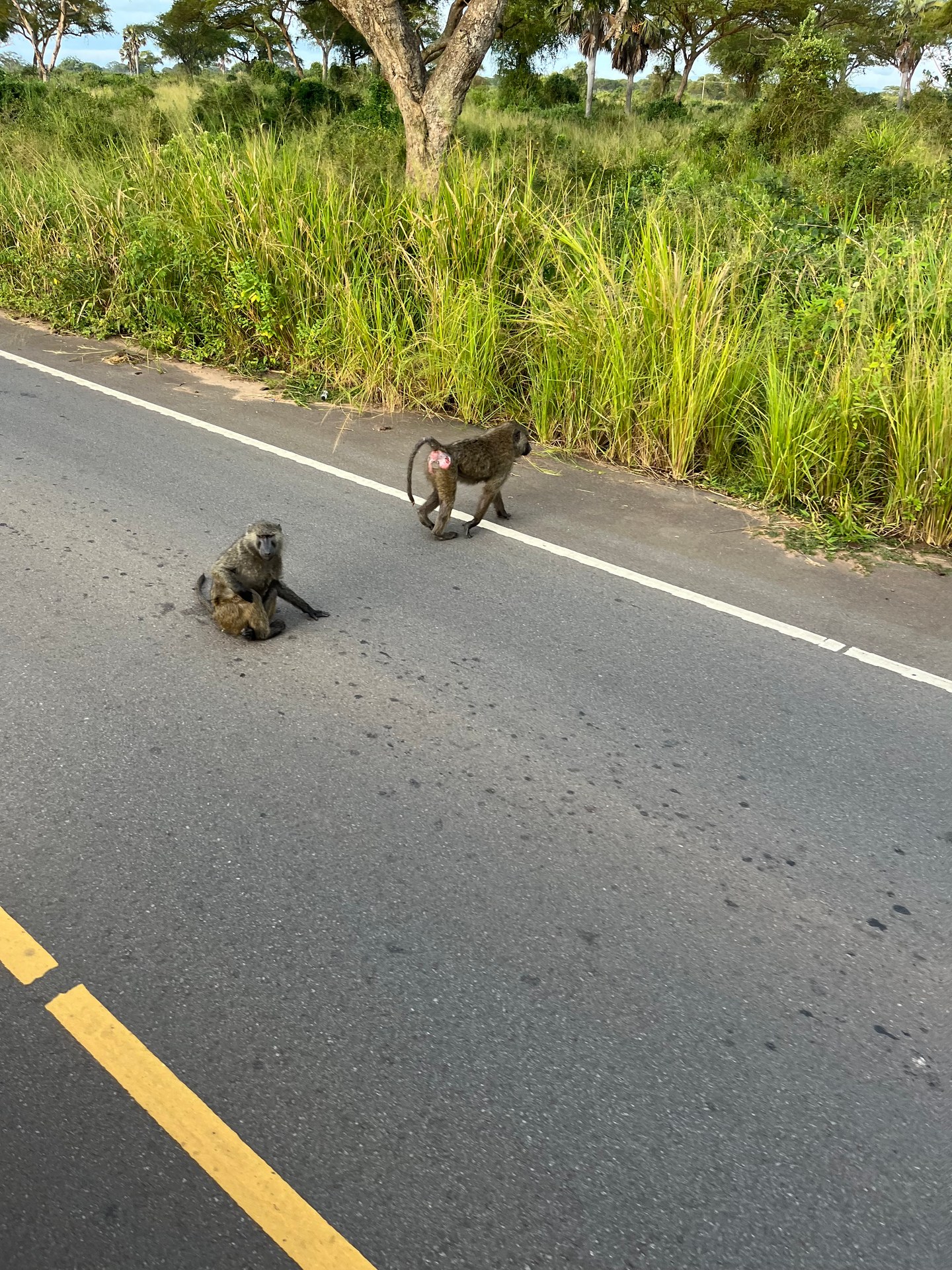
Baboons on the road in Murchison Falls National Park
Baboons