The Forest’s Framework
Trees are the structural foundation of Bwindi Impenetrable Forest. They create the canopy that intercepts rainfall, moderates temperature, and generates the humid microclimate on which thousands of other organisms depend. From the towering emergents that break through the canopy at over 40 metres to the gnarled, moss-draped montane trees on the highest ridges, Bwindi’s trees define the character of the forest at every altitude.
Lowland and Mid-Altitude Trees
The lower elevations of Bwindi, particularly around the Ishasha Gorge and the western valleys, support the forest’s tallest and most massive trees. Species from the Meliaceae family (related to mahoganies), including Entandrophragmaspecies, reach heights of 40 metres or more. These trees develop large buttress roots — plank-like extensions at the base of the trunk — that provide structural support in the shallow, rain-saturated soils.
Chrysophyllum species (from the Sapotaceae family) are also prominent in the lowland and mid-altitude zones. Their fruits are an important food source for primates and birds. Fig trees (Ficusspecies) are ecological keystones: they fruit asynchronously throughout the year, providing a reliable food source during periods when other trees are not fruiting. Their strangling growth habit — where a fig seedling germinating high in the canopy sends roots down to the ground, eventually enveloping its host tree — creates distinctive, architecturally complex structures.
Montane Trees
Above approximately 2,000 metres, the character of the forest changes dramatically. Trees become shorter, typically 15 to 25 metres tall, with smaller, thicker leaves adapted to cooler temperatures and higher UV radiation. Their trunks and branches are heavily loaded with epiphytic mosses, orchids, and ferns, giving the montane forest a distinctive, ancient appearance.
Podocarpus species (yellowwoods) are among the notable montane trees, representing an ancient conifer lineage that predates the flowering plants. These slow-growing trees can live for centuries, their durable timber historically prized but now protected within the national park.
Bamboo Zone
At the highest elevations, typically above 2,300 metres, Arundinaria alpina(African mountain bamboo) forms dense, near-monospecific stands. Bamboo is technically a giant grass rather than a tree, but it functions as the dominant woody plant at these altitudes. These bamboo zones are ecologically important: mountain gorillas feed extensively on bamboo shoots, and the bamboo provides habitat for specialised bird and invertebrate species.
Bamboo has a distinctive life cycle. After growing vegetatively for many years, an entire stand may flower synchronously, set seed, and die. This mass die-off creates temporary openings that are gradually recolonised, either by bamboo seedlings or by other plant species. These dynamics create shifting mosaics of bamboo at different stages of growth.
Tree Ferns
Among the most visually striking plants in Bwindi are the tree ferns of the genus Cyathea. These ancient plants — descendants of lineages that dominated Earth’s forests hundreds of millions of years ago — grow several metres tall on single, unbranched trunks crowned with spreading fronds. They are most common in the mid-altitude and montane zones, particularly along streams and in valley bottoms where moisture is consistently high.
Ecological Roles of Trees
Beyond providing the physical structure of the forest, trees play numerous ecological roles. Their roots stabilise the steep slopes, preventing erosion on Bwindi’s rugged terrain. Their canopy intercepts rainfall, reducing its erosive force before it reaches the soil. Fallen trees create gaps that allow light to reach the forest floor, driving regeneration and maintaining structural diversity.
Dead standing trees (snags) and fallen logs provide critical habitat for cavity-nesting birds, roosting bats, and countless invertebrates. The decomposition of large woody debris by fungi and termites returns nutrients to the soil over periods of years to decades, sustaining the slow but essential nutrient cycling that keeps the forest productive.
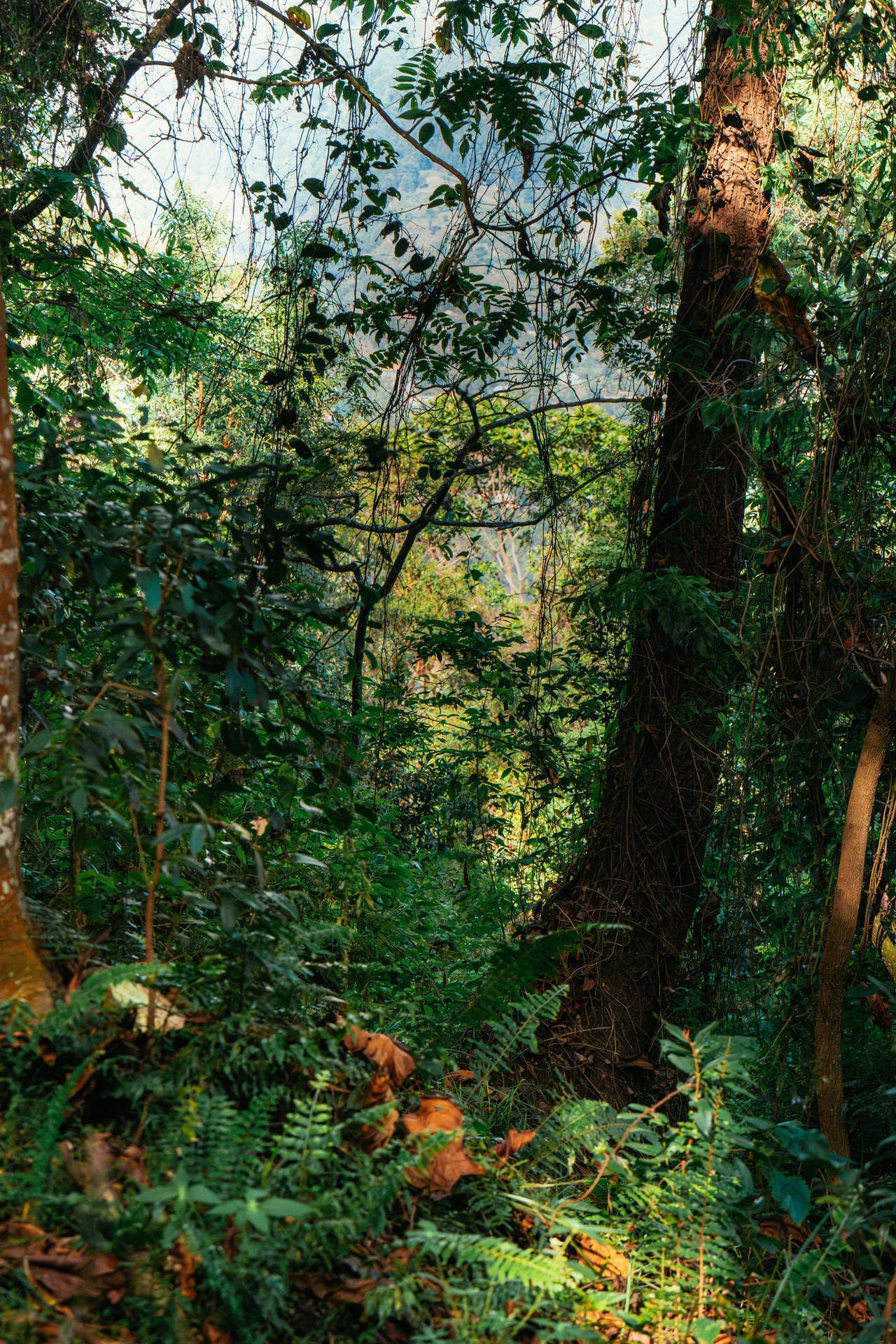
Dense jungle at the start of the gorilla trekking trail

Gorilla trekking in Bwindi: the path through the rainforest
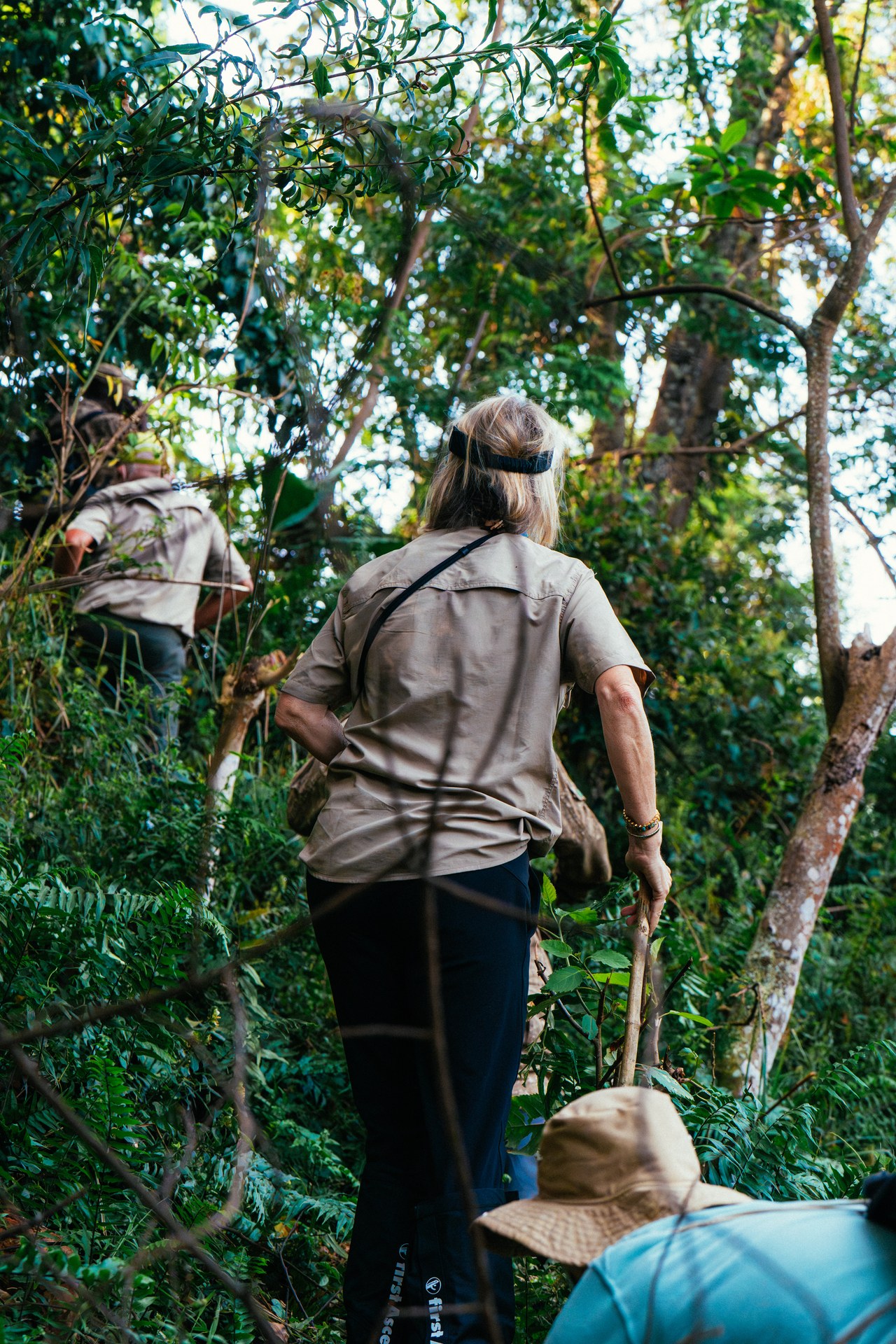
Through Bwindi forest on the trail of gorillas
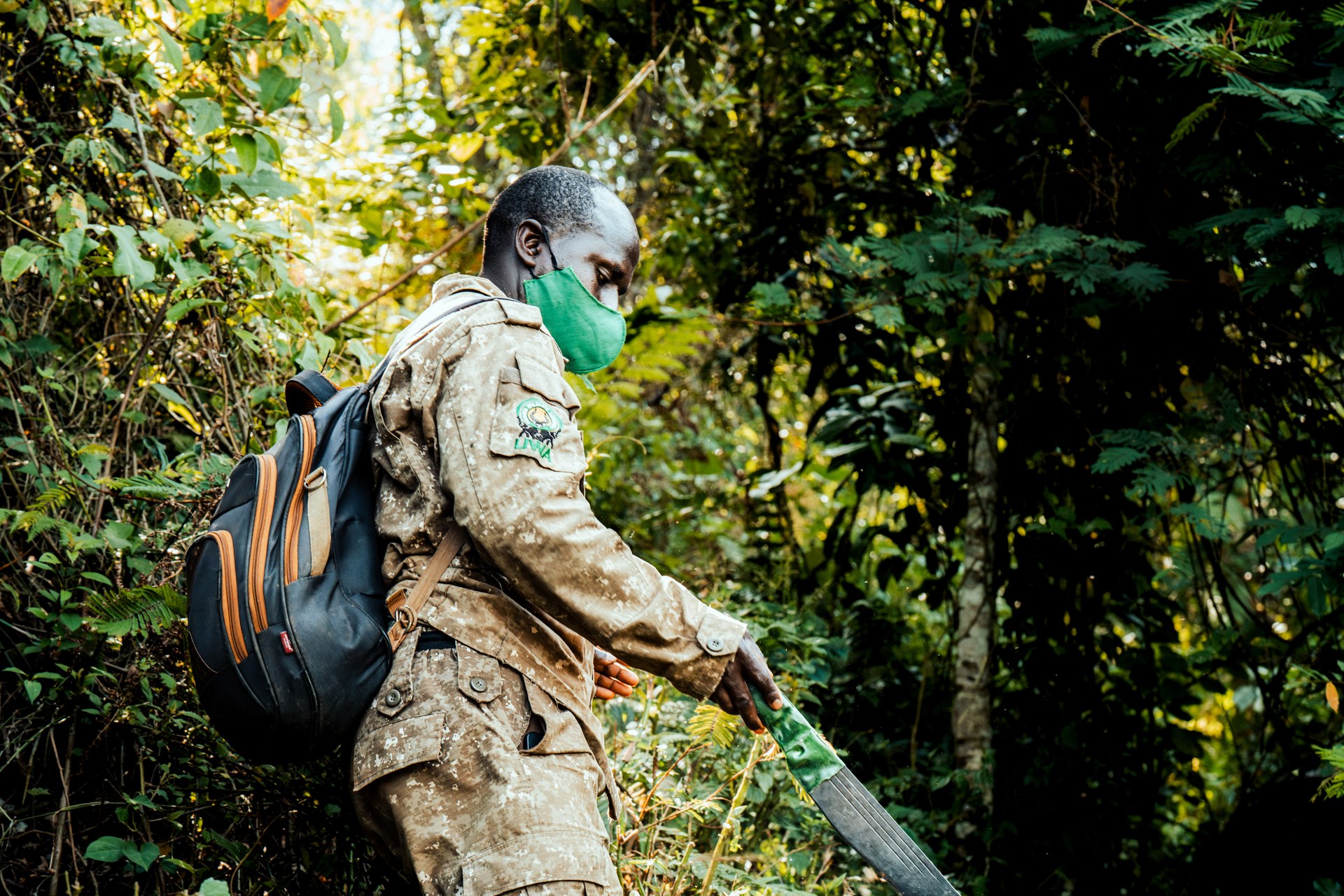
Ranger in Bwindi forest on the way to the gorillas

Preparing for the adventure: gorilla trekking in Bwindi
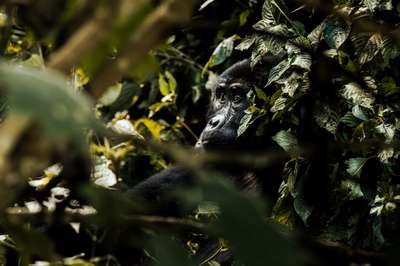
Mountain Gorilla Peering Through Dense Forest Foliage
Mountain Gorilla