An Ecosystem Shaped by Time and Terrain
Bwindi Impenetrable Forest is not simply a collection of trees. It is a complex, self-sustaining ecological system that has been functioning continuously for more than 25,000 years. Every organism within it — from the tallest canopy tree to the smallest soil fungus — plays a role in maintaining the cycles of energy, water, and nutrients that keep the forest alive.
The forest’s ecology is fundamentally shaped by two factors: its great age and its dramatic terrain. As one of Africa’s oldest surviving rainforests, Bwindi has had millennia to develop intricate ecological relationships. Its steep ridges and deep valleys, carved along the edge of the Albertine Rift, compress a remarkable range of habitats into a relatively small area.
Altitudinal Zonation
The most striking ecological feature of Bwindi is its altitudinal gradient. Rising from approximately 1,160 metres in the Ishasha Gorge to 2,607 metres at Rwamunyonyi Hill, the forest spans nearly 1,500 vertical metres. Temperature decreases roughly 0.6 degrees Celsius for every 100 metres of elevation gain, creating markedly different growing conditions at the base and summit.
At lower elevations, the forest has characteristics of lowland tropical rainforest: taller trees, larger leaves, and greater structural complexity. As elevation increases, trees become shorter and more gnarled, leaves become smaller and thicker, and mosses and lichens become increasingly dominant. The highest ridges support montane forest with dense understorey vegetation, tree ferns, and bamboo.
Microclimate and Moisture
Bwindi receives between 1,400 and 1,900 millimetres of rainfall annually, distributed across two principal wet seasons. However, rainfall alone does not explain the forest’s moisture regime. At higher elevations, persistent cloud and mist provide additional water through a process called horizontal precipitation or cloud stripping. Mosses, epiphytes, and leaf surfaces intercept tiny water droplets from passing clouds, channelling them down to the soil.
This combination of rainfall and cloud interception maintains the high humidity — often above 85 percent — that is essential for the forest’s epiphytic plant communities, soil organisms, and amphibian populations. The canopy also moderates temperature extremes, keeping the forest floor cooler during the day and warmer at night than exposed areas at the same altitude.
Nutrient Cycling
Like all tropical forests, Bwindi’s soils are relatively nutrient-poor. The apparent richness of the forest is maintained not by fertile soil but by efficient nutrient cycling. When leaves, branches, and other organic matter fall to the forest floor, they are rapidly broken down by fungi, bacteria, termites, and other decomposers. The released nutrients are immediately absorbed by the dense network of fine roots that permeates the upper soil layers.
In Bwindi’s montane zones, decomposition is slower than in warmer lowland forests, leading to thicker accumulations of leaf litter and organic soil. Mycorrhizal fungi play a particularly important role at these elevations, forming symbiotic relationships with tree roots that enhance nutrient uptake. This underground fungal network — sometimes called the “wood wide web” — connects individual trees and may facilitate the transfer of nutrients between them.
Ecological Interactions
The forest’s biodiversity is sustained by a dense web of ecological interactions. Frugivorous birds and primates, including mountain gorillas and chimpanzees, disperse the seeds of forest trees. Pollination is carried out by insects, birds, and bats. Predator-prey relationships regulate populations across trophic levels. Epiphytic plants create microhabitats for invertebrates and small vertebrates high in the canopy.
These interactions have co-evolved over thousands of years, making them both highly effective and potentially fragile. The loss of a single keystone species — a major seed disperser or pollinator, for example — can trigger cascading effects throughout the ecosystem. This interconnectedness is one reason why maintaining the forest’s full complement of species is so important for its long-term health.
The Refugium Effect
During the Pleistocene glaciations, when cooler and drier conditions caused most African tropical forests to contract into fragmented patches, Bwindi maintained continuous forest cover. This made it a refugium — a place where species could persist through unfavourable conditions. When the climate warmed again, Bwindi served as a source from which species recolonized the surrounding landscape.
This refugium history explains much of Bwindi’s exceptional species richness. Species that evolved in isolation during glacial periods coexist with those that arrived from both lowland and montane sources as the forest expanded and contracted over millennia. The result is an unusually high number of species for a forest of its size, including many that are endemic or near-endemic to the Albertine Rift region.
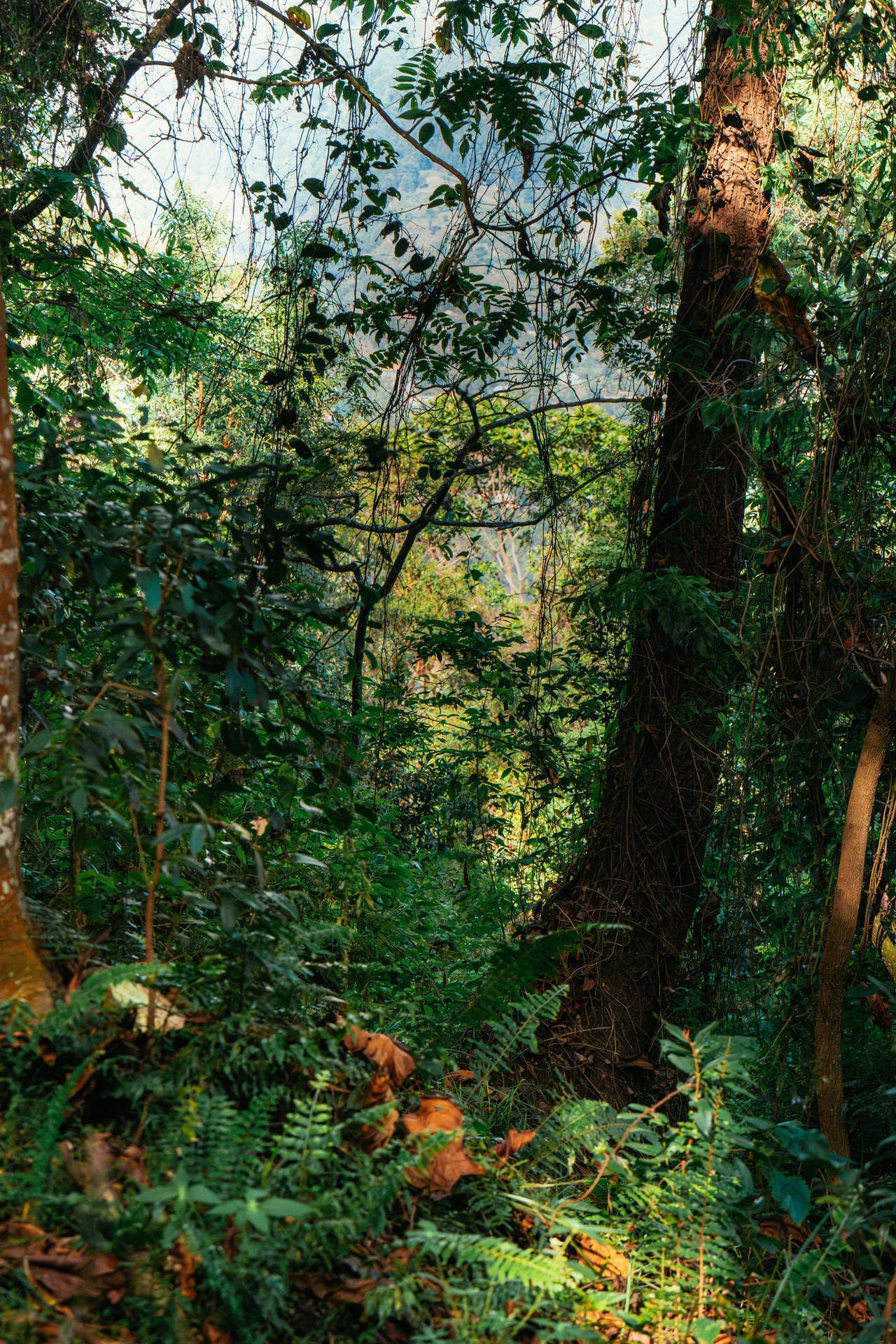
Dense jungle at the start of the gorilla trekking trail

Gorilla trekking in Bwindi: the path through the rainforest
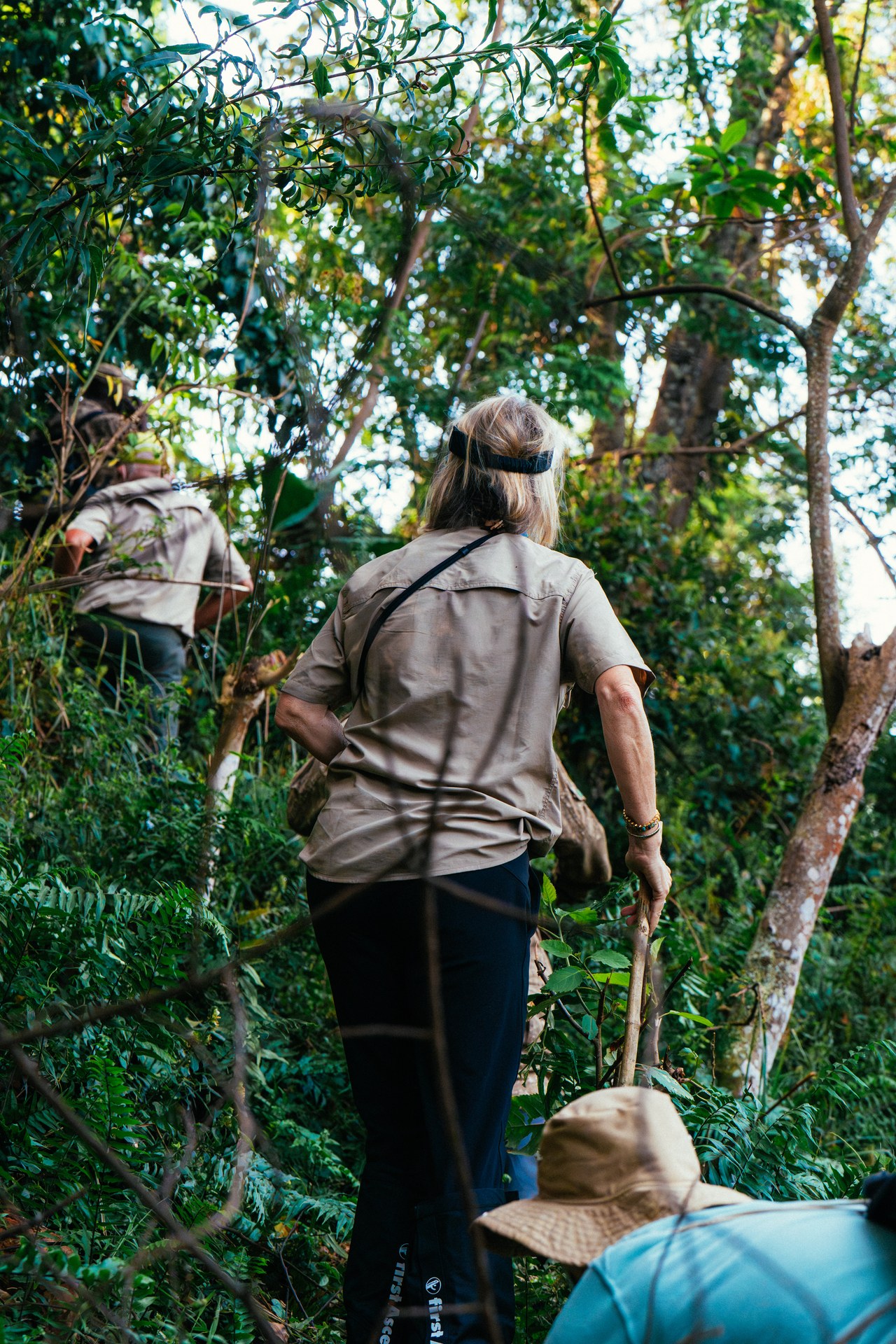
Through Bwindi forest on the trail of gorillas
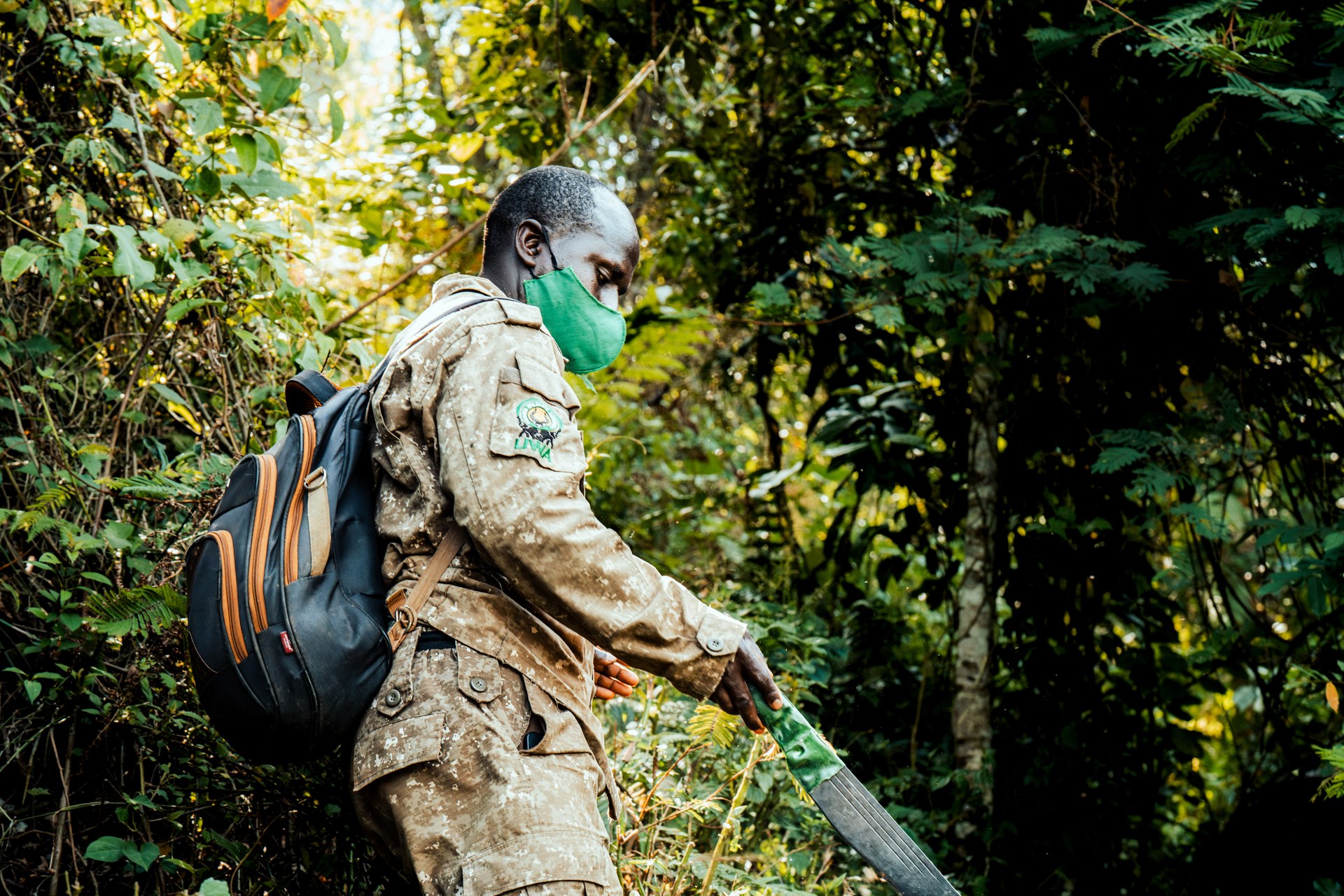
Ranger in Bwindi forest on the way to the gorillas

Preparing for the adventure: gorilla trekking in Bwindi
Mountain Gorilla Peering Through Dense Forest Foliage
Mountain Gorilla