Healing the Edges
Bwindi Impenetrable Forest is overwhelmingly intact. The vast majority of its 321 square kilometres consists of primary forest that has never been cleared. However, before the area was designated a national park in 1991, some zones along the forest’s margins were affected by encroachment, selective logging, and agricultural clearing. These degraded edges represent both a conservation challenge and an opportunity.
Forest restoration at Bwindi aims to rebuild these damaged areas, strengthening the park’s boundary, improving habitat connectivity, and enhancing the ecosystem services — particularly water regulation and soil stabilisation — that the forest provides to surrounding communities.
The Legacy of Encroachment
Southwestern Uganda is one of the most densely populated rural areas in Africa. The pressure on land surrounding Bwindi is immense. Before park establishment, communities cleared forest along the edges for cultivation, collected firewood and building materials, and grazed livestock in forest clearings. Some areas were selectively logged for valuable timber species.
These activities created a patchwork of degradation along the forest boundary: areas of thinned forest with reduced canopy cover, clearings reverting to scrub and grassland, and zones where the original tree species had been replaced by fast-growing pioneers and invasive plants. While small in total area compared to the intact forest, these degraded zones weakened the forest’s edge, increasing its vulnerability to further encroachment, fire, and wind damage.
Natural Regeneration
Where degradation is moderate — for example, areas that were selectively logged but retain their soil structure and seed bank — natural regeneration is often the most effective restoration strategy. By removing the pressures that caused the degradation (preventing further cutting, excluding livestock, controlling invasive species), the forest is allowed to recover on its own.
Natural regeneration is remarkably effective in Bwindi’s wet climate. Pioneer tree species establish quickly in disturbed areas, growing rapidly in the available light. Within a few years, their shade creates conditions suitable for slower-growing, shade-tolerant species to establish beneath them. Over decades, the forest structure gradually rebuilds itself, with the pioneer species eventually replaced by the longer-lived trees that characterise mature forest.
The advantage of natural regeneration is that it produces a forest that is genetically and structurally appropriate to the site. Seeds come from surrounding intact forest, ensuring local adaptation. The disadvantage is that it requires patience: in severely degraded areas, the process can take decades or longer.
Active Planting
In areas where degradation has been severe — where the soil has been compacted by cultivation, the seed bank has been depleted, or the area is too far from intact forest for natural seed dispersal — active planting is necessary to initiate recovery. This involves growing seedlings of native tree species in nurseries and transplanting them to the restoration site.
Species selection is critical. Only native species appropriate to the altitude and forest type of the site are used. Fast-growing pioneer species are planted first to establish canopy cover quickly, followed by slower-growing species that will eventually form the mature canopy. The species mix is designed to replicate the natural composition of adjacent intact forest as closely as possible.
Community-operated nurseries play an important role in this process. Local people collect seeds from the forest, grow seedlings under controlled conditions, and supply them for planting. This provides employment and income while building local knowledge of native tree species and their ecology.
Corridor Restoration
One of the highest priorities for restoration at Bwindi is the creation and maintenance of forest corridors — strips of forest that connect otherwise isolated patches. These corridors are essential for genetic exchange between animal populations, allowing individuals to move between areas of suitable habitat without crossing exposed, hostile terrain.
For mountain gorillas, which live in family groups with limited home ranges, corridors between forest blocks can be the difference between genetic isolation and a viable, connected population. Corridor restoration typically involves planting native trees on degraded land between forest fragments, creating a continuous canopy that animals can use for movement and shelter.
Monitoring and Adaptive Management
Restoration is not a one-time event but an ongoing process that requires monitoring and adjustment. Permanent vegetation plots in restoration areas are surveyed periodically to track species composition, canopy cover, tree growth rates, and the arrival of new species. These data help managers assess whether the restoration is proceeding as expected and whether interventions — such as weeding, replanting, or invasive species control — are needed.
Long-term monitoring has shown that even modest restoration efforts can produce significant ecological gains. Areas planted 20 to 30 years ago now support recognisable forest structure with multiple canopy layers, a growing diversity of native plant species, and increasing use by wildlife. The return of forest birds, primates, and other animals to restored areas is one of the most encouraging indicators of success.
The Role of Communities
Forest restoration at Bwindi cannot succeed without the cooperation and participation of surrounding communities. People who live along the forest edge are the most direct stewards of the boundary, and their land management decisions profoundly affect the forest’s integrity.
Successful restoration programmes combine ecological work with community engagement: providing alternative livelihoods that reduce dependence on forest resources, establishing buffer zones where compatible land uses (such as agroforestry and beekeeping) create a gradual transition between farmland and forest, and ensuring that communities see tangible benefits from a healthy forest, whether through tourism revenue, clean water, or direct payments for conservation.
The most durable restoration is that which becomes self-sustaining — both ecologically, as the restored forest develops its own regenerative capacity, and socially, as communities come to value and protect the forest not because they are compelled to but because they understand and benefit from its presence.
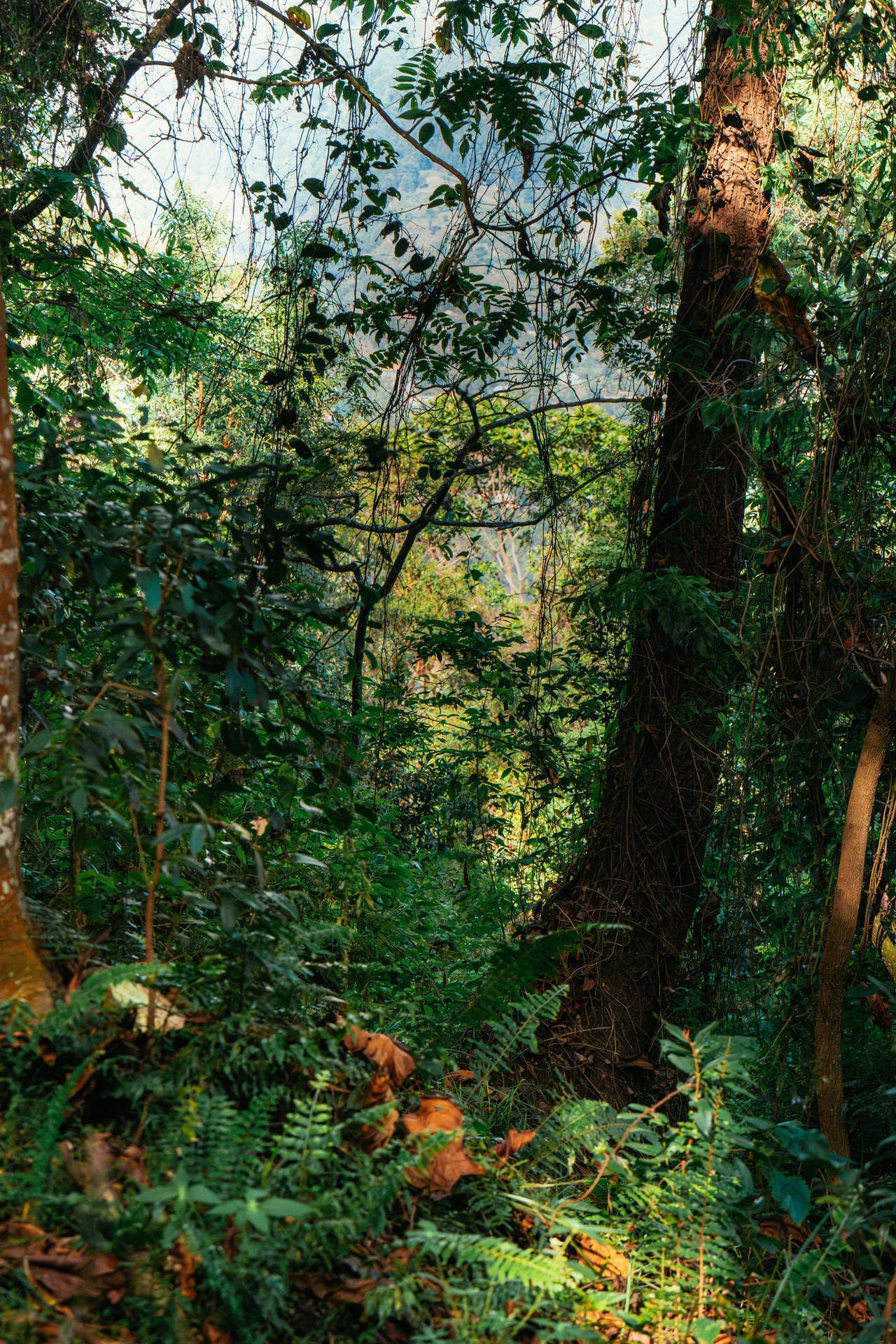
Dense jungle at the start of the gorilla trekking trail

Gorilla trekking in Bwindi: the path through the rainforest
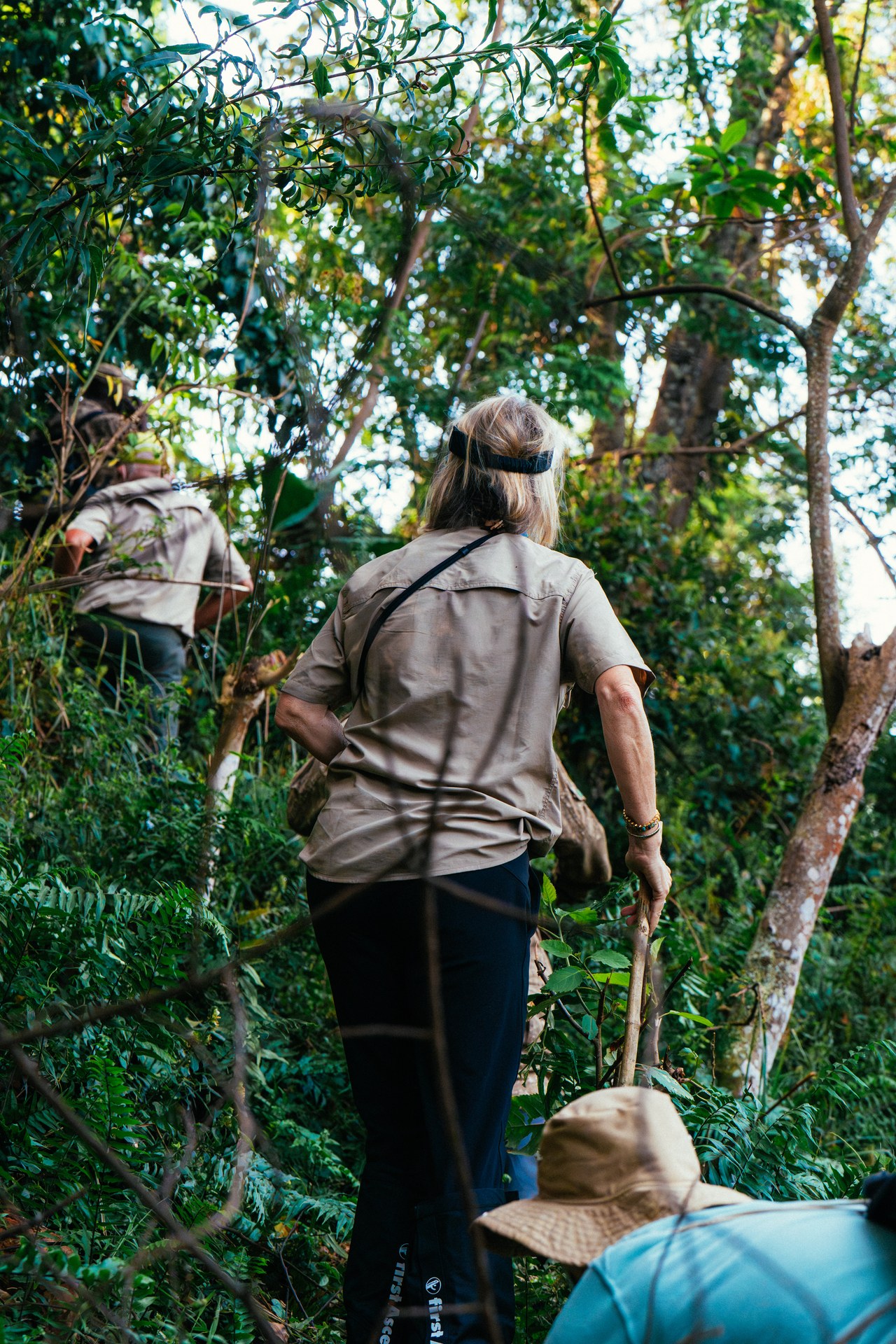
Through Bwindi forest on the trail of gorillas
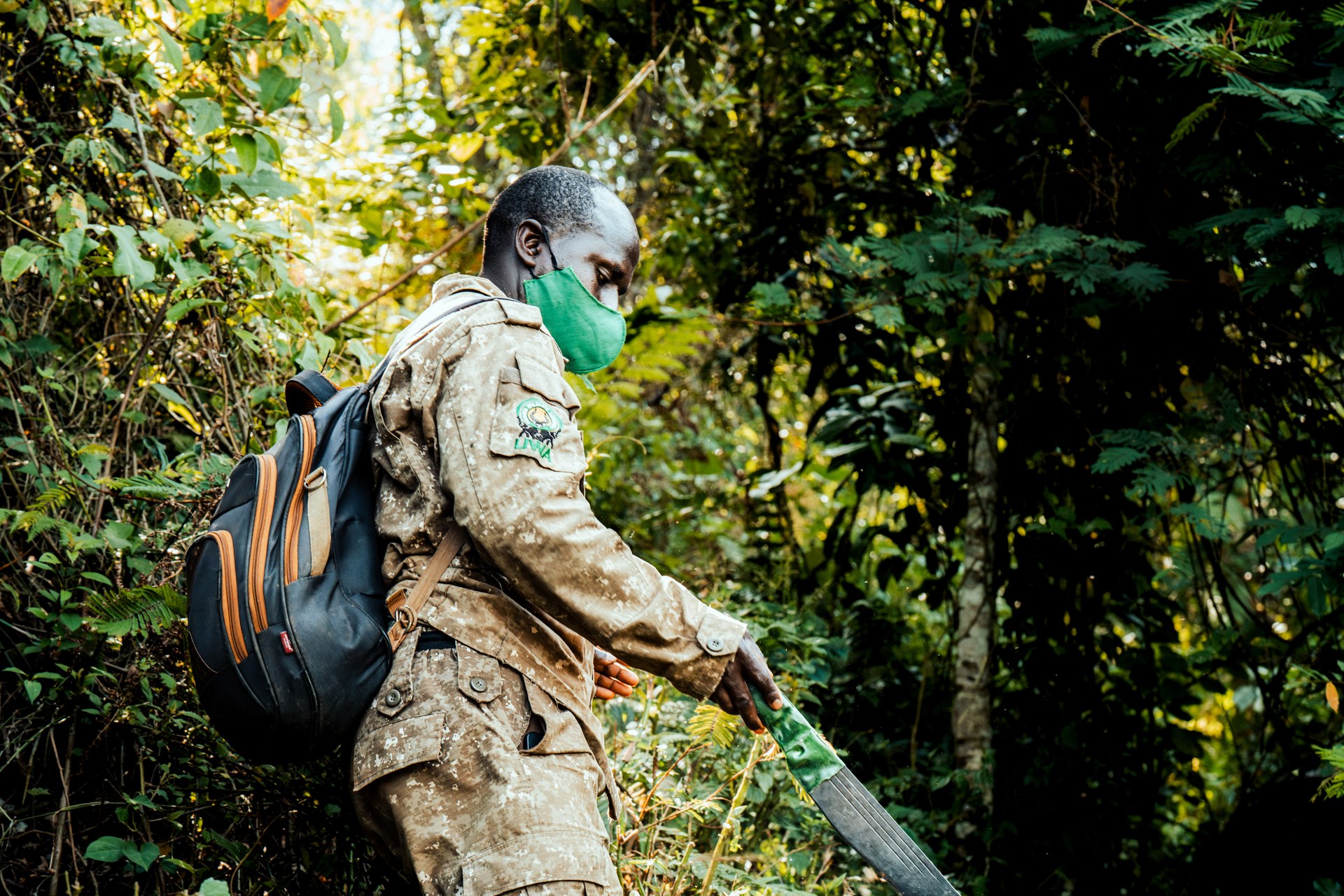
Ranger in Bwindi forest on the way to the gorillas
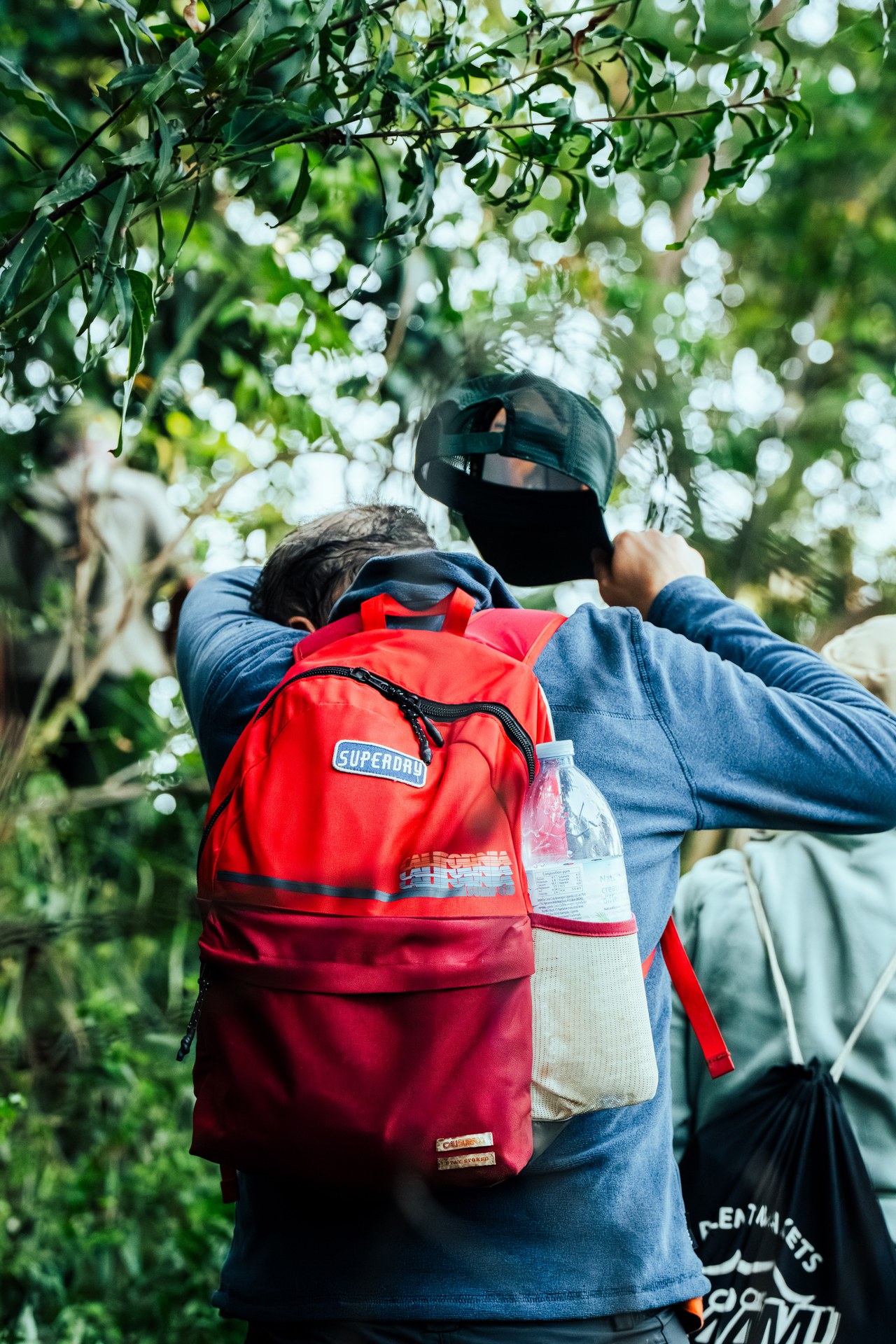
Preparing for the adventure: gorilla trekking in Bwindi
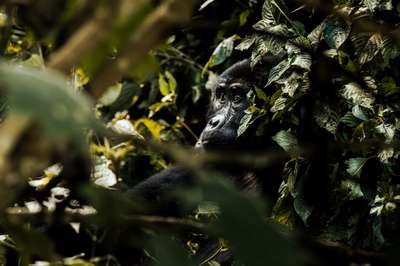
Mountain Gorilla Peering Through Dense Forest Foliage
Mountain Gorilla