An Encounter in the Canopy
The first bwindi gorillas we saw in January 2026 were not on the ground. After roughly an hour of trekking through the steep, dripping forest of Bwindi Impenetrable National Park, our ranger paused, pointed upward, and there — fifteen metres overhead, entirely at ease — sat a gorilla pulling leaves from the branches of a large tree and eating them with slow, unhurried deliberateness. That image, GPS-tagged at coordinates −0.9763°N, 29.6231°E and documented by photographer Mark Suer, captures something essential about bwindi gorillas: they are wild animals living on their own terms, and any encounter with them is a privilege shaped by years of careful, patient work.
The fact that we could stand close enough to observe that gorilla feeding undisturbed — and later, after three hours of trekking, reach a second family group resting peacefully on the forest floor — is the direct result of two interlocking systems: the habituation programme that gradually acclimatises gorilla families to human presence, and the community structures that give the people living around Bwindi a genuine stake in keeping the forest and its inhabitants intact. Understanding both is essential to understanding why bwindi gorillas continue to exist at all.
What Habituation Actually Means
Habituation is not domestication and it is not taming. A habituated gorilla remains as wild as the day it was born; what changes is its learned response to one specific stimulus: the presence of a small number of calm, non-threatening humans. The gorillas still make every decision about how they spend their day, where they sleep, whom they interact with, and what they eat. They have simply stopped treating human visitors as a reason to flee.
The process typically takes two to three years of daily contact with a dedicated team of Uganda Wildlife Authority rangers and researchers. In the earliest stages, the target gorilla group may disappear into dense undergrowth the moment it detects humans, requiring hours of patient following. The trackers approach gradually, using calm body language and soft vocalizations that mimic gorilla contact calls to signal that no threat is intended. Over weeks and months, the gorillas' flight distance decreases. Eventually, they remain in place, glance briefly at the humans nearby, and return to whatever they were doing.
Progress is fragile. A sudden movement, an unexpected noise, or an overconfident approach at the wrong moment can undo weeks of accumulated trust. Experienced trackers develop an intuitive understanding of each individual gorilla's temperament, learning which animals are curious, which are anxious, and which are likely to demonstrate if they feel crowded. The consistency and skill required of these teams is extraordinary, and the quality of Bwindi's habituation staff is a significant reason why the park now has more than twenty habituated gorilla groups available for conservation visits.
The Gorilla Habituation Experience (GHEX)
For visitors seeking more than the standard one-hour gorilla trek, Uganda Wildlife Authority offers the Gorilla Habituation Experience in Bwindi's Rushaga sector. Where standard trekking permits eight visitors per group for one hour with a fully habituated family, the GHEX admits only four visitors per group and allows up to four hours in the presence of a gorilla family still undergoing habituation. The permit costs $1,500 per person.
The difference in character between the two experiences is substantial. Standard gorilla trekking with a fully habituated group is calm and predictable: the gorillas are accustomed to observers and move through their routines with minimal reaction to human presence. GHEX visitors accompany the researchers and rangers who are actively conducting habituation work, which means the gorillas may be more reactive — a silverback may display, a female may withdraw her infant — and the experience carries a quality of genuine scientific observation. Visitors witness not just gorilla family life but the ongoing human effort that makes any gorilla encounter possible.
Four hours is long enough to observe a wide range of behaviour: extended feeding sequences, grooming partnerships, play among juveniles, silverback route-setting, and the subtle hierarchy negotiations that govern a gorilla group's social life. For those with enough time and budget, the GHEX offers depth that no one-hour visit can match.
Rangers, Trackers, and the People in the Forest
On our January 2026 trek, we were accompanied by a lead guide and two armed rangers. The firearms, which struck us as slightly unusual at first, are standard equipment and serve a practical purpose: Bwindi is a complex ecosystem that also harbours buffalo and forest elephant, and the weapons act as both a safety measure and a deterrent against poaching. In practice, the rangers were unhurried, knowledgeable, and patient with our group on the steep and slippery ascent. When the trail became genuinely difficult, they assisted without being asked.
[QUOTE: local guide on first impressions of working with gorilla groups early in their habituation]What these rangers represent is the professional core of a conservation workforce that has grown alongside gorilla tourism over decades. Many of them grew up in communities bordering the park, in villages where the relationship between forest and livelihood has always been complicated. Employment as a ranger or tracker is not simply a job; it is a position that carries real status and a visible role in protecting something that the wider world regards as extraordinary.
Community: The Third Pillar of Gorilla Conservation
Mountain gorillas cannot be conserved by biology alone. The 459 individuals recorded in the 2018–2020 census across Uganda's gorilla range represent a population that shares its landscape with hundreds of thousands of people, many of whom live in conditions of material scarcity. Conservation history is full of protected areas that failed because local communities saw no benefit in them and treated wildlife as competition for land and resources. Bwindi's survival as a functioning gorilla habitat depends on reversing that dynamic.
Uganda's revenue-sharing programme directs twenty percent of all park entry fees back into communities surrounding Bwindi Impenetrable National Park. These funds have supported school construction, healthcare access, and local infrastructure projects. The mechanism is deliberately transparent: money is managed through parish and community councils, and communities themselves participate in decisions about how it is allocated. The programme is not charity — it is a structural recognition that conservation imposes real costs on communities that forgo land use and accept wildlife-related risks, and that those communities deserve a proportionate return.
Beyond revenue sharing, gorilla tourism sustains a wide employment ecosystem: guides, trackers, porters, lodge staff, drivers, artisans, and community performers. Tourism also generates informal income opportunities for entrepreneurs living near park entry points. Porters, in particular, provide a direct and accessible economic bridge between the trekking experience and community benefit — engaging a porter costs visitors relatively little while making a meaningful difference to the individual and their household.
Clinton and What Tourism Builds
One afternoon in January 2026, walking the road in front of Gorilla Bluff Lodge near Buhoma, we met Clinton. He was seventeen years old, carrying a small collection of hand-painted pictures he had made himself. He sells them to visitors passing between the lodge and the park gate. The money he earns goes to his family: his mother, two brothers, and a younger sister with a disability, since his father died. Clinton's ambition, stated directly and without hesitation, is to become a tour guide.
Clinton's story is not exceptional in the communities surrounding Bwindi. Many young people near the park have grown up watching guides, rangers, and lodge staff build stable livelihoods from gorilla tourism, and they are motivated to enter that workforce. Tourism creates not only immediate income but a visible career trajectory that did not exist for previous generations. That trajectory — from roadside artist to certified guide, from porter to senior ranger — is what sustainable conservation looks like when it operates at human scale.
The relationship between the park and the communities around it is not without friction. Wildlife-related crop damage remains a genuine hardship for farming households near the forest edge. Land pressure in the broader region means that forest boundaries are contested and that the value of remaining forest is constantly being weighed against competing needs. These tensions are real, and acknowledging them honestly is part of what distinguishes meaningful community engagement from promotional language.
Planning a Habituation-Focused Visit
For travellers whose primary interest is in bwindi gorillas and the habituation process, Rushaga is the natural base. It is accessible from Kisoro (approximately two hours) and Kabale (approximately three hours), with accommodation ranging from well-appointed lodges to mid-range and budget options. Booking the GHEX requires advance planning — the four-visitor daily limit means permits are genuinely scarce, and peak seasons in June through September and December through February sell out months ahead. Uganda Wildlife Authority manages all permits directly and through registered tour operators.
Standard gorilla trekking in Bwindi is available across all four sectors — Buhoma, Ruhija, Nkuringo, and Rushaga — each offering a distinct character of forest and a different set of habituated groups. When we visited in January 2026, the trails at Buhoma were steep and required sustained effort, but the forest at that elevation in that season was vivid and largely clear of mist. The wet seasons — March through May and October through November — bring heavier rain but also less crowded trails.
Whatever sector or experience type a visitor chooses, the underlying conditions are the same: a small permitted group, experienced guides and rangers, a strict seven-metre proximity rule to protect gorilla health, and one hour (or up to four for GHEX) in the presence of a gorilla family. These constraints exist for the gorillas' benefit, and respecting them is not a bureaucratic formality but an active contribution to the conservation work that made the encounter possible in the first place.
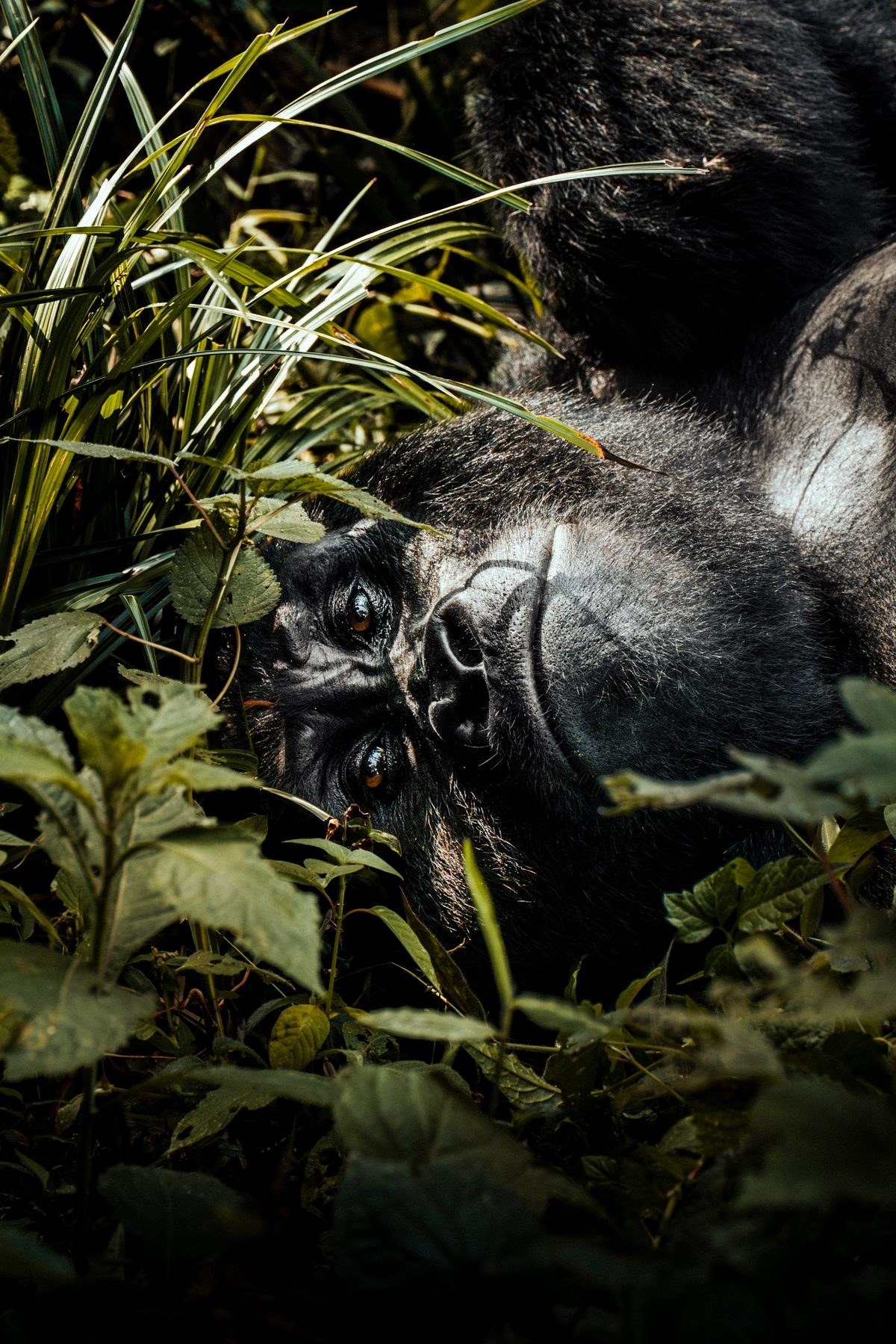
Silverback in the thicket, gazing into ancient eyes
Gorillas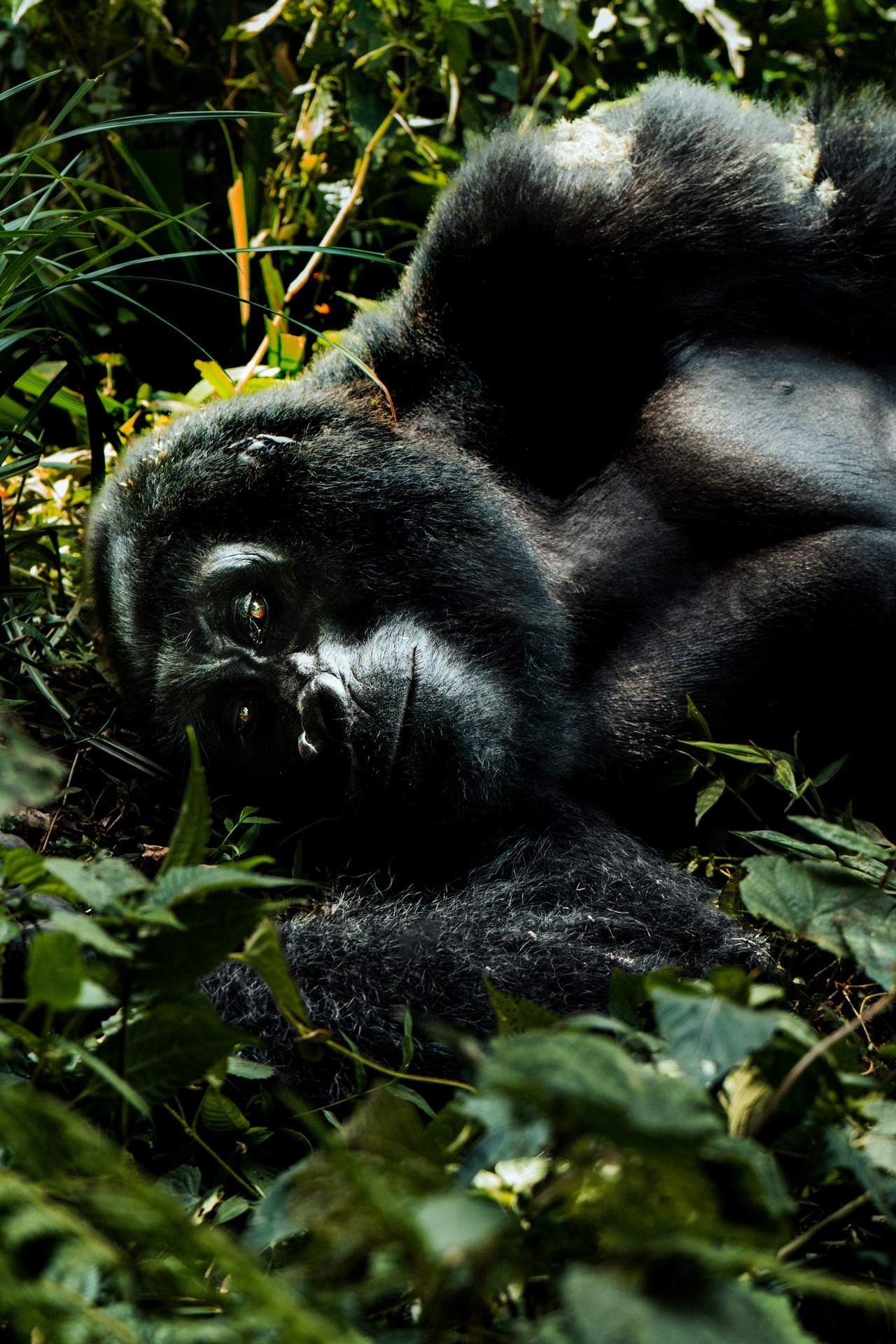
Silverback resting in Bwindi rainforest
Mountain Gorilla (Silverback)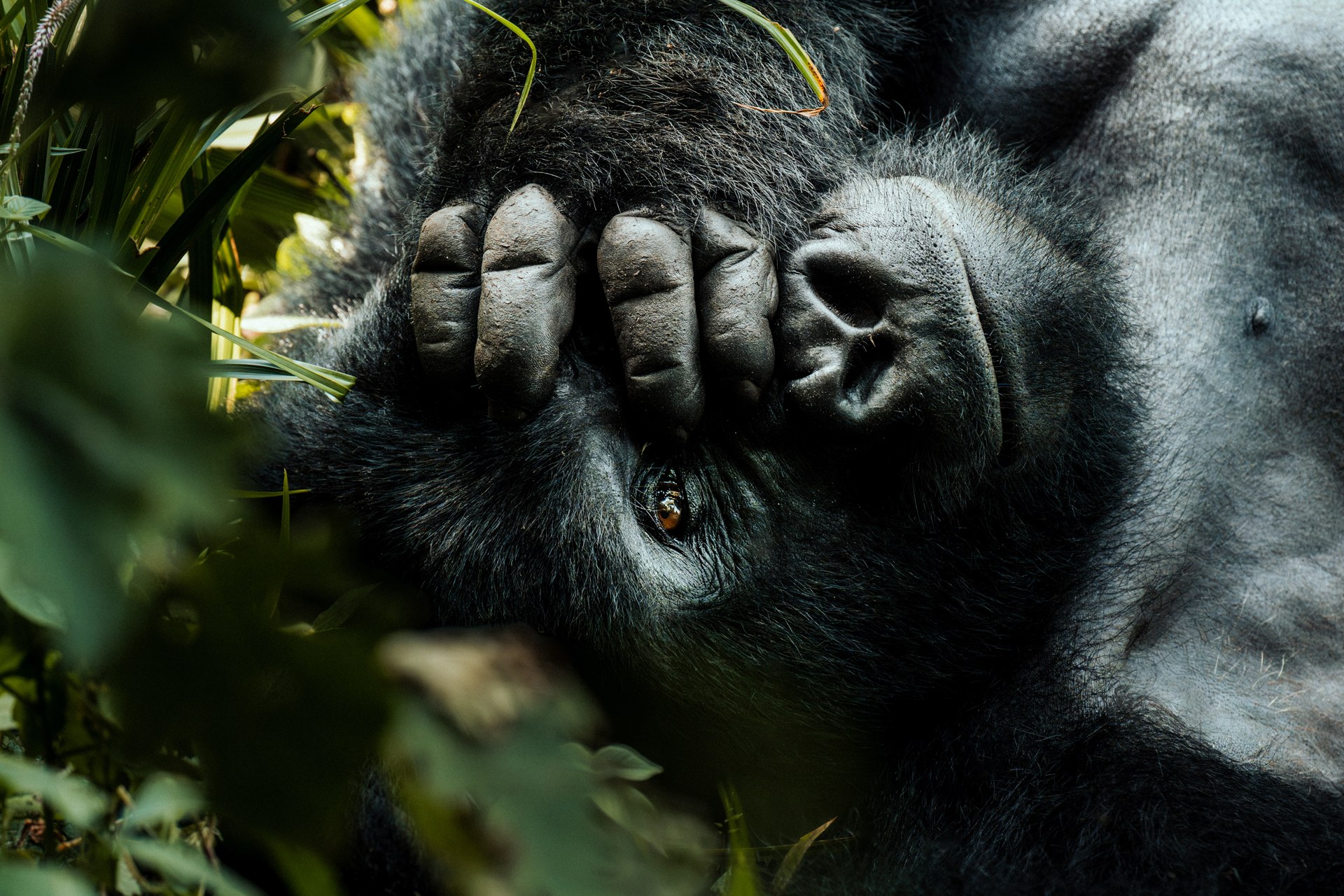
Gorilla covering its face with its hand
Mountain Gorilla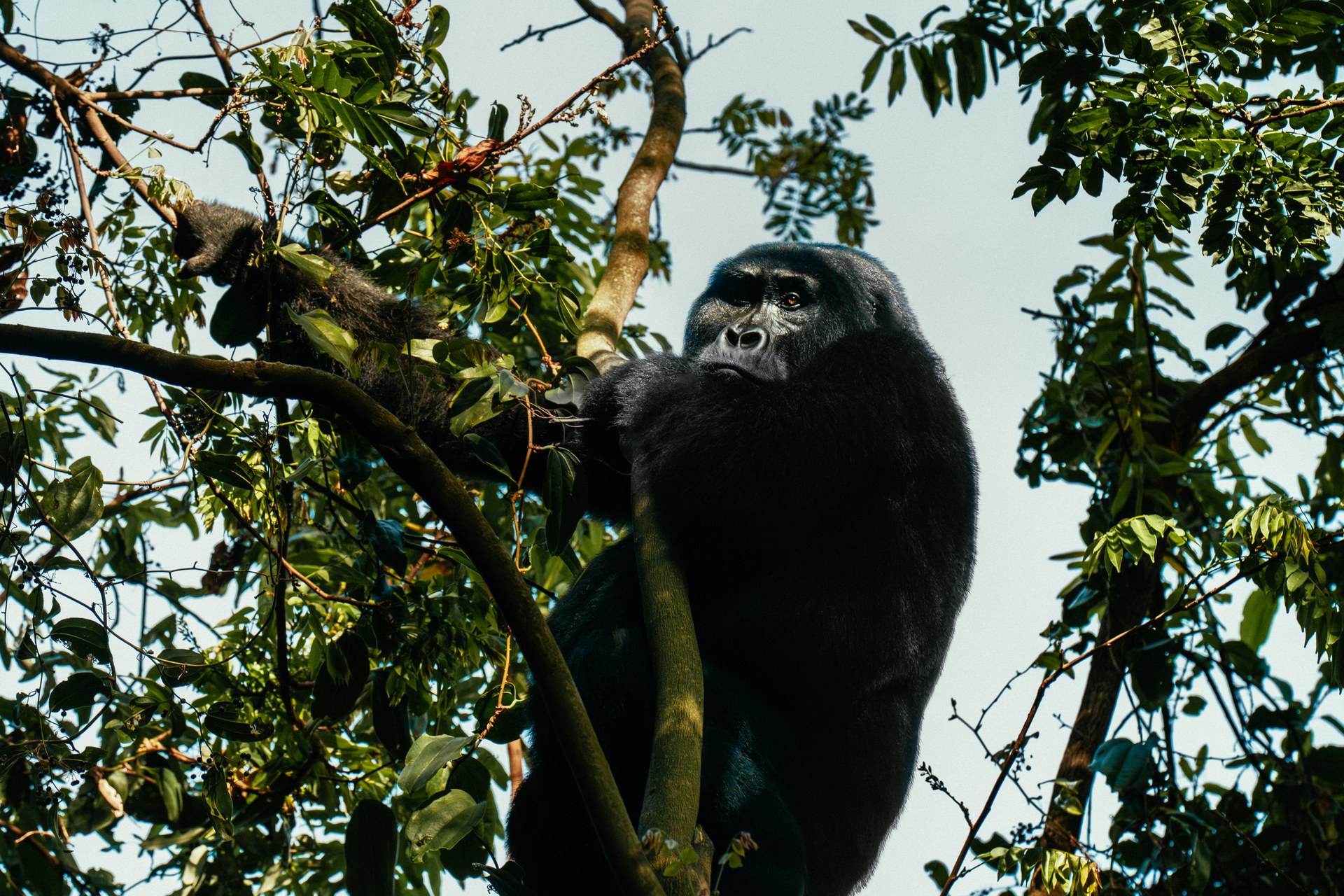
Silverback sitting majestically in Bwindi rainforest
Mountain Gorilla (Silverback)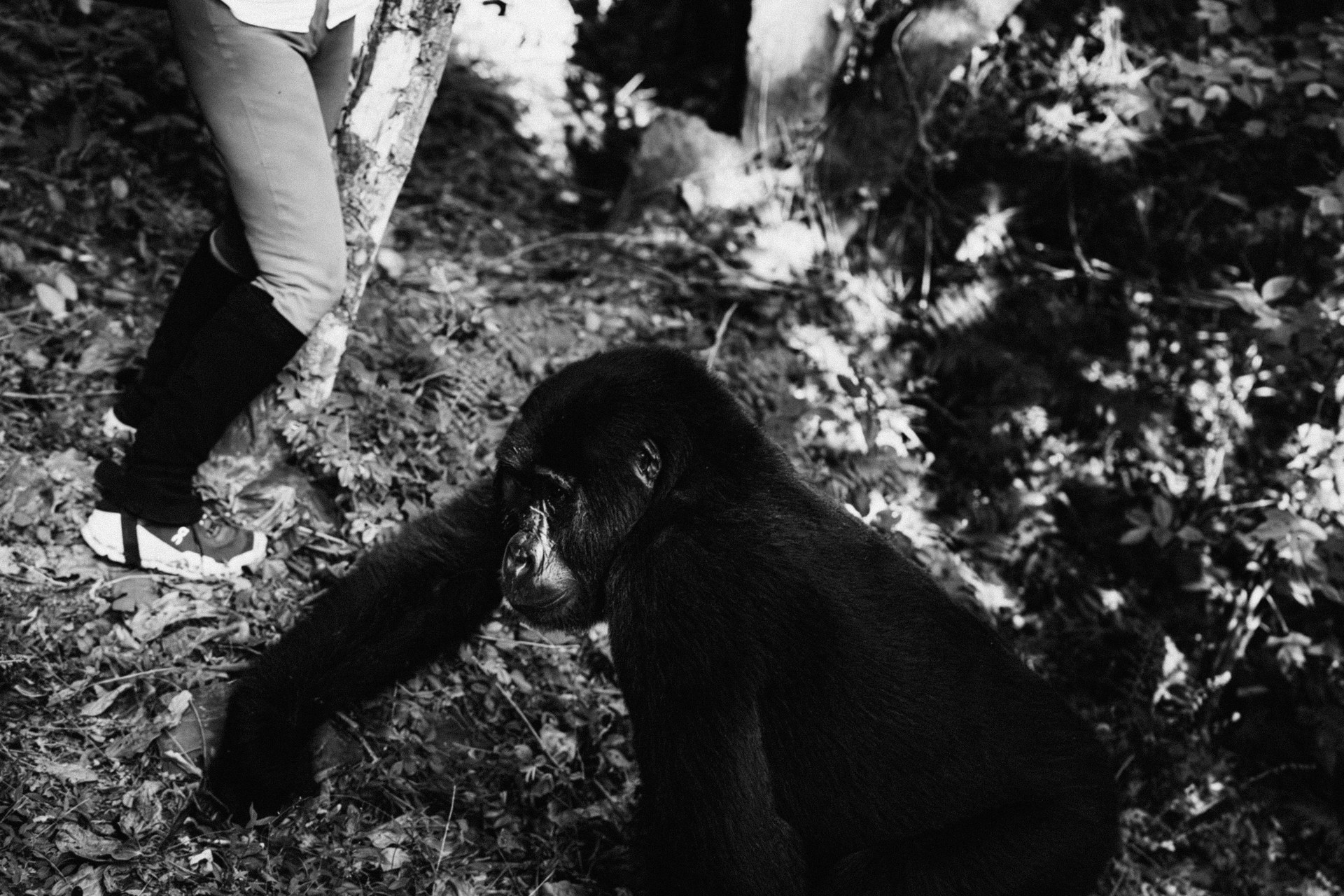
Young mountain gorilla on the forest floor in Bwindi
Mountain Gorilla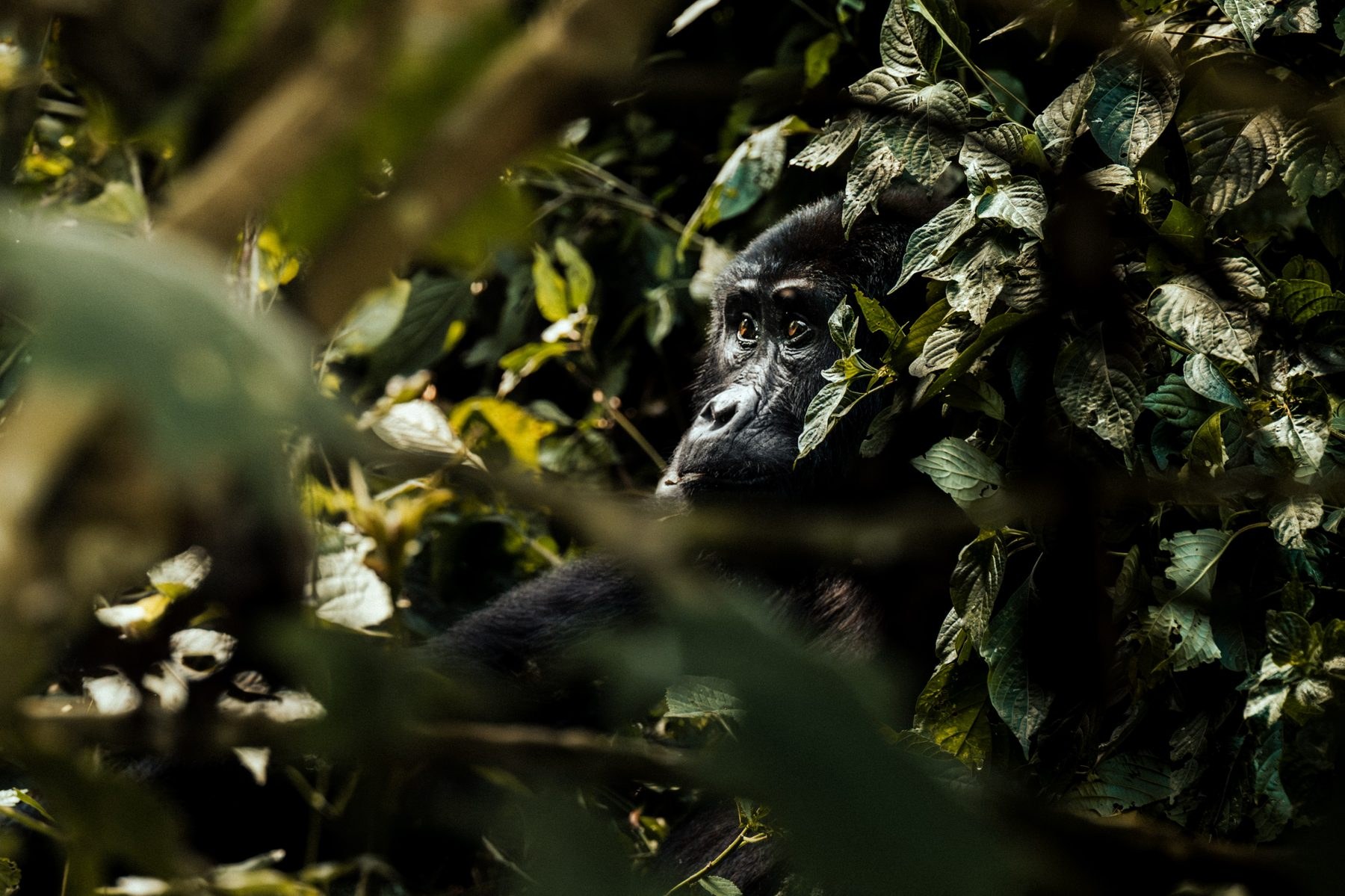
Gorilla in the thickets of Bwindi Impenetrable Forest
Mountain Gorilla