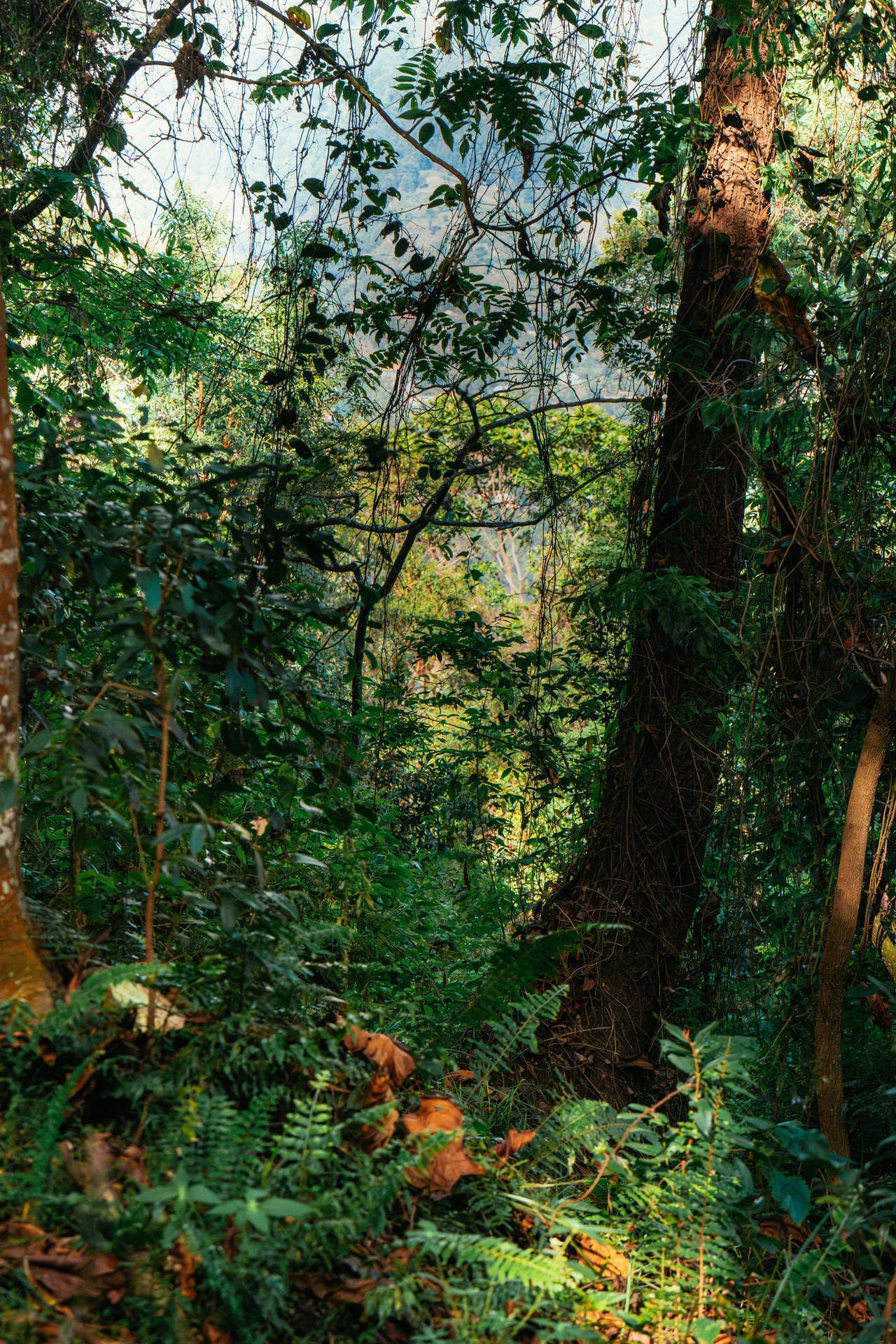
A Forest Carrying the Weight of a Warming World
The bwindi gorillas — mountain gorillas living in the Bwindi Impenetrable National Park of southwestern Uganda — inhabit one of the most biologically rich places on Earth. Their forest has persisted through ice ages, volcanic upheaval, and human pressure for more than 25,000 years. But the pace of change now underway is unlike anything this ancient ecosystem has previously endured. Climate change is not a distant threat to Bwindi: its fingerprints are visible in the forest today.
During visits to Bwindi in October 2024, January 2026, and June 2026, the forest felt different depending on the season. In June, the canopy was thick and dripping; in January, the ridges were drier than expected for what should have been a wetter period. Rangers and guides who know this landscape intimately describe seasons that no longer behave predictably, dry spells arriving when rains should, and downpours coming in concentrated bursts rather than the steady daily showers that once kept the forest floor perpetually damp. These observations align with what climate scientists have been documenting across the Albertine Rift for years.
For mountain gorillas, the forest is not merely habitat. It is food, shelter, thermoregulation, and social architecture. Bwindi's gorillas are generalist herbivores in the broad sense, but their diet is deeply tied to specific plants at specific elevations, available in specific seasons. When those rhythms break down, the consequences cascade through every gorilla family group.
Temperature Rise and the Limits of a Mountain Forest
Bwindi sits at the eastern edge of the Albertine Rift, rising from around 1,160 metres at its lowest point to 2,607 metres at the summit of Rwamunyonyi Hill. This altitudinal range is one of the forest's great strengths: it compresses multiple ecological zones into a compact area and gives species room to shift upslope as conditions change. But that flexibility has a hard ceiling. Once temperatures rise enough that the cool montane zone at the summit becomes unsuitable for high-altitude specialists, there is nowhere further to go.
Average temperatures across montane East Africa have been rising, and projections suggest continued warming through the coming decades regardless of global mitigation efforts in the near term. For plant communities, this translates into shifting flowering and fruiting phenology — the biological calendar of the forest drifts out of sync with itself. Gorillas that have learned to time their movements around the seasonal abundance of certain fruits, leaves, and bark find those cues becoming unreliable.
Higher temperatures also accelerate evapotranspiration, drawing moisture out of the soil and vegetation faster than rainfall can replenish it in drier periods. The dense, moisture-laden undergrowth that makes Bwindi genuinely impenetrable depends on sustained humidity. A drier forest floor is a more fire-prone, erosion-prone, and fragmented forest — all changes that reduce the quantity and diversity of food available to gorillas.
Rainfall Shifts and the Disruption of Seasonal Rhythms
Bwindi historically receives between 1,400 and 1,900 millimetres of rainfall annually, spread across two wet seasons with no truly dry months. This consistent moisture supply has been the engine of the forest's biological productivity. Disruptions to the timing, duration, or intensity of these rains have effects that ripple far beyond the immediate days of drought or flood.
Concentrated, intense rainfall events strip topsoil from the steep ridge slopes that characterise much of Bwindi's terrain. Exposed soil erodes into streams, reducing water quality for communities downstream and destabilising the root systems of large trees. Fallen trees open the canopy, allowing light to reach the forest floor and promoting the growth of pioneer species that gorillas find less useful as food.
Extended dry spells between seasons stress trees and shrubs that gorillas depend on for bark, pith, and leaves during leaner months. Some plant species respond to drought by reducing leaf production or shedding leaves prematurely — strategies that work for the plant but reduce the food base for large herbivores. Gorilla groups that would normally find adequate forage across a familiar home range may need to travel further, potentially into less familiar territory or into areas where gorilla families already established a presence.
[QUOTE: local guide on how the rains have changed in the past ten years]
Vegetation Change and Habitat Quality
The bwindi gorillas do not live in a static landscape. The forest responds continuously to rainfall, temperature, disturbance, and the activities of the animals within it. But climate-driven vegetation change is introducing shifts that operate at a speed and scale beyond what gorillas can easily adapt to.
As warming pushes the optimal range of montane plant species toward higher elevations, the composition of vegetation at mid-altitudes changes. Species gorillas have fed on for generations may thin out or disappear from areas they once dominated. New species may colonise those zones, but gorillas require years of learned behaviour to incorporate unfamiliar plants into their diet — a process that is slow, risky, and dependent on social transmission through family groups.
Critically Endangered endemic plants face particular peril. Rotheca violacea subsp. kigeziensis, a flowering shrub found only near Bwindi and Kibale Forest, already occupies an extremely narrow range. Any further contraction of suitable habitat — driven by climate, by competition from species moving upslope, or by forest edge disturbance — pushes such species toward extinction. The loss of any endemic plant removes a thread from the ecological web that supports the entire community, including gorillas.
The forest interior also matters. Records from Bwindi show that non-timber forest product extraction incidents — people collecting wood, plants, or other resources from inside park boundaries — have continued at rates of between 20 and 60 documented incidents per year through the early 2020s. While this pressure is distinct from climate change, it interacts with it: a stressed forest is less resilient to any additional disturbance, and communities whose agricultural yields suffer from erratic rains are under greater pressure to seek resources from the park. Climate change and human need reinforce each other at the forest edge.
Mountain Gorillas: Adaptive Capacity and Its Limits
Mountain gorillas are not passive victims of their environment. They are cognitively sophisticated animals with strong social structures and demonstrated capacity to adjust behaviour in response to change. The gorilla population in Uganda — including those in Bwindi and the Mgahinga Gorilla National Park — numbered around 459 individuals in the most recent comprehensive count, representing a recovery from critically low numbers in the late twentieth century. That recovery is a testament to what sustained, science-based conservation can achieve.
But adaptive capacity is not unlimited. Gorillas are large-bodied, slow-reproducing animals. A female typically gives birth once every four to five years. Mortality events — whether from disease, trauma, or nutritional stress — take years or decades to recover from at the population level. Climate-driven disruptions that reduce food availability, increase thermal stress, or force groups into conflict over shrinking resources could reverse population gains that took generations to achieve.
Connectivity between Bwindi and neighbouring forests matters enormously in this context. The corridors linking Bwindi to Kibale and other fragments of the Albertine Rift forest system provide pathways for genetic exchange and allow animals to respond to large-scale environmental shifts by moving. These corridors have already been disrupted in places by infrastructure and agricultural expansion, including development associated with tourism. Maintaining and restoring them is not a peripheral concern — it is central to the long-term survival of mountain gorillas in a changing climate.
Bwindi and Echuya also serve as a final refuge for range-restricted species beyond gorillas, including an endangered wild cat recognised on Uganda's national Red List. The park does not protect gorillas in isolation: it protects an entire community of organisms, each connected to the others. Losing any strand weakens the whole.
What the Forest Needs Now
Protecting the bwindi gorillas from climate change requires defending the forest systems that sustain them, not just the gorillas themselves. That means maintaining strict protection of forest cover to preserve the microclimate buffering that keeps temperatures inside the canopy lower than ambient air. It means managing the park boundary carefully to prevent the edge effects — invasion by agricultural weeds, desiccation, fragmentation — that make forests more vulnerable to warming. It means supporting communities around the park so that food insecurity and livelihood pressure do not drive increased extraction from an already-stressed forest.
Restoration of degraded areas along forest margins adds area and resilience. Long-term ecological monitoring, including tracking phenological shifts and vegetation change, gives managers the data they need to respond before problems become crises. And international support — financial, scientific, and political — for Uganda's protected area system is essential. Bwindi holds something that cannot be rebuilt elsewhere: a 25,000-year-old forest and the only mountain gorillas on Earth. The cost of losing either is incalculable.
Standing at the forest edge in the early morning, watching mist move through the valley below a ridge trail, it is easy to believe that this place is permanent. It is not. It persists because people have chosen to protect it, and it will continue to persist only if that choice is renewed at every level — in ranger stations, in government offices, in the decisions visitors make when they come to see the gorillas, and in the commitments that countries make about the emissions that are warming the planet. The bwindi gorillas do not have a voice in any of those conversations. They have only the forest, and the forest depends on us.