The Tension: Conservation vs. Community Access
When Bwindi Impenetrable Forest was gazetted as a national park in 1991, it drew a legal boundary around 321 square kilometres of one of Africa's most biodiverse forests. For the conservation of the mountain gorilla and hundreds of other species, that boundary was essential. For the more than 500,000 people living in the parishes surrounding the park, it meant losing access to a forest they had relied on for generations — for medicinal plants, building materials, honey, firewood, and spiritual practice.
The resulting tension was not merely social or political. Communities that feel excluded from a protected area have less incentive to support its existence and more reason to encroach on it. Uganda Wildlife Authority recognised early that long-term conservation of Bwindi — and its 459 mountain gorillas — required finding a way to address genuine community needs without opening the forest to unregulated extraction. The Resource Use Program was the response.
The program does not resolve the tension so much as manage it deliberately. It acknowledges that communities have legitimate needs, that some of those needs can be met within the park under strict conditions, and that UWA has an obligation to help communities find alternatives to forest dependence over the long term. This three-part approach — regulated access, monitored compliance, and alternative sourcing — frames everything that follows.
What the Resource Use Zone Allows
Bwindi's zoning system divides the park into areas with different management objectives. The Resource Use Zone is the designated area where regulated community extraction is permitted. It is not the entire park — core gorilla habitat and sensitive ecological areas remain fully protected — but it provides meaningful access to forest resources within a managed framework.
Within the Resource Use Zone and under the terms of a valid MoU, communities may collect specific categories of resource. Medicinal plants for traditional healthcare are among the most important: many plant species found in Bwindi have no cultivated equivalent, and traditional healers serving surrounding communities depend on access to them. Certain plant materials used in craft production — basketry, weaving, and other traditional crafts — are also permitted, as are some building materials.
What is clearly not permitted is equally important. Commercial timber harvesting is prohibited. Large-scale firewood collection — the kind that would require repeated trips or commercial resale — is not allowed. Hunting in any form is forbidden, as is any form of clearing or ground disturbance. The MoU for each community specifies the exact list of permitted resources, the quantities that may be taken in a given period, the community members authorised to enter, and the times during which access is granted.
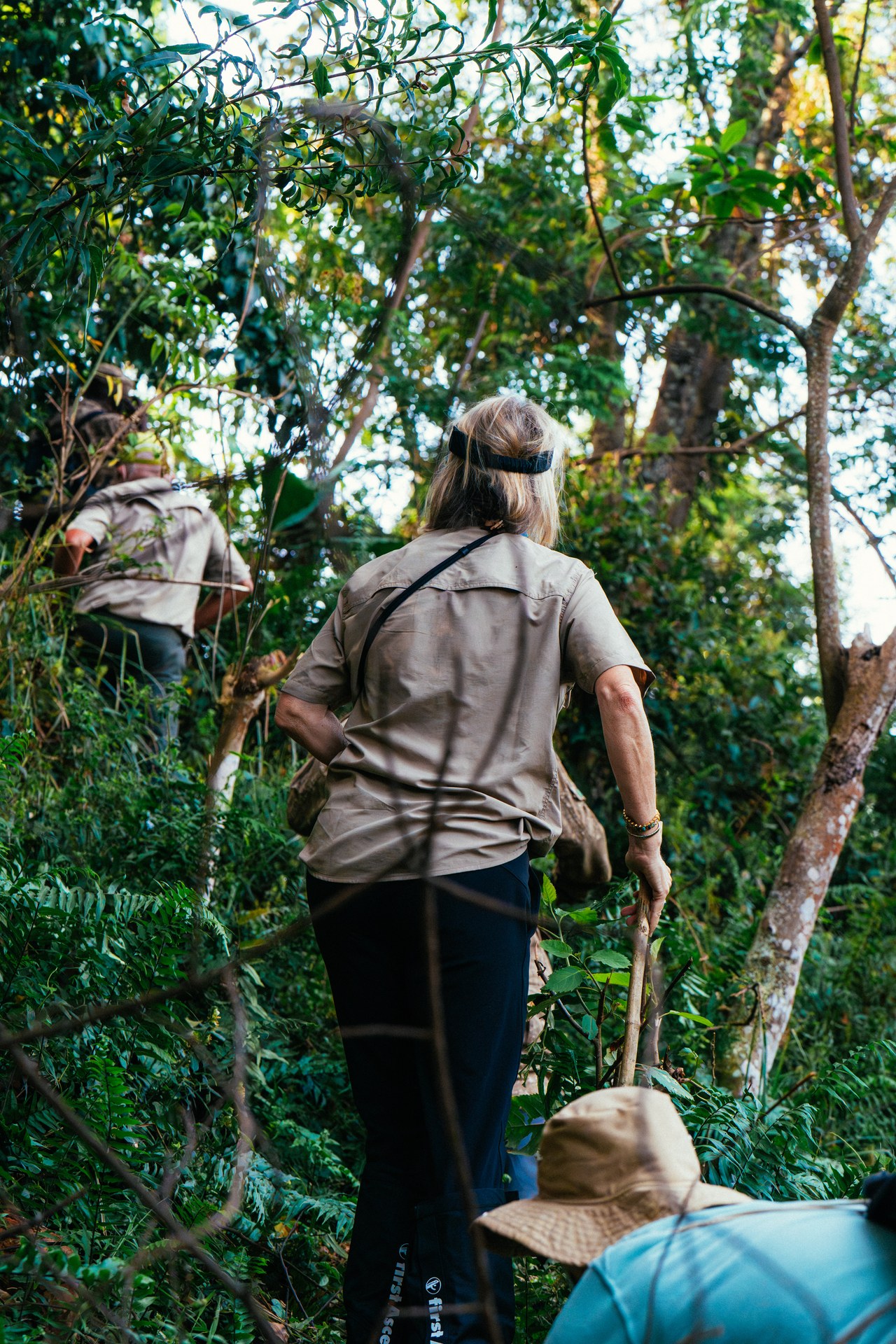
Through Bwindi forest on the trail of gorillas
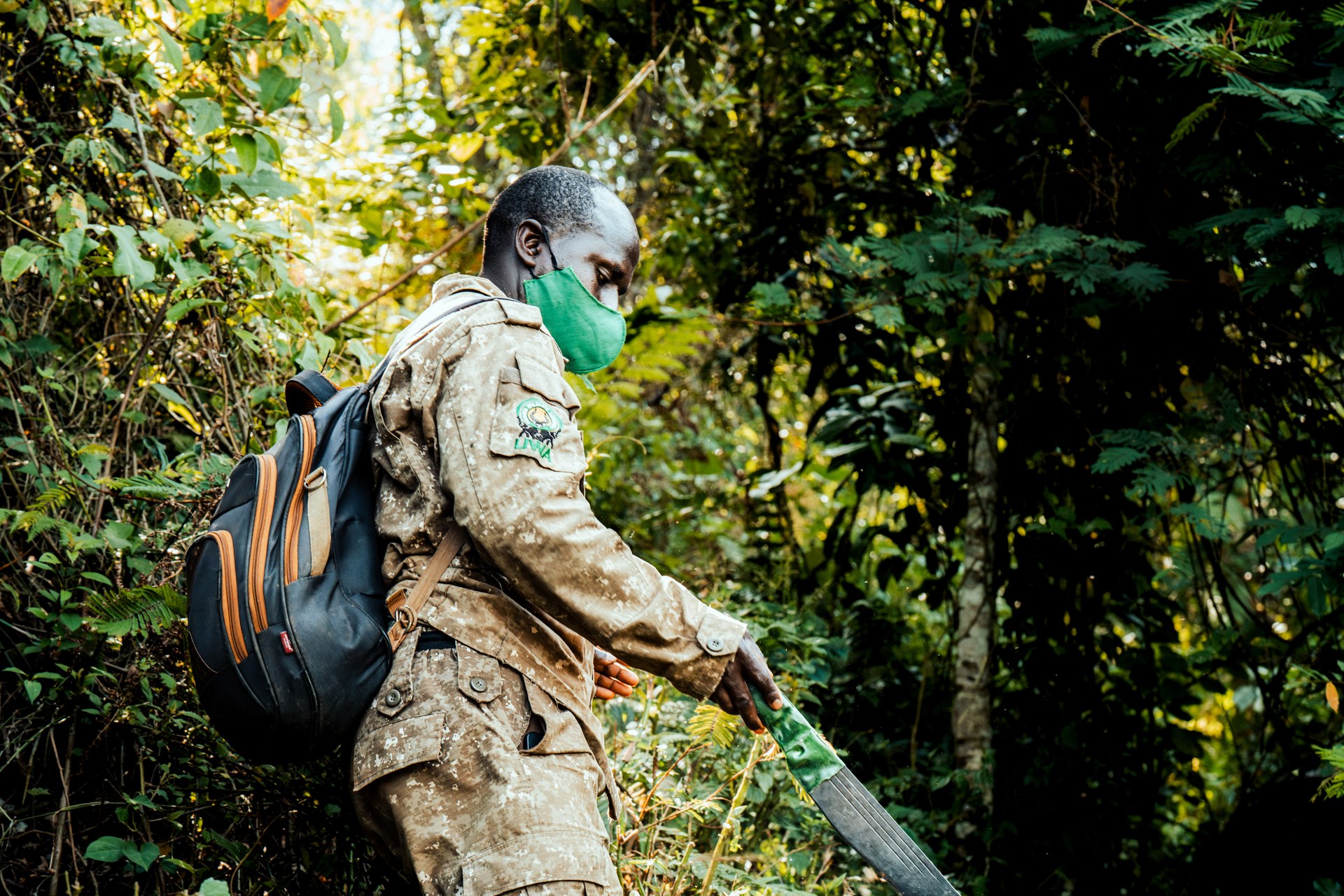
Ranger in Bwindi forest on the way to the gorillas
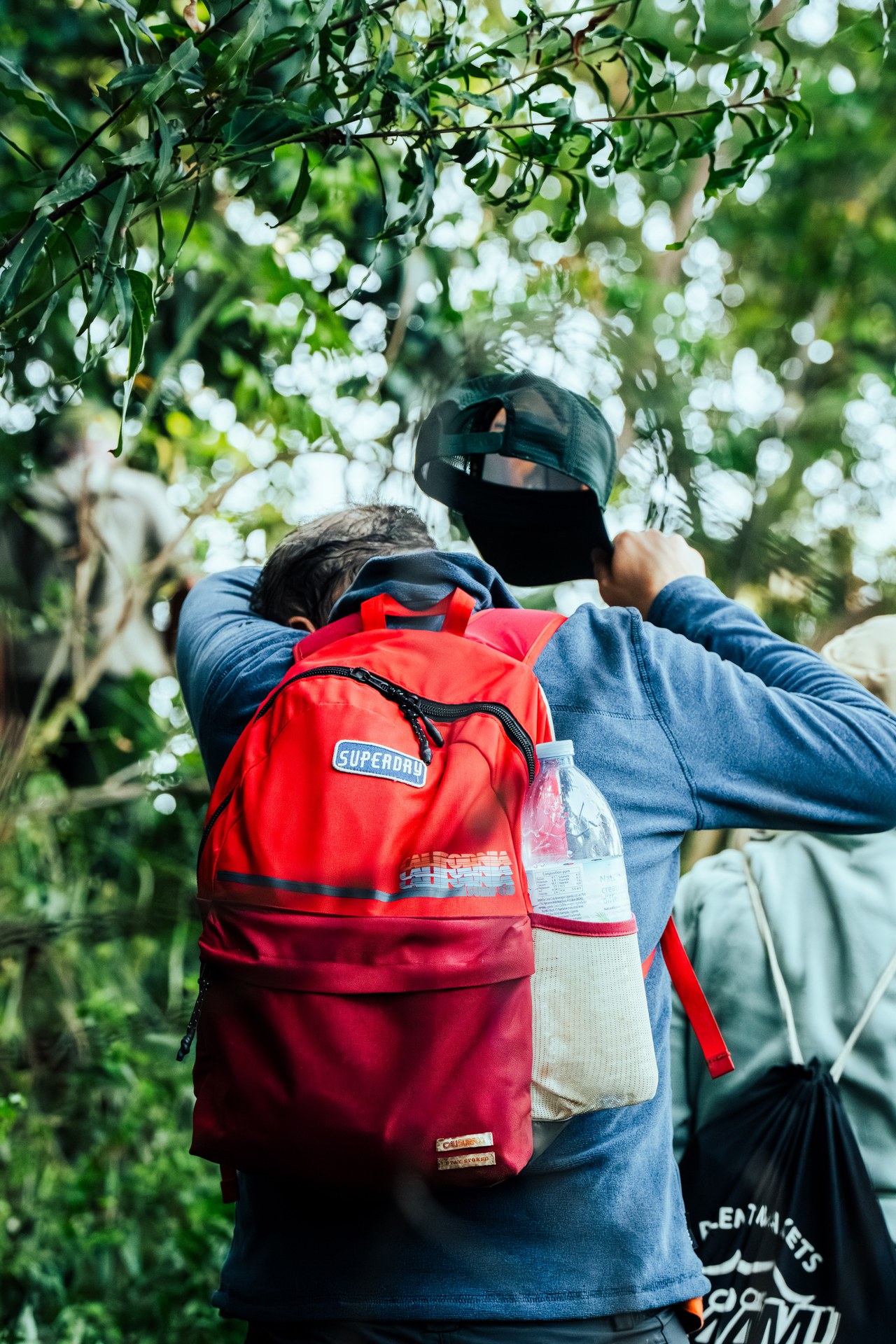
Preparing for the adventure: gorilla trekking in Bwindi
The MoU System in Practice
Access to the Resource Use Zone is not an informal arrangement. Communities must apply for and maintain a current Memorandum of Understanding with Uganda Wildlife Authority. The MoU is a formal legal document that creates accountability on both sides: UWA commits to permitting access under the stated conditions, and the community commits to collecting only what is specified, by the people named, in the quantities and times agreed.
In practice, the MoU system places a significant administrative and organisational burden on communities. A community group must be sufficiently organised to apply for an MoU, to maintain records of who enters and what is collected, and to ensure that individual members comply with the terms. Community-based organisations and NGOs working in the Bwindi landscape play an important role in supporting communities through this process.
UWA rangers are responsible for monitoring compliance in the field. When MoU terms are violated — whether through collection of unauthorised species, excess quantities, or entry by non-authorised individuals — the consequences can include suspension or revocation of the MoU. This enforcement function is essential to the credibility of the program: if violations go unaddressed, the regulated access framework loses its meaning and the Resource Use Zone becomes de facto open access.
The Integrated Resource Program: UWA's Evaluation Commitment
The General Management Plan 2014–2023 includes a specific planned action regarding the resource use program: to evaluate the integrated resources program and prepare a management action paper based on the findings. This commitment reflects a mature understanding that a program running over many years requires periodic assessment to determine whether it is achieving its objectives.
The key questions for such an evaluation are substantive. Are the resources being harvested under MoUs being taken at sustainable levels, or is offtake exceeding the forest's capacity to regenerate them? Is community dependence on the forest decreasing over time as alternative sources become available, or are MoU holders becoming more reliant on park access? Are the terms of existing MoUs realistic given actual community needs and forest conditions, or do they require revision?
The GMP also committed UWA to conducting a feasibility study for newly demanded resources — that is, cases where communities request access to forest products not currently covered by existing MoUs. Rather than simply refusing such requests or granting them without analysis, the GMP framework calls for a structured assessment of ecological feasibility before any expansion of the permitted resource list.
Ex-Situ Solutions: Growing Outside the Park
One of the most forward-looking elements of UWA's resource use strategy is the commitment to ex-situ cultivation — growing forest plant species outside the park boundary on community-owned or community-managed land. The GMP planned action calls on UWA to identify and promote the multiplication of forest resources ex-situ as an alternative to in-park extraction.
The logic is straightforward: if medicinal plants, craft materials, and other forest products can be cultivated outside Bwindi, communities can access them without entering the park at all. This removes the monitoring burden on UWA rangers, eliminates the risk of accidental or deliberate over-harvesting, and over time can reduce community dependence on the Resource Use Zone entirely. Some traditional healers already maintain plant nurseries; the ex-situ approach would scale and systematise this practice.
Implementation requires identifying which species are most in demand, which can be successfully cultivated outside their natural forest habitat, and which communities are best positioned to establish cultivation plots. It also requires support — technical advice on propagation, access to planting material, and sometimes financial assistance during the establishment phase. This is an area where partnerships with NGOs, research institutions, and the private sector are particularly valuable.
Building Community Capacity
The General Management Plan identified a specific action to build the capacity of existing conservation NGOs and community-based organisations to monitor the implementation of MoUs. This reflects a recognition that UWA rangers alone cannot provide comprehensive oversight across the full extent of the Resource Use Zone, and that community-level accountability mechanisms are both more efficient and more durable.
When CBOs are equipped and empowered to monitor MoU compliance within their own communities, several things change. Peer accountability replaces or supplements external enforcement. Community members who follow the rules have a direct interest in ensuring that others do too, because violations by some members can result in the whole community losing access. The CBO becomes an intermediary — managing the relationship between individual households and UWA, aggregating compliance records, and raising issues that need to be addressed at a higher level.
The long-term vision underlying the resource use program is one in which communities surrounding Bwindi protect the park not because they are excluded from it, but because they benefit from it in tangible ways — through regulated access, through revenue sharing from tourism, through ex-situ cultivation programs, and through the ecosystem services the forest provides. The resource use program is one part of that broader strategy, and its success depends on communities being genuine partners in its implementation rather than passive subjects of external management.