Safety Information
Trail safety, wildlife encounters, and practical security guidance for your visit.
On the Trail
Every gorilla trekking group is accompanied by experienced UWA rangers and trackers. The rangers carry firearms as a precaution against rare wildlife encounters and are trained in wilderness first aid. Your safety begins with following their instructions at all times.
- Never leave your group or wander away from the guides.
- Watch your footing carefully. The terrain is steep, uneven, and often slippery.
- Use trekking poles for stability, especially on descents.
- Hire a porter. Beyond carrying your pack, porters help you navigate difficult sections and provide physical support.
- Stay hydrated and take breaks when needed. Inform your guide if you feel unwell.
- Do not touch or pick up any plants, insects, or animals.
Wildlife Encounters
Gorillas
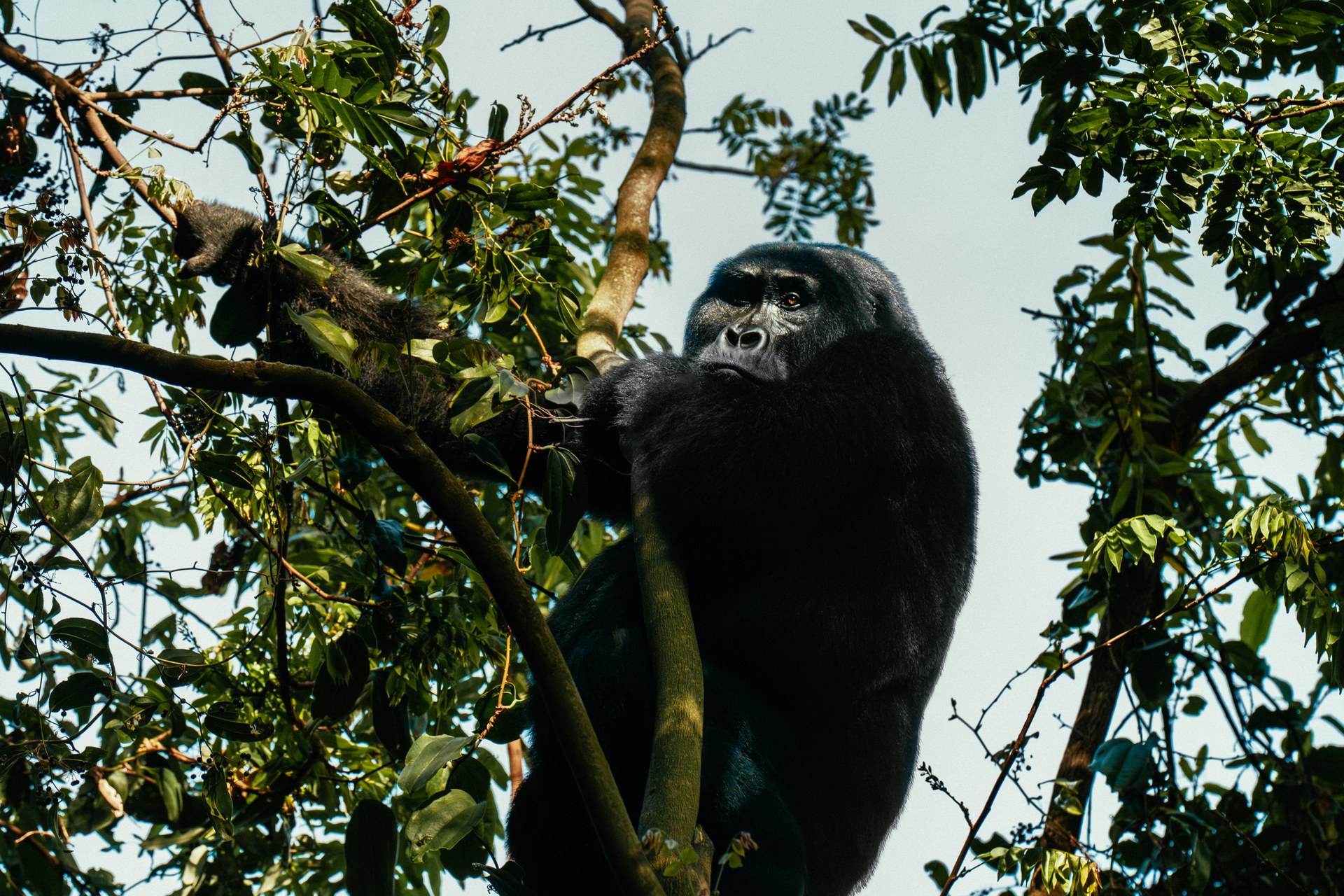
Habituated gorillas are accustomed to human visitors but remain wild animals. Respect the following guidelines:
- Maintain the minimum 7-metre distance at all times.
- Speak in low, calm voices. Avoid shouting or sudden loud noises.
- Do not make direct prolonged eye contact with silverbacks.
- If a gorilla approaches within 7 metres, slowly back away.
- Never attempt to touch, feed, or provoke a gorilla.
- If a silverback displays or charges, crouch down slowly, look at the ground, and remain still. Do not run. The guides will be beside you.
Other Wildlife
The forest is home to elephants, buffaloes, and several snake species. Direct encounters are uncommon, but awareness is important:
- Forest elephants are shy but can be dangerous if surprised. Rangers will guide you around them.
- Watch where you step and place your hands. Snakes are rarely seen but may rest in undergrowth or on low branches.
- Bees and wasps can be present along trails. Alert your guide if you have a known allergy.
Road Safety
Road travel in southwestern Uganda requires caution:
- Avoid driving after dark. Roads are unlit and shared with pedestrians, cyclists, and livestock.
- Use a 4WD vehicle, particularly for unpaved access roads to the park sectors.
- Ensure your vehicle is in good condition with a spare tyre and basic tools.
- Fuel up at the last major town (Kabale, Kisoro, or Kihihi) before entering the park area.
- Most visitors opt for an experienced local driver-guide who knows the roads and conditions.
Personal Security
- Keep valuables secure and out of sight, particularly in towns.
- Use the safe at your lodge for passports, extra cash, and electronics when not needed.
- Carry copies of important documents (passport, permit, insurance) separately from the originals.
- Register with your country's embassy in Kampala if recommended by your government.
- Monitor official travel advisories for the most current security situation.
Emergency Contacts
Sector-specific UWA contact numbers are provided at each park gate and briefing point. Save them in your phone upon arrival.
Travel Insurance
Comprehensive travel insurance is strongly recommended for all visitors. Ensure your policy covers medical treatment, emergency evacuation (including air evacuation), trip cancellation, and loss of personal belongings. Medical facilities near Bwindi are limited, and serious cases may require evacuation to Kampala or Nairobi. Keep your insurance provider's emergency contact number readily accessible.