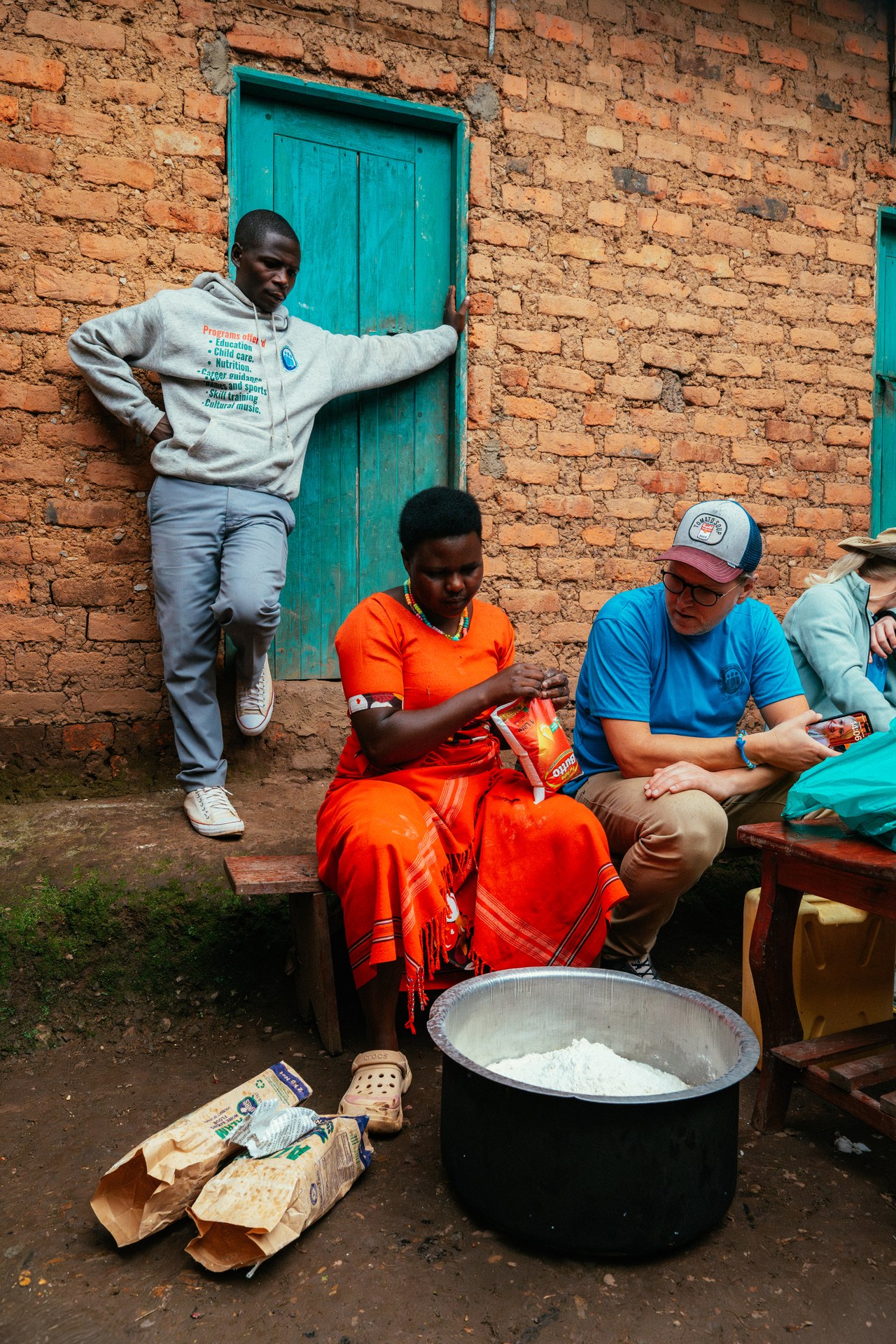
Life at the Forest's Edge
Daily life around Bwindi is shaped by the land, the seasons, and the constant proximity of the forest. Most families depend on what they can grow, and the rhythm of the year follows the planting and harvest cycles. It is a life of physical labour, close family ties, and a deep practical knowledge of the environment.
Agriculture
The hillsides around Bwindi are intensively cultivated. Smallholder farms, often no larger than a hectare or two, produce the food that sustains families. Bananas(known locally as matooke when prepared as food) are the most important crop — both as a dietary staple and a marker of the landscape. Dense banana groves surround nearly every homestead.
Beans provide protein and are intercropped with other plants. Cassava and sweet potatoes serve as fallback staples when other crops fail. Irish potatoes thrive at higher altitudes around Ruhija. Tea is grown as a cash crop in some areas, providing one of the few sources of monetary income for families who otherwise farm for subsistence.
Farming here is physically demanding. The terrain is steep, mechanisation is virtually absent, and soil fertility must be maintained through composting, rotation, and terracing. Women do a disproportionate share of agricultural labour, often while also managing household duties and childcare.
Markets and Trade
Weekly markets are the economic heartbeat of the region. They rotate between villages on different days, creating a circuit that allows farmers to sell surplus produce, buy necessities, and maintain social connections beyond their immediate neighbourhood.
A typical market day is a vivid, busy affair. Farmers arrive with bundles of bananas balanced on their heads or loaded onto bicycles. Traders display second-hand clothing, soap, salt, sugar, and cooking oil. Cooked food vendors offer roasted goat, fried cassava, and chapati. Children dart between stalls. News and gossip travel as efficiently as goods.
Food and Cooking
Cooking is done over wood fires in separate kitchen structures. The preparation of matooke — peeling, wrapping in banana leaves, and steaming for hours — is a daily task that requires considerable time and fuel. Beans are boiled, sometimes with groundnut paste. Greens (dodo, nakati) are steamed or fried with onion and tomato.
Firewood collection is a significant daily chore and a source of tension with conservation efforts, as communities are restricted from collecting wood inside the park boundary. Tree planting initiatives and improved cookstoves aim to reduce pressure on both the forest and the time women spend gathering fuel.
Education
Primary schools serve most communities, though resources are often limited. A single classroom may hold sixty or more pupils, with minimal teaching materials. Uganda's universal primary education policy means fees are not charged at government schools, but families must still cover uniforms, notebooks, and other supplies — costs that can be prohibitive.
Secondary education requires fees that put it beyond the reach of many families. Community projects funded by tourism revenue and organisations like HopeKitchen help sponsor children's schooling, particularly for the most vulnerable families.
Health and Infrastructure
Health centres vary in capacity, from small dispensaries staffed by clinical officers to the more established Buhoma Community Hospital. Malaria remains common at lower altitudes. Maternal health services are improving but still insufficient in remote areas. For complex medical needs, patients face long and expensive journeys to Kabale town or the capital, Kampala.
Water comes from protected springs, boreholes, and in some places piped systems, though access is uneven. Electricity from the national grid reaches some trading centres but not most rural homesteads. Solar panels are increasingly common, powering lights and phone charging.
Living with Wildlife
For communities at the park boundary, wildlife is not an abstract concept but a daily reality. Baboons and monkeys raid crops. Bush pigs destroy cassava fields under cover of darkness. Elephants, though less frequent, can devastate an entire garden in one visit.
These losses are not trivial for families living on the margin of food security. Problem-animal management involves community scouts, trenches along the park boundary, chilli-pepper fencing, and buffer-zone crops that are less attractive to wildlife. The system helps, but crop raiding remains one of the most contentious aspects of living next to a national park.
Everyday Moments
Agriculture, cooking, markets, and the routines of daily life around Bwindi.
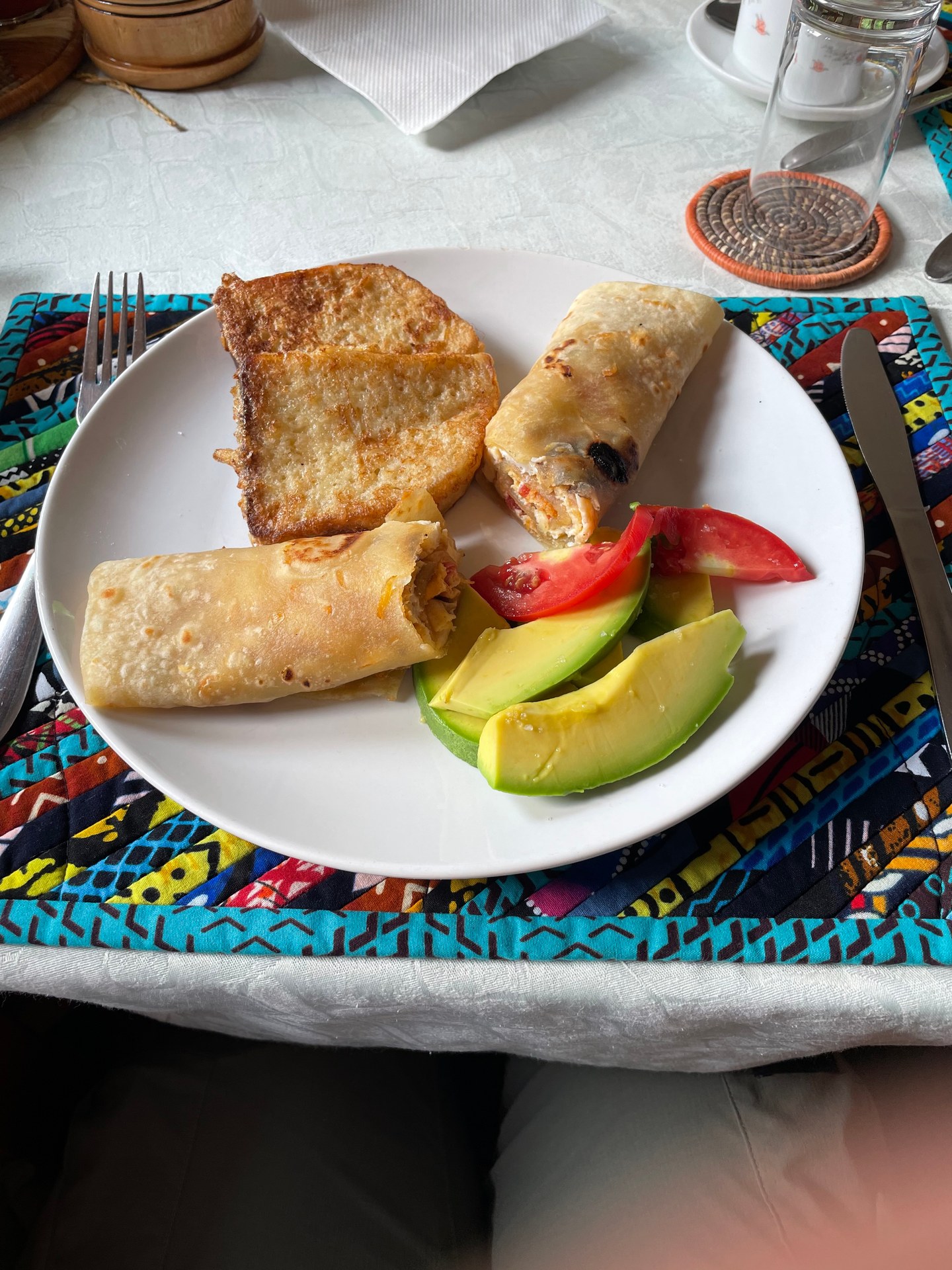
Breakfast at Gorilla Bluff Lodge, a quiet morning
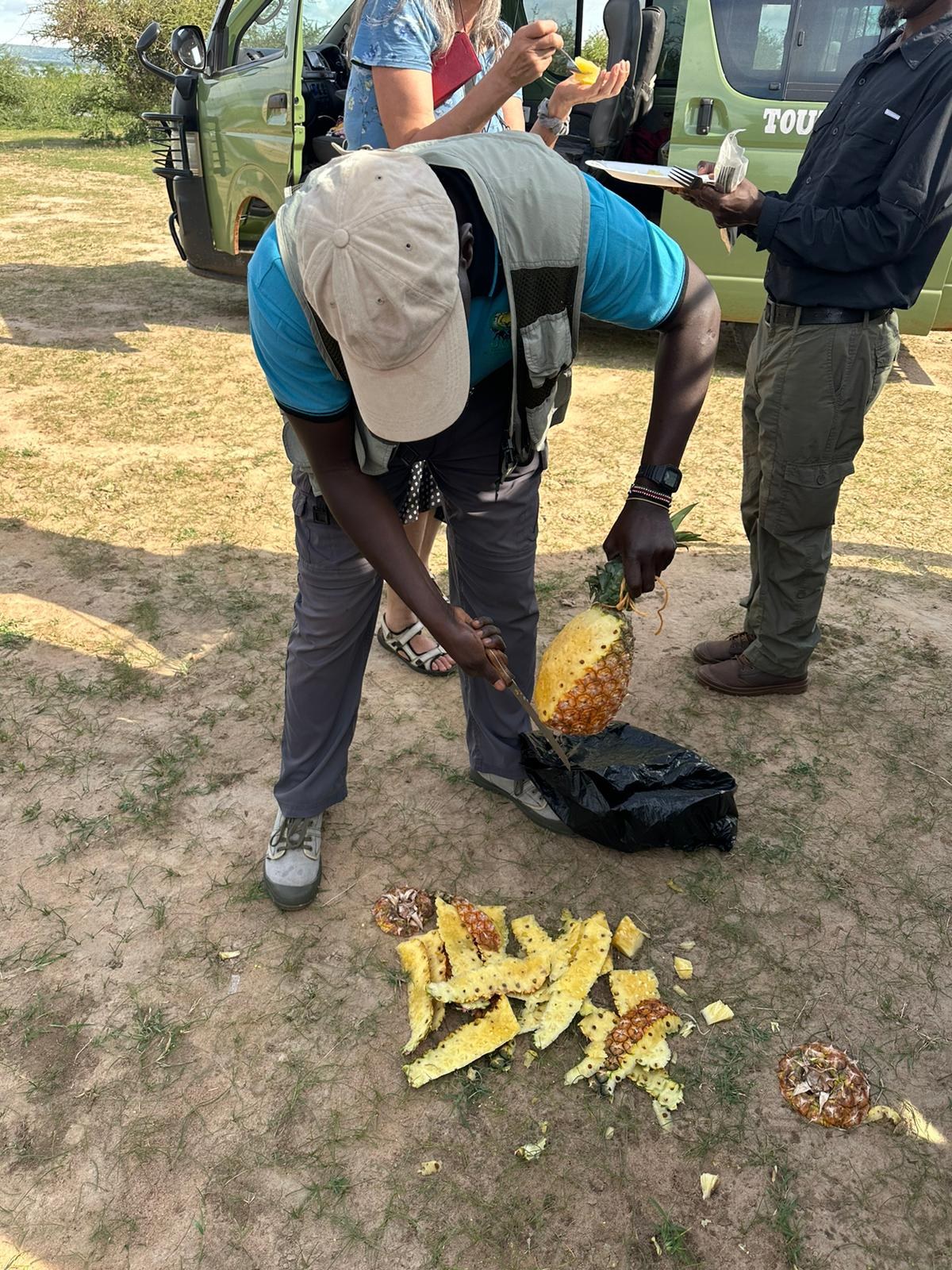
Fresh pineapples by the roadside in Murchison Falls Park
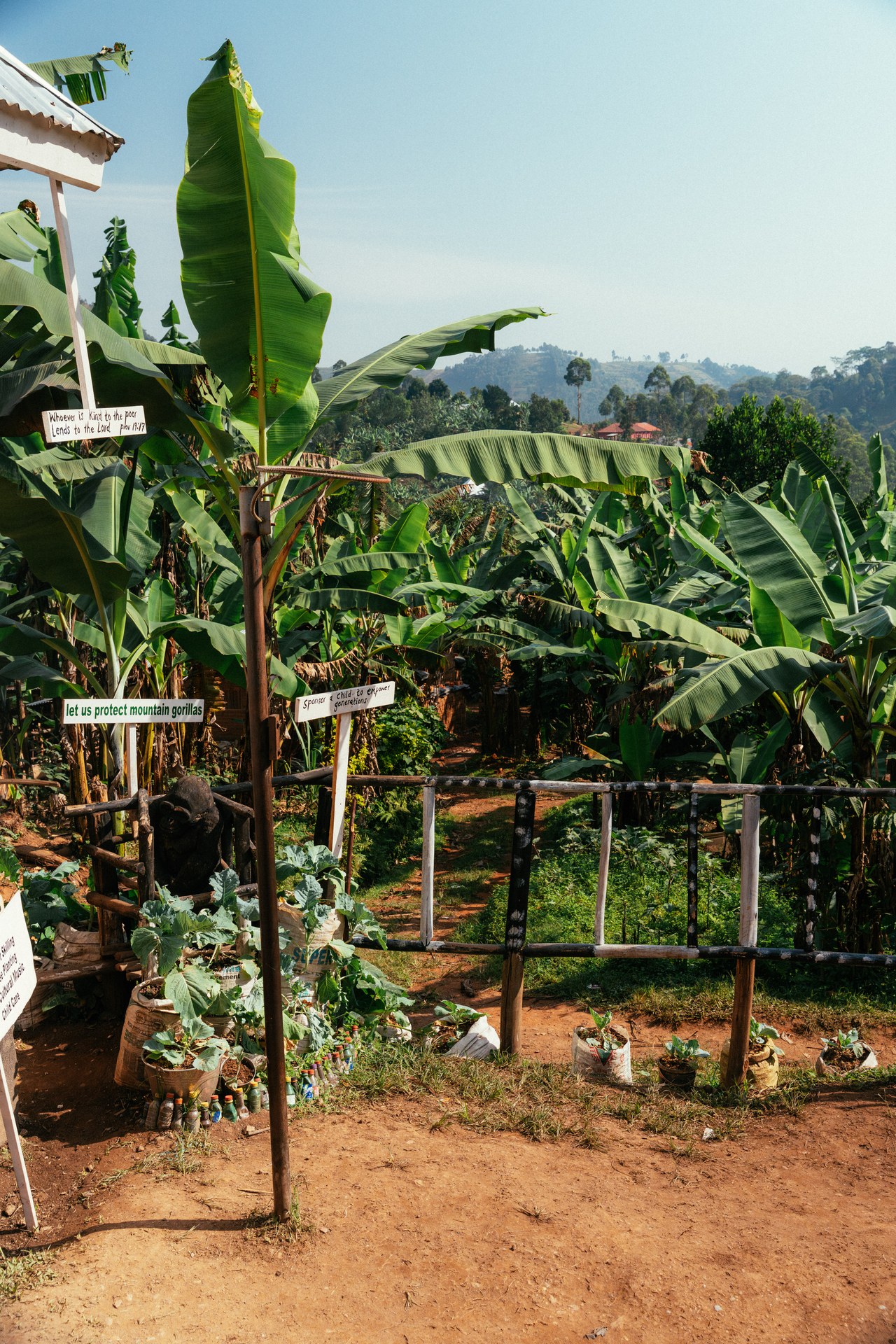
Garden of hope at the orphanage in Buhoma
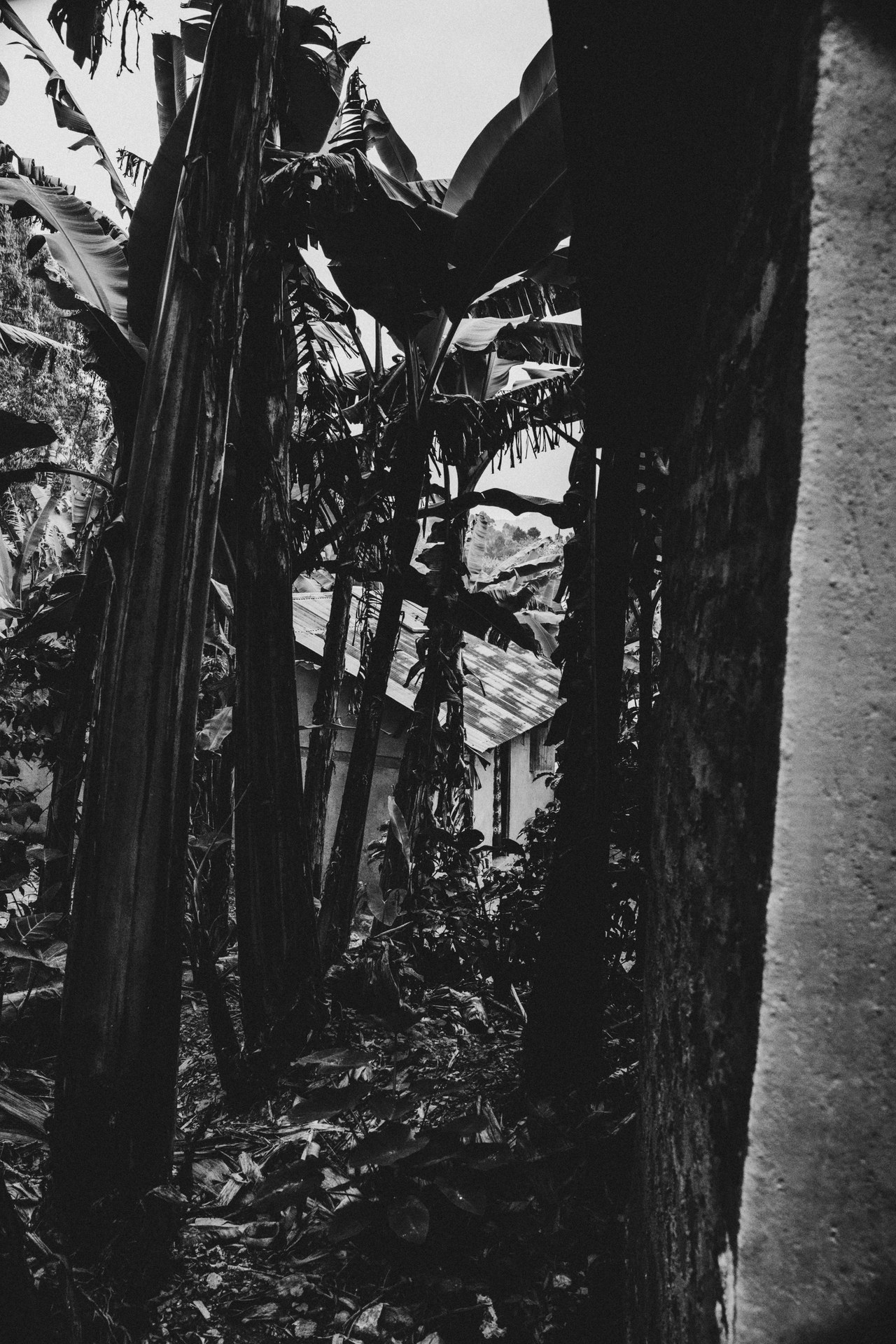
Among banana plants: life around the orphanage
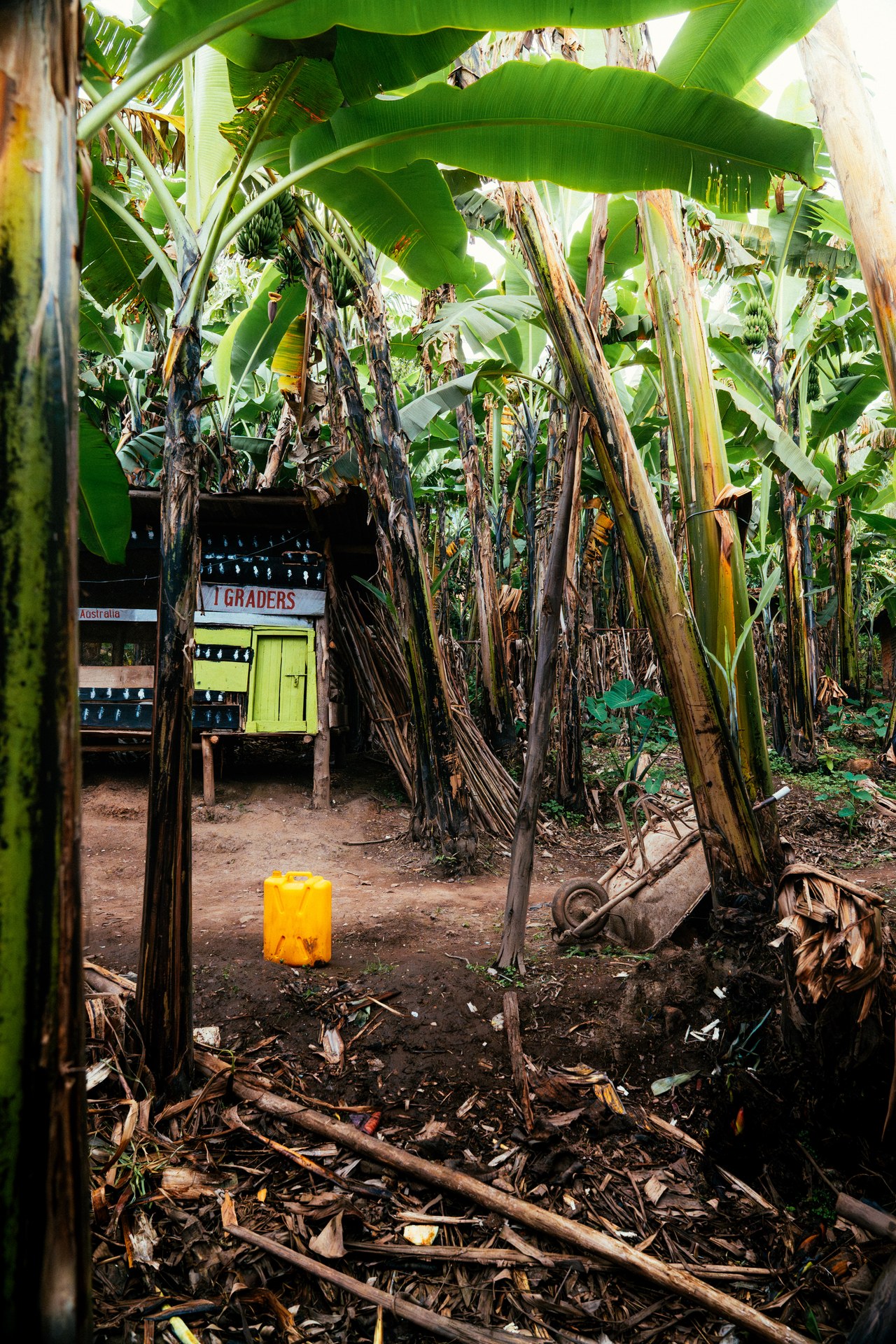
Banana plantation in Buhoma, life among the plants
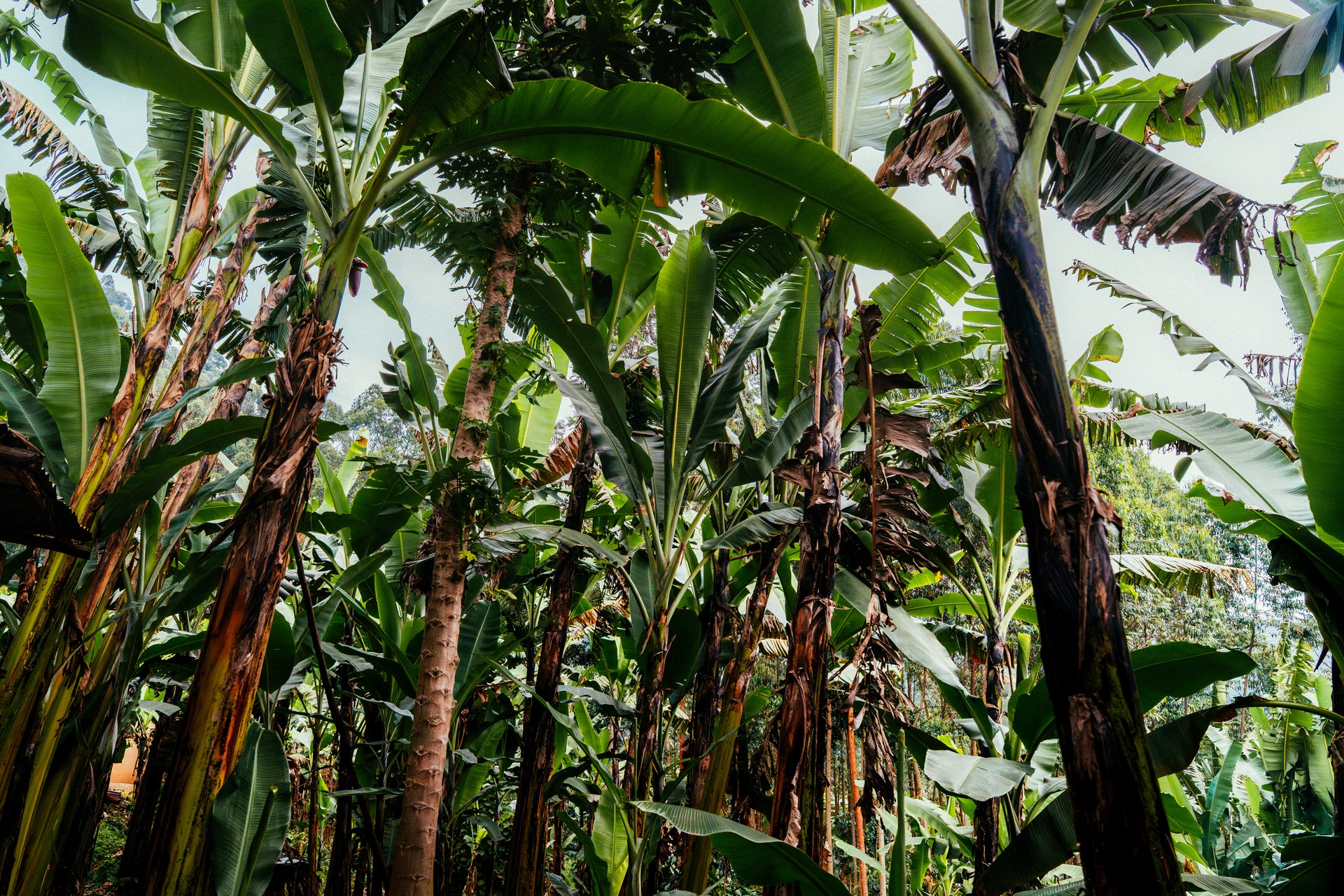
Banana plantation in Buhoma, green community life
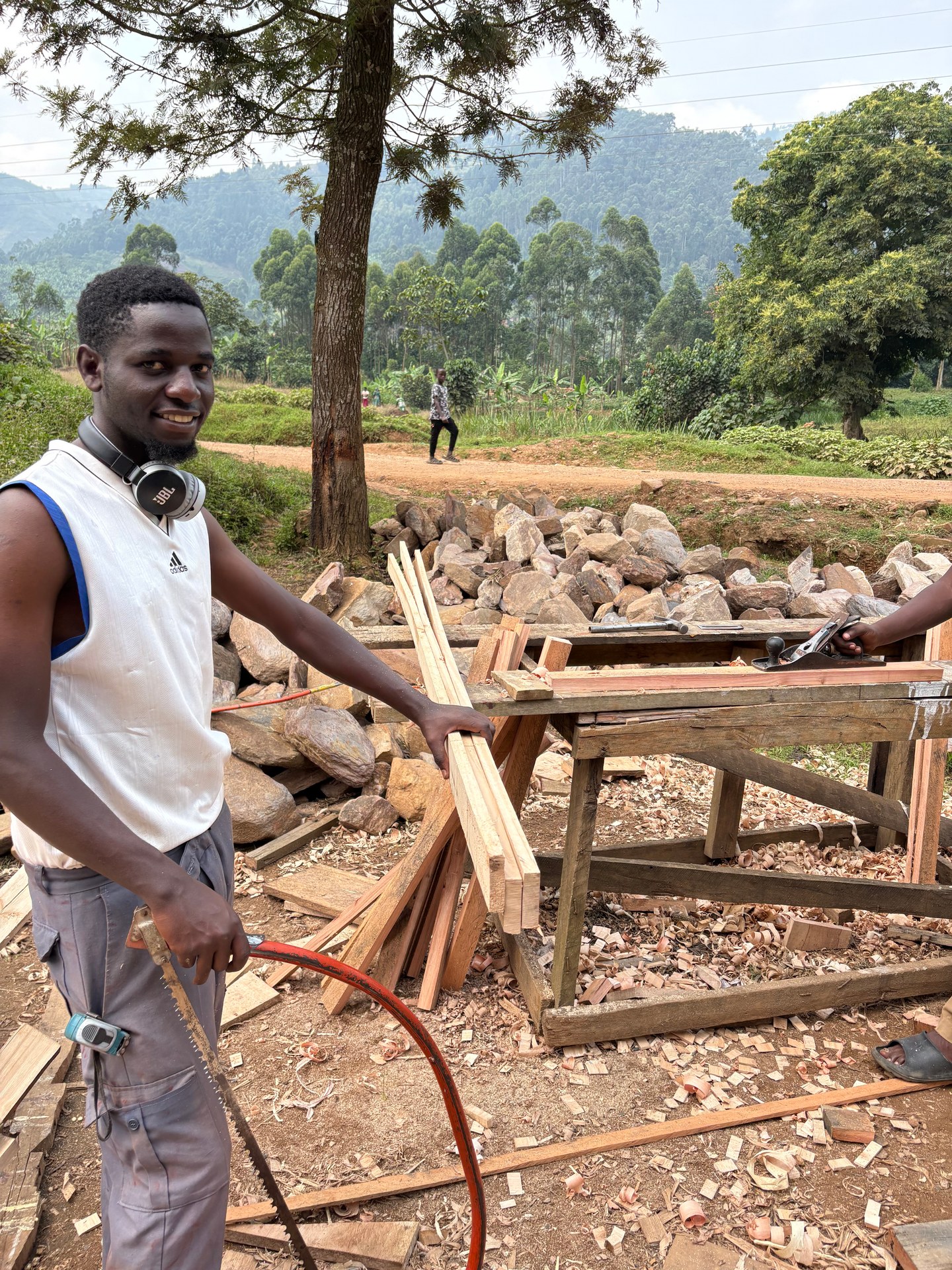
Carpenter in Buhoma
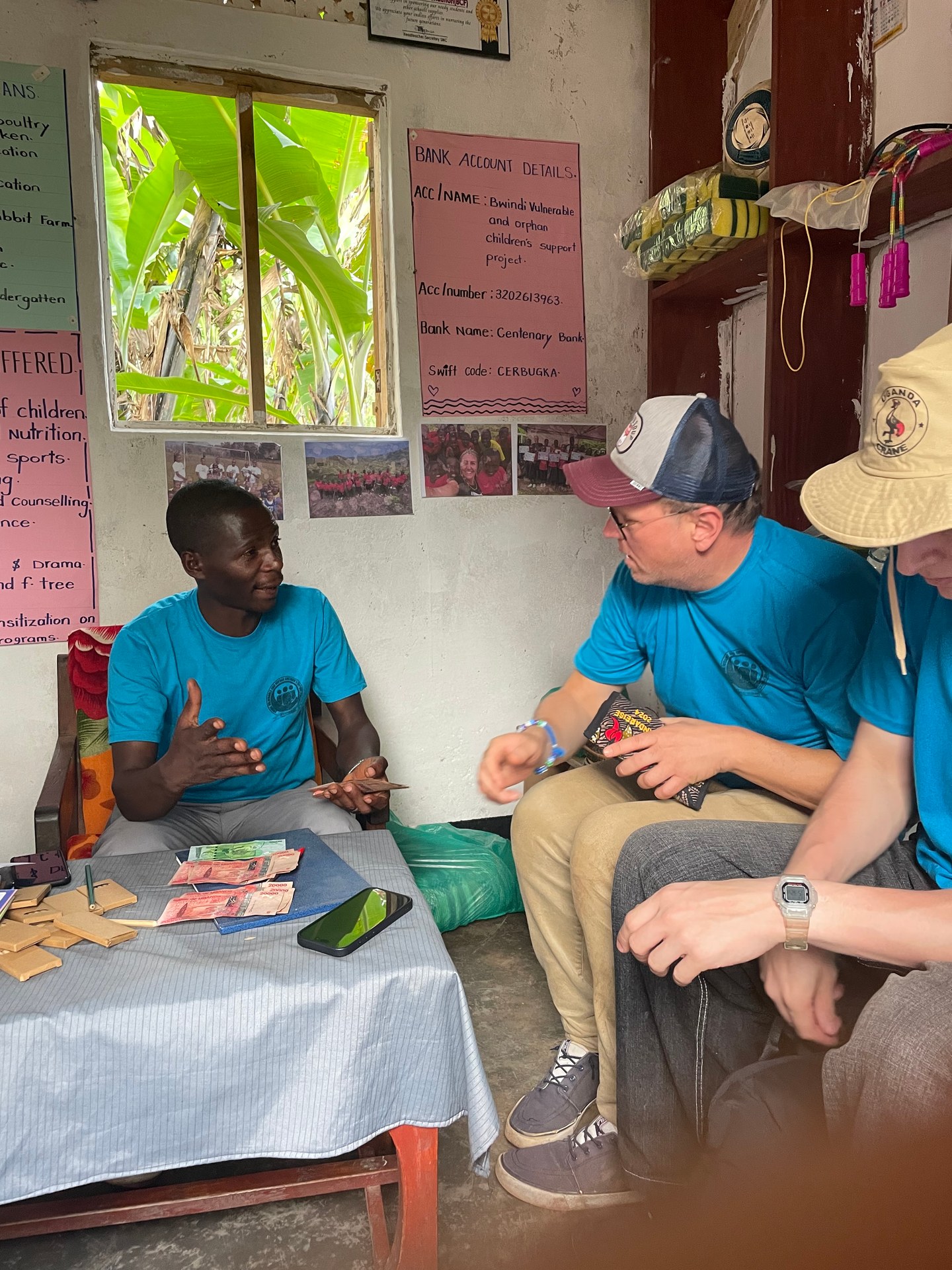
Face-to-face conversation in Buhoma
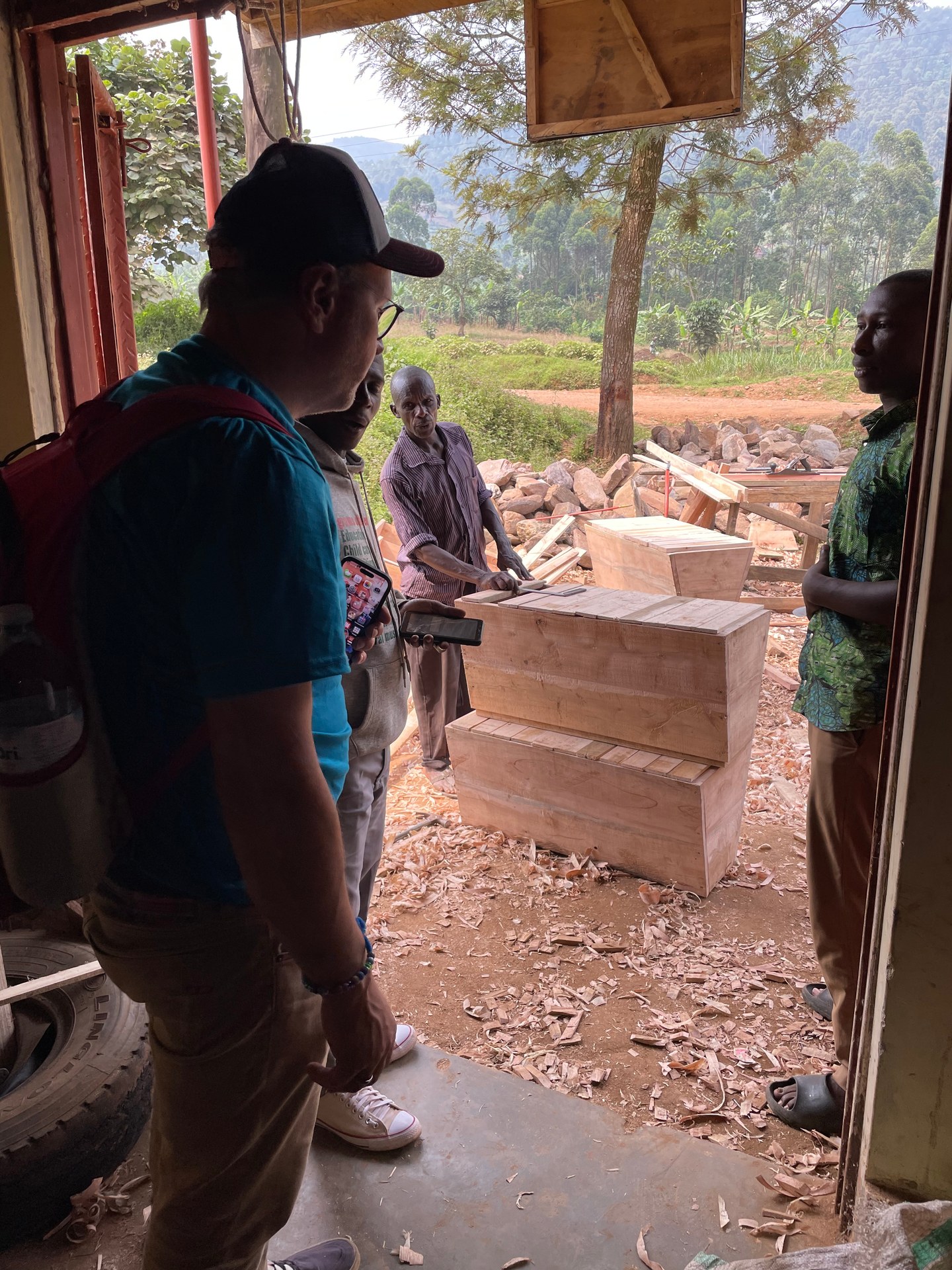
Carpenter in Buhoma, craftsmanship by hand
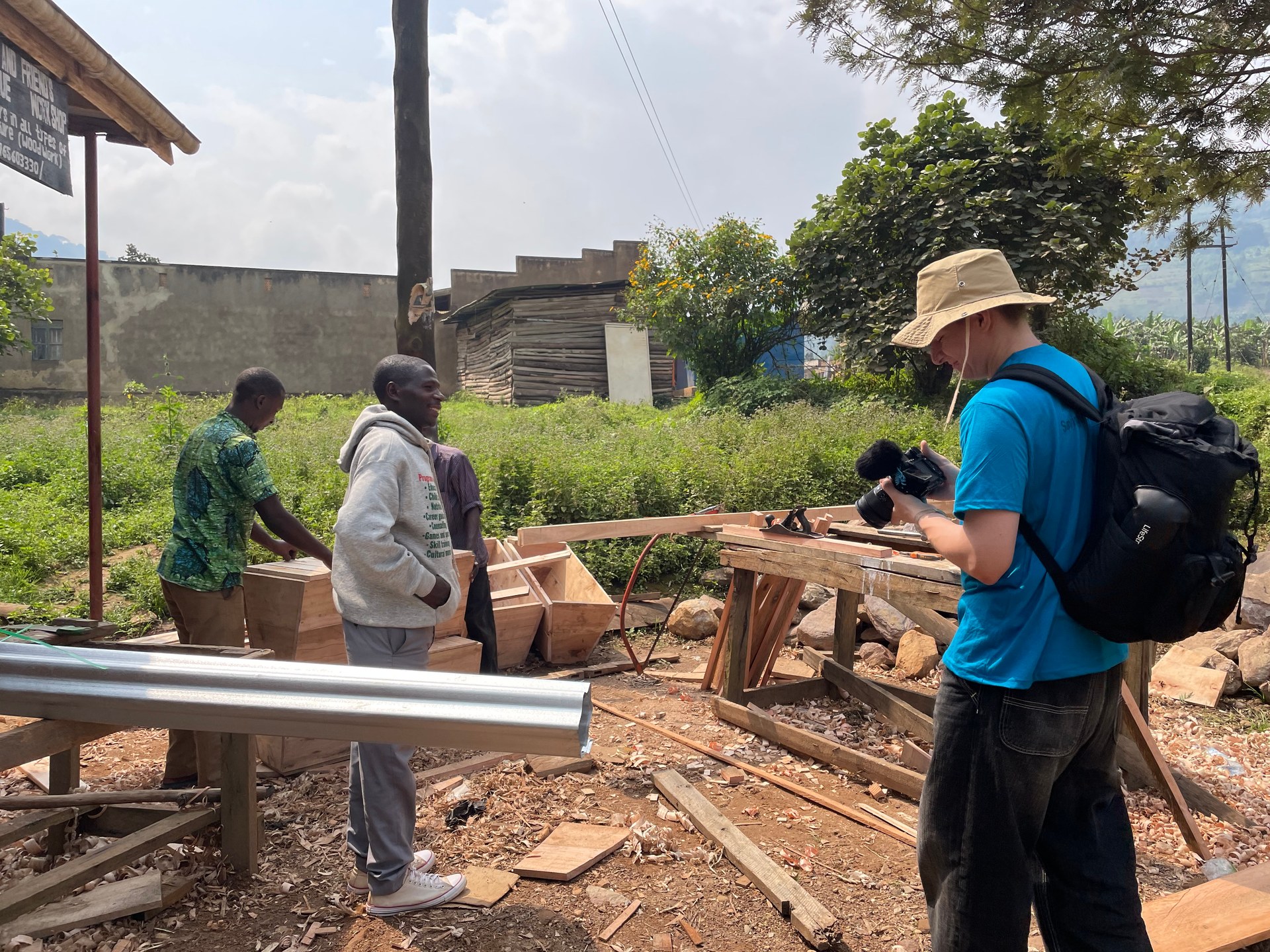
Craftsmanship in Buhoma: carpenters showing their work
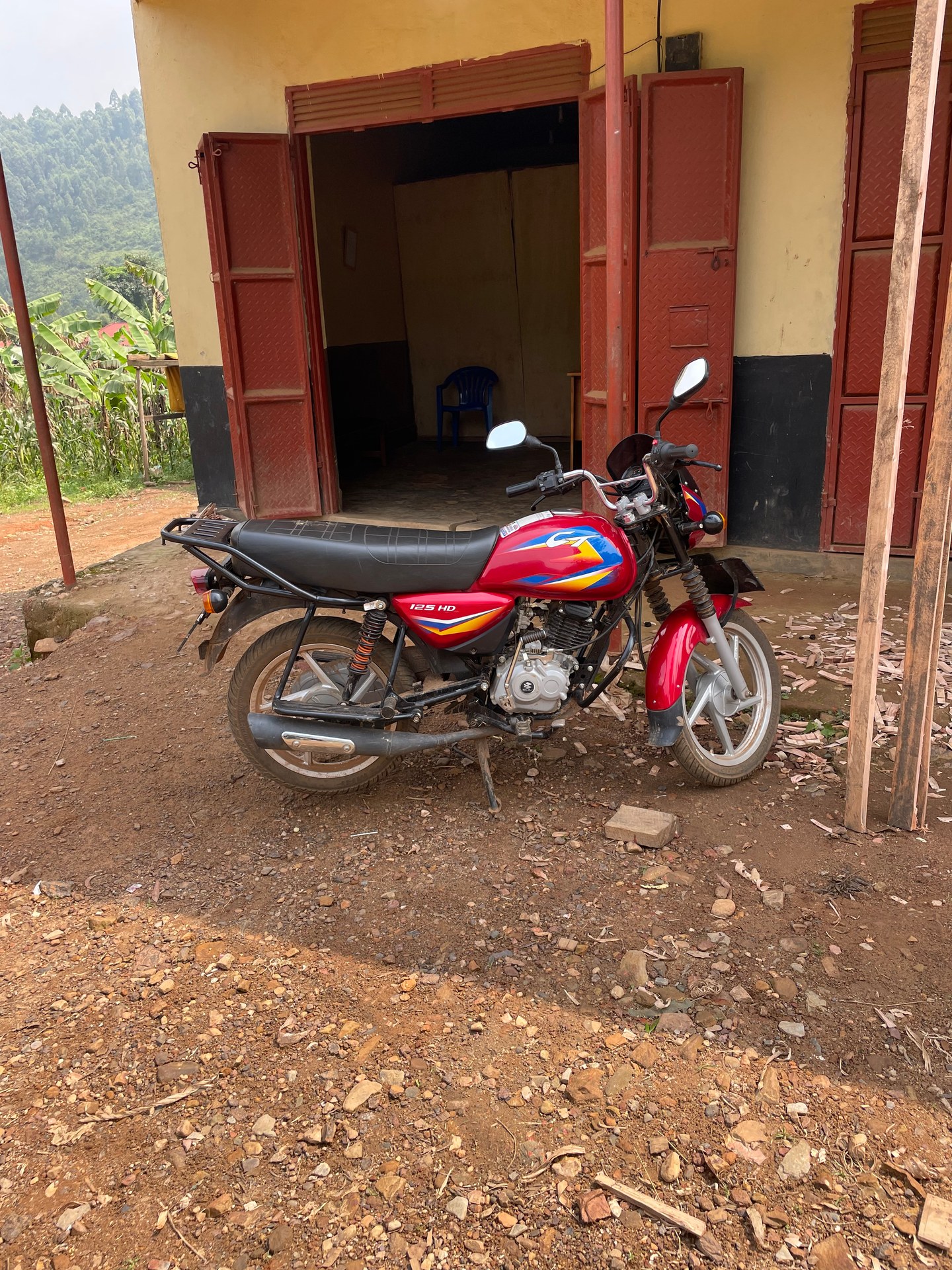
Red motorcycle in front of yellow house in Buhoma
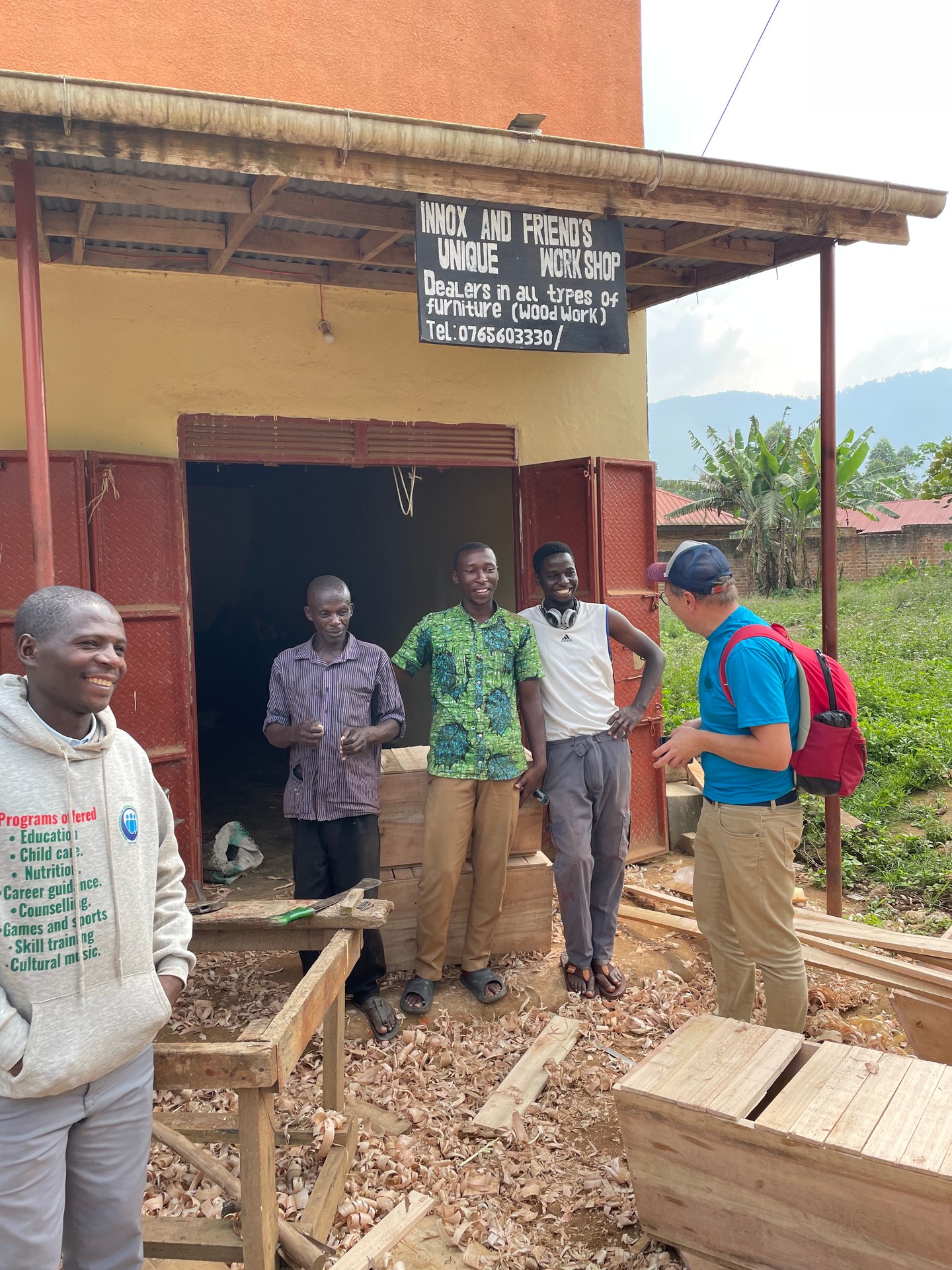
Woodworking workshop in Buhoma