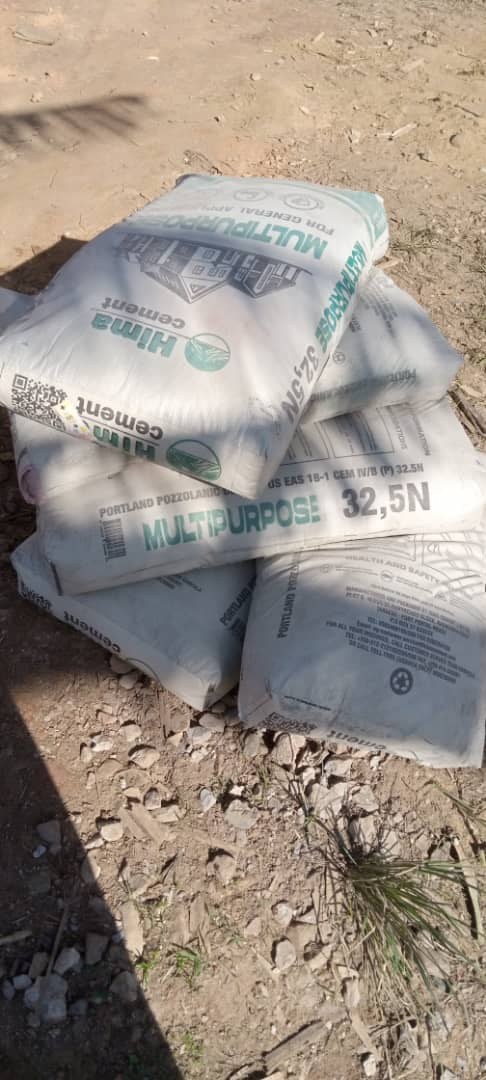
Stacked on the red laterite soil of Buhoma, a row of Portland cement bags was waiting to be mixed for the bricklaying work on the HopeKitchen. Nothing about the scene was visually dramatic — white sacks, red earth, the quiet activity of a construction site in a mountain village. But standing there in January 2026 during our extended visit to the area, the ordinariness of it was the point. The same cement, the same technique used to bind brick to brick in Germany or Belgium, was being put to work here in southwest Uganda, at the edge of one of the world's most famous gorilla habitats. Development, when it is working, looks exactly this unspectacular.
That scene stayed with me as we spent time getting to know Buhoma beyond its role as a trekking departure point. The village sits at the northern entrance to Bwindi Impenetrable National Park, and it carries an international reputation built almost entirely on the gorilla permits issued from its UWA sector headquarters. But Buhoma is also a functioning community — with local entrepreneurs, schoolchildren in red uniforms, market stalls, and residents who have watched a global tourism economy take shape around them over three decades. What that economy means for them, in practice, is the question this article tries to answer honestly.
Buhoma — The Northern Gateway to Bwindi Impenetrable National Park
Buhoma sits at the northern edge of Bwindi Impenetrable National Park, a small but strategically vital village that serves as the starting point for the majority of gorilla trekking expeditions on this side of the park. The Uganda Wildlife Authority's sector headquarters is located here, and it is from this point that registered trackers set out each morning with small groups of visitors carrying permits for the habituated gorilla families ranging through the northern section of the forest.
The setting is striking in its contrasts. Red laterite soil lines the paths between wooden market stalls, banana plantations crowd the hillsides, and the dense equatorial forest begins just beyond the village boundary. Children in red school uniforms are a constant presence. The altitude — roughly 1,500 metres above sea level — means the light is clear and the air noticeably cooler than in Uganda's lowland areas, a physical detail that strikes arriving visitors immediately and that shapes the pace of life in the village.
During visits in October 2024 and January 2026, the difference between first arrival and deeper acquaintance with the village became apparent quickly. The immediate impression is of movement: boda bodas carrying supplies, lodge staff heading to work, vendors arranging produce. The slower impression, which takes more time to form, is of a community actively navigating the tension between the economic promise of international tourism and the practical challenges of building sustainable infrastructure in a remote mountain environment. Buhoma has been at the centre of gorilla tourism development for over thirty years. That longevity shows in the maturity of its institutions — and in the calibrated expectations of its residents.
For most travellers, Buhoma means a standard pre-trek overnight stay, an early morning briefing, and a departure into the forest. For residents, it means something considerably more complex: a global industry has arrived at their doorstep, bringing money, attention, and a set of assumptions about what their home is supposed to look like and what role they are expected to play in it.
Tourism Growth in Uganda — Numbers That Illuminate a Local Story
The scale of Uganda's tourism growth in the years leading up to 2015 provides useful context for what has unfolded in Buhoma. Visitor numbers to the country's national parks increased by 41 percent between 2009 and 2013, rising from 151,818 to 213,950. This growth was not spread evenly across all twelve national parks and three game reserves — it was concentrated in destinations with internationally recognised wildlife, and Bwindi Impenetrable National Park, with its population of habituated mountain gorillas, was among the primary drivers.
In 2013, 47 percent of national park visitors in Uganda were classified as foreign non-residents, with a further 24 percent coming from East African Community countries. Together, more than 70 percent of visitors that year were arriving from outside the country specifically for experiences available nowhere else at comparable scale. The gorilla permit — which carries a significant fee per person for foreign non-residents — concentrates this international expenditure directly in the communities adjacent to parks like Bwindi.
The Uganda Wildlife Authority, which manages all national parks in the country, has a formal mandate not only to protect wildlife but to distribute a proportion of park revenues to surrounding communities. The revenue-sharing model has evolved considerably since its introduction, and the communities around Buhoma have been among the most closely observed test cases for whether such mechanisms can deliver meaningful development outcomes alongside conservation goals. The percentages look straightforward in published reports; on the ground in Buhoma, the distribution of benefit is more uneven and more contested.
What the aggregate numbers cannot show is the lived experience of a resident who operates a small business in the orbit of the trekking economy without direct employment by a lodge or the UWA. Understanding Buhoma as a community means understanding the gap between what tourism statistics record and what individual households actually receive.
The HopeKitchen — What Cement Bags Reveal About Development in Practice
Standing next to stacked cement bags on the red soil of Buhoma, it is easy to underestimate what they represent. The bags — Portland cement, the same product used on construction sites across Europe — were waiting to be mixed for the bricklaying work on the HopeKitchen, a community infrastructure project in the village. The red bricks that would form its walls were already on site. The method is familiar and transferable: mortar binds brick to brick, the same technique used in a construction site in Berlin or Cologne.
That continuity of craft across continents carries a substantive implication. Development in Buhoma does not require the import of foreign methods or the displacement of local knowledge. What it requires is materials, planning, sustained commitment, and the organisational capacity to coordinate a project through completion. The HopeKitchen represents an attempt to address a gap in community nutrition and gathering infrastructure — modest in its physical scale, but more significant as a demonstration of what sustained external partnership alongside local initiative can produce over time.
The photo taken during the January 2026 visit captures this plainly. Bags stacked beside the construction site under the dry-season sun: nothing dramatic, deliberately so. Development work at village scale in a remote highland community is not photogenic in the way that gorilla encounters are. It is incremental, material, and occasionally slow in its procedural requirements — sourcing materials to a location hours from the nearest major supply point, managing a construction schedule around weather and seasonal constraints, coordinating labour and oversight across a community with competing demands on its time.
The result, however, accumulates into something durable. A kitchen built with cement and brick in Buhoma will still be standing in twenty years. The same cannot be said of every intervention that arrives in communities adjacent to famous wildlife destinations, stays briefly, and departs without a structure that outlasts the visit.
Local Voices and the Limits of What Tourism Alone Can Deliver
One of the recurring tensions in communities like Buhoma is the gap between what tourism revenue theoretically provides and what residents report as their actual economic experience. International gorilla trekking is a high-value, low-volume product by design. The permit system deliberately limits the number of visitors per habituated gorilla group per day, preserving the experience for paying guests and reducing stress on the animals themselves. The consequence is that the economic footprint within the village does not scale with the global prestige of the destination in any simple way.
“The tourism changes things, yes — you see the lodges, the visitors, the rangers. But for those of us who are not working in those lodges, not employed by UWA, the question is always: how do we connect to that economy? The gap is real. You watch the visitors come and go and you wonder what stays behind.”
Local entrepreneurs in Buhoma who operate outside the direct employment structures of lodges or the ranger service occupy an economic middle ground that aggregate tourism statistics do not capture. Norman's perspective, shared during the preparation of this article, points to a theme that surfaces consistently in conversations with Buhoma residents: visibility. The village is globally visible as a gorilla trekking departure point. The specific economic conditions of residents who provide transport, food supply, or informal services in and around that departure point are far less visible to the international visitors passing through.
This does not mean that tourism has failed the community — the evidence for material improvement in living conditions over the thirty-plus years of gorilla trekking is real, if unevenly distributed. It means that the relationship between tourism revenue and equitable community benefit requires deliberate institutional design, ongoing adjustment, and, above all, the consistent inclusion of local voices in decisions about how that revenue is directed and what it funds. The presence of projects like the HopeKitchen, supported through a combination of international partnership and local coordination, is one practical response to this structural challenge.
What Gorilla Tourism Has Built — and What Remains Unfinished
The physical evidence of tourism investment in Buhoma is visible and real. Infrastructure connecting the village to the wider road network has improved incrementally over the years since gorilla trekking became a major draw. Lodge construction — from basic banda accommodation to mid-range and high-end options — provides employment for a section of the community. The UWA sector headquarters brings a permanent institutional presence with year-round payroll. School enrolment rates in communities adjacent to Bwindi have been cited in conservation literature as rising alongside tourism revenues, though the causal relationship involves multiple variables.
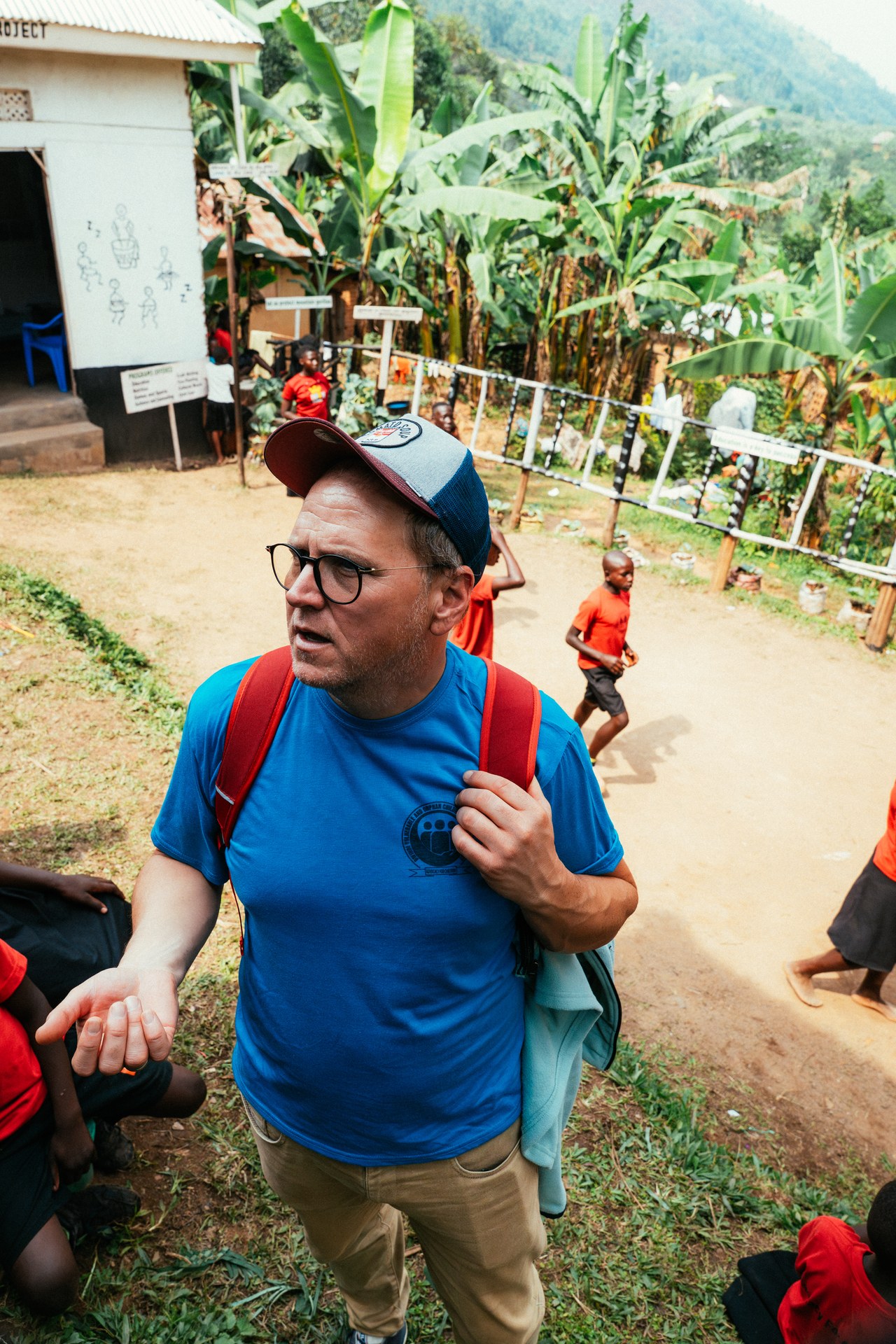
What is harder to quantify, and therefore easier to overlook, is what a globally oriented tourism economy does to a village-scale community over decades. Children growing up in Buhoma encounter international visitors as a routine feature of their environment from an early age. The interactions documented in photos from the January 2026 visit — a visitor presenting a development project to children in red school uniforms, banana plantations in the background, a mountainous landscape that simultaneously marks isolation and provides the spectacular setting that draws visitors from across the world — suggest an intergenerational familiarity with external engagement that is neither naively enthusiastic nor cynically transactional.
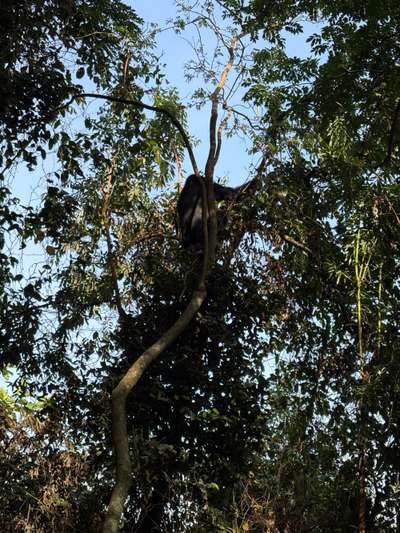
During the January 2026 gorilla trek, the group encountered the first family after roughly an hour of walking through the forest. The first individual was sitting in a tree, feeding on leaves — a GPS-verified encounter at coordinates -0.9735°N, 29.6281°E that illustrates exactly why Buhoma's position at the park boundary has transformed it over three decades. That transformation is ongoing. Its trajectory depends on whether the voices of Buhoma's residents — not just its lodge managers and UWA staff, but its small traders, its schoolteachers, its construction workers — are consistently heard in the decisions that shape it.
The path forward involves ensuring that the community's voice in this negotiation is not subordinated to the louder claims of conservation agencies, lodge developers, or national tourism planners. The Voices of Buhoma series, of which this article is a part, is an attempt to document that voice — not as a counterpoint to conservation or tourism development, but as an integral part of how those things are designed and sustained over the long term.
Visiting Buhoma — Practical Notes and What to Expect Beyond the Trek
Travellers arriving at Buhoma for gorilla trekking will find a village well-organised for the mechanics of the trek itself. The UWA briefing area, vehicle parking, and ranger assembly point are all within close proximity of the main lodges. The morning routine — early breakfast, permit check, group allocation, briefing, departure — is efficient and has been refined over many years of daily operation.
What the organisational machinery of the trek does not automatically provide is any meaningful contact with the community itself. Visitors who arrive the afternoon before their permitted trek and depart the following morning have a technical experience of Buhoma without a community experience. Extending a stay by even a day — visiting the village market, eating at a locally run restaurant rather than a lodge kitchen, walking to one of the active construction or agricultural projects — produces a qualitatively different understanding of what Buhoma is and what it is working to become.
Travel in January, as experienced during the 2026 visit, means the short dry season between the two wet periods: trails are manageable, the forest canopy retains its density, and the village itself is active without the logistical pressure of peak-season visitor volumes. The October 2024 visit, during the longer dry season, offered its own version of the same contrast between the formal trekking infrastructure and the quieter rhythms of community life visible just off the main lodge approach road.
Gorilla trekking permits for Bwindi must be arranged well in advance through the Uganda Wildlife Authority or a registered tour operator. For visits to community projects, local businesses, or informal conversations with residents, contact through lodge staff or the UWA community liaison office in Buhoma is the most practical starting point. The experience of combining both — the wildlife encounter and the community engagement — is considerably richer than either alone.
Frequently Asked Questions
Related Articles
The Buhoma Sector: Northern Entry to Bwindi Impenetrable National Park
Gorilla Trekking in Bwindi: Complete Practical Guide
Boda Boda Buhoma: Getting Around the Village
Gorilla Trekking Permits: What You Need to Know
Endangered Species in Uganda: Conservation at Bwindi