Why Environmental Management Plans Matter at Bwindi
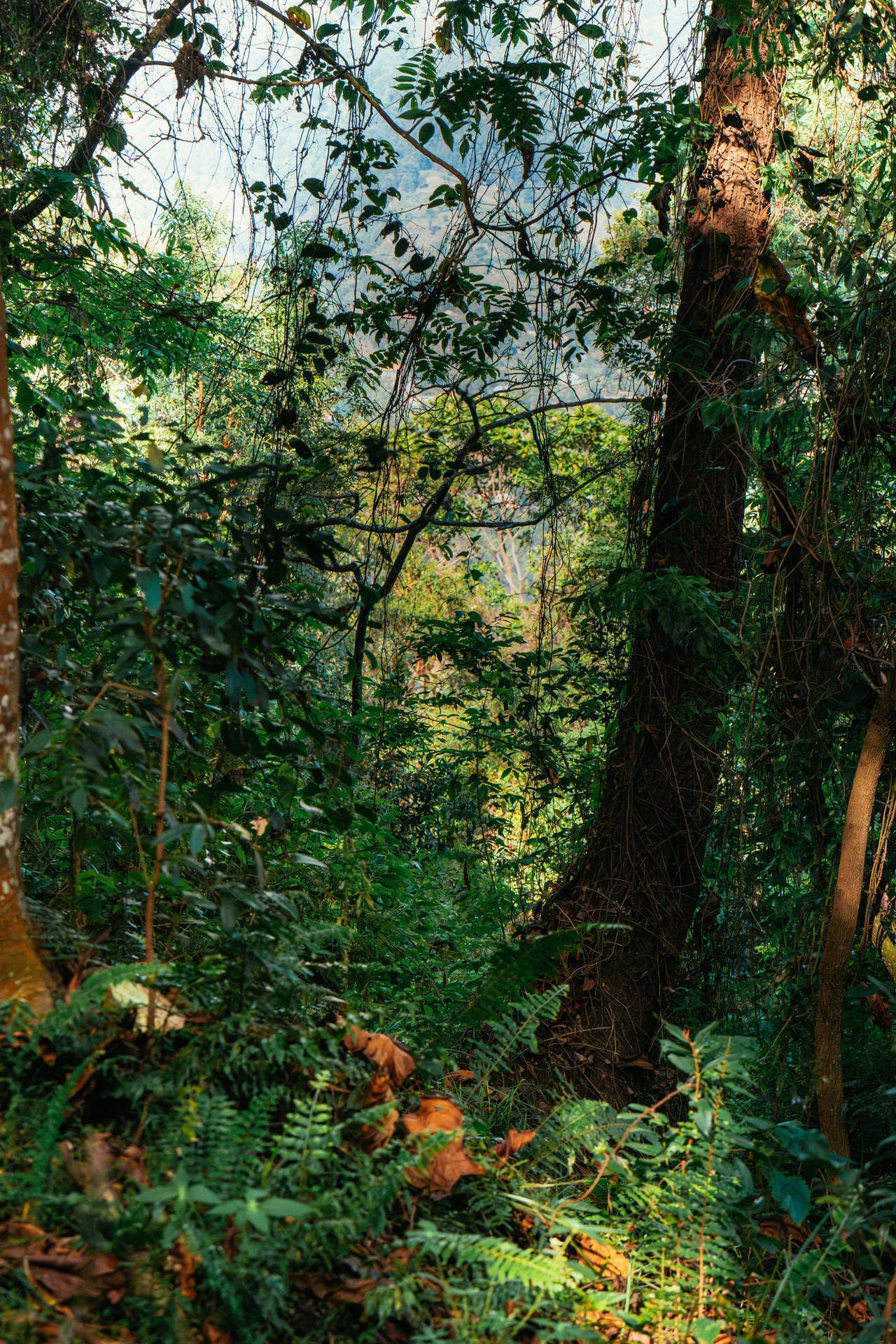
Bwindi Impenetrable National Park sits in one of the most biologically dense landscapes on the African continent. The forest shelters over half the world's remaining mountain gorillas alongside hundreds of bird species, dozens of Albertine Rift endemics, and plant communities found nowhere else on earth. Among them is Rotheca violacea subsp. kigeziensis, a flowering shrub classified as Critically Endangered and confirmed only in the Kibale Forest and on Mulole Hill near Bwindi. The park boundary is not a hard wall between pristine forest and human activity — it is a contested edge where tourism infrastructure, local agriculture, and wildlife corridors converge daily.
No accommodation is permitted inside Bwindi itself. Every lodge, tented camp, and guesthouse serving gorilla trekkers sits on private land outside the park boundary, typically within a few kilometres of one of the four sector headquarters at Buhoma, Ruhija, Rushaga, or Nkuringo. That proximity means construction, operations, waste disposal, and water use at these facilities can directly affect the forest edge and the buffer zone that links the park to surrounding communities.
During visits to the area in October 2024 and again in January 2026, it was immediately apparent how tightly the lodge zone and the forest zone are woven together. At Buhoma, the community walk passes through a landscape where garden plots, lodge perimeters, and park boundary markers exist within a few hundred metres of each other. A kitchen that handles waste carelessly, a generator running through the night, or a drainage pipe discharging into a stream that flows into the park are not abstract risks — they are operational decisions made every day by lodge staff. Environmental Management Plans (EMPs) are the mechanism through which Ugandan law turns those decisions into accountable, auditable commitments.
The Legal Framework: What Applies to Lodges Near Bwindi
Uganda's environmental regulation for tourism infrastructure rests on several overlapping instruments. The foundational law is the National Environment Act (Cap. 153), which established the National Environment Management Authority (NEMA) and introduced the Environmental Impact Assessment (EIA) requirement for prescribed projects. Any commercial tourism development — including lodges, tented camps with permanent infrastructure, and visitor centres — that falls into the prescribed project categories must undergo an EIA before construction begins. The outcome of a successful EIA is a project certificate, and the EMP forms a mandatory annex to that certificate.
Two subsidiary regulations enacted in 2020 give teeth to the EMP system. The National Environment (Waste Management) Regulations S.I. No. 49 of 2020 specify how facilities must handle, store, transport, and dispose of solid waste, organic waste, hazardous waste, and wastewater. For a lodge near Bwindi, this translates into concrete requirements: waste must be segregated at source into defined categories, organic material must be composted or processed rather than buried or burned, and greywater from kitchens and laundry must be treated before discharge. The regulations prohibit open dumping and burning of non-biodegradable waste, both of which had been common informal practices at smaller facilities across Uganda.
The National Environment (Audit) Regulations S.I. No. 47 of 2020 complement the waste rules by establishing a cycle of self-reporting and third-party verification. Facilities holding a project certificate must conduct annual self-audits against the commitments in their EMP and submit those reports to NEMA. Third-party audits may be commissioned by NEMA at any time. For lodges near a national park — classified as ecologically sensitive locations — audit scrutiny is generally higher than for equivalent facilities in less sensitive settings.
The Uganda Wildlife Authority (UWA) operates alongside NEMA as a co-regulator in the buffer zone around Bwindi. Rangers who patrol the park perimeter are trained to observe the immediate surrounds of lodges and report any activities that appear to violate park rules or the lodge's environmental commitments. This on-the-ground layer of oversight means that EMP compliance is not purely a paper exercise handled between a lodge accountant and a Kampala regulator — it has a field dimension that is specific to the Bwindi context.
What a Bwindi Lodge EMP Contains
The structure of an EMP for a lodge or tented camp near Bwindi follows a standard template shaped by NEMA guidelines, but the content must be site-specific. A generic document copied from a facility in Kampala is not acceptable; the plan must address the particular ecological sensitivities of the Bwindi landscape and the specific operational characteristics of the property.
Waste management is almost always the largest section of a Bwindi EMP. The plan must specify how solid waste is separated into organic, recyclable, and non-recyclable streams at kitchen and housekeeping level. It must describe the composting system for organic material, the storage area for dry recyclables awaiting collection, and the arrangements for transporting non-recyclable and hazardous waste to an approved facility — typically in Kabale or Kisoro, since Bwindi's remote location means no waste collection infrastructure exists at the park gates. The plan must also address the disposal of chemicals used in laundry, sanitation, and pool maintenance where applicable.
Water management is the second major area. Lodges near Bwindi typically source water from boreholes, springs, or rainwater harvesting systems. The EMP must describe the source, the volume drawn, the treatment applied before use, and the method of greywater and blackwater treatment before any discharge. Given that the park contains multiple streams that feed the larger river systems of southwestern Uganda, discharge quality standards are applied strictly. Some lodges have installed constructed wetland systems or biodigesters as part of their EMP compliance; these approaches are viewed favourably by NEMA because they treat waste on site rather than generating a transport chain to distant disposal facilities.
Energy is a third area of increasing attention. Many lodges in the Bwindi area ran diesel generators until recently, and the EMPs of older properties often listed noise reduction measures around generator timing as a compliance obligation. The shift toward solar power systems — visible at multiple properties during our visits in January 2026 — has reduced both noise and emissions, but introduces new questions about battery storage and the end-of-life disposal of photovoltaic panels, which the 2020 waste regulations classify as hazardous waste requiring specialist handling.
Beyond these operational sections, an EMP for a Bwindi lodge typically includes a vegetation management plan (specifying which species can be cleared for fire breaks or garden maintenance, and committing to replanting with native species), a staff training schedule (quarterly or annual sessions covering waste handling, poaching reporting, and fire safety), a community benefit summary (describing employment, procurement, and revenue-sharing arrangements), and a monitoring calendar setting out when each element of the plan will be assessed and by whom.
Tourism Infrastructure and Its Edge Effects on the Forest
The relationship between tourism infrastructure and forest health at Bwindi is not straightforward. Gorilla tourism has generated the revenue that makes park protection financially viable, and the lodges that serve that tourism have collectively created thousands of jobs in one of Uganda's most economically marginal regions. At the same time, the physical footprint of lodge development has consequences that accumulate over time and at a landscape scale.
Across Uganda's protected area network, elephant and chimpanzee corridors linking the Budongo–Bugoma forest complex and the Kibale–Bwindi system have been fragmented by tourism infrastructure development, contributing to population stress for wide-ranging species. This is not a problem unique to Bwindi, but it illustrates the importance of treating lodge siting and design as conservation decisions, not merely hospitality decisions. An EMP that addresses only what happens inside the lodge fence — and ignores how the facility relates to the wider landscape — misses the most consequential dimension of environmental management in this setting.
Non-timber forest product extraction provides another window onto the pressure that the lodge economy places on the surrounding forest. Between 2020 and 2025, documented incidents of illegal extraction from Bwindi ranged from 20 to 60 per year, reaching the higher end of that range in the most recent years of the record. The connection between lodge staff, local labour supply, and the communities from which non-timber forest products are extracted is real, even if the causal chain is indirect. EMPs that include staff environmental education, transparent wage structures, and procurement commitments favouring locally grown alternatives to wild-harvested materials address this dimension more substantively than those that treat conservation as a branding statement rather than an operational constraint.
Uganda organises its wildlife management across six zones: Sango Bay, Kafu, Muzizi, Aswa, Central, and Kyoga. Bwindi sits within the broader southwestern management framework, and the lodge EMP system is one of the tools through which national-level environmental governance is translated into site-level accountability at one of the country's most visited protected areas.
Practical Implications for Lodge Operators and Travellers
For operators building or expanding a lodge near Bwindi, the EIA and EMP process begins before a single post is sunk. NEMA recommends engaging an accredited environmental practitioner during the site selection phase, not after a design has been committed to, because some siting decisions — proximity to streams, location within identified wildlife corridors, slope and drainage characteristics — will shape the EIA outcome and the EMP obligations for the lifetime of the facility. Engaging early reduces the risk of conditions being imposed that require costly redesign, and it creates a documented record of due diligence that is valuable both for the project certificate and for any future audit.
For operators of existing facilities, the annual self-audit is the most actionable EMP obligation. NEMA provides audit templates that guide a property manager through each section of their EMP, comparing actual practice against documented commitments and identifying gaps. The most common deficiencies identified in audits at tourism facilities across Uganda relate to waste segregation (particularly the failure to separate organic from non-organic waste in guest areas), inadequate greywater treatment, and the absence of documented staff training sessions. Addressing these three areas brings most facilities into reasonable compliance before any third-party inspection.
For travellers, the existence of an EMP provides a practical due-diligence tool. Lodges that have a current project certificate and can produce their most recent audit report are demonstrably operating within the legal framework. Many properties near Bwindi have gone further, pursuing voluntary certification under schemes such as the Ecotourism Society of Uganda's assessment programme, which adds a layer of peer-reviewed assessment on top of NEMA's regulatory requirements. Choosing a lodge with transparent environmental credentials is one of the most direct ways a visitor can ensure that the economic benefit of their trip does not come at the cost of the forest they have travelled to see.
[QUOTE: local guide on first impressions of how lodge practices have changed over the past decade]
The question of what constitutes genuine environmental management — as opposed to compliance on paper — is one that the lodge sector around Bwindi continues to work through. The 2020 regulations raised the floor by codifying waste management and audit obligations in much more specific terms than the earlier framework. The challenge now is ensuring that the annual self-audit cycle produces genuine reflection and improvement rather than a yearly exercise in paperwork. For the forest, for the gorillas, and for the communities whose livelihoods depend on Bwindi remaining the extraordinary place it is, the difference matters.