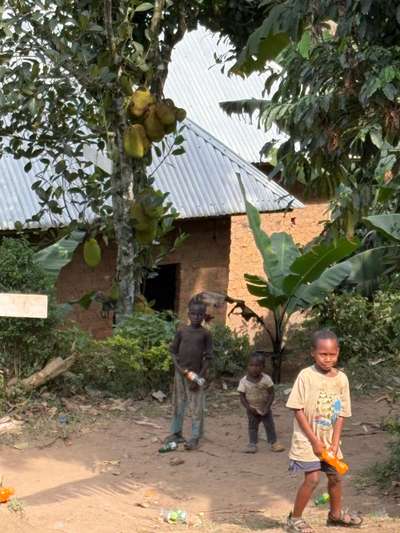
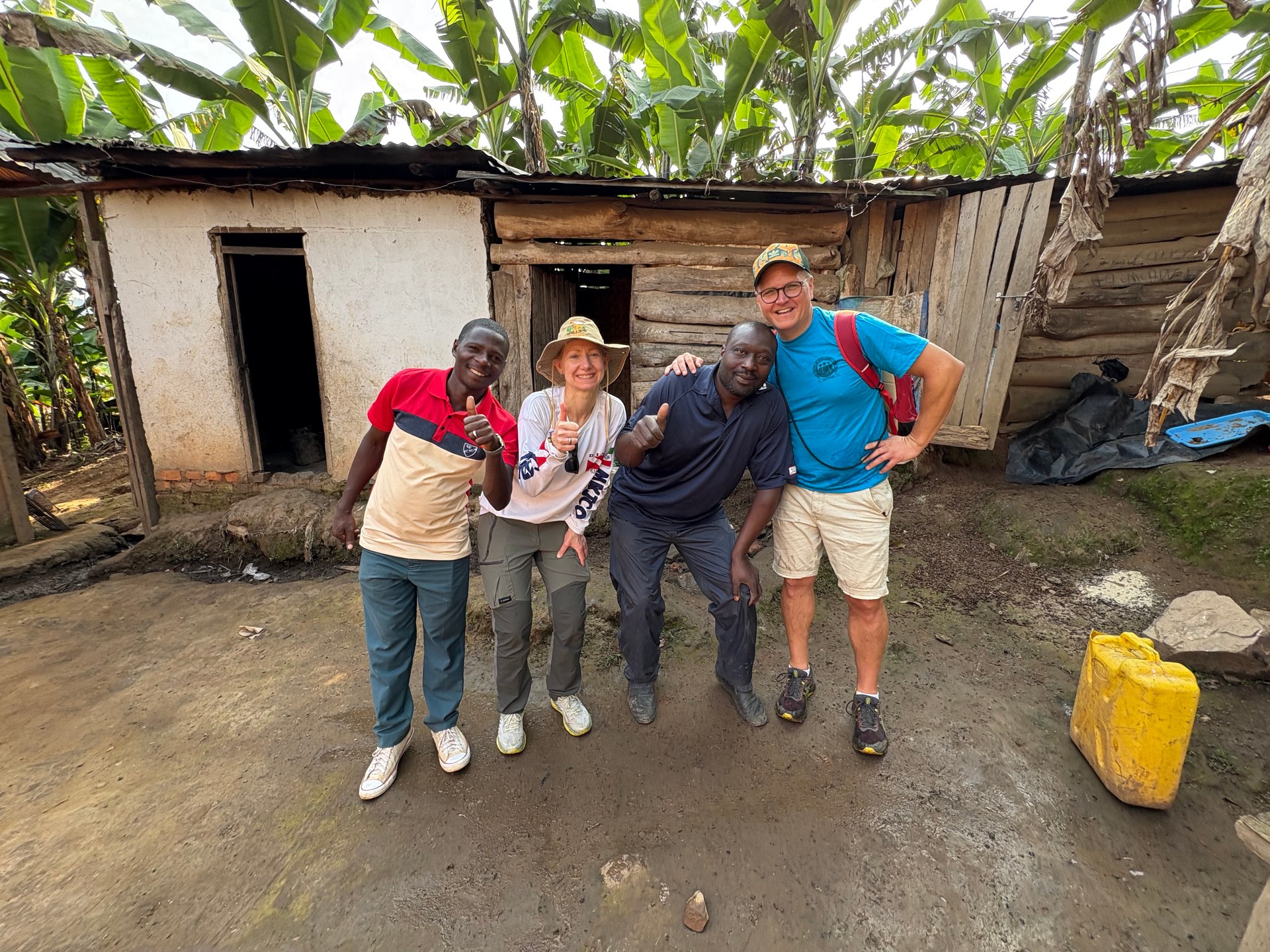
On a cool June morning in 2026, I visited a chicken farmer in Buhoma — a small settlement that sits just outside Bwindi Impenetrable National Park. The man ran his operation with a level of care and dedication that was immediately obvious: the birds were well-kept, the chicks healthy, the whole enterprise clearly something he had built over years of practice. We had come to buy chicks for the orphanage nearby, birds that would be raised for eggs or, on rare and celebrated occasions, for meat. It was a modest transaction, but it connected directly to something much larger — the economy of a community that exists, and survives, precisely because Bwindi draws visitors from across the world.
During my visit in June 2026, GPS coordinates logged at -0.9665°N, 29.6126°E, I thought about what those visitor numbers actually mean at ground level. The statistics are official and documented. The people behind them are real. This article explores what Uganda's 2013 data tells us about Bwindi and the national park system that surrounds it.
Uganda's Official Tourism Statistics: What the Record Shows
Uganda's government publishes annual statistical abstracts documenting key economic and social indicators, including tourism, wildlife management, and antiquities. The 2014 edition — covering data from calendar year 2013 — provides one of the clearest snapshots available of how Uganda's national park system was performing at the time. It is a primary source document, not a secondary summary, and the figures it contains carry the authority of official government measurement methodology.
For researchers, travel writers, and anyone trying to understand how Bwindi Impenetrable National Park fits into Uganda's broader conservation and tourism economy, the official record is essential reading. It documents visitor counts across the entire national park estate, breaks down those visitors by origin and category, and tracks year-on-year growth trends that place 2013 in a meaningful historical context.
Uganda managed twelve national parks and three active game reserves in 2013. These protected areas collectively offered tourism products including gorilla tracking, nature walks, and bird watching. Uganda Wildlife Authority was the statutory body responsible for managing this entire estate, balancing conservation obligations against the revenue expectations that came with an expanding international visitor base. The official data distinguishes between foreign non-residents, East African Community visitors, and domestic categories — a breakdown that reveals who was actually coming to Uganda's parks and what economic contribution they were making.
Understanding these baseline figures matters because 2013 represents a period just before significant changes in gorilla permit pricing and park infrastructure investment that would reshape the tourism landscape in subsequent years. The 2013 numbers document the system as it stood before those changes — a genuine historical baseline for understanding how Bwindi's visitor economy has evolved.
Bwindi Impenetrable National Park in the 2013 Context
Bwindi Impenetrable National Park sits in the southwestern corner of Uganda, in a region of dense montane forest that forms one of the most biologically diverse ecosystems on the African continent. By 2013, it had established itself as the primary international draw within Uganda's national park system. The park's reputation was already well-founded — Bwindi has been a UNESCO World Heritage Site since 1994, and the gorilla tracking permits it offers are among the most sought-after wildlife experiences anywhere on earth.
The village of Buhoma, located at the northern gateway to the park, had by 2013 developed into a small but functioning tourism hub. Lodges, community guides, and local enterprises — including the kind of small-scale poultry farming I observed during my visits in January and June 2026 — had grown up around the expectation of a steady visitor flow. The chicken farmer whose chicks supply the local orphanage represents exactly the kind of downstream economic integration that national park visitor numbers ultimately make possible.
When the statistics record 213,950 visitors to Uganda's national parks in 2013, they are measuring something that ripples out into the livelihoods of communities like Buhoma in concrete and often underappreciated ways. Bwindi attracted a significant share of the foreign non-resident visitors, given that gorilla tracking was — and remains — the flagship premium product in Uganda's nature tourism offering. The broader national figure sets the scale within which Bwindi's contribution should be understood.
Who Was Visiting Uganda's National Parks in 2013: A Demographic Breakdown
The visitor data does not simply count heads. It categorizes visitors by origin, revealing a clear picture of who was making the journey to Uganda's protected areas. Foreign non-residents — meaning visitors arriving from outside the East African Community with primary residence outside Uganda — made up 47 percent of all national park visitors in 2013. This figure is significant because it represents the segment most likely to have paid full international permit fees and to have contributed the highest per-visit revenue.
East African Community visitors — travelers from Kenya, Tanzania, Rwanda, Burundi, and South Sudan, as well as Ugandan residents from the region — accounted for 24 percent of visitors. This is a substantial share, reflecting the growing integration of regional tourism circuits in East Africa. Ugandan domestic visitors and residents made up the remainder, a group whose access to parks was often priced differently and whose motivations ranged from leisure to education to research.
For Bwindi specifically, the dominance of foreign non-residents had direct consequences. Gorilla tracking permits in 2013 were priced at levels accessible to international tourists but beyond the reach of most regional visitors, which meant the park's revenue base was heavily dependent on long-haul international demand. This dependency — while economically productive — also made Bwindi vulnerable to external disruptions, a dynamic that would become painful in later years during periods of health alerts and security concerns in the region.
The 24 percent East African Community share also reflects the increasing importance of regional wildlife tourism as middle-class populations grew and domestic tourism promotion intensified. Uganda Wildlife Authority made deliberate efforts to attract this segment, recognizing that a more diversified visitor base would provide greater resilience against volatility in long-haul travel patterns.
Growth Trends: Uganda's National Park Visitors from 2009 to 2013
One of the most striking data points in the official record is the growth trajectory over the five-year period from 2009 to 2013. Total national park visitors increased by 41 percent during this period, rising from 151,818 in 2009 to 213,950 in 2013. This represents consistent, sustained growth that outpaced many comparable destinations in sub-Saharan Africa over the same period.
This 41 percent increase did not happen by accident. It reflects a combination of factors: Uganda's improving reputation as a safe and accessible destination, the growing global interest in gorilla tracking as a bucket-list experience, targeted marketing by both the Uganda Tourism Board and private lodge operators, and improvements in infrastructure along key routes to Bwindi and other major parks. The period from 2009 to 2013 also coincided with significant investment in lodge capacity around Bwindi.
Growth of this pace creates opportunities and pressures simultaneously. For Bwindi, rising visitor numbers translated into increased permit revenue for Uganda Wildlife Authority, a portion of which was formally directed toward community benefit programs in the villages surrounding the park. Revenue-sharing mechanisms funded schools, health facilities, and small enterprise programs of the kind that connect the local economy to the park's visitor base.
At the same time, growth placed pressure on management systems. Gorilla habituation is a slow process, and the number of gorilla groups available for tracking cannot be rapidly expanded to meet rising demand. By 2013, Bwindi's tracking capacity was already well-subscribed during peak season, and the tension between conservation limits and commercial growth was a live management challenge. The 2013 statistics represent not just a success story but also the beginning of a more complicated phase of managing protected area tourism at scale.
The longer arc of Uganda's visitor numbers shows how fragile tourism can be. Pre-COVID, Uganda's national parks were receiving around 671,000 visitors annually — more than three times the 2013 figure and a testament to the sustained growth the 2009–2013 period set in motion. By 2022/23, as international travel resumed after the pandemic disruption, Uganda recorded approximately 489,000 national park visitors, still significantly below that pre-COVID level. The comparison makes visible both the scale of what was lost and the scale of recovery still required. For Bwindi, this context explains why the Uganda Tourism Board and Uganda Wildlife Authority have maintained a focus on international long-haul markets — those 671,000 annual visitors represent a benchmark the sector is actively working to restore.
Uganda Wildlife Authority and the Management Framework
The Uganda Wildlife Authority was established under national legislation as the government body responsible for managing Uganda's network of national parks, game reserves, and wildlife sanctuaries. By 2013, the UWA had been operational for over a decade and had accumulated significant institutional experience in balancing the competing demands of conservation, community welfare, and commercial tourism.
The legal framework governing game reserves and controlled hunting areas in Uganda designates these zones for wildlife conservation, landscape protection, and scientific research. This framework distinguishes between the strict protection regime of national parks — where consumptive use is prohibited — and the more flexible management approaches applied to game reserves. Bwindi falls firmly in the national park category: all visitor activity is non-consumptive.
Uganda Wildlife Authority's revenue model in 2013 depended heavily on the permit and entrance fee income generated by high-value parks, principally Bwindi and Queen Elizabeth National Park. The 41 percent growth in visitors between 2009 and 2013 represented a significant improvement in the UWA's financial position and its capacity to invest in both conservation and the community interfaces that help sustain local support for the park.
For travelers visiting Bwindi today, the UWA's institutional role is visible in practical ways: the ranger briefings before each trek, the strict group size limits, and the community revenue-sharing programs that fund initiatives in Buhoma and other villages. These structures were built incrementally through the years that the 2013 statistics document, shaped by the experience of managing an internationally significant protected area through sustained growth.
What the 2013 Data Means for Visitors Planning a Trip Today
The visitor statistics from 2013 are not merely historical curiosities. They establish a baseline that helps travelers understand how Bwindi and Uganda's national park system have evolved, and they illuminate why certain policies — permit pricing, booking lead times, sector-specific allocations — are structured the way they are today.
In 2013, with 213,950 total national park visitors, demand for gorilla tracking at Bwindi was already substantial but still manageable. Permit availability, while not guaranteed, was less constrained than it has become in subsequent years. For travelers visiting Bwindi today, the lesson is straightforward: advance planning and early booking are essential. The growth trend visible in the 2009–2013 period has continued, and the window for last-minute permit availability has narrowed.
The demographic breakdown from 2013 also remains relevant. The dominance of international visitors in Bwindi's visitor mix has deepened rather than diminished. This means that the infrastructure, services, and pricing structures in and around Bwindi are calibrated primarily for international travelers — lodge rates, guide services, and permit costs are all pitched at international market levels.
During my visits to Buhoma in January and June 2026 — GPS-logged across multiple locations in the valley below the park boundary — I saw a community that has adapted remarkably to the rhythms of international tourism. The morning routine around the park gate, the organisation of community guides, the network of small enterprises supplying lodges: all of it runs on a logic shaped by decades of visitor flows that the 2013 statistics helped to document and define. For travelers, the practical implication is that Bwindi rewards careful preparation, respect for the conservation framework, and genuine curiosity about the community context.
[Quote: local guide or Uganda Wildlife Authority ranger on how visitor numbers have changed the Buhoma community since 2013]