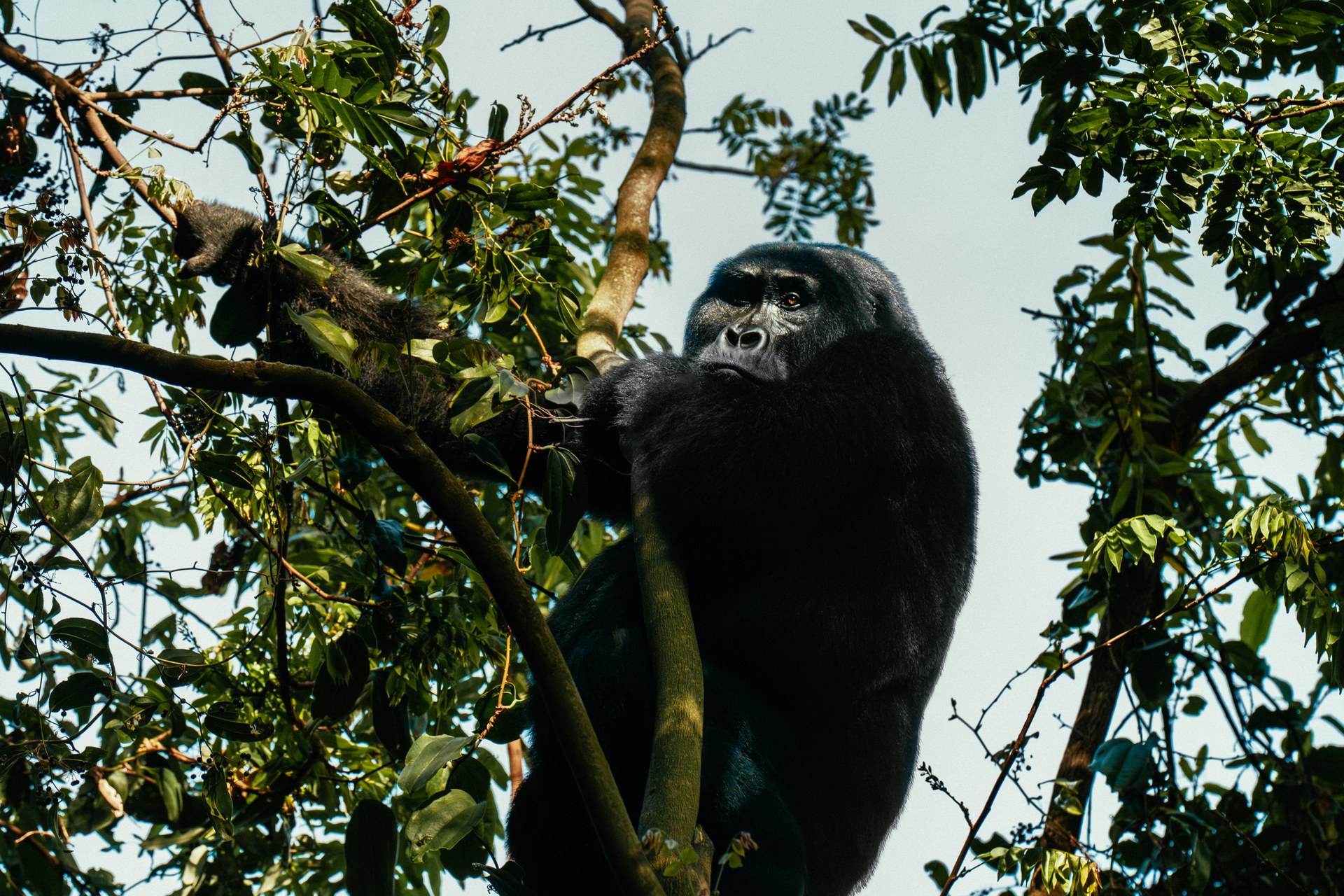
Beyond UWA: The Conservation Ecosystem
Uganda Wildlife Authority is the statutory authority responsible for Bwindi Impenetrable National Park, but protecting 321 square kilometres of ancient rainforest — home to roughly half the world's remaining mountain gorillas — is not a task any single institution can accomplish alone. Bwindi's conservation involves a deliberately constructed ecosystem of partners: research institutions, health NGOs, district governments, community-based organisations, and international donors all play formally recognised roles within the park's General Management Plan.
The GMP, which guided management from 2014 to 2024, was developed by a 16-member interdisciplinary planning team between November 2011 and February 2014. One of its stated outputs is "Strengthened stakeholder collaboration and coordination throughout the plan period." This is not rhetorical. The GMP explicitly frames all qualifying organisations as co-implementers, stating that NGOs, district local governments, CBOs, and development partners should use the GMP as their source of activities to implement in and around Bwindi each year until 2024.
The rationale for this approach is ecological as much as administrative. Mountain gorillas range freely across the park boundary. Disease does not respect institutional mandates. Water catchment areas that sustain both the forest and surrounding agricultural communities are managed by overlapping jurisdictions. Effective conservation requires coordination at a level that no single authority can compel — it must be negotiated, structured, and regularly renewed through shared forums and shared documents.
Research Partners: ITFC and Academic Institutions
The Institute of Tropical Forest Conservation (ITFC) is based at the Ruhija sector of Bwindi and operates as a constituent institute of Mbarara University of Science and Technology. It is the primary academic and research institution within the park, with a mandate covering long-term biodiversity monitoring, gorilla population studies, socio-economic research, and the training of conservation scientists.
ITFC manages the Kyaguriro research gorilla group — the only group at Bwindi habituated exclusively for scientific study rather than tourism. This distinction matters. Research groups allow scientists to collect behavioural, genetic, and health data under conditions that minimise the variables introduced by tourist presence. The data generated from Kyaguriro forms part of the evidence base used by UWA to evaluate habituation decisions, gorilla ranging behaviour outside the park boundary, and population trends.
The GMP's research action plan identifies several priorities that depend on ITFC capacity: conducting periodic population censuses of key wildlife species including gorillas, elephants, and chimpanzees; investigating the optimal number of gorilla groups that can be habituated without negatively impacting the resource base; and reviewing recommendations from ongoing studies on gorillas ranging outside the protected area. ITFC also maintains international academic partnerships that bring external expertise and funding into Bwindi's research programme.
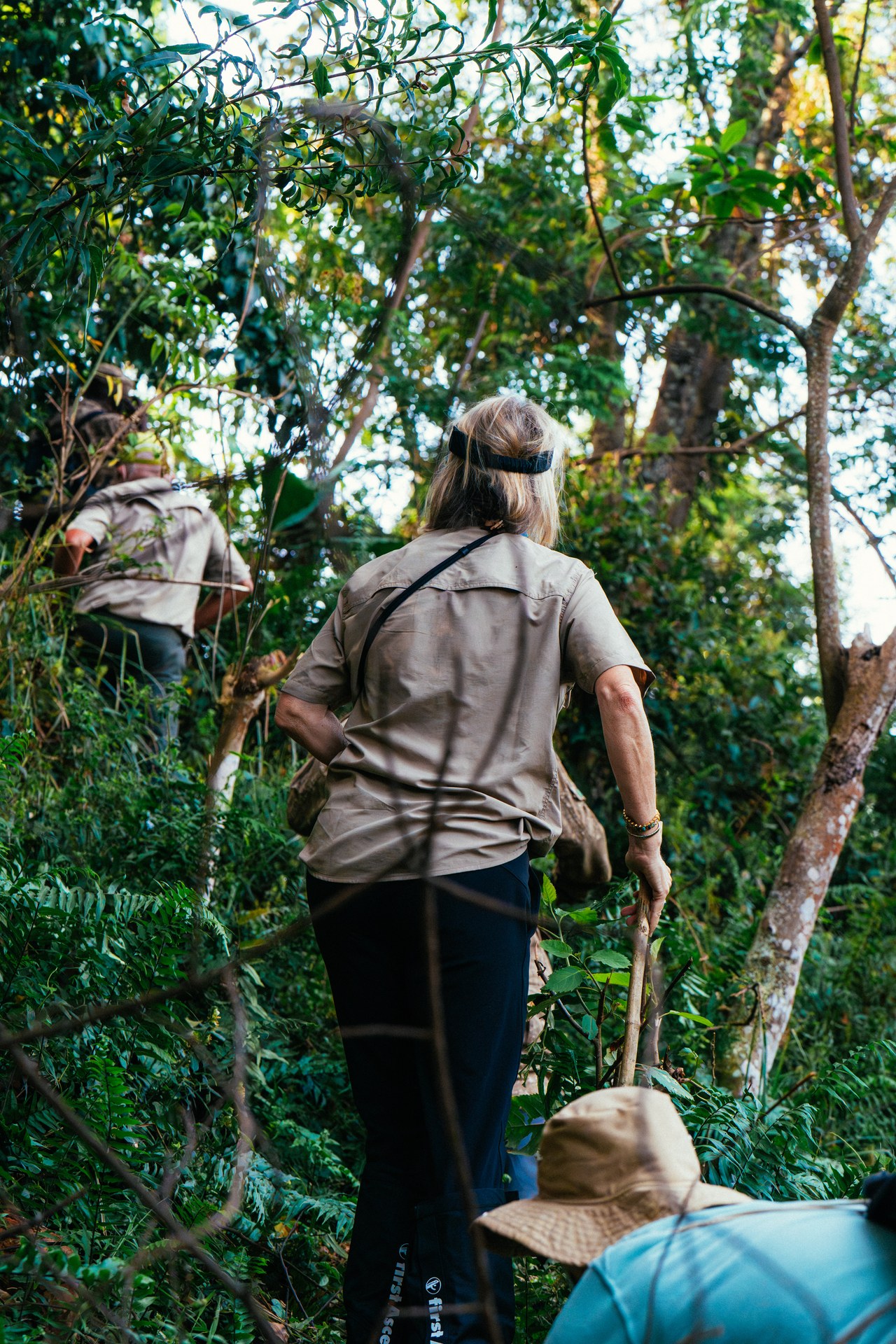
Through Bwindi forest on the trail of gorillas
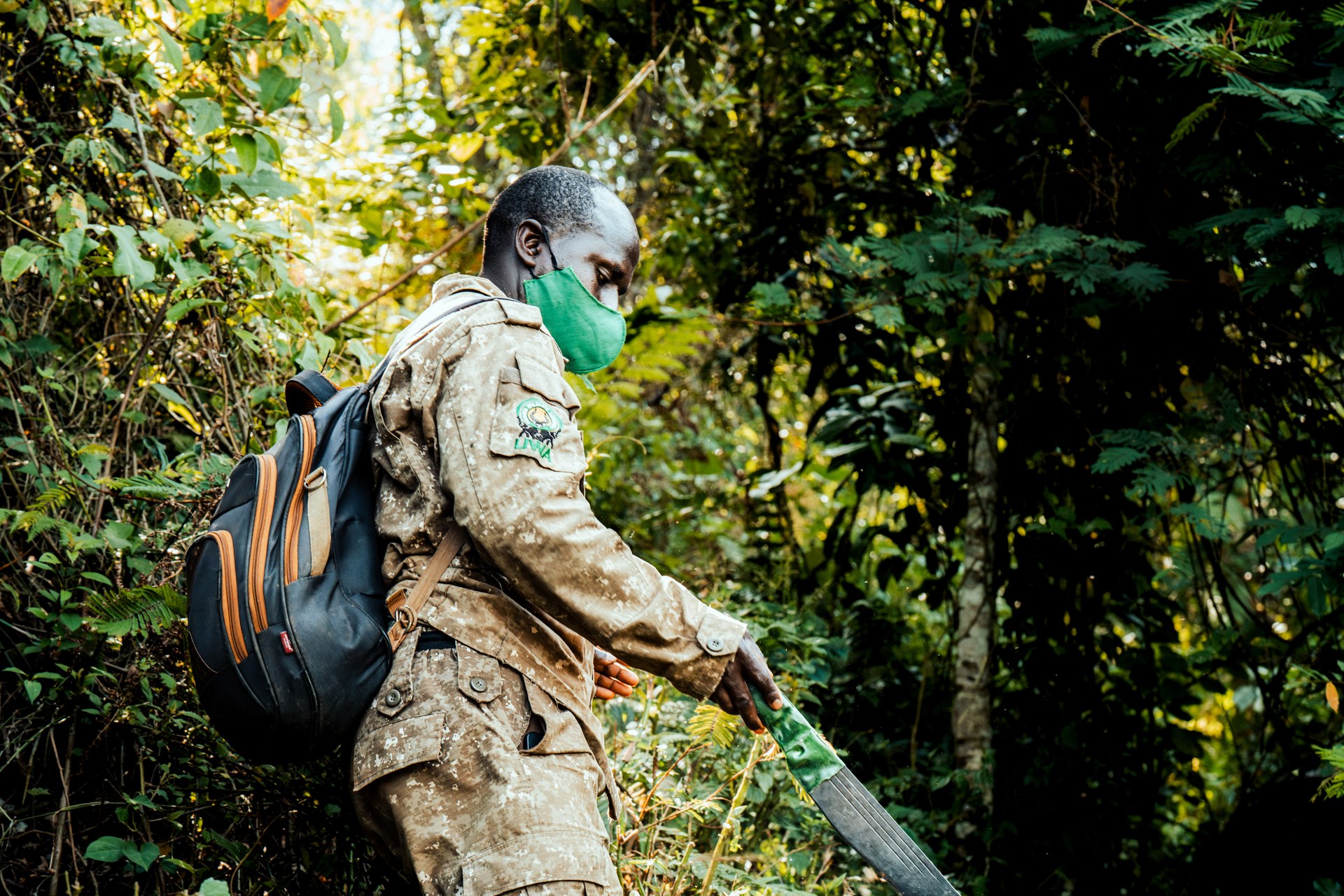
Ranger in Bwindi forest on the way to the gorillas
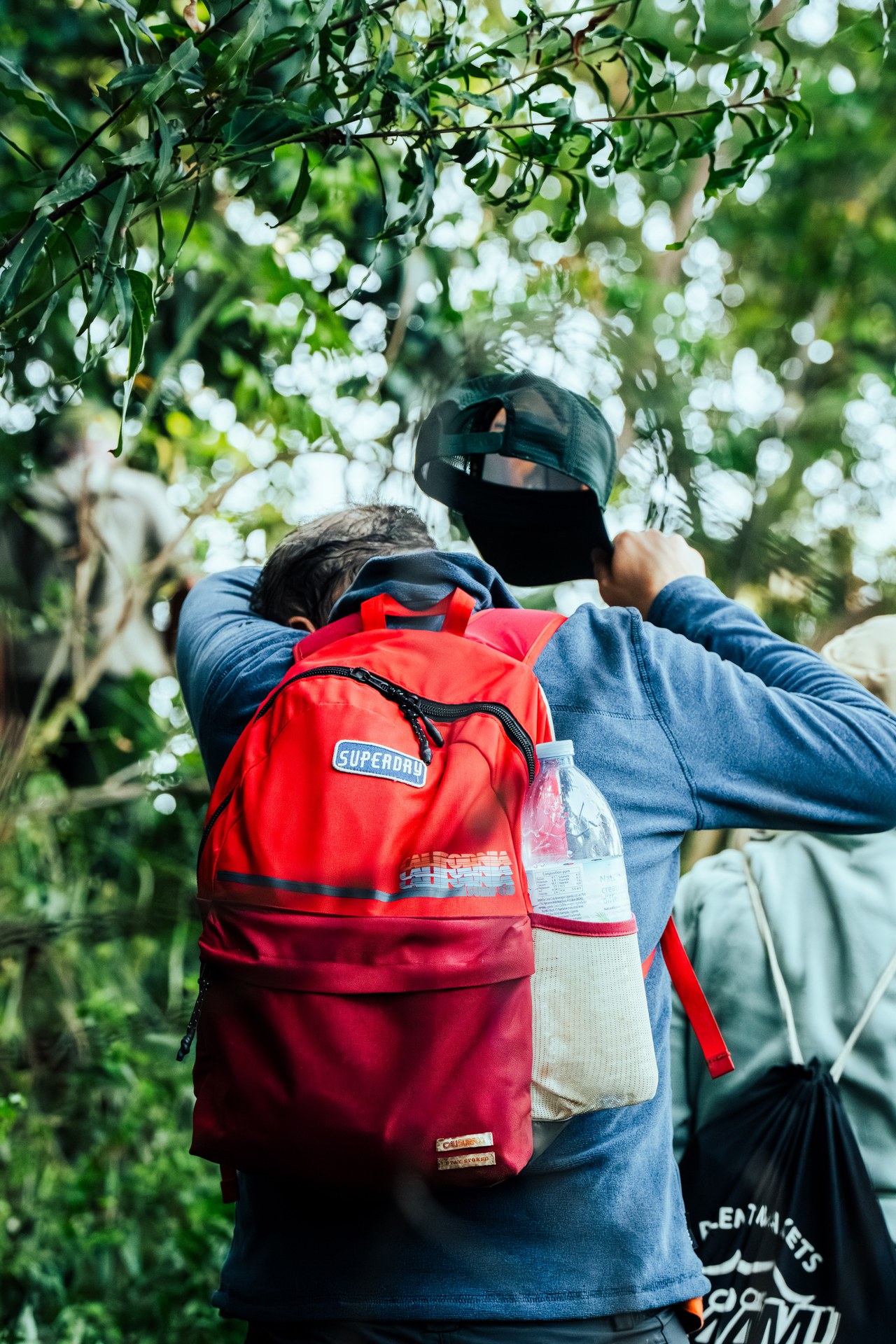
Preparing for the adventure: gorilla trekking in Bwindi
Health Partners: CTPH and the One Health Approach
Conservation Through Public Health (CTPH) was founded by Dr Gladys Kalema-Zikusoka, a Ugandan wildlife veterinarian who recognised early in her career that gorilla health cannot be separated from the health of the communities living around the park. CTPH operates under a Memorandum of Understanding with UWA that includes the establishment and joint management of a veterinary laboratory at Bwindi — a facility that supports both gorilla health monitoring and capacity building for local veterinary staff.
The organisation's guiding framework is One Health: the recognition that human health, animal health, and ecosystem health are deeply interconnected. At Bwindi, this means that reducing respiratory disease transmission between the roughly 500,000 people living in surrounding parishes and the mountain gorilla populations is as much a conservation intervention as it is a public health one. Community health workers trained by CTPH serve as a bridge between the park's veterinary concerns and the medical realities of adjacent villages.
In disease outbreak scenarios — a recurring risk given the genetic and immunological proximity between humans and great apes — CTPH's rapid response capacity and its relationships with both UWA rangers and community health networks make it a critical component of Bwindi's emergency management infrastructure. CTPH also contributes data to gorilla population monitoring and works alongside Gorilla Doctors, a veterinary programme specialising in direct clinical intervention for injured or ill gorillas.
Community Partners: Local Governments and CBOs
Bwindi spans four districts: Kanungu, Rukungiri, Kabale, and Kisoro. Each district local government plays a formal role in conservation through the revenue sharing programme, which directs a percentage of park entry fees to community development projects in surrounding areas. District governments receive and disburse these funds, making them institutional stakeholders with a direct financial relationship to the park.
The GMP identifies harmonisation of the park management plan with district development plans as a priority challenge. When a district government plans infrastructure, land use, or agricultural programmes near the park boundary without reference to the GMP, the result can be conflicting land use pressures, encroachment risks, or infrastructure that fragments habitat. Including district officials in the annual stakeholders forum and in GMP consultations is intended to reduce these misalignments before they become management crises.
Community-based organisations (CBOs) carry out specific programmes at a local level that government and park authorities are not well positioned to deliver. Uganda Wildlife Clubs bring conservation education into schools around the park. Other CBOs manage craft cooperatives, community tourism services, and cultural exchange programmes that provide income alternatives to forest resource extraction. Their activities are recognised in the GMP's resource use chapter, which calls for capacity building support for conservation NGOs and CBOs operating in the buffer zone.
NGO and International Donor Support
International conservation NGOs provide expertise, funding, and programme infrastructure that would otherwise exceed UWA's capacity. WWF, the Wildlife Conservation Society (WCS), and the African Wildlife Foundation all operate programmes in the Bwindi landscape, focusing on areas such as law enforcement support, landscape-level connectivity, and community livelihoods. Their presence brings not only resources but global networks and technical specialists in fields from genetics to geographic information systems.
The Batwa — the indigenous forest-dwelling community displaced from Bwindi at the time of the park's gazettal — are supported by specific organisations including the United Organisation for Batwa Development in Uganda (UOBDU) and the Kellermann Foundation. These organisations address the particular vulnerabilities of a community that lost its land and livelihood to conservation policy, advocating for land rights, cultural preservation, and economic integration into the park's tourism economy.
International donors including the Global Environment Facility and the World Bank have funded major investments in Bwindi's infrastructure and management capacity over successive programme cycles. These funding streams often carry requirements for stakeholder consultation, participatory planning, and measurable social and environmental safeguards — requirements that have reinforced the multi-stakeholder approach embedded in the GMP.
The GMP as a Coordination Document, Not Just a UWA Plan
One of the less-discussed features of Bwindi's General Management Plan is the explicit statement that it is not solely a UWA document. The GMP states that all NGOs, district local governments, CBOs, and development partners working in and around Bwindi are expected to use the GMP as their source of annual activities until 2024. This framing transforms the management plan from an internal operational guide into a shared governance framework for the entire Bwindi conservation landscape.
This approach has practical consequences for conservation coherence. When an international donor funds a new community health programme, or when a district government designs a road corridor near the park, the existence of a shared document with agreed priorities creates a reference point for negotiation and alignment. It does not eliminate conflict, but it establishes a common language and a common set of commitments that all parties have — in principle — endorsed.
The annual stakeholders forum is the institutional mechanism through which this shared framework is maintained. By bringing together UWA, local governments, research institutions, health partners, community organisations, and donors in a regular planning and reporting space, the forum creates accountability across the partnership. UWA's role in facilitating this forum — attending council meetings, sharing reports and policies, inviting partner input — is itself a management activity, one that the GMP treats as essential to the park's long-term conservation success.