Fort Portal sits at the foot of the Rwenzori Mountains in western Uganda, a city of roughly 50,000 people that serves as the natural hub for exploring the region's extraordinary concentration of wildlife and landscapes. From here, the road south traces a corridor through some of the most biologically rich terrain on the continent — passing the Ndali-Kasenda Crater Lakes, skimming the edge of Kibale Forest, and eventually descending into the valleys that lead toward Bwindi Impenetrable National Park. Whether you are arriving from Kampala and using Fort Portal as a staging point, or building a circular western Uganda itinerary, understanding this route helps you make the most of the journey rather than simply enduring it.
Fort Portal as a Gateway City
Fort Portal is one of the few cities in Uganda that genuinely rewards an extra day or two rather than being passed through. The city itself has an unhurried atmosphere that many visitors find a welcome contrast to Kampala. Its streets are relatively orderly, the market is lively, and the surrounding countryside begins immediately at the outskirts. What sets Fort Portal apart from other regional towns is the density of major attractions within short driving distance — most within one to two hours.
To the northeast, the Rwenzori Mountains rise steeply, their upper slopes hidden in cloud for much of the year. The mountains define the skyline and influence the city's climate, which is noticeably cooler and wetter than Kampala. To the east, Kibale Forest National Park shelters the highest density of primates found anywhere in Africa, including chimpanzees that can be tracked on foot. To the south, the Ndali-Kasenda Crater Lakes stretch across a rumpled landscape of volcanic hills. This geographic convergence makes Fort Portal the ideal anchor point for an extended western Uganda circuit that ends at Bwindi.
The Tooro Kingdom has its palace here, adding a dimension of cultural history that few other Ugandan cities can match. Those with time to spare before the drive south will find the palace and its surrounding story worth a morning.
The Ndali-Kasenda Crater Lakes: A Detour Worth Taking
Leaving Fort Portal and heading south, the landscape changes almost immediately. The Ndali-Kasenda Crater Lakes begin just a short distance from the city and extend southward toward Kibale Forest. These lakes occupy ancient volcanic craters, each one a distinct oval of still water set into steep green hillsides. From a viewpoint above one of the larger lakes, the effect is remarkable — a dozen blue mirrors scattered across the hills, separated by narrow ridges of farmland and banana groves.
During visits to this part of western Uganda in October 2024 and again in January 2026, the roads through the crater lake area were manageable in a standard vehicle during dry conditions, though the steep descents to the lakesides demanded care. After heavy rain, the clay surfaces become treacherous quickly, and a four-wheel-drive vehicle is the only sensible option. Several lodges operate on the crater lake rims, some of which have been here long enough to have established reputations beyond Uganda's borders. Stopping here for a night breaks the journey south into more comfortable segments and allows for an evening walk along the crater rim at dusk, when the light on the water is exceptional.
The area also lies within reach of Kibale Forest, Uganda's primary chimpanzee tracking destination. The forest's primate community extends to several other species including red colobus and red-tailed monkeys. Combining a crater lakes stay with a Kibale chimpanzee trek adds a full day to most itineraries but transforms what might otherwise be a transit leg into a destination in its own right.
Road Conditions: Fort Portal South to Bwindi
The road network out of Fort Portal has undergone significant improvement over the past decade. The highway toward Bundibugyo and the Semliki National Park to the west is now fully asphalted, making that route considerably more accessible than it once was. The road east toward Kampala via Mubende or Kasese is tarmac and well-trafficked. The southern routes, which concern most Bwindi-bound travellers, present a more variable picture.
Heading south from Fort Portal, the main tarmac highway carries you through Kamwenge district and eventually toward Queen Elizabeth National Park. This central section of the route is the most straightforward — a paved road through agricultural land, tea estates, and small trading centres. Fuel stations exist at regular intervals along this stretch, so topping up the tank is not a concern. Beyond the main highway, as you turn toward Bwindi's northern sectors such as Buhoma, the road surface transitions to unpaved murram. These final kilometres are where planning and vehicle choice matter most.
The murram roads into Bwindi are not technically difficult in dry conditions. They are wide enough for two vehicles, the gradients are manageable, and the scenery — tea plantations giving way to forest edge — is genuinely beautiful. In the wet seasons, particularly from March to May and again in October and November, sections of these roads can become deeply rutted. Vehicles without four-wheel-drive have become stuck on these approaches, sometimes blocking the road for following traffic. This is not a theoretical risk; it is a regular occurrence during prolonged wet spells. A 4WD vehicle is the responsible choice for the final approach to any Bwindi sector, regardless of the time of year.
Fuel availability decreases significantly once you leave the main highway. Fill up completely at the last major town before turning off toward Bwindi. Carrying a small reserve is advisable if your itinerary takes you through remote areas between districts.
Route Options: Choosing Your Approach to Bwindi
The choice of route from Fort Portal to Bwindi depends on which sector of the park you are visiting and whether you plan any stops along the way. There is no single correct answer — the western Uganda road network offers enough flexibility to tailor the journey to your itinerary.
Via Queen Elizabeth National Park to Buhoma
Approx. 270–300 km | 6–8 hours driving
The most common route for visitors coming from Fort Portal heads south through Kamwenge and Kasese, then joins the main Queen Elizabeth corridor before turning east toward Kihihi and the northern Buhoma sector. This route passes through or alongside Queen Elizabeth National Park and offers the option of a brief game drive or boat trip on the Kazinga Channel. It is the longest but arguably the most scenically varied approach, transitioning from crater lake highlands through savanna and then back into montane forest.
Via Ishasha to Rushaga or Nkuringo
Approx. 290–330 km | 7–9 hours driving
Ishasha, in the southern sector of Queen Elizabeth National Park, is famous for tree-climbing lions. From Fort Portal, this route takes you south through the park and then turns east toward Bwindi's southern sectors at Rushaga and Nkuringo. It adds distance but delivers an outstanding safari experience mid-journey. The Ishasha to Bwindi road is fully unpaved and should only be attempted in a 4WD vehicle.
Direct via Kamwenge and Kihihi
Approx. 250–270 km | 5–7 hours driving
For travellers on a tighter schedule heading specifically to Buhoma, the most direct option follows the tarmac south from Fort Portal through Kamwenge to Kihihi, then takes the murram road south into the park. This avoids the longer Queen Elizabeth loop but misses the savanna landscapes. It is the fastest approach and the one most commonly used by those arriving on domestic flights into Kihihi Airstrip.
[QUOTE: local guide on first impressions of the road from Fort Portal south]
Planning the Journey: Practical Considerations
Several practical details make the difference between a smooth transit and a stressful one. The most important is timing. Driving after dark anywhere in rural Uganda is strongly discouraged. Pedestrians, cyclists, and livestock share unlit roads with no reflective gear, and the risk of a serious accident is real. Most operators will plan departures to ensure arrival at Bwindi before sunset, which means an early morning start from Fort Portal is usually necessary if the full journey is attempted in a single day.
Breaking the journey into two days is often the better option. Spending a night at the crater lakes or within Queen Elizabeth National Park allows a more relaxed pace, time for optional activities, and arrival at Bwindi in daylight with energy to spare for the following morning's trek. The additional night also creates natural opportunities to absorb more of western Uganda's landscape rather than watching it blur past a car window.
Mobile coverage along this corridor has improved substantially. Major network providers maintain coverage on the main highways, and signal is generally available in larger villages. Remote stretches between districts and the final approach to Bwindi can drop to no signal or intermittent data only. Downloading offline maps before departure is a sensible precaution. GPS navigation works reliably throughout, though the road designations on digital maps sometimes lag behind actual conditions on the ground.
Water and snacks are worth packing for the road, particularly for families with children. Small roadside trading centres sell fruit, biscuits, and soft drinks, but supplies become less predictable the further south you travel. The towns of Kamwenge and Kihihi both have basic facilities and are reasonable places to pause for fuel and provisions before the final approach to the park.
For those arriving in Fort Portal from Kampala, the city is approximately 300 kilometres to the east on a road that is largely tarmac and regularly maintained. Adding the Fort Portal to Bwindi leg creates a full western Uganda circuit that encompasses gorilla trekking, chimpanzee tracking, crater lake landscapes, and savanna game viewing within a single continuous journey. Very few destinations anywhere in East Africa offer such diversity across a comparable distance.
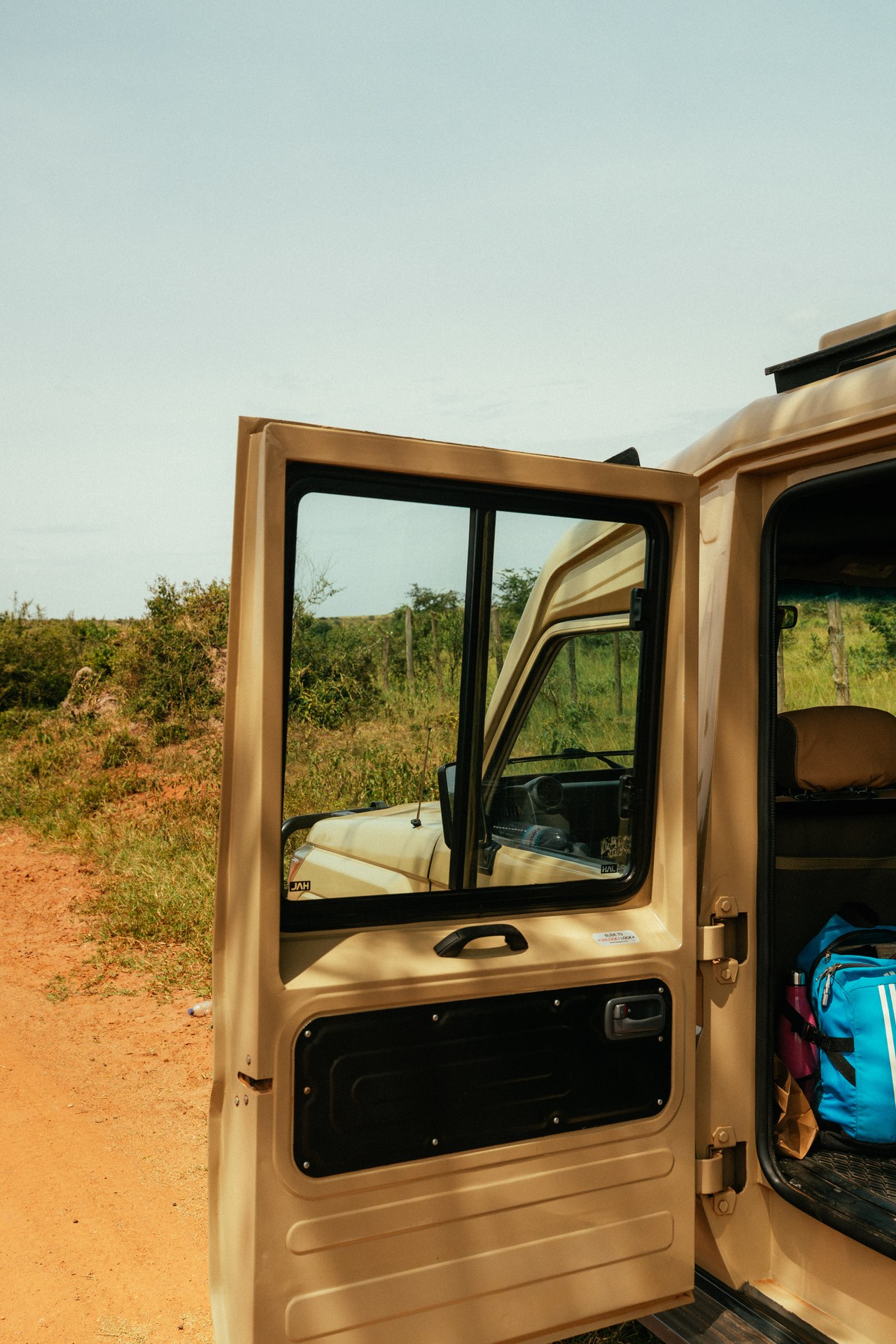
Open safari door: into the Ugandan wilderness
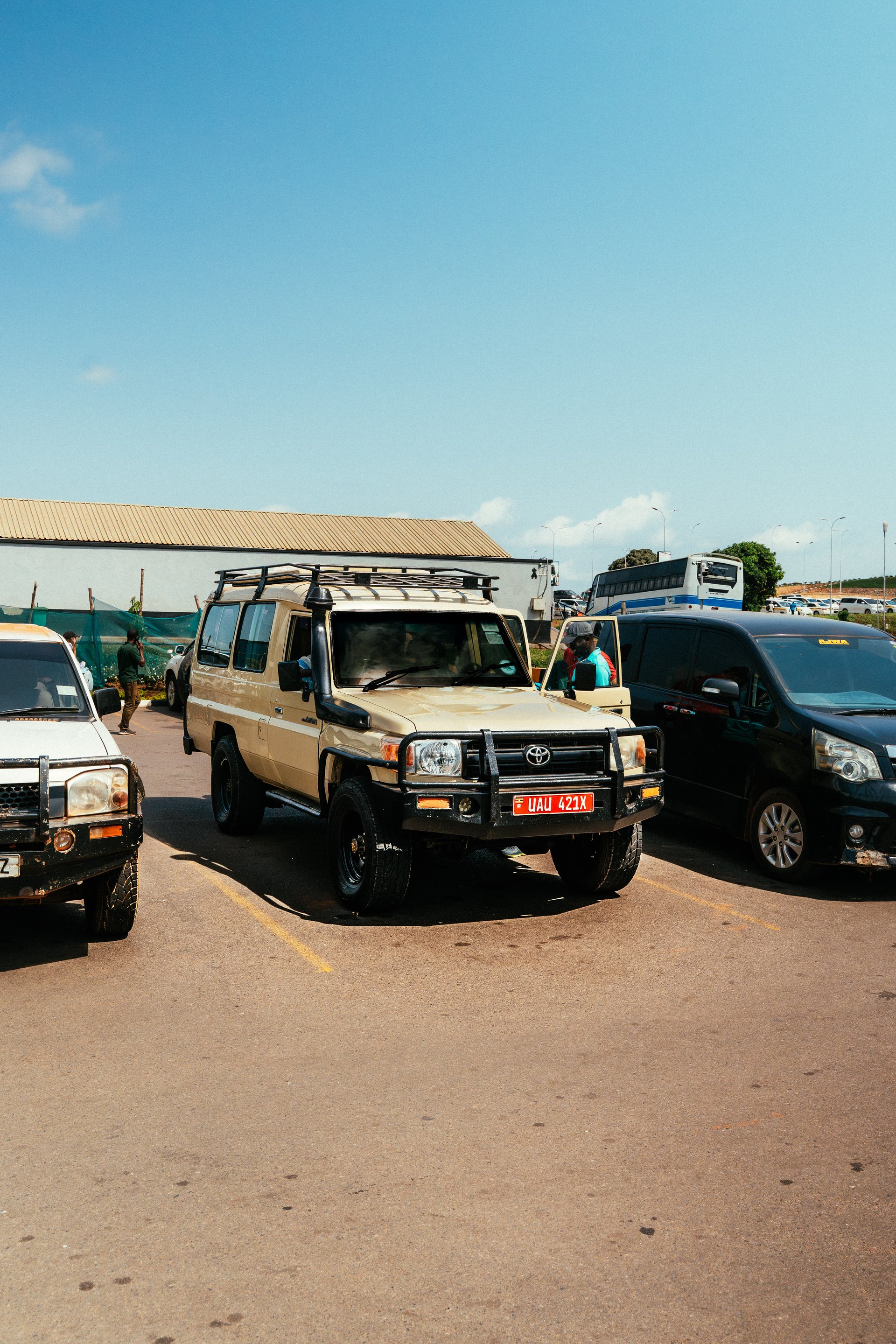
Toyota Land Cruiser Safari Vehicle Parked in Ugandan Lot
Off-road tyres in the shadow of a safari bus
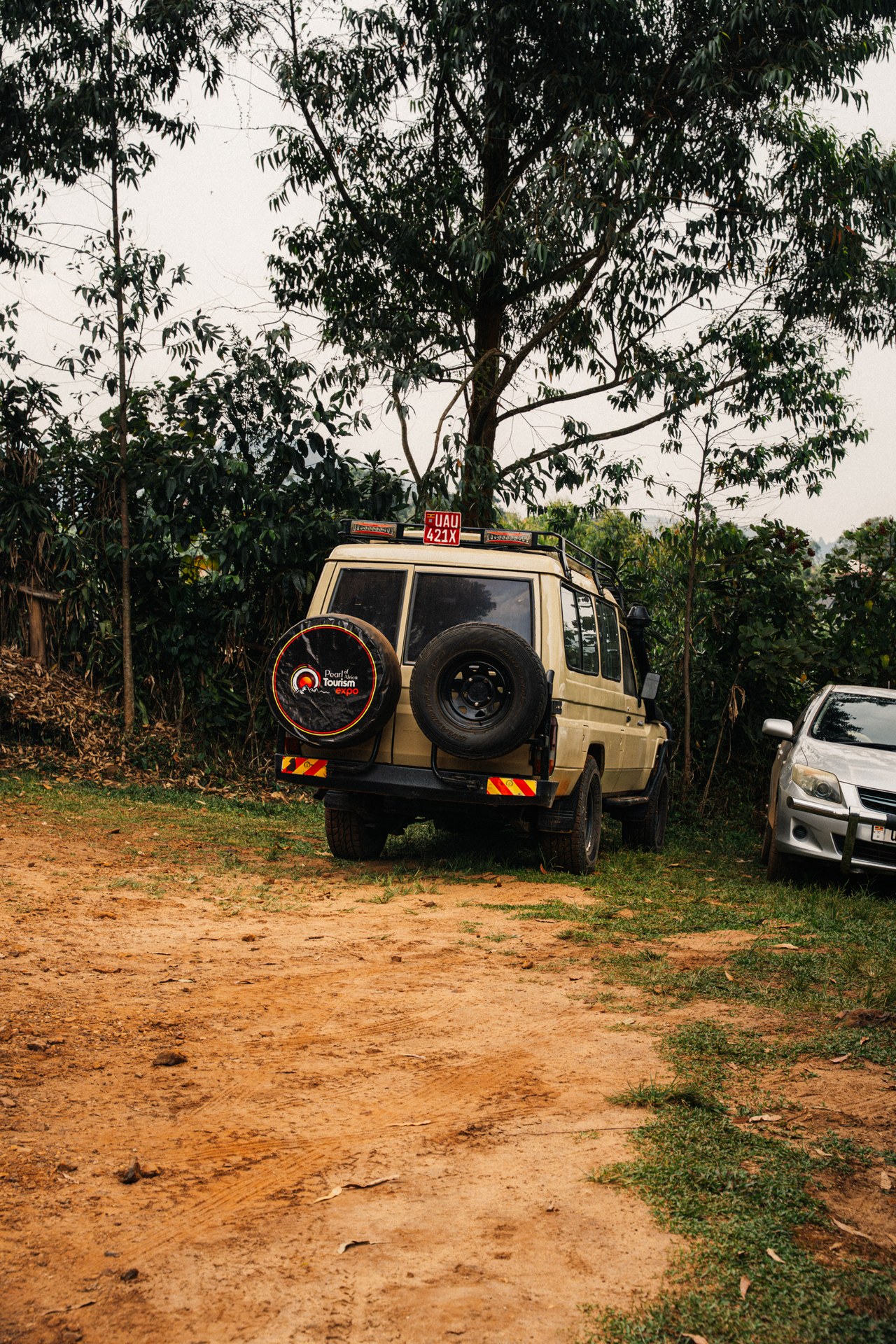
HopeBus on a sandy road in Uganda
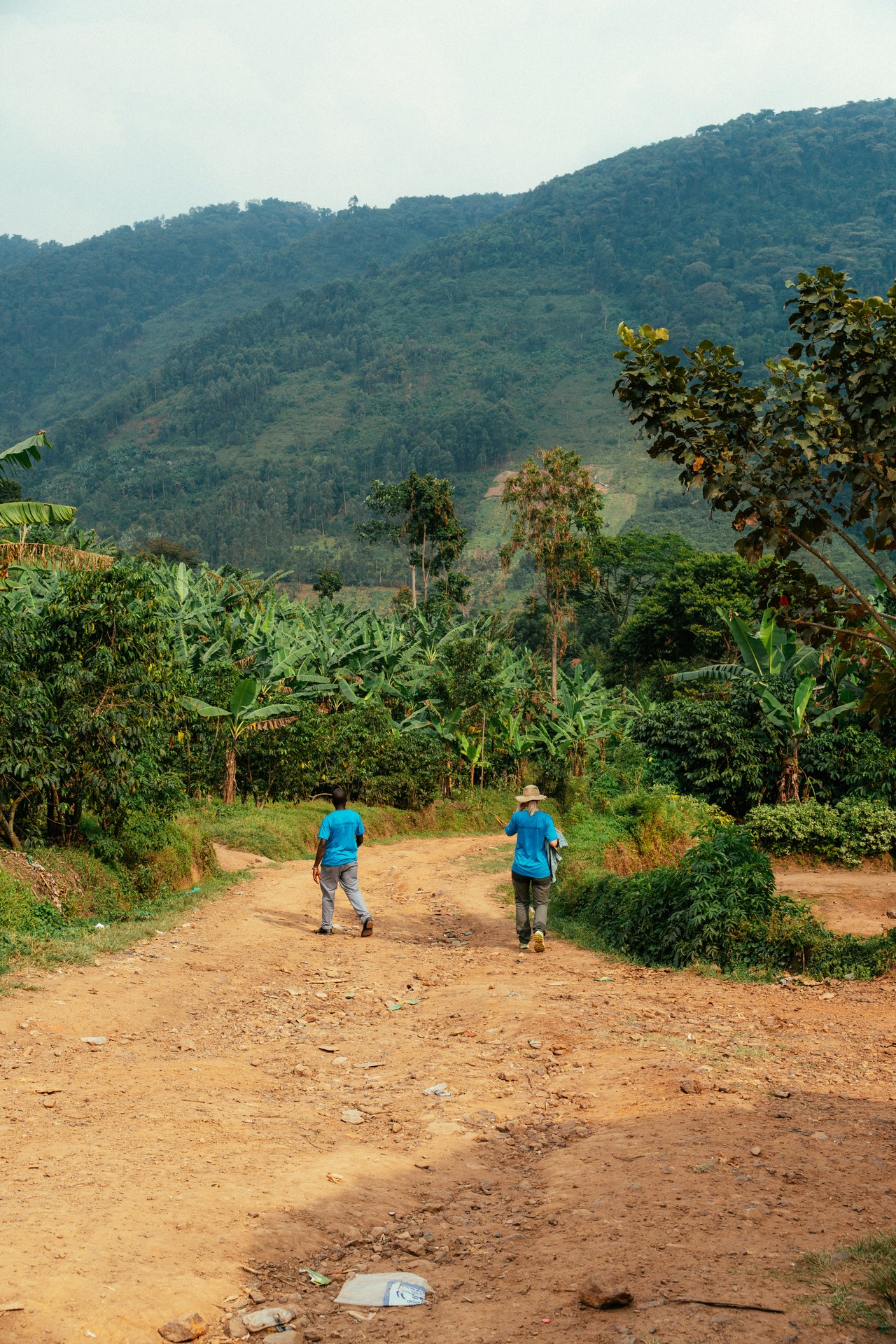
Two helpers on a dusty path through Uganda's green hills
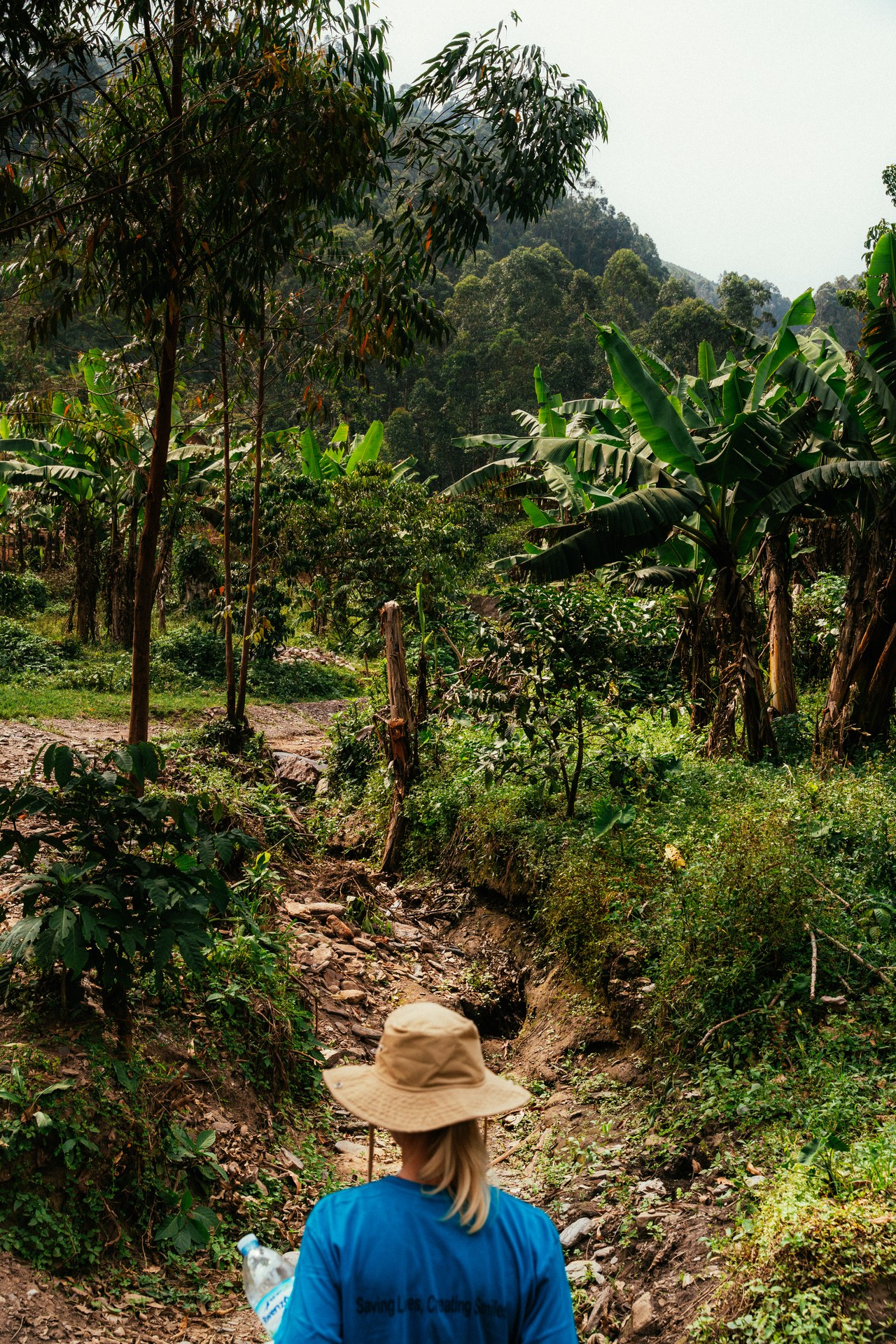
Woman on a dirt path through green Ugandan highlands