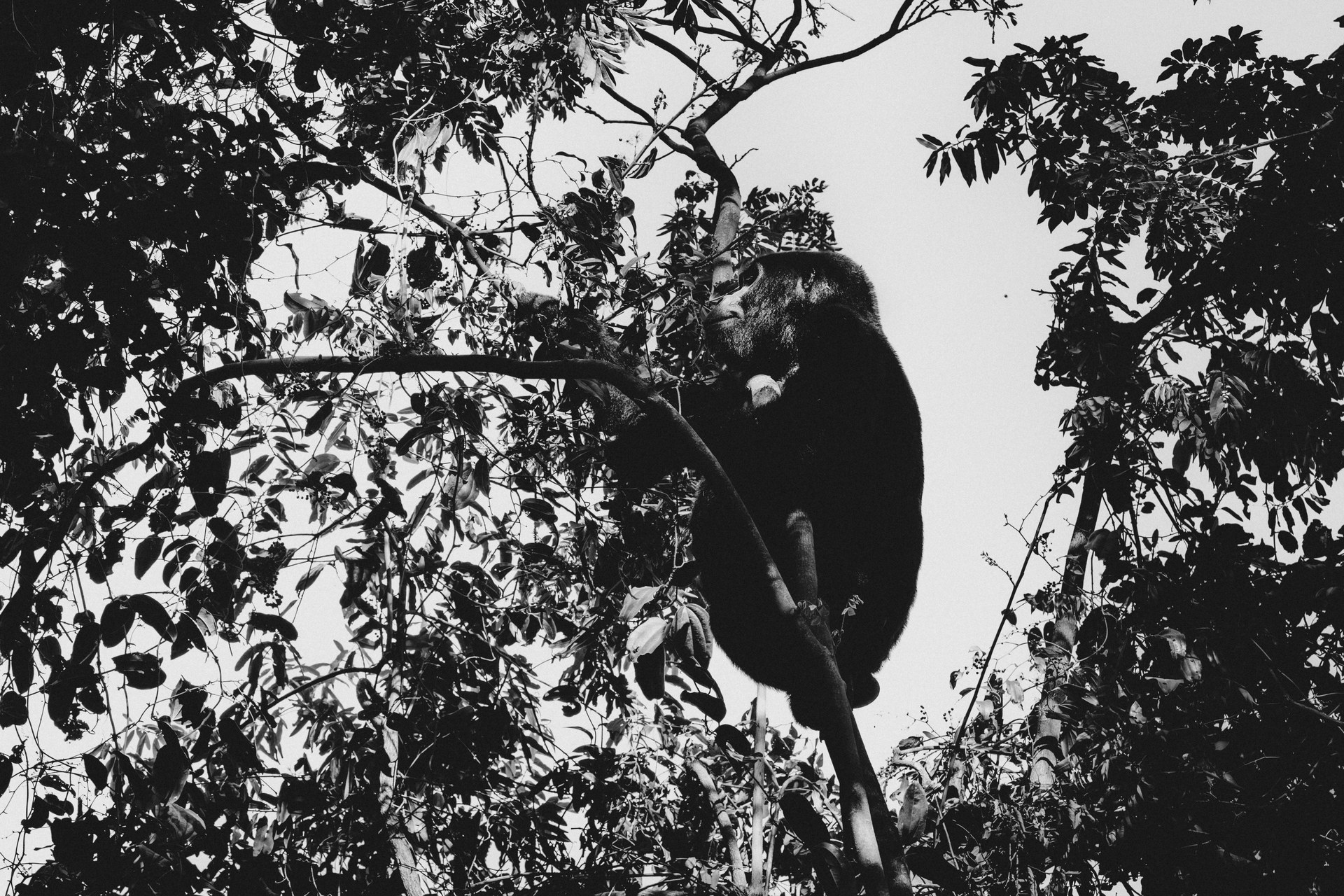
What Low Season Means at Bwindi
Bwindi Impenetrable National Park has two rainy seasons each year, and both are classified as low tourism season by Uganda Wildlife Authority. The long rains run from March through May, with April and May typically the wettest months. The short rains cover October and November, with variability depending on the year. These periods align with the broader East African rainfall calendar, driven largely by moisture from the Congo Basin to the west.
The Uganda Wildlife Authority General Management Plan (2014–2023) lists low visitation during the rainy season as a formal management challenge — one of 25 documented operational difficulties the park faces. The knock-on effects are significant: reduced revenue for rangers, maintenance, and the community programs that depend on tourism income. Understanding this context matters for visitors, because choosing low season is not just a personal convenience decision; it directly supports the park's financial stability.
What "low season" actually looks like on the ground is often a surprise to first-time visitors. Rain rarely falls all day. The typical pattern is clear, cool mornings — often with excellent visibility across the ridges — followed by cloud build-up from midday and afternoon or evening showers. Bwindi sits between 1,160 and 2,607 metres above sea level, and temperature stays mild year-round. Even the wettest months rarely feel oppressive. The experience is damp and misty, not tropical-humid.
The Real Advantages for Visitors
The most practical advantage of low season is permit accessibility. During peak season — June through August and December through February — gorilla permits sell out months in advance, with serious demand requiring bookings 6 to 12 months ahead. In low season, 4 to 6 weeks' notice is typically sufficient, and last-minute availability is not unusual. For travellers with flexible schedules or those who decide late, this is a genuine advantage rather than a compromise.
Lodge prices fall significantly during low season. Most properties in and around Bwindi reduce rates by 20 to 40 percent compared to peak season, and some offer package deals that bundle accommodation, transfers, and permit assistance. The savings can be substantial on a multi-night stay.
The difference in trail crowding is harder to quantify but easy to feel. A gorilla trek is legally capped at eight visitors per habituated group per day. In low season, departing groups often have four or five people rather than a full eight. Spending an hour with a gorilla family accompanied by four other people is a qualitatively different experience from a full-capacity group. The interaction feels quieter, less rushed, and more personal.
The forest itself is transformed by the rains. Vegetation that can look dusty and subdued in the dry season is intensely green and textured. Water moves visibly through the canopy — dripping from leaves, running along mossy branches, filling the air with sound. Experienced trackers note that gorillas often appear more settled in cooler, overcast conditions, moving less and spending longer at rest or feeding, which translates to better observation time for visitors.
Birding: Low Season Is Peak Season
For birdwatchers, the calculus is reversed from gorilla trekking: the rainy season is frequently the best time to visit. Insect abundance rises dramatically after rains, driving increased bird activity throughout the canopy and understorey. Migrants arrive from the north during the October–November short rains, adding species to the list that are absent in drier months. Calls, display behaviour, and territorial singing peak when food is abundant.
Bwindi sits within the Albertine Rift, one of Africa's most important avifaunal zones. The park holds more than 350 bird species, including 23 Albertine Rift endemics found nowhere else on earth. In October and November, the Ruhija sector in particular is considered one of the finest birding windows in East Africa, with endemic species such as the African green broadbill, Grauer's swamp warbler, and Shelley's crimsonwing at their most visible and vocal.
Combining a gorilla trek with dedicated birding time in October or November is one of the most rewarding itineraries available in Uganda, and the low season pricing makes it more affordable than a similar trip in the peak dry season.
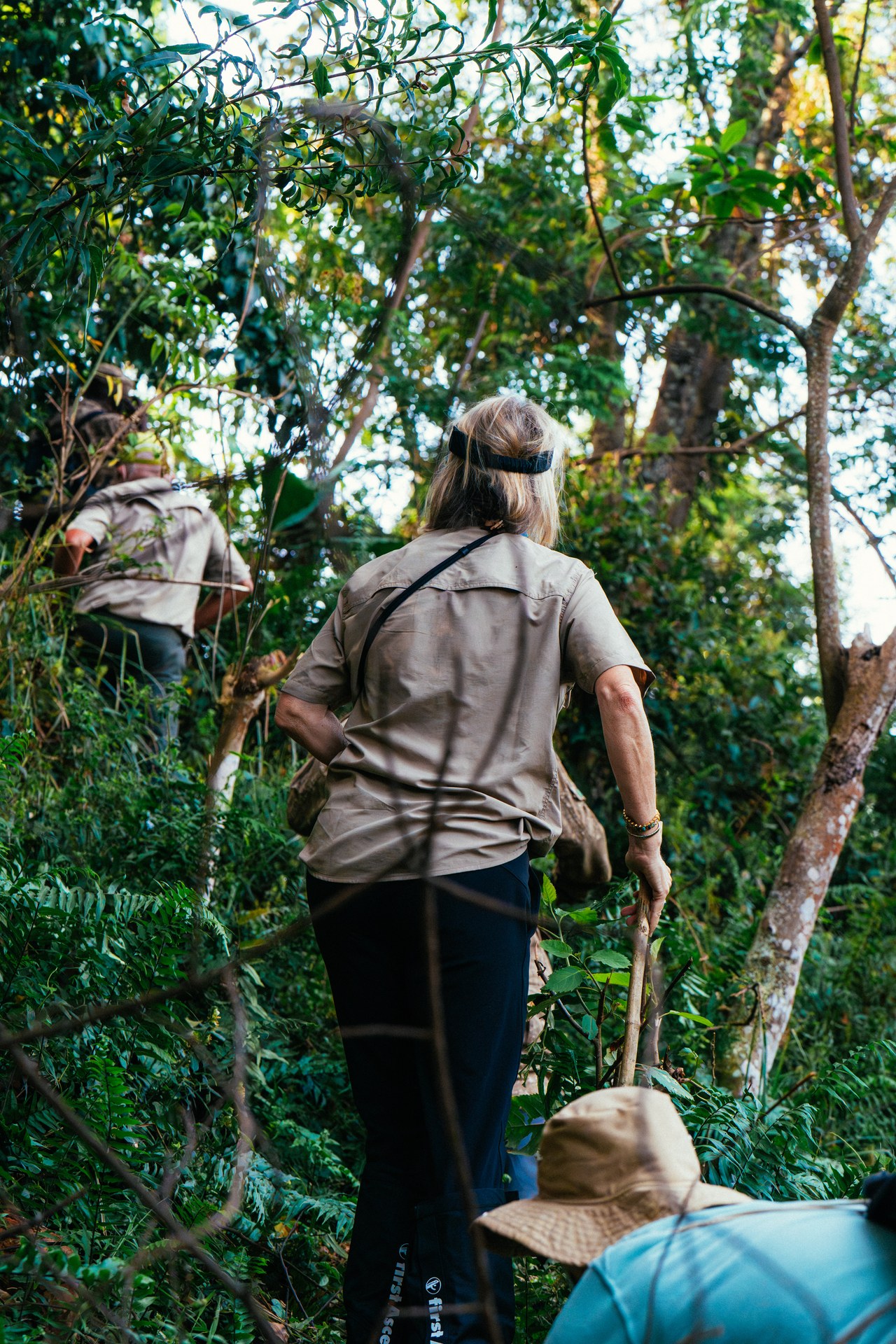
Through Bwindi forest on the trail of gorillas
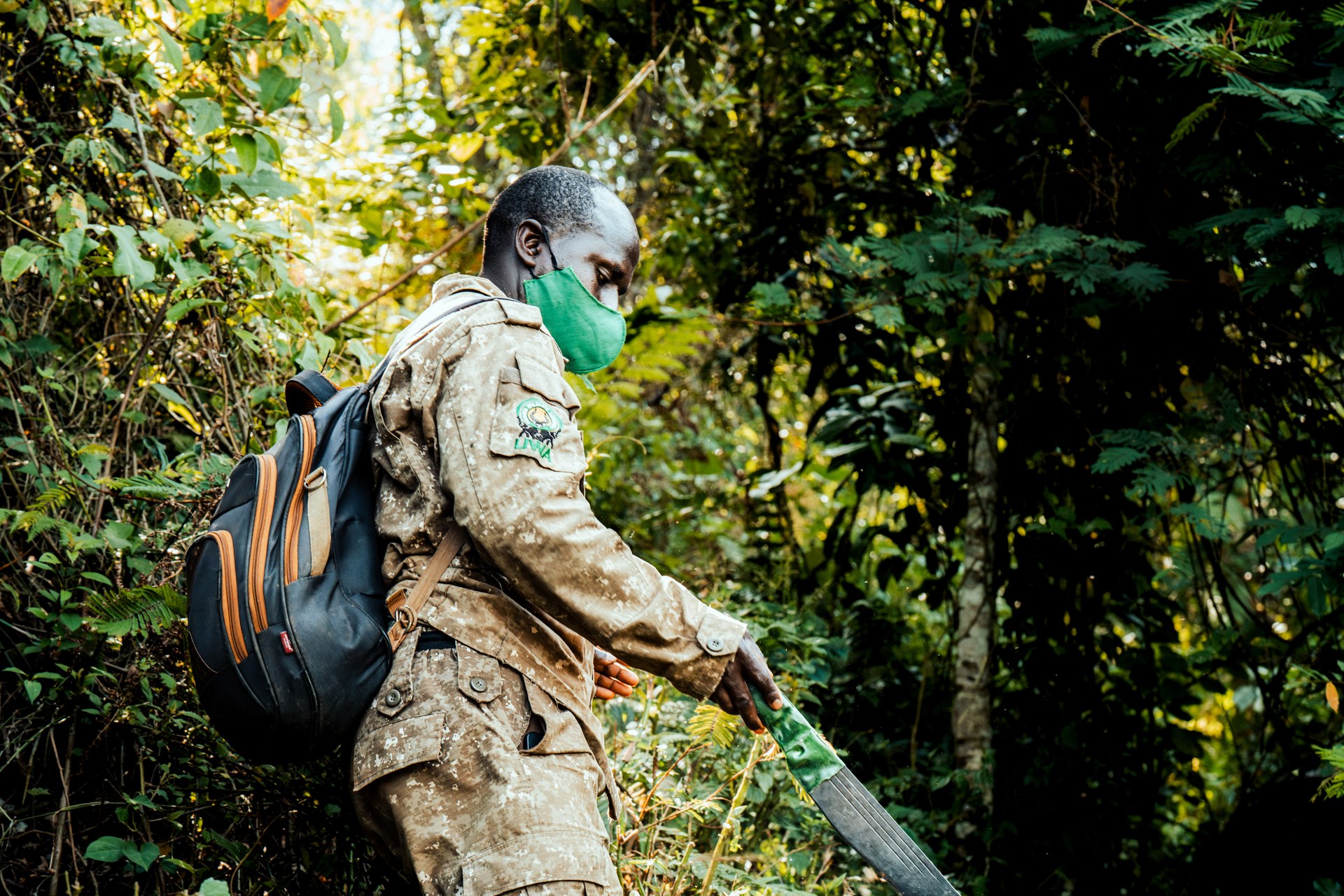
Ranger in Bwindi forest on the way to the gorillas
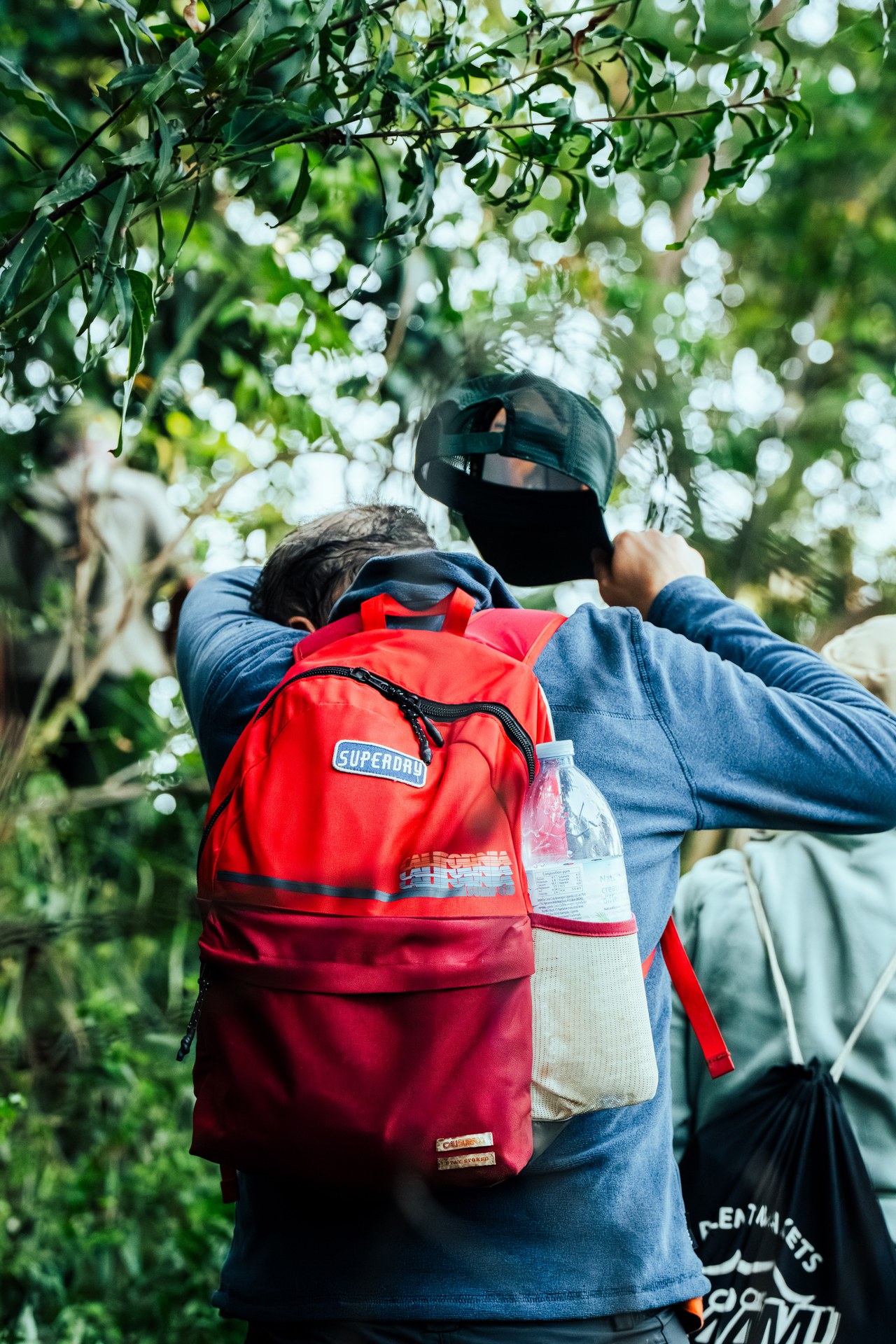
Preparing for the adventure: gorilla trekking in Bwindi
What Low Season Is Actually Like on the Ground
The daily rhythm during rainy season is fairly consistent. Gorilla treks depart at 8 a.m., when the forest is typically still dry and mist clings to the upper ridges. The trekking itself proceeds as normal — trackers locate the habituated group, guides navigate the terrain, and the hour-long visit with the gorillas is unchanged by season. The weather challenge usually arrives on the return walk, when clouds have built and afternoon rain begins.
The forest floor is genuinely muddy after sustained rain, and trails can be slippery on steep descents. Walking poles are strongly recommended and are usually available to borrow or hire at park offices if you have not brought your own. Leech socks or gaiters are a practical addition — leeches are harmless but persistent, and proper footwear prevents the nuisance of finding them later.
The atmospheric upside is difficult to overstate. The forest smells extraordinary after rain — a complex combination of earth, moss, bark, and wet vegetation that is specific to this ecosystem. Low cloud and mist settle across the canopy in layers, and the quality of light — diffuse, soft, with occasional shafts breaking through — is exceptional for photography. Many photographers who have visited Bwindi in both seasons rate the wet season images more highly.
UWA's Challenge: Making Low Season Work
The Uganda Wildlife Authority's management plan explicitly acknowledges the financial pressure created by low season. Reduced visitor numbers translate directly to reduced permit revenue, which funds core park operations including ranger salaries, anti-poaching patrols, boundary maintenance, and the community benefit programs that sustain goodwill among the 500,000-plus people living in the parishes surrounding Bwindi.
In response, UWA and licensed operators have developed pricing structures and promotional packages aimed at attracting visitors during quieter months. Some lodges partner with conservation organisations and community enterprises to offer value-added experiences — village visits, community forest walks, cultural programs — that make a low season trip feel more complete rather than a compromise on the peak season experience.
Some conservation researchers argue that low season visits may be preferable for the gorillas themselves. The UWA's own research agenda includes work on the optimal number of habituated groups and the cumulative effects of daily tourist contact on gorilla behaviour. Fewer visitors per day and lower average group sizes during low season reduce the aggregate stress placed on habituated families — a consideration that sits alongside the financial case for spreading tourism more evenly across the year.
Planning a Low Season Visit
Packing for low season requires modest adjustments rather than a complete change of approach. A lightweight, packable waterproof jacket and trousers are more practical than a heavy rain coat. Dry bags or waterproof cases for cameras and phones are essential — gear failure in the forest is a real risk. Quick-dry synthetic clothing layers work well; cotton should be avoided for trekking as it retains cold and moisture. Leech protection — either dedicated leech socks or close-fitting gaiters over boots — is worth including, particularly in April and May.
Among the low season months, April and May are the wettest, with October more variable and November transitioning toward the dry season. March is often a reasonable entry point into low season — wetter than the peak dry months but not yet at maximum rainfall. For visitors prioritising birding, October and November offer the best combination of activity and manageable weather. For visitors primarily focused on gorillas with good value, March or early November tend to work well.
Accommodation availability is generally good across the low season, and last-minute bookings are feasible at most lodges and guesthouses in the Buhoma and Ruhija sectors. Visitors combining Bwindi with other Ugandan parks should note that Queen Elizabeth National Park — the nearest major savannah destination — has a partially overlapping dry season calendar, making a combined circuit during October or early November viable for travellers who want forest and savannah in a single trip.
The gorilla permit booking process is straightforward through UWA's online portal or via a licensed operator. In low season, permits for specific dates are typically available with a few weeks' notice, and some operators hold small permit allocations that can be confirmed within days. For spontaneous travellers or those adjusting itineraries at short notice, this flexibility is one of the most compelling reasons to choose low season at Bwindi.
Frequently Asked Questions
Related Articles
Best Time to Visit Bwindi: Seasons Explained
What to Pack for Gorilla Trekking
Gorilla Permits: How to Book and What to Expect
Beyond Gorillas: Other Things to Do in Bwindi
Birds of Bwindi Impenetrable Forest
Ruhija Sector: Bwindi's Birding Hub