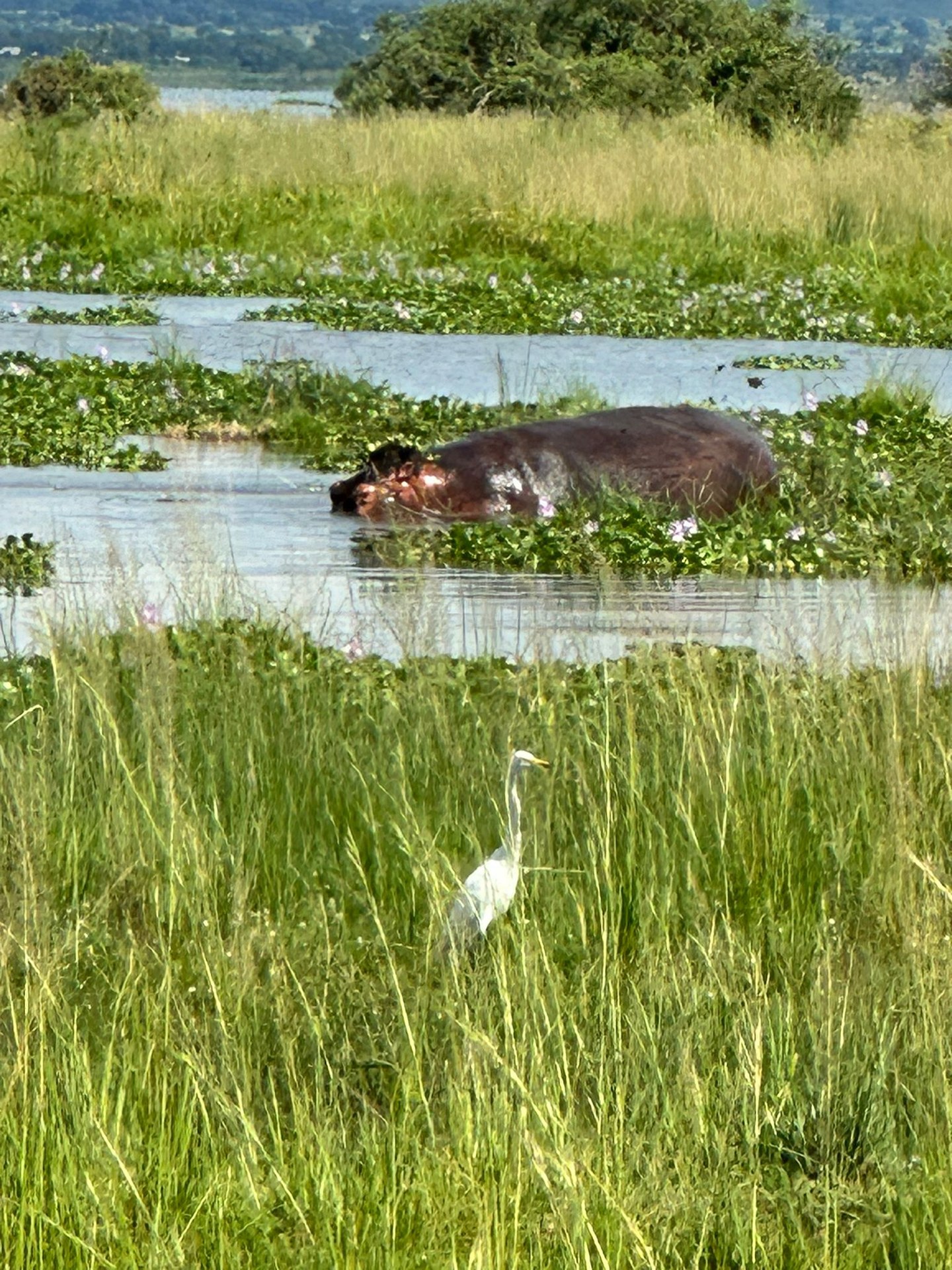
Uganda is frequently described as the “Pearl of Africa” and nowhere does that description feel more earned than in the country's avifauna. With 1,063 recorded bird species representing 11% of all bird species known to science and roughly 50% of Africa's total bird diversity, Uganda packs an astonishing ornithological range into a country smaller than many European nations. This richness sits alongside 18,783 documented species of fauna and flora in total, which place Uganda consistently among the top ten most biodiverse countries on Earth.
Multiple visits across different seasons — including a ten-day stay in January 2026, fieldwork in October 2024, and further time in May 2026 — make clear that Uganda's birding is not concentrated in one region or habitat type. The diversity is spread across montane forest, savanna woodland, papyrus swamp, acacia scrub, crater lakes, and the shores of the great Rift Valley lakes. Each ecosystem sustains a distinct community of birds, and a well-planned itinerary moving between two or three parks can produce lists approaching 500 species within a single trip.
Why Uganda Ranks Among the World's Top Birding Destinations
The ecological foundations of Uganda's bird diversity are unusual even by African standards. The country sits at the junction of the Albertine Rift, the Congo Basin forest system, the East African savanna belt, and the Nile watershed. Each of these major biogeographical zones contributes its own set of species, and in Uganda they overlap rather than being cleanly separated. A birder who spends time at the western border — near Bwindi Impenetrable National Park or the Rwenzori Mountains — encounters an avifauna dominated by Albertine Rift endemics and Congolese forest species. Moving east toward Queen Elizabeth National Park or north toward Murchison Falls, the community shifts toward savanna generalists, waterbirds, and open-country raptors.
This diversity is reinforced by the country's altitude range. From the shores of Lake Victoria at roughly 1,135 metres above sea level to the glaciated peaks of the Rwenzoris above 5,000 metres, Uganda provides habitat for lowland, mid-altitude, and Afroalpine bird communities within a short driving distance of one another. The Echuya Central Forest Reserve in Rubanda and Kisoro districts illustrates this altitude effect well: its bamboo forest and papyrus swamp at higher elevations support species such as the Yellow-whiskered Greenbul, Sooty Boubou, and the Regal Sunbird — birds that do not appear in the warmer, drier parks further east.
The country's stable tropical climate, with two rainy seasons and two dry seasons per year, means that resident bird populations are productive for a longer portion of the calendar year than in many African countries with more extreme seasonality. The arrival of Palearctic migrants between November and April adds a further layer of diversity, with species from Europe and Asia appearing alongside the permanent resident community.
The Key Birding Parks and What Each Offers
Bwindi Impenetrable National Parkis Uganda's most celebrated birding site. More than 350 species have been recorded within its montane forest, including 23 of the Albertine Rift endemic bird species — the highest concentration of range-restricted birds in any single African forest. Target species include the African green broadbill, Shelley's crimsonwing, the Rwenzori turaco, and the handsome francolin. The Ruhija sector at around 2,300 metres is the most productive zone for endemic species, while Buhoma in the north offers excellent general forest birding for those combining a gorilla trek with a morning bird walk. On visits to Buhoma in October 2024 and January 2026, the range of species encountered in a single morning walk consistently exceeded expectations, with hornbills, sunbirds, and forest robins active from first light.
Kibale Forest National Park in western Uganda is best known for the highest concentration of primates on Earth, but its closed-canopy forest also supports an impressive bird list. Forest species that require continuous canopy cover thrive here alongside the chimpanzees, and early morning walks produce a steady stream of barbets, greenbuls, hornbills, and sunbirds. The adjacent Bigodi Wetland Sanctuary provides excellent open-water and papyrus birding with easy community-guided access.
Queen Elizabeth National Park covers a dramatic landscape of savanna, crater lakes, and the Kazinga Channel, which connects Lake George and Lake Edward. The Kazinga Channel boat cruise is one of the most productive waterbird experiences in East Africa: African fish eagles, pied kingfishers, yellow-billed storks, pink-backed pelicans, and goliath herons are regularly encountered at close range. The Maramagambo Central Forest Reserve, within the park, adds a forest dimension with its own set of species distinct from the open savanna community outside.
Lake Mburo National Parkoccupies a special position in any Uganda birding itinerary: it is the only location in the country where the Red-faced Barbet can be seen. This sought-after species is found at the salt-lick platforms in Miriti Valley and around Rubanga Forest, making it a firm target for any visiting birder. The park's acacia woodland and wetland habitats also support species including the Lilac-breasted Roller, African Grey Hornbill, Nubian Woodpecker, Greater Blue-eared Starling, and the Bare-faced Go-away Bird. The best birding season within Lake Mburo runs from November to April, when migratory species swell the resident list.
Murchison Falls National Parkin the northwest draws birders for its waterfall, river, and savanna combination. The Nile delta at the northern end of the park is a productive site for the endangered shoebill, one of Africa's most extraordinary birds. Boat trips on the Nile below the falls deliver excellent waterbird diversity, and the open savanna woodlands support large raptors, rollers, bee-eaters, and the Abyssinian ground hornbill.
Notable and Threatened Species
Among the most visually striking of Uganda's birds is the Grey-crowned Crane (Balearica regulorum), the country's national bird. Its gold-and-white facial mask, red wattle, and dramatic grey-and-white wings with chestnut and gold inner feathers make it unmistakable in the papyrus swamps and wet grasslands it inhabits. Despite its status as a national symbol, the Grey-crowned Crane is classified as threatened, facing pressure from wetland drainage, capture for the pet trade, and habitat conversion. Protecting the species has become a focal point for several Ugandan conservation organisations.
Three vulture species recorded in Uganda — the White-backed Vulture, Rüppell's Vulture, and Hooded Vulture — are also listed under threatened categories. Vultures across Africa face severe population declines driven primarily by deliberate and accidental poisoning, the trade in vulture parts for traditional medicine, and electrocution on power lines. Uganda's relatively intact wilderness areas still support viable populations, but the long-term picture across the region is of concern. An additional 15 bird species in Uganda carry vulnerable status, underlining the pressure on even this exceptionally rich avifauna.
The shoebill (Balaeniceps rex) is among Africa's most iconic birds, and Uganda offers some of the continent's most reliable viewing opportunities. Mabamba Bay Wetland on the northern shore of Lake Victoria, and the Nile delta at Murchison Falls, are both well-established shoebill sites. The bird's enormous clog-shaped bill, prehistoric bearing, and habit of standing entirely motionless for extended periods make every encounter remarkable.
Habitats: From Bamboo Forest to Papyrus Swamp
The Albertine Rift montane forests in the west — Bwindi, the Rwenzoris, Echuya, and Mgahinga — hold the highest density of endemic and range-restricted species. These forests are characterised by deep shade, high humidity, and a complex vertical structure from forest floor to emergent canopy, each layer supporting its own set of specialist birds. Bamboo zones within these forests, such as those at Echuya Central Forest Reserve, are particularly important for species that depend on this plant type for food and nesting.
Wetlands are the second great driver of bird diversity. Uganda holds a significant portion of Africa's papyrus swamp, a specialised habitat that supports papyrus endemics including the papyrus gonolek and the white-winged warbler. The Bigodi Wetland, Lake Victoria shoreline, Mabamba Bay, and the swamp margins throughout western Uganda are all productive papyrus birding sites. Open water on the great Rift Valley lakes adds waterbirds ranging from African fish eagles and cormorants to various species of heron, egret, kingfisher, and wader.
The savanna woodlands of Queen Elizabeth, Lake Mburo, and Murchison Falls introduce the third major habitat community. Here the characteristic birds are rollers, bee-eaters, starlings, weavers, hornbills, and raptors adapted to open landscapes with scattered trees. The seasonal pulse of rainfall dictates the timing of breeding and migration in these parks, and the presence of migratory species between November and April significantly enriches any visit during that period.
Planning a Uganda Birding Trip
A Uganda birding itinerary of ten to fourteen days can comfortably cover three or four parks and expose a visitor to the full range of the country's habitats. The most productive sequence for a comprehensive list typically begins in Bwindi or Kibale for forest endemics, continues to Queen Elizabeth for waterbirds and savanna species, adds Lake Mburo for the Red-faced Barbet, and finishes with Murchison Falls for shoebill and northern savanna birds. Each park pairs birding with other wildlife — gorilla trekking in Bwindi, chimpanzees in Kibale, lions in Queen Elizabeth — making the itinerary compelling for non-birding travel companions as well.
A field guide covering East African species, combined with a smartphone app for call identification, forms the most useful toolkit. Binoculars in the 8x42 or 10x42 range perform well across the range of distances encountered, from close forest undergrowth to open water. Booking specialist birding guides at each park, rather than relying on general safari guides, makes a substantial difference: a local specialist at Bwindi who knows the individual territories of rare endemic species can deliver results in a morning that a visitor with a standard guide would be unlikely to replicate in several days. Morning starts before 6:30 AM maximise the productive window when bird activity peaks, and light rain during the wet season need not deter an early session — birds often continue calling through light rainfall in the forest parks.
[QUOTE: local guide on first impressions of Uganda's bird diversity]