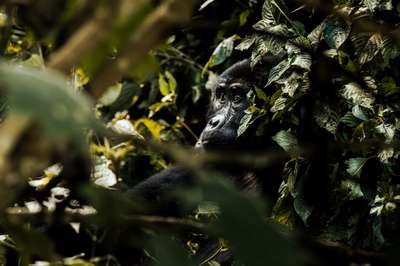
Bwindi Forest National Park — officially Bwindi Impenetrable National Park — is a 321 km² ancient rainforest in south-western Uganda and UNESCO World Heritage Site that holds approximately half the world's surviving mountain gorillas. After three hours of hiking through the dense, slippery undergrowth on our gorilla trek, we crouched in near silence and watched a gorilla family go about their morning — completely unconcerned by our presence. No fence. No distance. No intermediary between you and one of the most endangered primates on Earth.
Key Facts
- Official name
- Bwindi Impenetrable National Park
- Location
- South-western Uganda, Albertine Rift
- Area
- 321 km²
- Altitude range
- 1,160 – 2,607 m above sea level
- UNESCO status
- World Heritage Site since 1994
- Forest age
- Over 25,000 years
- Mountain gorillas
- ~459 (2019 census), ~half of global total
- Bird species
- 350+ including 23 Albertine Rift endemics
- Trekking sectors
- Buhoma, Ruhija, Rushaga, Nkuringo
- Gorilla permit (foreign)
- $800 per person (UWA, 2026)
What Makes Bwindi's Forest "Impenetrable"
The word is not metaphorical. Bwindi's forest floor is a tightly interlocked mass of ferns, vines, root systems, and low canopy growth that has built up, layer upon layer, over 25,000 years without significant human clearing. Moving through it without a machete and a guide is genuinely impossible across most of the forest interior. The trails maintained for gorilla trekking are narrow cleared paths through this density — and even they require effort, balance, and occasional crawling beneath fallen trunks.
The park spans a dramatic altitude range, from around 1,160 metres above sea level at the valley floors to over 2,600 metres along the upper ridges. This creates distinct ecological zones stacked vertically through the same forest. Lower altitudes support a closed-canopy tropical forest with fig trees, oil palms, and dense undergrowth. Higher elevations transition into montane forest with Podocarpus and Hagenia trees, more open canopy, and a cooler, misty atmosphere. The Ruhija sector sits at this upper zone, at around 2,340 metres, giving it a noticeably different character from the valley-floor trails at Buhoma.
Bwindi is one of the oldest forests in Africa. While much of Uganda's forest was cleared during the last ice age approximately 18,000 years ago — when the climate became cooler and drier — Bwindi's topography and microclimate allowed it to persist as a refugium. Species that were driven to extinction in the broader region survived here. This is why the forest holds such a disproportionate concentration of endemic species: it has been a stable ecosystem for an extraordinarily long time. Uganda's forest ecosystems, of which Bwindi is the most ancient and best-preserved, represent some of the most biodiverse land in Africa relative to their area.
The park is surrounded by a densely settled agricultural landscape, which makes it ecologically isolated. It does not connect to other major forest blocks by wildlife corridors, though a cross-border link with the Sarambwe Reserve in the Democratic Republic of Congo exists along the park's western boundary. This isolation has amplified the park's role as a refuge — and made conservation of the boundary critically important. The forest that exists within the 321 km² park boundary is essentially all that remains of this ancient ecosystem.
Mountain Gorillas: The Population That Survived
Mountain gorillas (Gorilla beringei beringei) exist in only two populations on Earth: the Virunga Massif, shared between Uganda, Rwanda, and the Democratic Republic of Congo; and Bwindi Forest National Park. No mountain gorillas survive in captivity. Every individual alive is in the wild, in these two locations. The 2019 census put the Bwindi population at 459 individuals — roughly half the global total.
The recovery of mountain gorillas from the brink of extinction is one of the most documented conservation successes in Africa. When the Bwindi population was first formally surveyed in 1997, approximately 300 individuals remained. The population has grown steadily under protection, driven by dedicated ranger forces, veterinary monitoring, a community revenue-sharing programme, and the economic incentive created by gorilla tourism. Mountain gorillas were reclassified from Critically Endangered to Endangered on the IUCN Red List in 2018 — the only great ape to have its threat status downgraded in recent years.
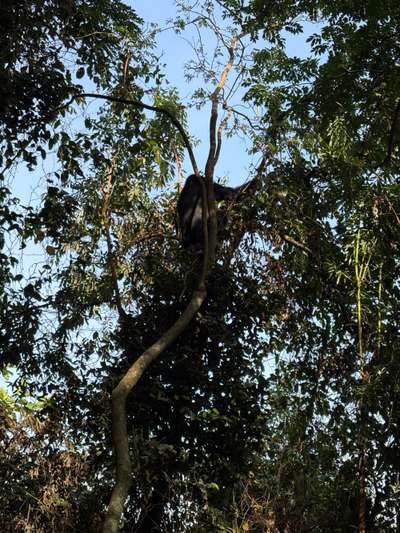
Bwindi's gorillas are organised into family groups, each with a dominant silverback male, multiple females, juveniles, and infants. As of 2026, more than 18 of these groups have been habituated — a multi-year process in which researchers and rangers gradually accustom the gorillas to human presence until they no longer flee or display aggression when approached. Only habituated groups are available for tourism visits, which are capped at eight visitors per group per day to minimise disturbance.
Gorilla behaviour during a trekking encounter is genuinely striking. The families we observed were entirely occupied with feeding, resting, and social interaction. Young gorillas tumbled through low branches, silverbacks sat and watched with the absolute calm of animals that have nothing to fear. In June 2026, the first gorilla we encountered was feeding in a large tree — pulling leaves methodically, unhurried, apparently indifferent to the group of eight humans standing ten metres below. The one-hour time limit felt arbitrary from a wildlife perspective, but it exists to protect the gorillas from prolonged exposure to human pathogens, which they share a vulnerability to because of their genetic closeness to us.
The organisations working on mountain gorilla conservation in Bwindi include the Uganda Wildlife Authority (UWA), the International Gorilla Conservation Programme, and the Dian Fossey Gorilla Fund International — all of which contribute to veterinary monitoring, anti-poaching capacity, and community engagement programmes. The Gorilla Conservation Coffee initiative, which supports smallholder coffee farmers near the park boundary as an alternative livelihood to forest encroachment, represents the kind of integrated approach that makes Bwindi's conservation model distinctive.
Gorilla Trekking in Bwindi Forest: What Actually Happens
The trekking experience at Bwindi Forest National Park begins the evening before, when you should confirm your permit, sector, and lodge transfer arrangements. Trekking briefings start at 7:00 AM at the sector headquarters — Buhoma Gate, Ruhija, Rushaga, or Nkuringo — where rangers assign your group to a specific gorilla family and give an overview of what to expect. Groups are a maximum of eight visitors, accompanied by a tracker guide and two armed rangers.
During our gorilla trek in January 2026, we were accompanied by one guide and two rangers carrying rifles. The presence of armed rangers in a forest felt strange at first — but it makes complete sense. The rangers are there for safety and as a deterrent against the very rare possibility of unexpected wildlife behaviour, not against the gorillas themselves (who by this point are fully habituated). Both rangers on our trek were exceptional: knowledgeable, cheerful, and genuinely helpful on the steep and slippery sections, where they offered a steadying hand without being asked.
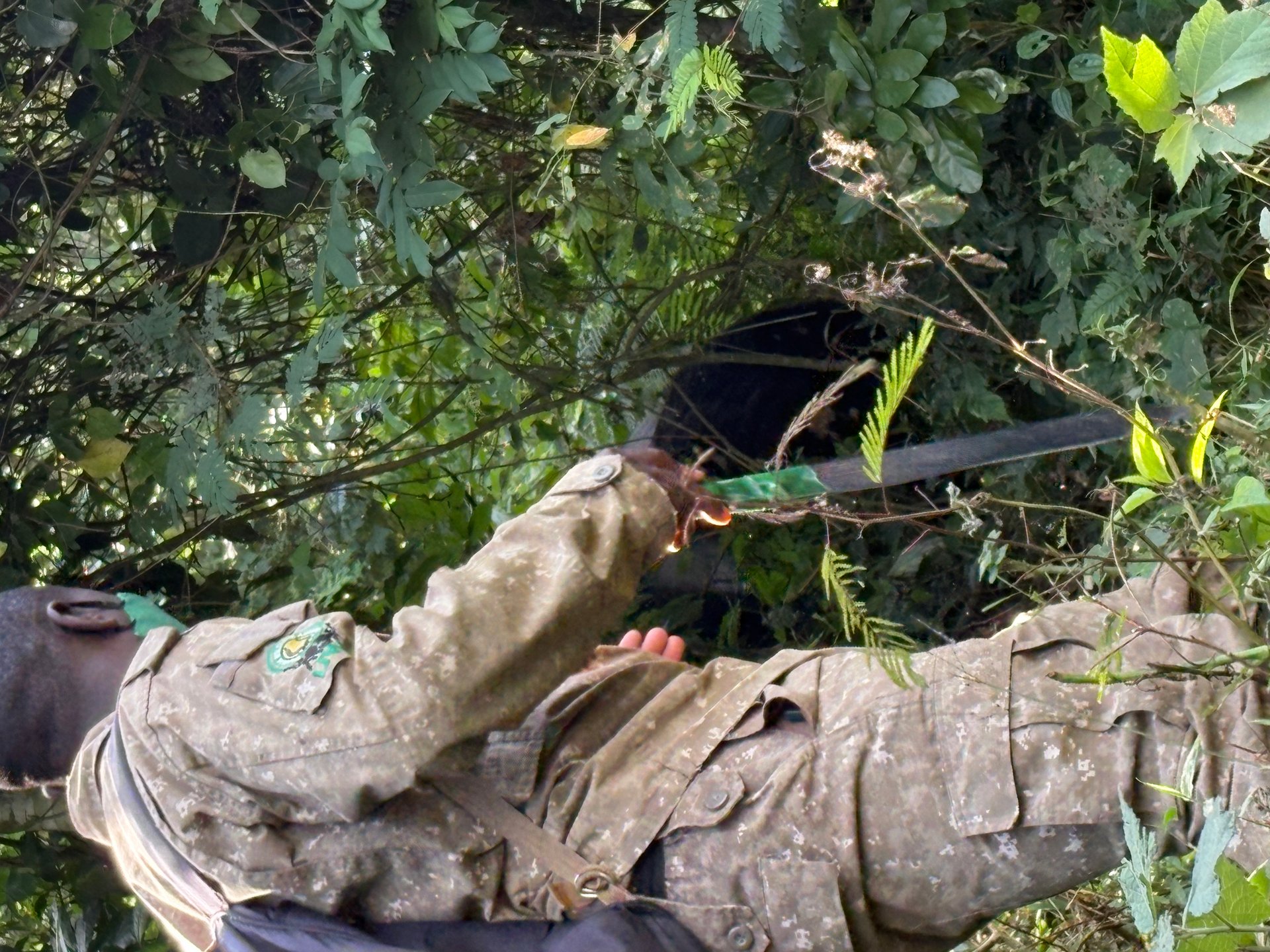
The trek itself took us three hours on the outward leg in January 2026 before we reached the gorilla family. Some treks take under an hour; others last a full day depending on where the family has moved overnight. Gorilla trackers begin work early in the morning, following the group from where they nested the night before, and radio ahead to the trekking guide when the family is located. The forest terrain at Bwindi is genuinely demanding: steep ridges, exposed root systems, and wet clay underfoot for most of the year. Hiking poles and porter hire — available at the trailhead for approximately $15–20 — make a significant practical difference, particularly on the descent.
When you arrive at the gorilla family, the guide signals to stop and spread out quietly. The rule is a minimum of seven metres distance from any individual gorilla, and no flash photography. In practice, the gorillas themselves sometimes move closer — young ones especially have a tendency to wander toward the curious visitors. When a juvenile passed within two metres of our group in June 2026, the guide held up a hand for stillness, not retreat. The gorilla stopped, looked, lost interest, and climbed a nearby sapling.
[QUOTE: local guide on first impressions of a gorilla family encounter]
The gorilla trekking permit for foreign visitors costs $800 per person (Uganda Wildlife Authority, 2026). This fee covers park entry for the trekking day and funds the entirety of Bwindi's conservation infrastructure: ranger salaries, veterinary monitoring, anti-poaching patrols, and the community revenue-sharing programme that returns a portion of park revenues to local communities. The permit is non-transferable and tied to your passport number. It must be booked in advance — through UWA directly or via a licensed tour operator — and during peak season (June–September and December–February) permits sell out months ahead.
The Four Sectors of Bwindi Forest National Park
Bwindi Forest National Park is divided into four trekking sectors, each covering a different section of the park and served by its own cluster of accommodation. Your gorilla permit specifies which sector you will trek from, and you should book accommodation in or near that sector before confirming your permit.
Buhoma
North — Kanungu District
The original gorilla tourism base, established in 1993 when the Mubare group became Uganda's first habituated family. The most developed infrastructure with the widest range of accommodation, from the budget Buhoma Community Rest Camp to the Sanctuary Gorilla Forest Camp (a luxury tented property within the park boundary, accessible directly from the trailhead) and Buhoma Lodge. Three gorilla families: Mubare, Habinyanja, and Rushegura.
Ruhija
Northeast — 2,340 m altitude
The highest sector, set in upper montane forest and approached from Kabale. Fewer visitors than Buhoma or Rushaga, with a pronounced birding focus — Ruhija is the primary site for Albertine Rift endemic bird species within Bwindi. The Ruhija Community Rest Camp and Ruhija Gorilla Safari Lodge serve visitors. The altitude means cool evenings and morning mist, requiring warmer clothing than lower sectors.
Rushaga
South — Kisoro District
The sector with the greatest number of habituated gorilla groups available for permits — making it the most practical option when peak-season permits to Buhoma are unavailable. Growing accommodation infrastructure including Clouds Mountain Gorilla Lodge (above 2,000 m, a community project of Wildplaces Africa and the African Wildlife Foundation) and Volcanoes Bwindi Lodge (eight bandas, renovated 2018). Convenient for combining with Lake Bunyonyi.
Nkuringo
Southwest ridge — 2,090 m
The most dramatic setting in Bwindi: a ridge above the south-western park boundary with views across the forest canopy into the DRC on clear days. The Nkuringo Bwindi Gorilla Lodge, a community property at 2,090 m with 18 rooms, is the base for most visitors. Nkuringo Walking Safaris operates specialised multi-day walking routes connecting the sector to Lake Mutanda and Kisoro. The descent into the forest is steep; porter hire is particularly recommended here.
Buhoma: The Community Beside the Forest
The village of Buhoma in Kanungu District sits at the northern gate of Bwindi Forest National Park, at around 1,490 metres above sea level. Its main street runs along the red-earth road leading to the sector headquarters: small workshops, food stalls, and timber-framed shops with corrugated iron roofs facing each other across a wide, dusty strip. In January 2026, the street was active and welcoming. A new tarmac surface is planned for 2026 — one of the more visible signs of the infrastructure investment that gorilla tourism revenue has made possible in the village over the past thirty years.
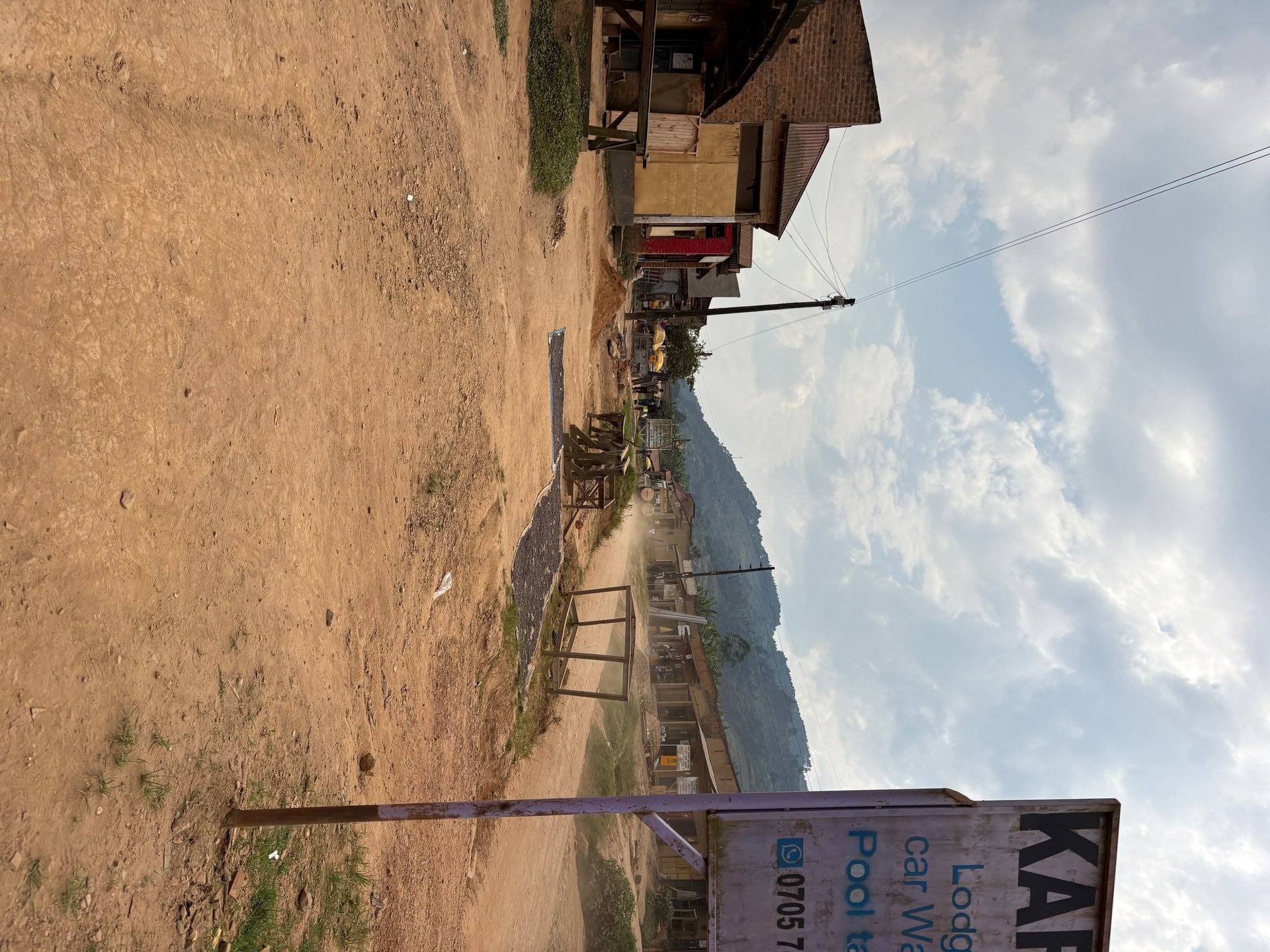
Buhoma's economy is almost entirely dependent on gorilla tourism. Boda boda drivers, lodge staff, porters, craft sellers, and guides all earn from the same source: visitors who arrive with permits. When that flow of visitors stops — as it did during Uganda's 2022 Ebola outbreak, which triggered international travel advisories affecting the entire country — the impact lands immediately on individual people in the village.
Norman Noel, a boda boda driver in Buhoma, described the situation: “I have spent a week riding, but no customers at all, because now we have got a problem. Uganda discovered a border case, and we as people here in Buhoma, we survive on tourism, and we have got a problem here. Tourists are few because of the Ebola.” Norman's ambition extends beyond the current situation: “If I can get a chance of getting a driving licence, I will have to expand my business of driving. At least I advance from a motorcycle to a car. I meet my friends from USA, UK, Germany, everywhere. I start exploring Uganda as my dream for exploring.”
Norman Noel's position is not unusual in Buhoma. Across the village, individuals have built small businesses and career paths that depend directly on the stream of international visitors who come for the gorillas. The connection runs from the global mountain gorilla conservation success — which has made Bwindi Forest National Park one of the most sought-after wildlife destinations in Africa — down to a single boda boda driver waiting on the main street for a fare. It is the most concrete illustration of what “community-based conservation” means in practice.
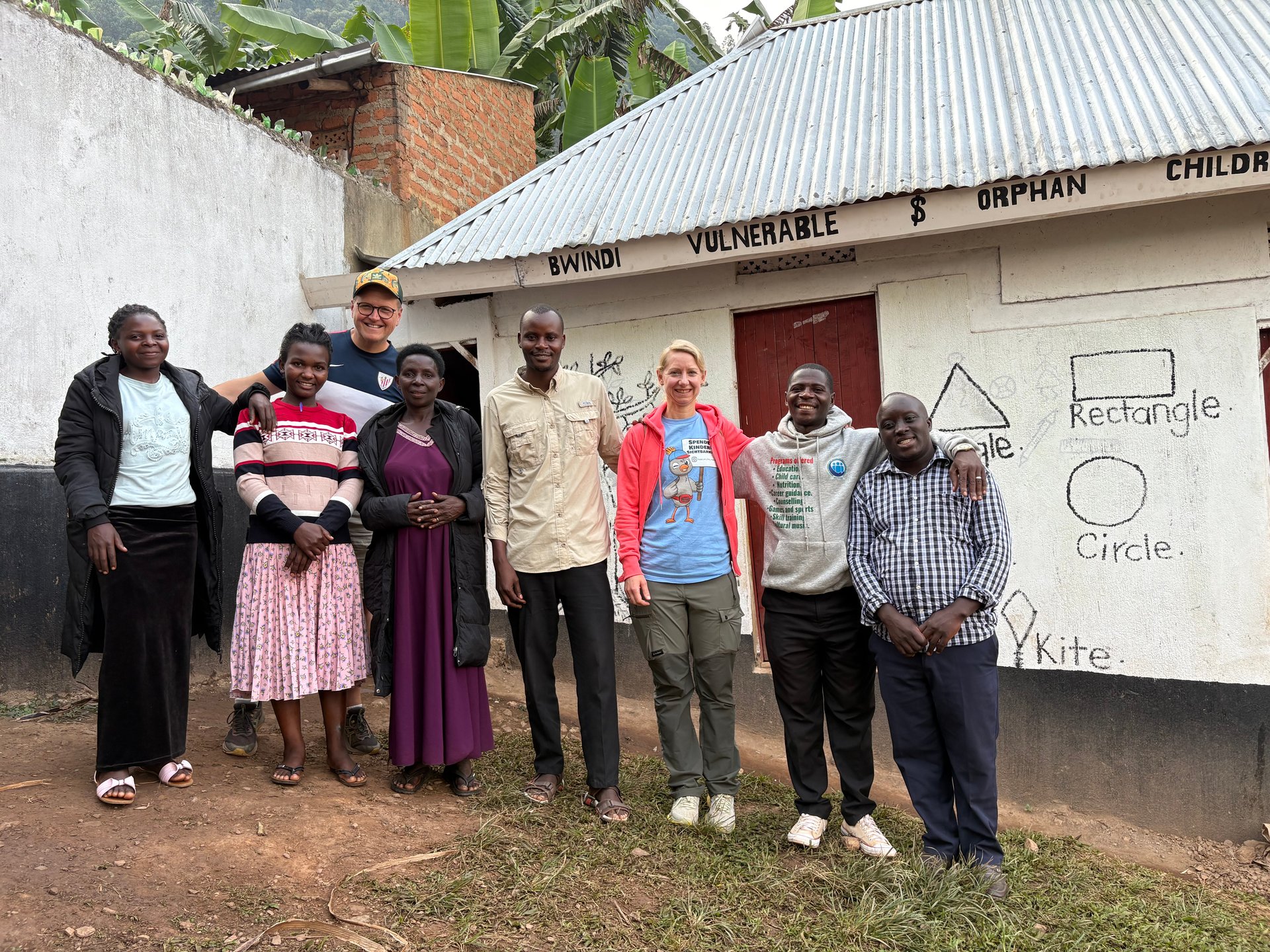
On a visit in June 2026, we stopped at the smallholding of a local chicken farmer a short walk from the orphanage in Buhoma — GPS confirmed at -0.9713°N, 29.6142°E. The farmer raises chicks in careful conditions, monitoring their growth and health with the kind of attention that makes the difference between subsistence and a functioning small enterprise. We had purchased chicks from him on several previous visits for the orphanage run by Nicholas — some are kept for eggs, some for meat, and the surplus is sold to generate income. For a household with no external funding, a small laying flock represents both a regular food source and a modest cash flow. What struck us most was how seriously the farmer treated the work: this was not an afterthought alongside other activity, but a deliberate, carefully managed operation.
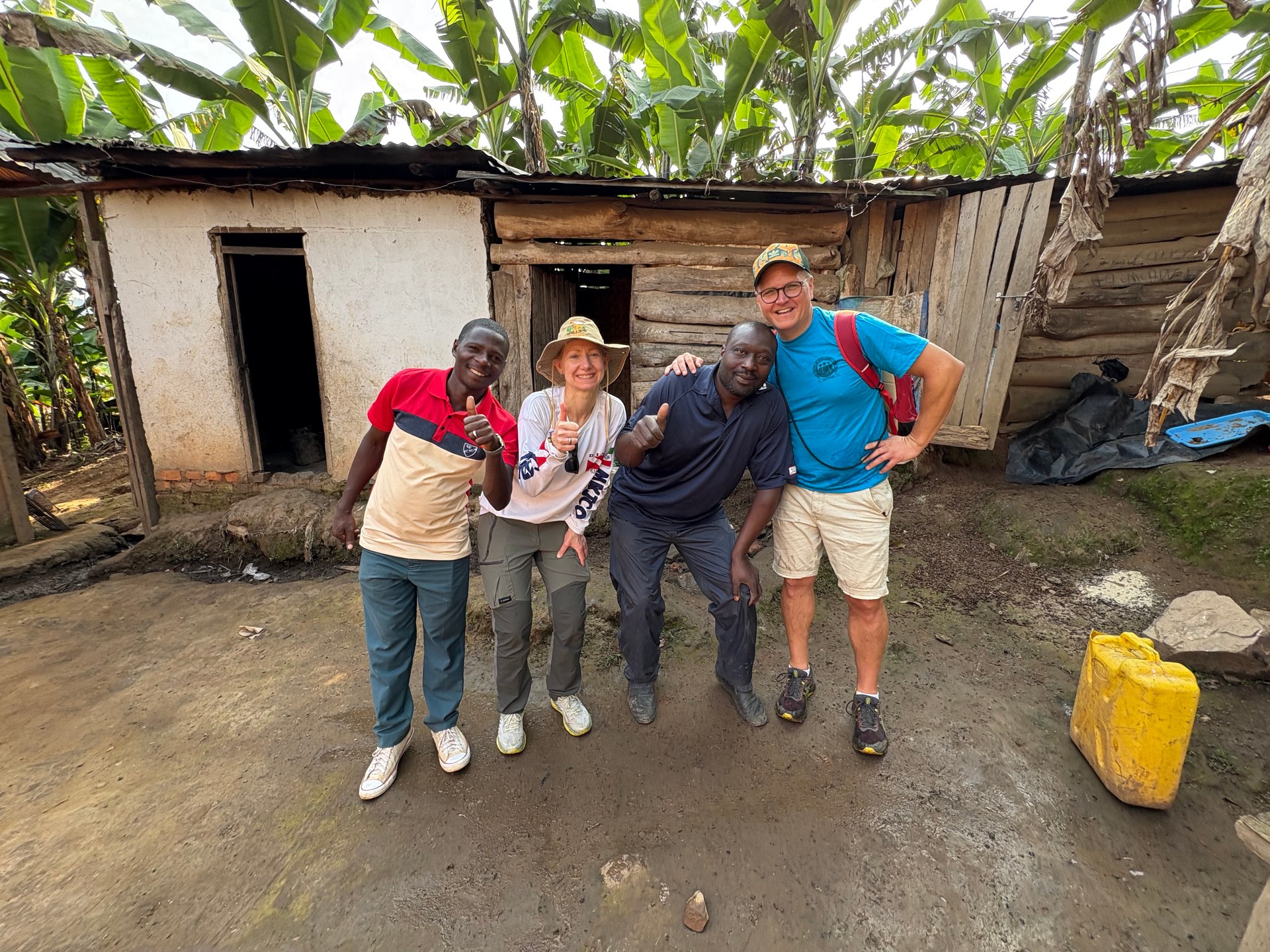
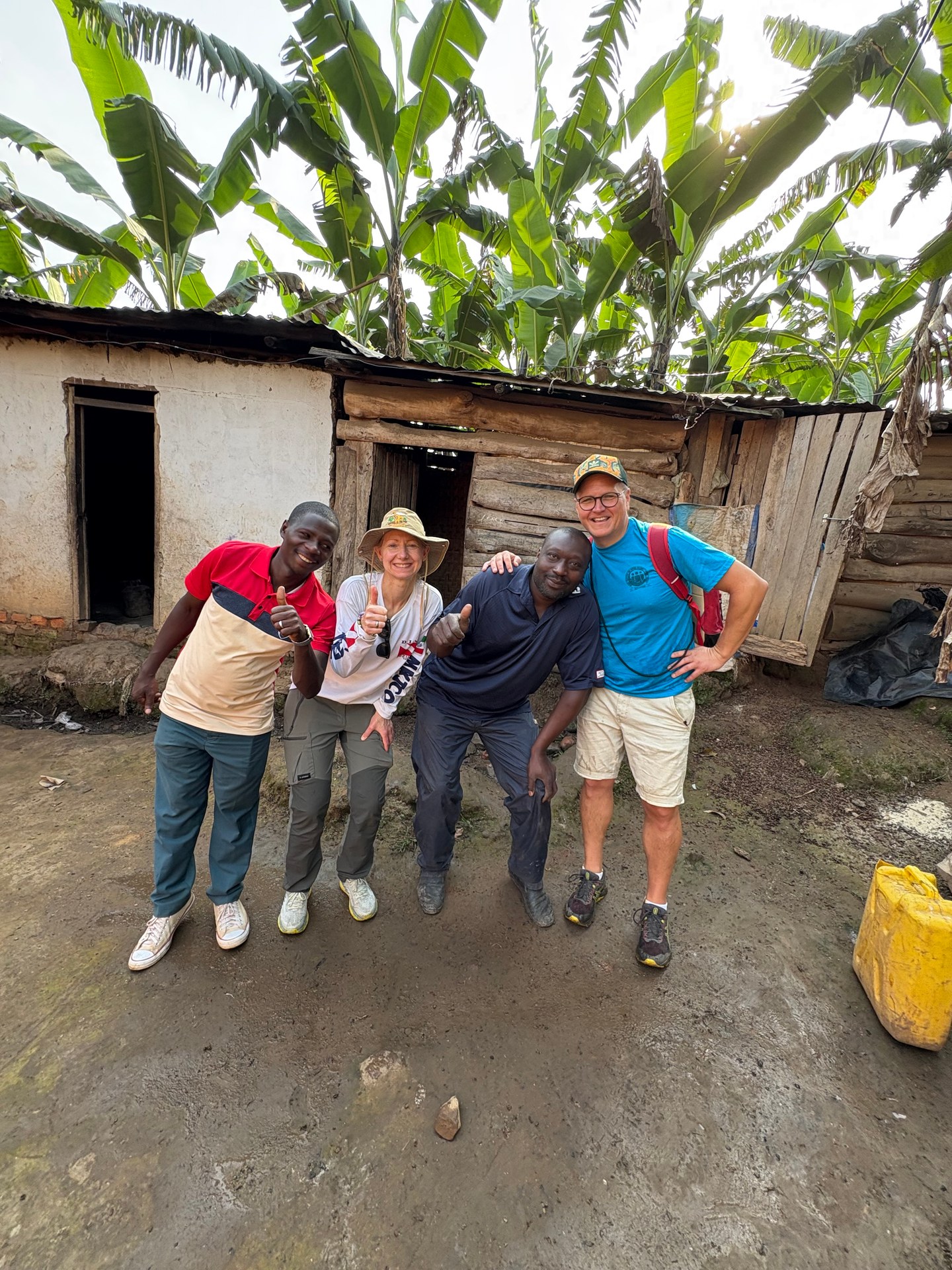
The first chicks purchased for the orphanage were a significant moment: the group photograph — four people holding the birds in front of the farm building — showed something more than an animal transaction. It was the start of a supply chain that connects a local producer to an institution that had no reliable food source for meat. When there is chicken at the orphanage, it is genuinely a celebration.
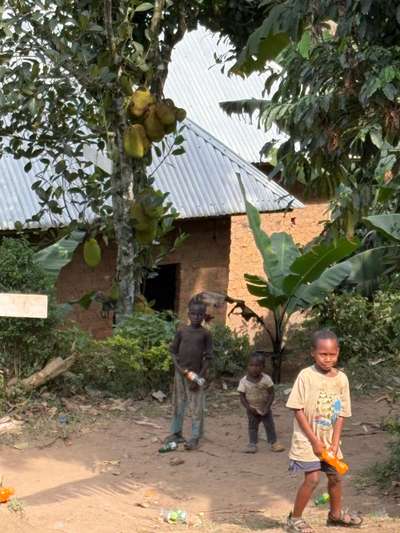
Also in June 2026, three children from the neighbourhood of the orphanage — not residents, but from families living nearby — came to the compound. They were visibly underfed, their clothes worn. We invited them immediately to eat with the other children. The directness of that moment — the simplicity of setting an extra plate — is what community proximity in Buhoma actually looks like. The village sits at the edge of one of Africa's most valuable wildlife assets, and many of the families around it exist on very little.
Wildlife and Forest Ecosystems Beyond the Gorillas
Bwindi Forest National Park is remarkable for biodiversity beyond its flagship species. The park holds more than 120 mammal species, including forest elephants, chimpanzees, L'Hoest's monkeys, black-and-white colobus, red-tailed monkeys, bush pigs, giant forest hogs, and the elusive African golden cat. Most of these species are encountered incidentally during gorilla treks or on dedicated nature walks — the forest is dense enough that wildlife sightings, while frequent, are rarely guaranteed.
The 350+ bird species recorded in Bwindi include 23 Albertine Rift endemics — birds found nowhere else in the world outside this narrow highland corridor. For birders, Ruhija sector is the primary destination, but the forest edge at Buhoma also produces consistent sightings of forest specialists including the African green broadbill, bar-tailed trogon, handsome francolin, and several species of Apalis. The park is listed as one of Uganda's most important birding areas.
Uganda's broader forest ecosystem context helps explain why Bwindi matters so much beyond its own boundaries. Uganda once had extensive forest cover across large parts of the country. What remains today is largely fragmented into national parks, Central Forest Reserves managed by the National Forestry Authority, and small community forest plots. Bwindi stands apart from these as the largest tract of intact ancient montane forest in East and Central Africa. Kibale Forest National Park to the north is the other major forest park, known for its chimpanzee population and accessible primate tracking — a useful complement to a Bwindi visit for travellers with time.
Practical Planning: Seasons, Getting There, and Accommodation
Bwindi Forest National Park can be visited year-round, but the dry seasons offer the most comfortable trekking conditions. The two main dry periods are June through September and December through early February. During these months, the trails are drier, the forest is less muddy, and visibility in the canopy is often better as the mist is less persistent. That said, gorilla trekking in wet season — as we experienced in January 2026 — is entirely manageable with the right gear, and the forest in rain is particularly atmospheric.
The park is accessible by road from Kampala, a journey of approximately eight to ten hours to Buhoma depending on road conditions and the route taken. Domestic charter flights to Kihihi airstrip (for Buhoma) reduce this to around 90 minutes by air, with a further 30-minute road transfer. Kisoro airstrip serves the southern sectors (Rushaga and Nkuringo). Most tour operators and lodges can arrange transfers from Kampala, Entebbe, or Kabale.
Kabale is the most practical overland staging point for Bwindi. The town sits approximately 120 kilometres from Buhoma — a drive of three to four hours depending on road conditions — and has functioning guesthouses, ATMs, and a supermarket on the main Kabale-Kisoro Road where supplies can be topped up before heading into the forest zone. A National Parks Information Office on the Kabale-Kisoro Road provides current transport information and can assist with the organisation of onward transport to gorilla trekking sectors.
From Kampala to Kabale, long-distance coaches — including Kampala Coach and Jaguar Executive Coaches — run multiple departures daily, taking around five to six hours. Matatus (shared minibuses) are faster but less comfortable and depart from the main taxi parks when full. From Kabale to Bwindi, the main options are a private transfer arranged through a lodge or operator, a special hire vehicle (significantly more expensive but faster and more reliable for luggage), or local matatus toward Buhoma. Kabale also sits 20 kilometres from the Rwanda border at Katuna, making it a useful hub for travellers combining Bwindi with a Rwanda itinerary — particularly those linking gorilla trekking on both sides of the Virunga landscape.
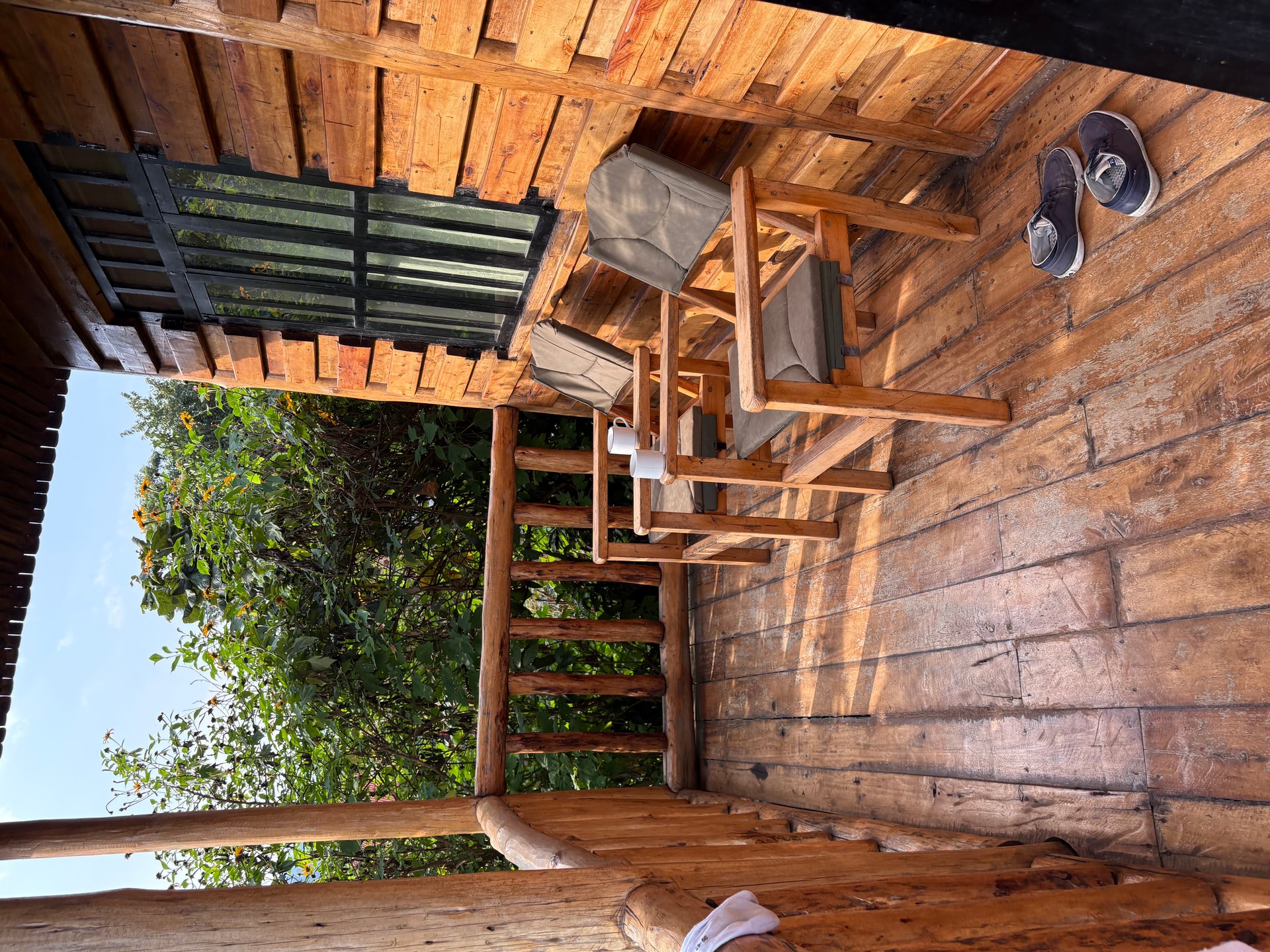
Accommodation near Bwindi ranges from the budget Buhoma Community Rest Camp (a community-owned guesthouse directly at the park gate) through mid-range lodges such as Gorilla Bluff Lodge and Bwindi Backpackers Lodge near Nkuringo, to upmarket properties like Buhoma Lodge (eight cottages from local materials within the park concession area) and the Sanctuary Gorilla Forest Camp. The Travellers Rest Hotel in Kisoro, founded in 1955 and historically the base for gorilla researchers including George Schaller and Dian Fossey, offers a historically resonant option for those visiting the southern sectors. No accommodation exists inside the park itself, except within the specific lodge concession areas at park boundaries.
The key planning principle is to book accommodation for the same sector as your gorilla permit. Your permit is issued for a specific sector, and the four sectors are separated by travel times of 1–3 hours by road. Confirm your lodge before finalising your permit sector. During peak season, both permits and the most popular lodges should be reserved six months or more in advance.
For visitors combining Bwindi with Uganda's savannah parks — which is a natural itinerary given the country's compact size — Murchison Falls National Park in the north offers a dramatically different landscape: open savannah, the world's most powerful waterfall by flow rate, and boat safaris on the Victoria Nile where hippopotamuses and Nile crocodiles are reliably seen from a short distance. The contrast between the ancient closed-canopy forest of Bwindi and the open horizons of Murchison Falls captures something of Uganda's full ecological range within a single trip.
Frequently Asked Questions
Related Articles
Bwindi: Park Overview
Buhoma Sector: The Original Gorilla Base
Ruhija Sector: High Altitude Birding
Rushaga Sector: Southern Gorilla Groups
Nkuringo Sector: The Ridge Above the Forest
Gorilla Trekking Permits: How to Book
Where to Stay Near Bwindi
Conservation and Ecotourism in Uganda