A Small Shop, a Village, and a Larger Question of Belonging
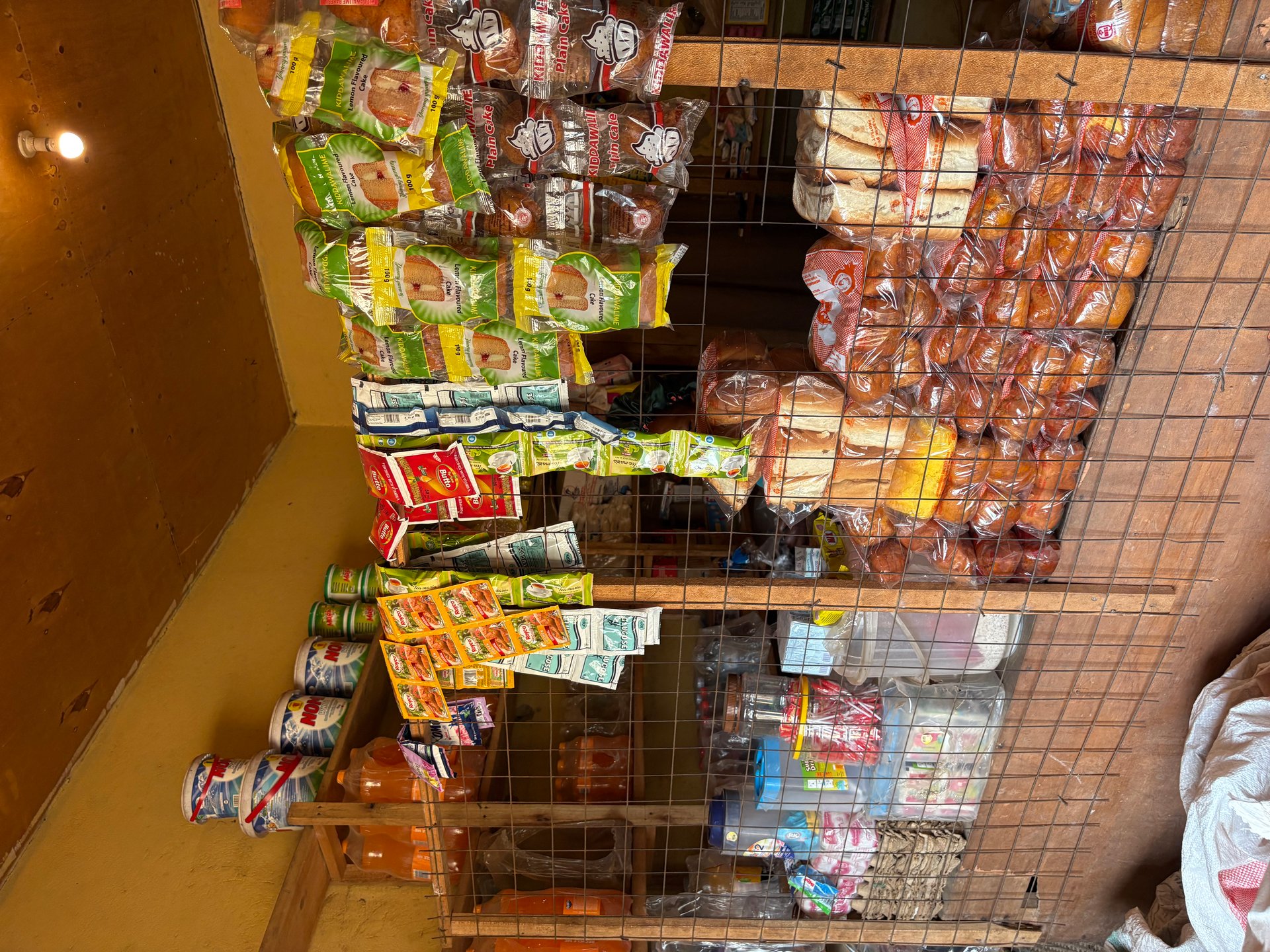
During my visit to Buhoma in January 2026, I stepped into one of the small shops that line the main track through the village. The store was perhaps twenty square metres, its shelves stacked behind a light metal grille: packaged sweets, bottled water, small snacks. A woman ran it. We bought water for ourselves and sweets for the children gathered outside. The transaction lasted two minutes, but the scene stayed with me — the quiet ordinariness of it, the self-sufficiency, the fact that this modest commerce was entirely her own.
I thought about that shop later when reading about the formal consultation process designed to bring Batwa voices into the planning of a major conservation project. Buhoma sits at the northern entrance to Bwindi Impenetrable National Park, and it was one of four locations where Batwa community members gathered in June 2022 to tell project designers what they needed, what they feared, and what they refused to have decided for them. The gap between that simple shop and the architecture of a World Bank safeguards process is enormous — but the consultation was an attempt to bridge it.
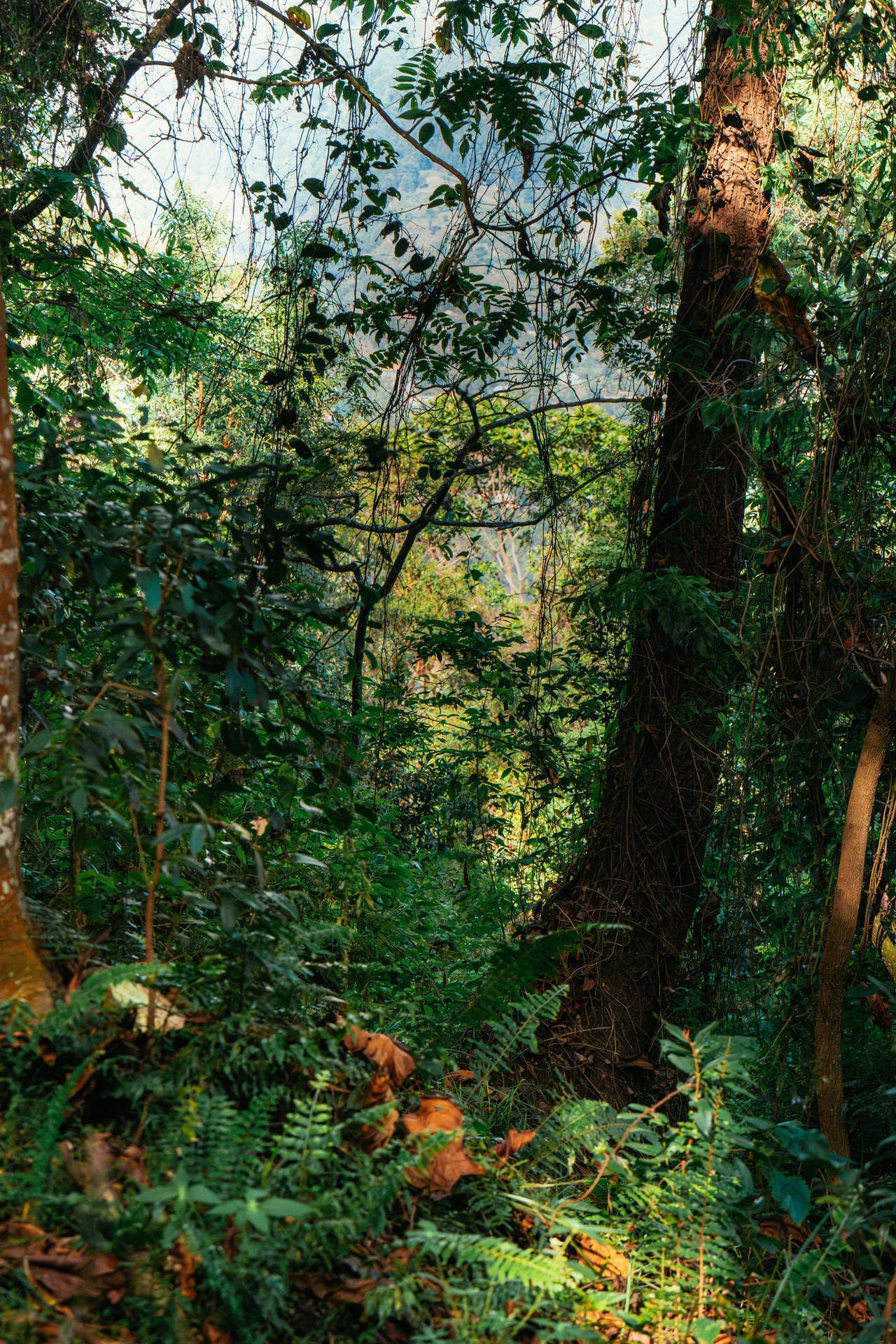
GPS coordinates of my January 2026 visit confirmed a location at roughly -0.97 degrees latitude, 29.61 degrees longitude — the heart of Buhoma, less than a kilometre from the park boundary. That proximity is everything. For Batwa families, the park is not a distant abstraction. It is the place where their grandparents were born, the place from which they were evicted in 1991, and the place that a new conservation project would now reshape once more.
The IFPA-CD Project and Why Consultation Was Mandatory
The IFPA-CD project — Investing in Forests and Protected Areas for Climate Smart Development — is one of the largest conservation finance initiatives in Uganda's history. Funded by the World Bank at US$148.2 million, it encompasses forest management, protected area governance, and community development across Uganda's most significant natural landscapes, including Bwindi. The project was designed to run through June 2026.
World Bank operational policies impose strict requirements when projects affect vulnerable and marginalized groups, including indigenous communities. The Batwa around Bwindi qualify on both counts: they are recognised as an indigenous forest people, and they remain among the most economically marginalised communities in southwest Uganda, still largely landless following their displacement from the park in 1991. Any project altering management of the forest that was once their home triggers the requirement for a Vulnerable and Marginalized Groups Plan — a VMGP — developed through genuine, documented community consultation.
The process was not optional and it was not cosmetic. It required the preparation of a framework, two distinct rounds of consultation with affected communities, and the formal adoption and public disclosure of a plan that could be reviewed by independent monitors. The consultations with Batwa communities around Bwindi were the mechanism through which that obligation was fulfilled — but the documentation suggests the process produced substantive engagement rather than mere compliance.
Phase I: Starting During a Pandemic
The first phase of consultations took place in June 2021, in the middle of Uganda's COVID-19 lockdown. The constraints were severe. Large gatherings were prohibited. Movement was restricted. Normal community engagement — bringing people together in a hall, conducting group discussions with dozens of participants — was impossible.
The team preparing the VMGP adapted. Methods included Key Informant Interviews with Batwa leaders, one-on-one physical discussions, and Focus Group Discussions structured in groups of no more than five people, held in open spaces to minimise transmission risk. Where in-person contact was not possible, telephone interviews were conducted with leaders of Batwa communities around Bwindi.
A critical design decision was made before a single interview began: all conversations would be conducted in Rukiga and Kifumbira/Kinyarwanda — the languages the Batwa around Bwindi actually speak. The team preparing the VMGP was already conversant with these languages, which meant that interviews did not rely on interpreters who might soften, simplify, or inadvertently distort what participants said.
Phase I focused on Batwa leaders rather than broad community participation. It established the foundational concerns and priorities that would shape the draft VMGP, which was then circulated for review before the larger second round of consultations.
Phase II: Four Meetings, 167 Voices
The second and larger consultation round took place over three days, from 20 to 22 June 2022. Four meetings were held at different locations around the park: Rubuguri Town Council, Rushaga, Sanuriro, and the Buhoma Visitor Centre. In total, 167 people from Batwa communities around Bwindi participated. When combined with NGOs, civil society organisations, and relevant government authorities, the total reached 184 participants across the consultation process.
Choosing four separate locations mattered. Bwindi is not one community — it is a park with four distinct sectors, each with different Batwa populations, different histories, and different relationships to the park and to local NGOs. Holding a single centralised meeting would have excluded many who could not travel. The multi-site approach brought the consultation process to the communities rather than requiring communities to come to a single administrative centre.
Prior communication was made by telephone through NGO representatives who already had established relationships with community members. This was deliberate: the consultation was announced in advance through trusted intermediaries, with clear communication about objectives, venue, and expected outcomes. Participants arrived knowing what the meetings were for.
Each meeting followed a structured agenda. Participants were guided through an issue-identification exercise, working from previous reports as a baseline, and asked to prioritise challenges and proposals in their own terms. The meetings also served to validate the draft VMGP prepared from Phase I — participants could confirm, correct, or dispute what had been written on their behalf.
What the Batwa Said: Priorities and Boundaries
The consultations produced a clear set of priorities. Participants called for full inclusion of Batwa communities and their leaders in the planning, selection, design, and implementation of IFPA-CD activities — not consultation after decisions had already been made. They identified strengthening collaborative resource management with Uganda Wildlife Authority as a core need, alongside investment in practical livelihood skills: crafts training, beekeeping, and confidence-building programmes that could make Batwa groups more self-sufficient.
Employment was a recurring theme. Participants identified specific opportunities — guides, porters, and boundary management roles — and explicitly requested that access to these positions be gender-balanced. This was not a theoretical aspiration: it was a practical demand reflecting the reality that Batwa women, in particular, have been excluded from formal employment in and around the park.
Participants also addressed cultural preservation. They articulated the need for coordinated, culturally sensitive interventions that support Batwa traditions while meeting conservation and development goals — an explicit rejection of approaches that treat culture as an obstacle to development rather than an asset to be protected. Linking Batwa cultural values and indigenous knowledge to education and employment was proposed as a model for integrating cultural preservation into protected area management.
Some community members raised issues that fell outside the project's scope. Land purchase, support for the Batwa Forest Experience Trail, and the establishment of a dedicated Batwa cultural centre were all identified as priorities — but participants were informed that these could not be addressed through IFPA-CD activities. The documentation of these out-of-scope concerns was itself treated as significant: by recording and preserving these requests, the process created a reference that could guide other partners and future initiatives.
[QUOTE: local Batwa community representative on what meaningful participation means in practice — to be gathered here]
From Consultation to Implementation: The VMGP and Its Partners
The Vulnerable and Marginalized Groups Plan that emerged from this process was adopted and formally disclosed in March 2023. It is explicitly designed not as a static document but as an adaptive plan responsive to evolving conditions. The commitment to ongoing consultation — and to updating the VMGP as lessons emerge from implementation — was built into the document itself.
Implementation depends heavily on the network of organisations that have Batwa community relationships. The Bwindi Batwa Development Association, which holds a formal Memorandum of Understanding with Uganda Wildlife Authority, is a central partner. Its role includes organising and mobilising the Batwa to participate in project-related training, strengthening Batwa capacity, and maintaining the Batwa Forest Experience trail at Nkuringo.
The Nkuringo Cultural Centre works alongside the Batwa to promote cultural tourism, including performance, music, dance, drama, and support for the establishment of a pilot cultural centre. Other Batwa-led organisations — including BIDO (Batwa Indigenous Development Organisation) and BDO — handle mobilisation, training, capacity building, knowledge sharing, and support for livelihood activities.
Monitoring is built into the IFPA-CD framework. The monitoring and evaluation of the VMGP runs as part of the overall M&E framework for the project, allowing project management to track whether the commitments made during consultation are translating into actual changes in Batwa communities' access to project benefits, employment, and decision-making. Between 2020 and 2025, Bwindi documented between 20 and 60 non-timber forest product extraction incidents per year — a figure that points to the continued economic pressure on communities at the park boundary and underscores why livelihood support embedded in proper consultation matters.
For travellers visiting Bwindi and spending time in Buhoma or the other sectors, the consultation process and the VMGP represent something worth knowing about. The gorilla trekking experience is shaped by a conservation system that, at its best, attempts to balance wildlife protection with the rights and needs of the people who live at the forest edge. The formal consultation of Batwa communities in the design of IFPA-CD is one piece of that system — imperfect, constrained by bureaucratic timelines and project scope, but grounded in the actual voices of the people most directly affected. For more on Batwa heritage and the cultural experience programmes available to visitors, the communities section covers the history and practical visitor options in detail. And for the broader conservation governance context, the community conservation overview sets out how UWA, NGOs, and local communities share responsibility for the park.