Conservation Value #7: Climate Stabilization
Uganda Wildlife Authority does not describe Bwindi Impenetrable National Park solely in terms of its gorillas. The General Management Plan 2014–2023 formally lists climate stabilization and carbon sink function as Conservation Value #7 — one of the park's core justifications for protection. The management purpose statement is explicit: the park exists to conserve its ecosystem services "for the benefit of the local, national and the global community."
This framing places Bwindi within the global conversation about tropical forest conservation and climate change mitigation. At a time when international climate negotiations increasingly recognise intact forest ecosystems as irreplaceable carbon infrastructure, Bwindi's status as a formally protected area with active management gives it a credible role in Uganda's climate strategy that goes well beyond its considerable biodiversity value.
The ecosystem services recognised in the GMP include not only carbon storage but also watershed protection, microclimate regulation, and the stabilization of rainfall patterns across a densely populated landscape. These services benefit an estimated 500,000 people living in the parishes surrounding the park, making climate stabilization a livelihood issue as much as an environmental one.
How Much Carbon Does Bwindi Store?
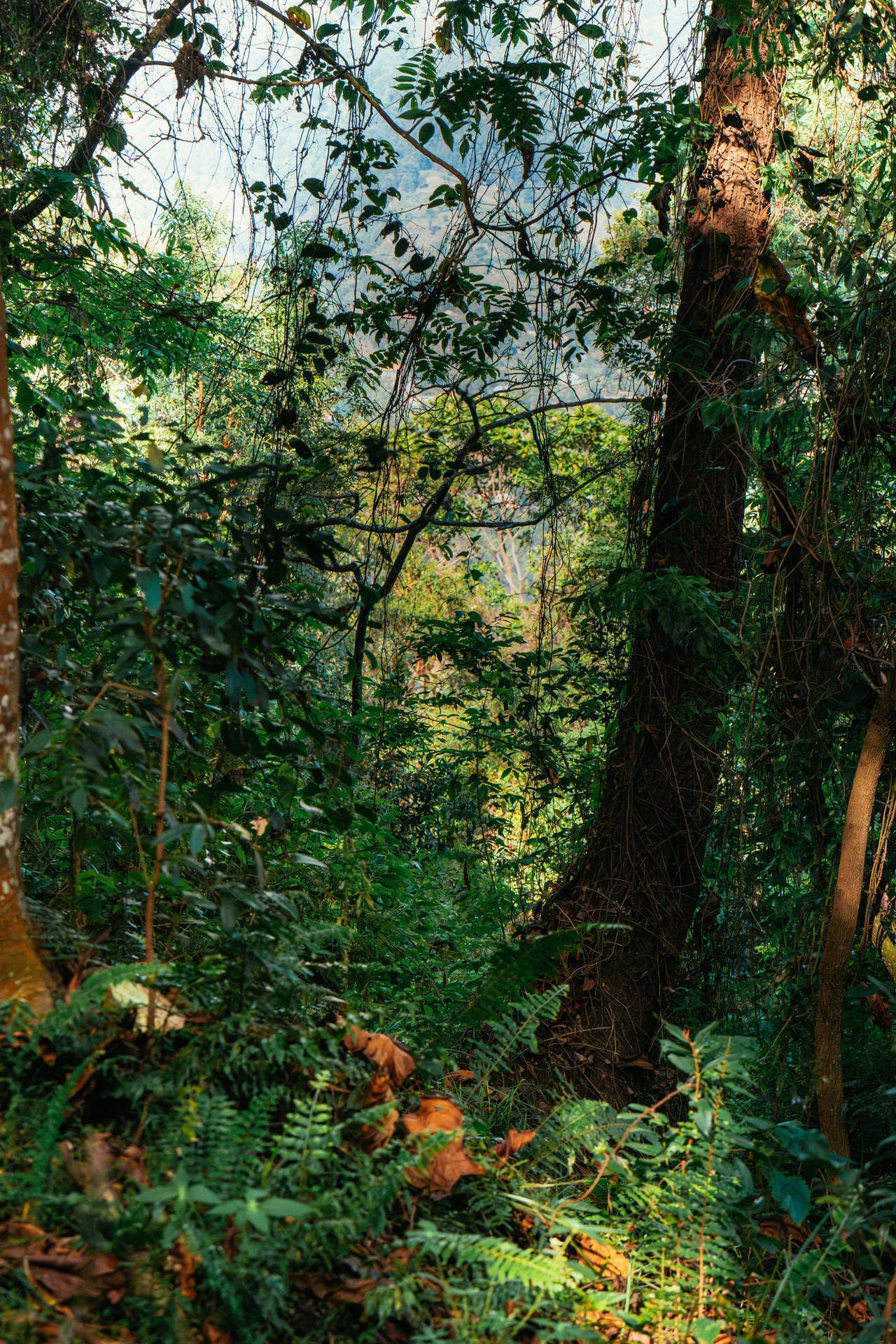
Precise carbon stock measurements for Bwindi are not publicly aggregated into a single published figure, but the characteristics of the forest make its carbon storage capacity substantial by any comparison. The 321 km² are covered almost entirely by old-growth Afromontane forest — trees that have never been logged, with biomass accumulated over centuries. Old-growth forests store carbon in living wood, roots, leaf litter, and especially in deep organic soils, and they continue to accumulate carbon as long as they are not disturbed.
A key factor specific to Afromontane ecosystems is the role of altitude and temperature. Bwindi rises from 1,160 metres at its lowest point to 2,607 metres at its highest. At these elevations, cooler temperatures slow the microbial decomposition of organic matter, meaning that dead plant material breaks down far more slowly than in lowland forests. Carbon compounds accumulate in the soil over long timescales, building deep organic horizons that hold carbon stably. This mechanism makes montane forests, weight for weight of forest area, more efficient carbon stores than many lowland tropical systems.
The volcanic soils of the Albertine Rift add another layer of carbon-holding capacity. Rich in minerals and organic matter, these soils support high plant productivity and have a strong capacity to stabilize carbon compounds chemically. Combined with the dense multi-layered canopy that limits soil surface temperatures, Bwindi's geology and geography create conditions close to optimal for long-term terrestrial carbon storage in the African context.
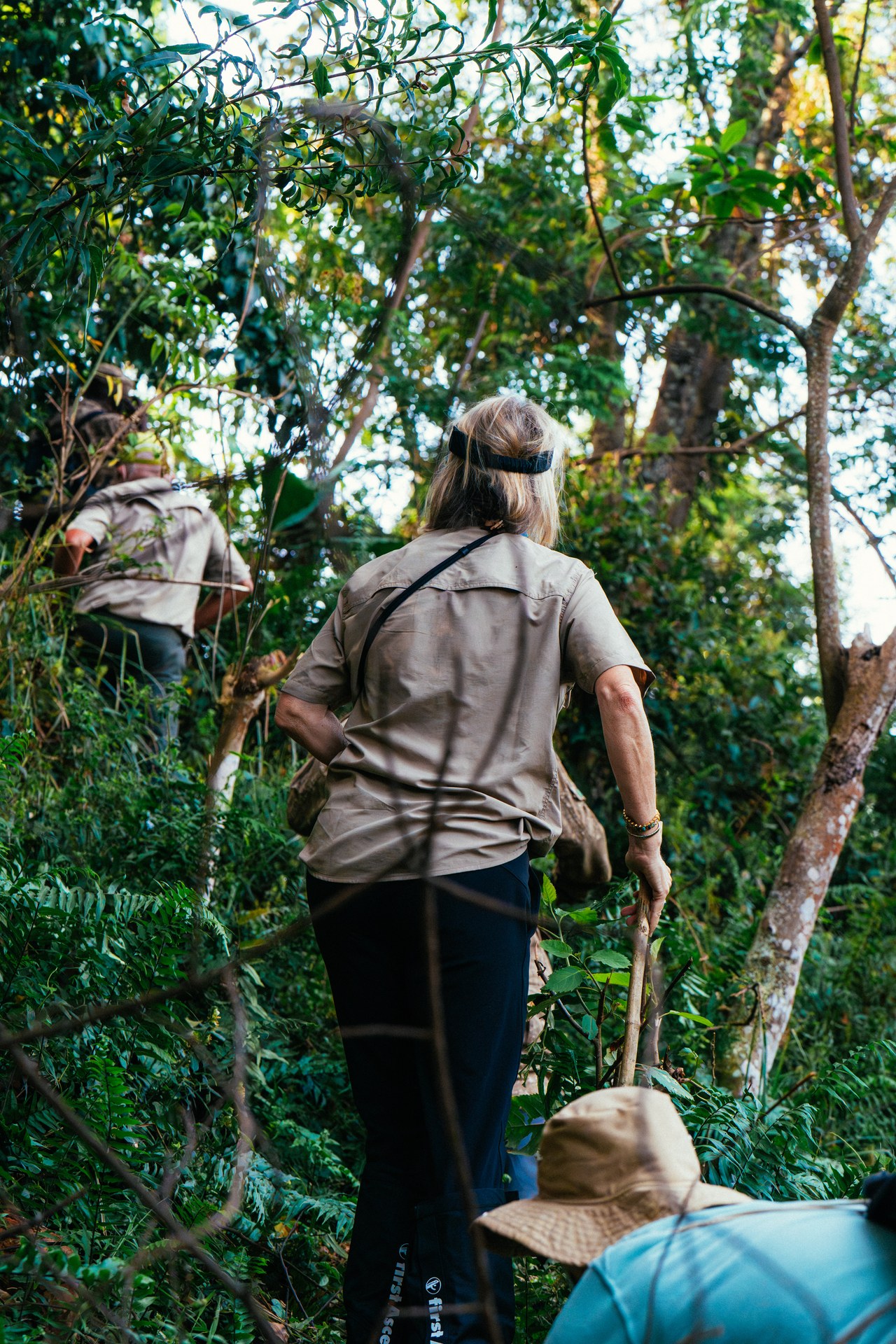
Through Bwindi forest on the trail of gorillas
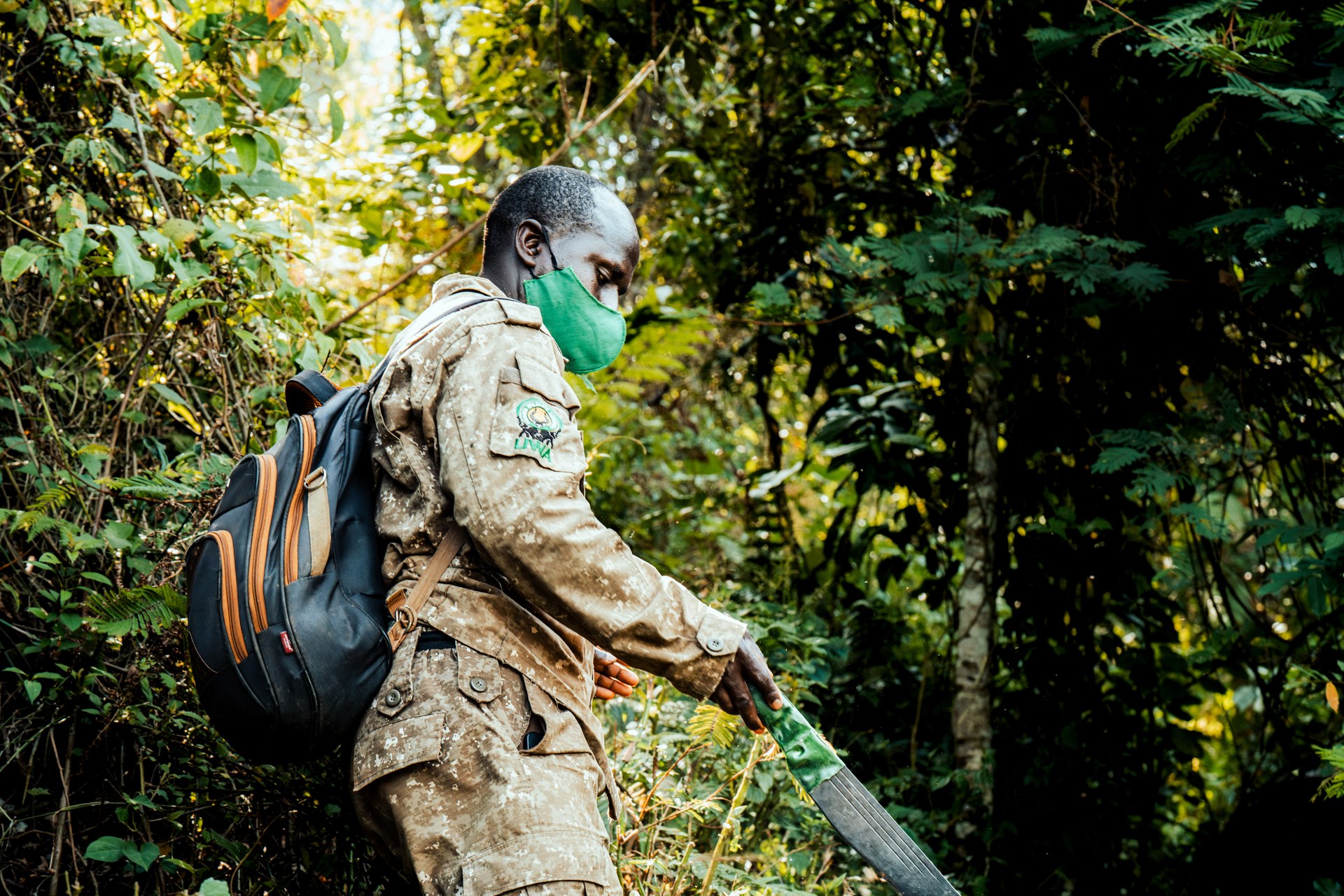
Ranger in Bwindi forest on the way to the gorillas

Preparing for the adventure: gorilla trekking in Bwindi
Local Climate Regulation
Standing inside Bwindi, the microclimate is immediately perceptible: even at midday, the dense canopy filters sunlight and maintains cool, humid conditions that differ strikingly from the open agricultural land at the forest boundary. This difference is not merely perceptible — it is documented and consequential for the communities that farm around the park.
The forest canopy intercepts cloud and mist moving across the Albertine Rift escarpment, stripping moisture from air masses that would otherwise pass through without releasing rain. This process — known as horizontal precipitation or mist interception — delivers water directly to forest soils and streams independently of rainfall events, sustaining river flow during dry periods. The five major rivers that originate in Bwindi and flow toward Lake Edward depend on this constant moisture input to maintain perennial flow.
When tropical forests are cleared, the heat island effect is measurable within years. Bare or cropped land absorbs and re-radiates solar energy without the buffering effect of transpiration and canopy shade, creating higher daytime temperatures and lower humidity. Farmers at Bwindi's boundary experience the benefits of proximity to the forest in the form of moderated temperatures, higher moisture availability, and more reliable rainfall distribution — ecological services that have no market price but a very real economic value.
Bwindi's Role in Global Climate Commitments
Uganda ratified the Paris Agreement and has submitted Nationally Determined Contributions outlining how the country will reduce emissions and adapt to climate change. Forest conservation features prominently in Uganda's climate strategy because the country's remaining intact forests represent a significant carbon stock whose continued protection prevents emissions that would otherwise be very costly to offset by other means.
Bwindi fits into the international REDD+ framework — Reducing Emissions from Deforestation and Forest Degradation — which provides mechanisms for developing countries to receive financial compensation for protecting forests rather than clearing them. Under REDD+, a forest like Bwindi can be valued not only for the timber it does not yield but for the carbon it continues to store and the emissions it prevents. This framework creates a potential revenue stream that complements tourism income as a justification for maintaining strict protection.
The loss of Bwindi to deforestation would represent a double climate failure: the immediate release of centuries of stored carbon into the atmosphere, and the permanent loss of a functioning carbon sink that would otherwise continue absorbing carbon dioxide for decades or centuries. No reforestation programme can replicate the carbon storage capacity of old-growth forest on any timescale meaningful for current climate targets.
The Threat of Climate Change on Bwindi Itself
While Bwindi provides climate services to the world, it is simultaneously vulnerable to the climate change it helps to mitigate. Temperature increases across equatorial Africa are projected to continue over coming decades, and the Albertine Rift is not exempt. Even moderate warming shifts the altitudinal zones in which specific plant communities can survive, compressing montane ecosystems toward higher ground as conditions become inhospitable at lower elevations.
Mountain gorillas are specialists. Their diet, their thermal comfort range, and the structure of their social groups are all calibrated to conditions in Bwindi and the Virunga volcanoes as they exist today. Unlike migratory species that can track climate zones across landscapes, gorilla groups are resident, territorial, and constrained by the boundaries of protected areas. If the suitable climate envelope for their habitat shifts upward by several hundred metres in altitude, there is simply no higher ground within Bwindi for all current groups to occupy.
Shifting rainfall patterns compound this threat. Phenological changes in fruiting and leafing cycles of key food plants, driven by altered rainfall timing, can create food shortages at critical periods in the gorillas' annual cycle. UWA's research agenda includes monitoring wildlife population dynamics and the impacts of climate variability — recognition that managing a park in a changing climate requires ongoing scientific attention rather than static management assumptions.
Why Your Visit Matters
The connection between a gorilla trekking permit and global climate is not abstract. Permit revenue is the primary income stream funding UWA ranger operations that prevent encroachment, manage boundaries, and maintain the intact forest cover that stores carbon and regulates regional climate. Without viable tourism revenue, maintaining the operational capacity to protect 321 km² of forest against the pressures of agricultural expansion and resource extraction from 500,000 surrounding residents would be significantly harder.
Twenty percent of gorilla permit fees are returned directly to communities around the park through a revenue-sharing programme. This funding supports schools, health centres, and infrastructure in parishes where households might otherwise have an economic incentive to clear forest for farmland. Reducing that incentive is one of the most effective and durable forms of forest protection available — and it depends on visitors continuing to choose Bwindi.
Visitors who trek in Bwindi are not contributing to a carbon offset scheme in any formal accounting sense. But they are participating in the economic system that keeps old-growth Afromontane forest standing, its carbon stored, its climate services functioning, and its gorillas alive — an outcome with consequences that extend well beyond the hour spent in the presence of a gorilla family.