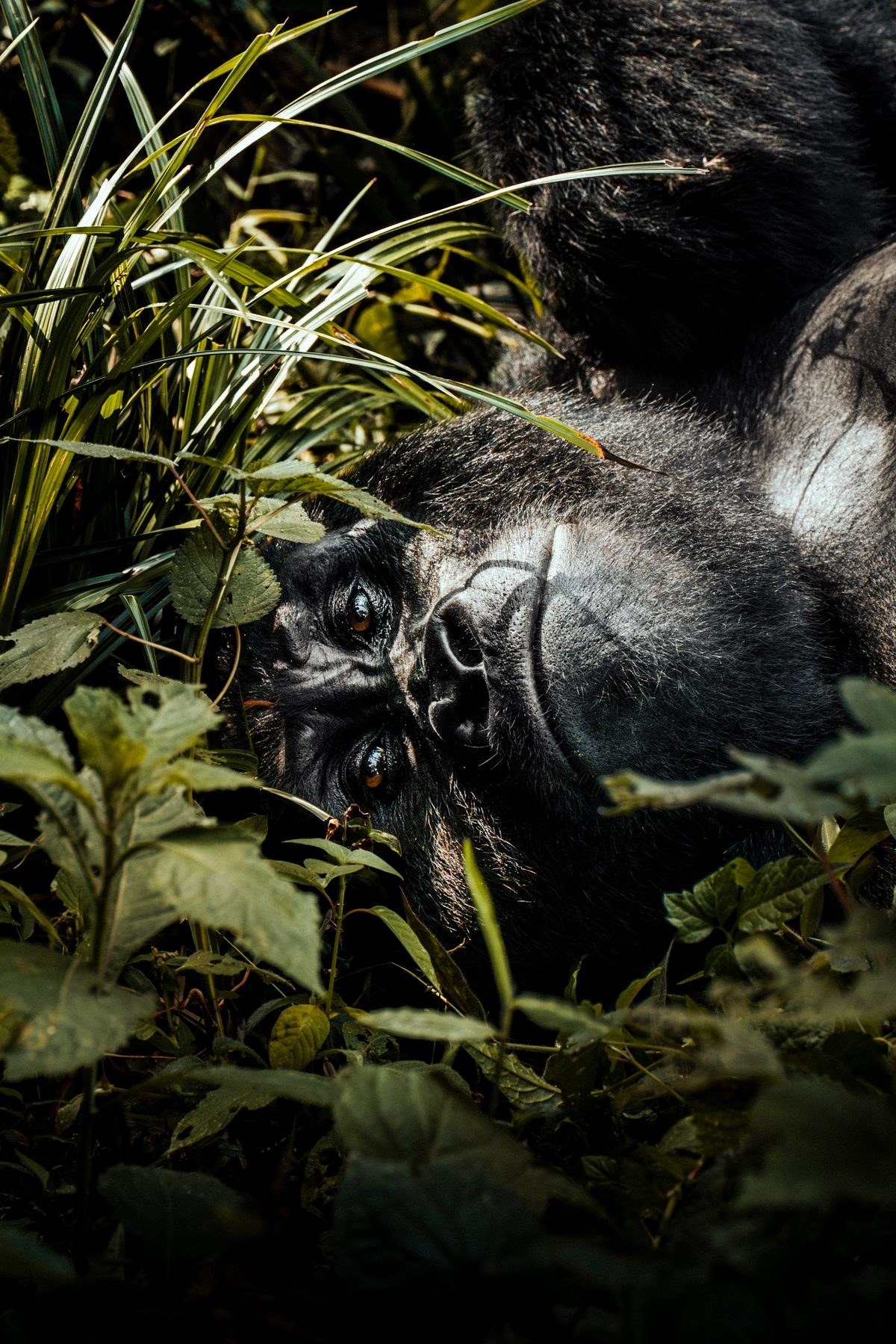
In January 2026, I walked the main trail out of Buhoma in the early morning, before the first trekking groups had set out. The valley was cool and still, the forest edge catching the first light above the lodges on the ridge. A ranger was preparing briefing materials near the park gate, laying out laminated sheets showing the gorilla families and their ranges. It was an ordinary morning in what has become a well-managed, highly structured operation — and yet the numbers behind it are anything but ordinary.
Uganda's gorilla trekking sector has grown from a niche wildlife experience into one of East Africa's most recognised and economically significant tourism products. The trajectory from the 2013 baseline — when Uganda's national parks collectively recorded around 214,000 visitors — to the pre-COVID peak of roughly 671,000 annual visitors represents sustained, structural growth over more than a decade. Understanding where that trajectory leads by 2030, and what shapes it, is the question this article addresses.
The Gorilla Population as the Foundation of the Tourism Forecast
Any credible forecast for Uganda's gorilla tourism must begin with the gorillas themselves. The mountain gorilla population in Uganda stood at 459 individuals in the 2018–2020 census, a figure that reflects decades of intensive conservation work and the direct contribution of tourism revenue to protection efforts. Mountain gorillas exist only in the Virunga Massif, shared between Uganda, Rwanda, and the Democratic Republic of Congo, and in Bwindi Impenetrable National Park — and nowhere else on earth. This geographic concentration and irreplaceability is the foundation of the tourism model.
The species' trajectory has been positive but not inevitable. In the early 1990s, the global population was estimated at around 320 individuals. The increase to 459 by the close of the 2020 census represents genuine conservation progress, driven by a combination of anti-poaching enforcement, veterinary intervention through the Mountain Gorilla Veterinary Project, and the habituation of gorilla families for tourism — a process that has also reduced human-gorilla conflict by creating structured, managed contact. Bwindi and Echuya Forest Reserve are additionally recognised in the 2026 State of Wildlife Resources report as the last stronghold for an endangered cat species on Uganda's Red List, underscoring the broader conservation significance of these protected areas.
From a tourism forecast perspective, the gorilla population sets the supply ceiling. Each habituated family can receive a maximum of eight visitors per day, and contact time is capped at one hour. These limits are not commercially motivated; they reflect disease transmission risk and behavioural disturbance thresholds established through research. They mean that even as visitor demand grows, the number of permits available on any given day is fixed by the number of habituated families, not by market pressure. Expanding capacity requires the slow, multi-year process of habituating additional gorilla groups — a process that cannot be accelerated without compromising the welfare of the animals.
This structural constraint shapes the entire forecast. Uganda's gorilla tourism growth to 2030 will not be driven by permit supply expansion alone. It will be shaped by how effectively the existing supply is sold, at what price, and to which markets.
Permit Demand Trends: What the 2021–2025 Data Shows
Uganda Wildlife Authority publishes data on gorilla permit sales and availability, and the period from 2021 to 2025 covers the full arc of the post-COVID recovery. The 2025 statistical abstract tracks trends in permit sales and unsold capacity from 2021 through 2025, documenting the improvement in permit uptake and the reduction in unused capacity as international travel recovered from the pandemic disruption.
The recovery has been uneven across sectors. Buhoma, as the most accessible and best-known entry point, with lodges like Bwindi Lodge and Silverback Lodge anchoring the visitor infrastructure, recovered fastest. Rushaga and Nkuringo, which attract visitors looking for a slightly more remote experience, recovered more slowly, though their permit sales also improved meaningfully through 2024 and 2025. Ruhija, known for its highland position and proximity to the Ruhija Research Station, occupies a more specialist market and its permit demand is characterised by different seasonal patterns.
The 2025 data shows a narrowing gap between available permits and permits sold. This is the key leading indicator for the 2030 forecast. As that gap closes — as unsold capacity approaches zero during peak season — the system moves toward a state where demand chronically exceeds supply, requiring earlier booking windows, potentially higher pricing, or both. Uganda Wildlife Authority figures covering the period from 2024 to 2025 document the improvement in permit sales and the reduction in unsold capacity over that span. If the trend from those two years continues, Bwindi could reach full capacity utilisation during both high seasons well before 2030.
Market share data across gorilla permit sales adds another layer of context. Uganda, Rwanda, and the DRC collectively host the world's entire mountain gorilla population, and each country competes for a share of the international gorilla trekking market. Rwanda has pursued an aggressive premium positioning strategy, raising its permit price to USD 1,500 — nearly double Uganda's current USD 800 — while maintaining strong demand through effective marketing and a streamlined visitor experience. Uganda occupies the value position in this comparison, offering comparable wildlife access at a lower price point. Whether that price differential narrows between now and 2030 is one of the key variables in the forecast.
Revenue Projections and the Community Connection
The economic significance of gorilla tourism to Uganda extends well beyond permit revenue. The sector generates income across an entire supply chain: international flights, ground transport, accommodation in Kampala, mid-range lodges along the route to Bwindi, and then the concentrated cluster of high-end and mid-range lodges in and around the park itself. Each stage of that chain supports employment and local enterprise, and Bwindi's villages benefit from both direct revenue sharing and indirect supply chain integration.
During visits to Buhoma in October 2024 and again in January and June 2026, I observed the practical reality of this connection firsthand. Local farmers supply lodges with fresh produce. Community guides lead clients on forest walks and village tours. A small crafts economy has developed, connecting Batwa artisans and other local producers to the visitor economy in ways that were not present a decade ago. The chicken farmer in Buhoma whose poultry operation supplies the local orphanage is one small, specific example of how the downstream economic effects of gorilla tourism reach into everyday community life in ways the aggregate revenue figures do not capture.
Revenue sharing from Uganda Wildlife Authority's gate and permit income is formula-driven, with a defined percentage allocated to community programmes in parishes surrounding Bwindi. As permit revenue grows with recovering visitor numbers, the absolute value of that community allocation increases. By 2030, if visitor numbers approach or exceed the pre-COVID peak of approximately 671,000 annual national park visitors, the community revenue flows could be substantially larger than those seen in the years immediately following the pandemic. The intervening years — 2021 through 2025 — have been a period of rebuilding that the UWA permit data chronicles in detail.
Infrastructure investment also shapes the revenue forecast. The Uganda Wildlife Authority maintains a 16-kilometre stone wall in Mgahinga Gorilla National Park, built to prevent gorillas from raiding crops in adjacent farmland. This kind of structural investment — expensive, unglamorous, and largely invisible to visitors — is funded in part by the revenue that tourism generates. It reduces conflict between gorilla families and farming communities, which in turn supports the social licence that makes the whole tourism model viable. As visitor numbers and permit revenue grow toward 2030, the capacity for this kind of infrastructure investment increases.
Uganda's Wildlife Management Framework and Long-Term Stability
Any tourism forecast is also a bet on institutional stability. Uganda's wildlife management is organised through six administrative zones: Sango Bay, Kafu, Muzizi, Aswa, Central, and Kyoga. This zonal structure, documented in Uganda's 2026 State of Wildlife Resources report, reflects the geographic distribution of the country's protected estate and the management priorities attached to each zone. Bwindi falls within the southwest, connected to the broader protected area network that includes Mgahinga, Queen Elizabeth National Park, and the Kibale ecosystem.
The Game Department, Uganda's colonial-era wildlife management predecessor, was established in 1925 and 1926 — a century before the current forecast period. The institutional continuity from that colonial foundation through independence, through the political disruptions of the 1970s and 1980s, and into the modern Uganda Wildlife Authority, is itself a form of evidence about institutional resilience. Uganda's wildlife management framework has survived substantial political and economic turbulence. By 2030, it will have been operating continuously for a century.
The protected area network has also diversified. Kibale Protected Area, Mount Elgon Protected Area, Maramagambo Central Forest Reserve with its Python Cave and large bat colony, and the broader national park estate collectively provide a range of wildlife tourism products that reduce dependence on any single destination. For visitors to Uganda, this means that gorilla trekking at Bwindi exists within a richer safari circuit than the destination alone would suggest. That circuit breadth supports the overall growth forecast by making Uganda a viable multi-day, multi-experience destination rather than a single-purpose trip.
[QUOTE: local guide on first impressions of how the trekking sector has changed since COVID and what the next five years look like for Buhoma]
Practical Implications for Travellers Planning Ahead to 2030
For a traveller making plans for a gorilla trekking trip in 2027, 2028, or beyond, the forecast has direct practical consequences. If permit demand continues to recover at the rate documented in the 2024–2025 UWA data, the window for booking last-minute or short-notice permits will narrow further. Peak season months — June through August and December through early January — will likely require six to twelve months' advance booking, or more, for any guarantee of permit availability. Shoulder seasons will remain more flexible but will themselves attract growing interest as the value proposition of lower prices and lighter trail traffic becomes better understood.
Permit pricing is the other variable. At USD 800, Uganda's gorilla permit remains significantly below Rwanda's USD 1,500. That differential is a deliberate competitive positioning decision, not an accident of market forces. Uganda Wildlife Authority has historically used price adjustments to manage demand and optimise revenue without expanding physical capacity — the move from USD 500 to USD 600, and then to USD 800, followed that logic. Whether another adjustment comes before 2030 depends on how fully the market recovers, how Rwanda's competitive position evolves, and what revenue targets the UWA sets for itself.
For travellers, the clearest lesson from the forecast is that earlier planning rewards better options. Sector choice — Buhoma for first-time visitors, Rushaga for those who want access to multiple gorilla families in one area, Ruhija for highland forest atmosphere, Nkuringo for dramatic landscape and a strong community tourism integration — will increasingly require booking well in advance if the specific sector matters to the visitor's experience. As the system approaches full utilisation during peak periods, the flexibility to choose sector and date on short notice will diminish.
The broader trajectory to 2030 is one of managed growth within a fixed biological and ecological constraint. Uganda's gorilla tourism has demonstrated over more than three decades that it is possible to grow a high-value international tourism sector while simultaneously improving the conservation status of the species on which it depends. The mountain gorilla population has grown from around 320 to 459 during that same period. That parallel trajectory — more visitors, more revenue, and more gorillas — is the outcome that makes the model worth forecasting, and worth planning around.